
What is a writer? Besides hugely full of himself, obviously.
Someone who tells a story, of course. It may be a story about self-discovery, in which the writer explores feelings deeply personal and expresses them through a character…

The writer may explore deep, painful things, like fear and loss…
The writer may explore the relationships between characters, romances and rivalries and friendships and betrayals, to show us a microcosm of life with all the things we keep under the surface in our own lives brought to light in shimmering, dramatic detail.

Any one writer will tell the same story in different ways. Something that may be of passing interest to one writer may seize the interest of another, changing the entire fabric of the story. Is Achilles a vainglorious fool, who selfishly abandons his people over a minor sleight? Is he standing up to a tyrannical king, who wrested him away from his life to fight in a war he has no stake in? Is he a divine pawn, fighting only at the behest of the gods, to serve out a prophecy that would otherwise render his life entirely insignificant? Or is a young man in love, who fights for himself and his lover, and who abandons all in the face of that lover’s brave end?
Each interpretation is valid and each colors how we understand the tale of the Trojan War. Storytelling is a universal language, and nobody’s interpretation of a tale carries more weight than another.
But that’s myth. Myth comes from an oral tradition. Stories were passed down through generations and changed with different taletellers. Homer was not an author, he wasn’t hoarding intellectual property. His Trojan Cycle is simply a small piece of a longer, lost tradition.
How do we treat the tellers of stories in modern times? When J.K. Rowling write her smash seven book epic and announces after the fact that, indeed, one of the main characters was gay all along? Is that so? Can we read that into the text? Wouldn’t it have been nicer if that aspect was part of the story all along and not something only mentioned later?
What if I preferred a narrative where Sirius and Lupin were gay? What if they were lovers? What if I write my own version of the story to this effect? I don’t own the characters, I don’t own the world. But I don’t seek to claim glory from my work, I seek only to tell my own version of the story with pieces used before me.
That’s fanfiction. The myth of the modern era.
What about TV?
At the tale end of the 1970s almost a decade after Dark Shadows went off the air, another ABC soap was staring cancellation in the face. General Hospital had begun in 1963 as a medical drama centered in the titular hospital in what would later be confirmed as the town of Port Charles, New York.
All the characters were connected in some way to the hospital, be they doctors or nurses, or the spouses of doctors and nurses. The hospital was always the hub of activity. Things began to expand throughout the ‘60s and into the ‘70s thanks to the expanding nature of the cast.
In 1971, the same year Dark Shadows would go off the air, Audrey Hardy was accused of murder, giving GH its first ever spot at the top of the daytime ratings list.
Later stories followed the trend. Murders, infidelities, baby switches filled the first half of the decade, all in a desperate attempt to claw back to the number one spot in the ratings. As a result, the hospital drifted further and further away from the hub of the show.
Enter Douglas Marland, one of the great soap opera writers. He was brought on to head the writing team in 1978, introducing iconic families like the Quartermaines and the Spencers, families who remain the bedrock of GH to this day. Heroine Laura Webber, daughter of fan-favorite Dr. Lesley Williams-Webber, entered an affair with her mother’s spurned lover David Hamilton, who she killed in a fit of vengeful pique, cementing her status as GH’s new lead.
The hospital was still there, of course. Laura’s love interest Scott Baldwin was the son of a nurse, and Laura’s rival for Scotty’s affections, Bobbie Spencer, was a nurse herself. And Laura’s mother was a doctor!
But the show was not about a hospital. And it became less about a hospital when Bobbie’s brother Luke entered the scene.
More people are familiar with the reign of executive producer Gloria Monty, who single-handedly salvaged the show from cancellation in the late ‘70s, leading to a Golden Age in the next decade, which made General Hospital the most iconic soap opera in the American cultural lexicon.
Her action adventure stories were notoriously ridiculous, preposterous, and uninvolved with the titular hospital. But they saved the show.
What is General Hospital? Is it a medical drama? Is it a spy thriller? An action adventure? Is it a teen soap? Is it a mob drama? Is it a supernatural thriller? A serial killer story?
It has been all of those things. Influences changed, writers changed, directors, producers…all would revolve. Some characters became mainstays, their families becoming dynasties within the world of Port Charles. Others would fade.
But General Hospital remained and remains alive…it may even see 60 if it can pull through the next three years.
Soap operas are the myth made modern, in a similar way to superhero comics. The big difference is with comic books, the constant is the character. Spiderman has a hundred origin stories, Batman a thousand. They are our modern day Achilles, their adventures changing with the times, but the essence of their characters remaining constant over the decades.
Soaps, conversely, convey a different version of mythological immortality. In soaps, people age. Laura Webber-Baldwin-Spencer Collins is a matriarch now, with children and grandchildren. Port Charles can’t ignore the ravages of time, much as some of its leading men might like to think it can.
So what keeps a soap eternal? What is the mythic quality of a soap opera? Where does it come from? Not its sets. Not its stories. Not even its characters. But the atmosphere. The sense that you belong in this world, that you can exist here, and have existed here, for years at a time. That you have grown older with this place and changed as it has.
The change is the intoxicating thing about soaps. We watch them grow in real time. We see Maggie Evans go from ballsy waitress to bright-eyed heroine, we see Roger Collins go from cruel villain to lovable putz, we see Victoria Winters go from isolated stranger to as good as a blood member of the strange family she found at the great house on Widows’ Hill.
In soaps, the writers aren’t the mythmakers. We are. Because our perception of the world grows with and influences the soap’s world. And sometimes the writer just gets swept along for the ride.
Which brings us back to Dark Shadows Episode 41.
This lengthy prelude was brought to you by the Dark Shadows writing team which, according to the conventions of 1960s soap opera, was one man. For the first 40 episodes of this very strange serial program, that writing team has been one man: Art Wallace.
That changes today.
The precipitous ratings drop throughout the month of August (hm…I wonder why?) caused Dan Curtis to reevaluate just how he wanted to present this show loosely based on what was Certainly Not a Wet Dream.
This means slowly drifting away from the original series bible mocked up by Art Wallace, who has tried his very best these past eight weeks to deliver…
Something. Even if that “something” hasn’t always been exciting, or dramatic, or halfway resembling what one would expect from a soap opera. Either way, it became clear that there weren’t enough cooks in the Collinsport kitchen.
Enter Francis Swann, Dark Shadows writer number two. A brief bio before we dive into this era:
Francis Swann is, like recent cast additions Dave Ford and Thayer David, from a stage background. But, in his case, this doesn’t seem like a feature, but more of an incidental thing. Like Wallace, he had no soap opera experience (afterward, however, Wallace would go on to operate with the legendary Agnes Nixon on her passion project As the World Turns as a story consult), so clearly Dan’s grand plan to save Dark Shadows didn’t include More Soap Things.
What Swann did have was a…er…much skinnier resume. Wallace had worked on the many television anthologies of the previous decade. Swann’s resume includes some feature films (his earliest was a Fred Astaire vehicle, so you can guess the period) such as The Gay Intruders and Tarzan’s Peril. Sadly, these films were not the same genre.
On the stage, he had penned several Broadway dramas, most notably Out of the Frying Pan. It’s unclear whether it was his stage work or his film record that made him enticing to Dan Curtis et al, or if he even was enticing at all and not just a desperate hire to save a sinking ship.
Considering that the guy had no prior television credits, forget about soap operas… Well, I think we have an answer. Moreover, while Swann’s most recent film credit Pao de Acucar (set in Brasilia, natch) was a romantic comedy, his filmography is mostly horror, action adventure and the occasional western. Not the first thing you think of when you imagine a soap opera.
And yet here we are. Dark Shadows is changing gears, throwing out the script, and trying Something New. It’ll take a few attempts, but…we’ll get there. If nothing else, Art Wallace (who will stay on as a writer, alternating weeks with Francis Swann in a similar way to episode directors Lela Swift and John Sedwick) gave the new guy some interesting ground to launch off of.
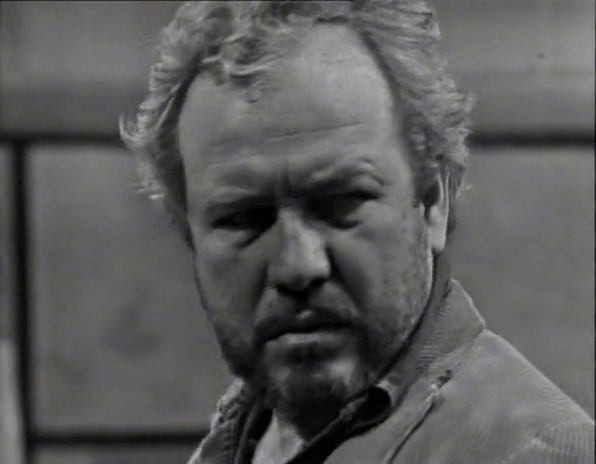
I’ve litigated to hell and back how Sam has gone from being an inconsequential numpty to the practical lead of the show within a week of his introduction, so I’ll spare you. But it remains fact that he is also the pivotal center of the first major cliffhanger since Roger’s car crash.
When we open the episode, and the week, Sam receives a phone call from…
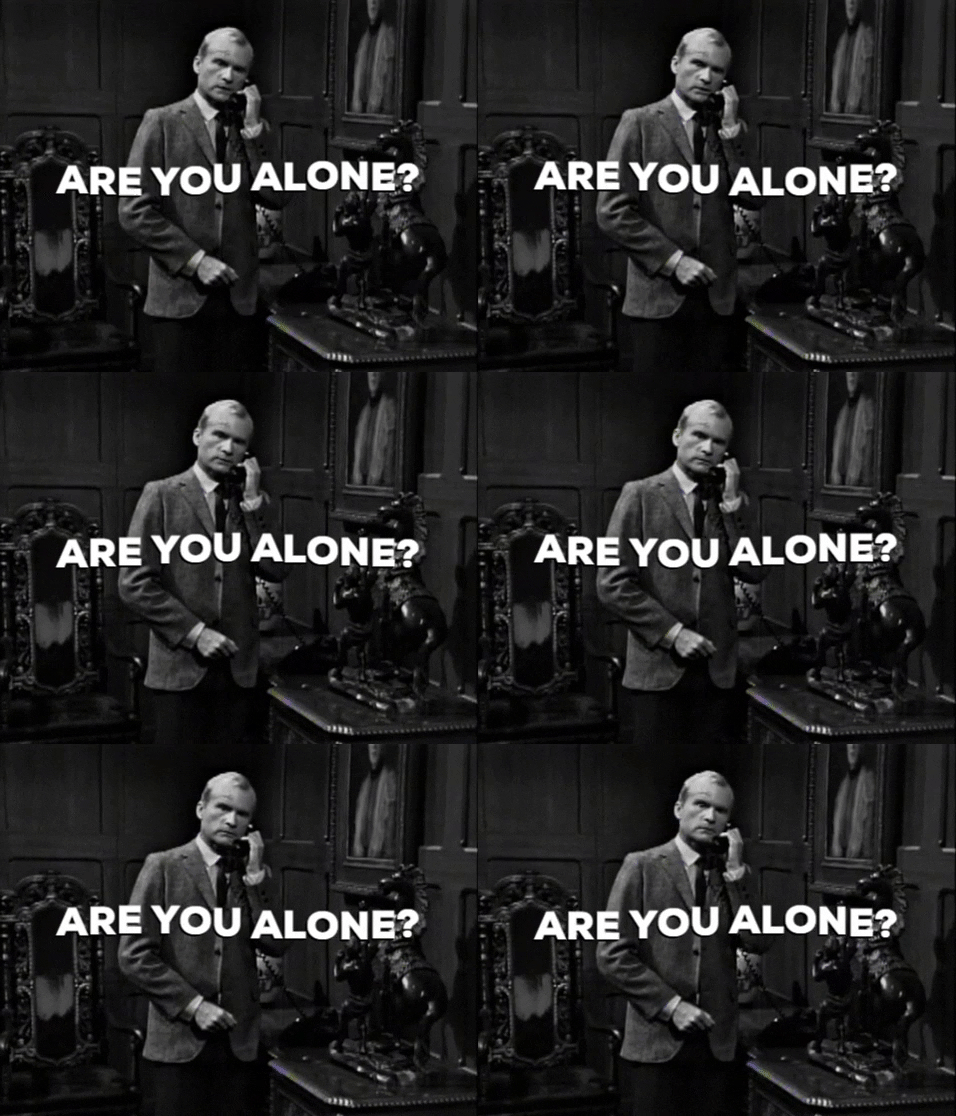
Sam reply’s “Except for the devils in my brain” and Roger is all “What kind of answer is that?” and…well, if that’s your first dialog as the new writer, very good. But that’s just me.
Roger is eager to know whether Bill Malloy is still hanging around the house with his probing and his questions and his Ayups.
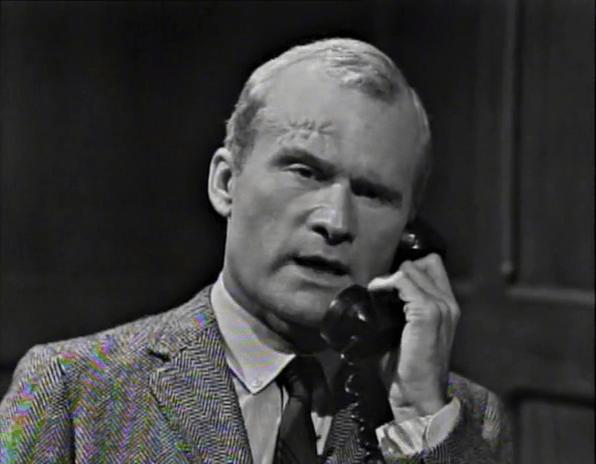
So, our first Pro of the new writer: Roger will be even more openly flaming than he was before. All he needs is an opera cape and a red hat with a violet plume.
Sam claims he and Malloy only had a few drinks and…well, considering how plastered he was, it seems he doesn’t remember the fateful (perhaps fatal) confession he made just as he was passing out: that he is the only man standing between Roger and the clink.
Roger guesses Sam was too drunk to remember anything and then begins ranting about all the ways Sam’s ass is grass and Sam just puts the phone down and goes to get a drink.

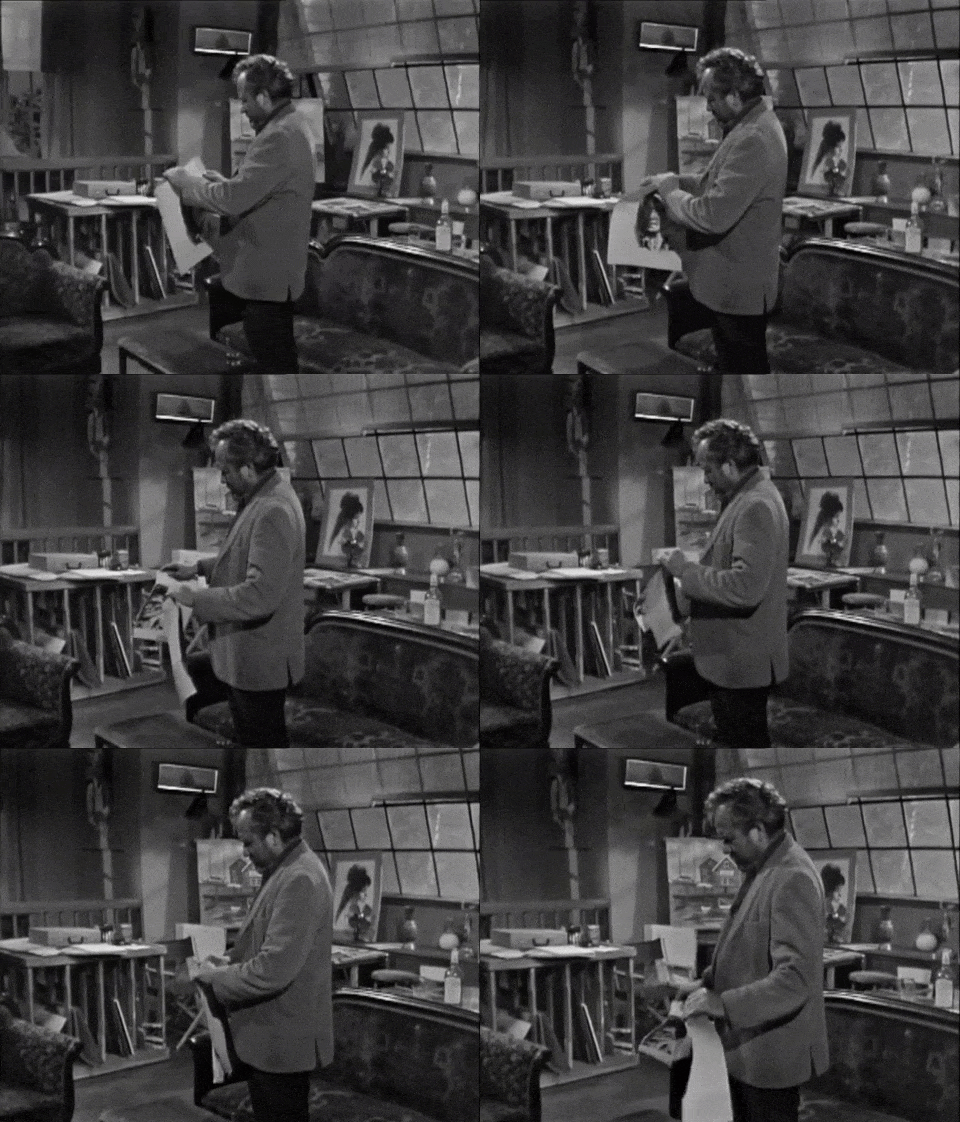
And then Sam rips up his sketch of Burke because fuck everybody, basically.
Roger’s impotent phone dickering is interrupted by the timely arrival of his sister, who becomes the latest in the long line of people wondering why Roger hasn’t gotten his ass to work.
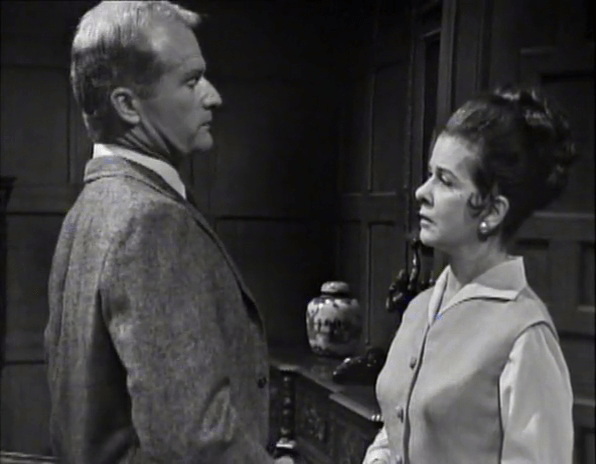
He tells her about his heroic attempt to keep Carolyn from seeing Burke about this ring business, presumably entirely oblivious to the fact that she just went to see him anyway, and is even now plotting to follow him out of town to a city 50 miles way, telling absolutely nobody about this or even when she might be back.

Roger’s metamorphosis into “Sassy Gay Friend” continues apace. Sadly, we don’t get to hear any of Liz’s Roaring 20s courtship experiences, but if they’re anything like her actress’s, they are worth several books.
In what is perhaps a not-so-subtle indicator of the writing change, Liz and Roger pivot to discussion of family finances.

For the record, it’s not like they were letting Francis Swann pull things out of his ass on day one. This is from Art Wallace’s series bible and has been seeded in various capacities since the first episode: the reason for Roger and David’s abrupt return to Collinwood only a few months ago.

Roger casually stuffing bills into the stripper’s G-string.
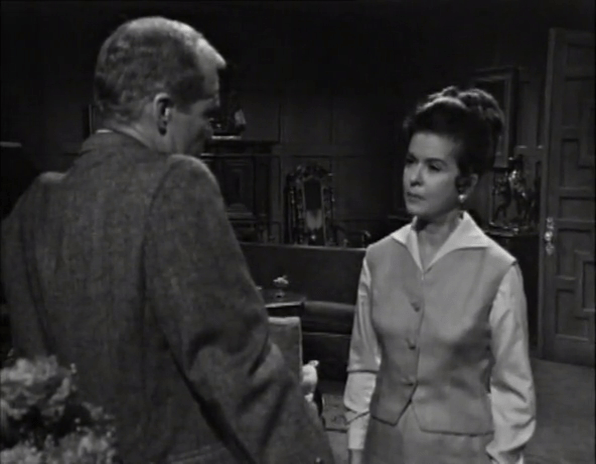
Well shit.
So, it turns out that while Roger was being a rich idiot, he wasted his inheritance on “luxuries”, perhaps including all that sherry and his phallic sports car. He apparently blew so much of his money that he attempted to sell his shares in the family business.
Liz got wind of this and bought them back.

Stocks and bonds and hostile takeovers are bread and butter for soaps about family businesses. See The Young and the Restless, which has been trafficking in business-oriented stories of varying degrees of quality for almost 50 years.
The issue of buying and selling stock and manipulating hostile takeovers of family businesses, is rife with drama. Alliances, betrayals, the meaning of legacy (and, er, Dynasty, which did this kind of thing several times) is a hotbed for story. But it’s important to make the business something that the viewer can understand and connect with, rather than just a bunch of numbers. The real meat of the business story is how the players behind the scenes deal with the numbers, not the numbers themselves.
For example, if one of your leads is visibly having trouble describing the nature of the business story, you might have a problem…

The struggle is real.

So maybe one of the new writer’s cons is that he isn’t very good at transitions. Roger and Liz talk about her refusing to leave Collinwood, something that has next to nothing in common with what they’ve been talking about, and an old hat topic that’s been common knowledge to every character since the first week. It’s almost like Swann is doing this to remind himself that Liz never leaving the house is a Thing on this program he’s been hired to write for.
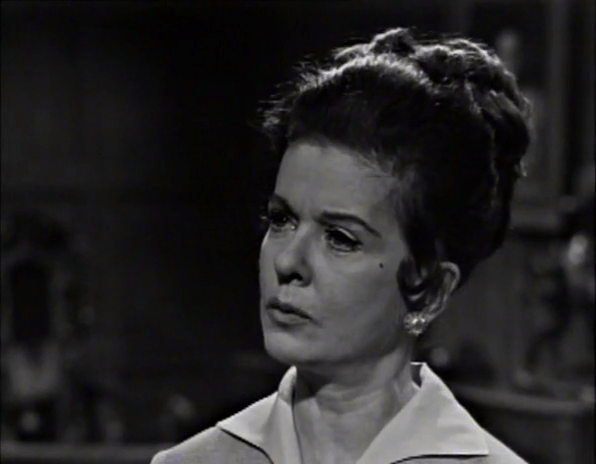
Let the record show that it took them almost two months to name Liz’s missing husband. Roger’s wife clocked just over one.
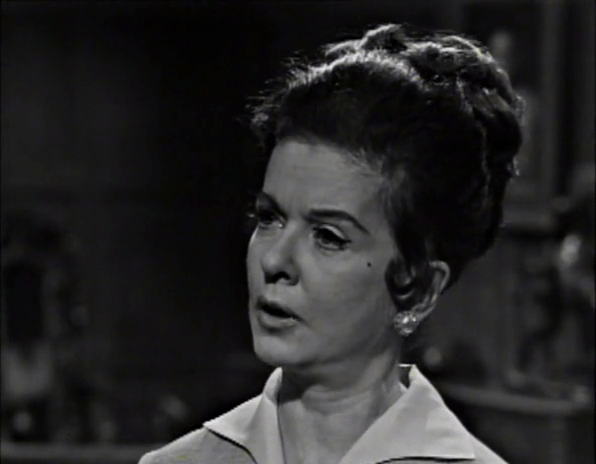
So, not a great day for Joan Bennett, but in her defense, none of these things she’s talking about will ever be important, so it’s fine.
But, because Ned Calder still seems like he’s important, we have to play along.
Roger is visibly distressed to learn Liz was hoping to bring Ned back to work for her.

That probably wasn’t a line flub at the end. Just a lot of words.
Anyway: Maggie Evans.
Maggie was just heading off for her afternoon shift when she realized she forgot her grocery list, because her unemployed father can’t be bothered to get off his (albeit lovable) drunk ass to go shopping even as his daughter works ungodly hours every day of the week.
Sam wonders why she didn’t call.
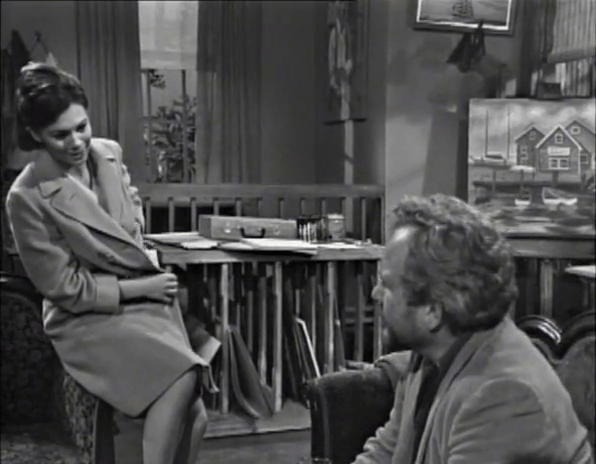
Maggie discovers the ripped up sketch.
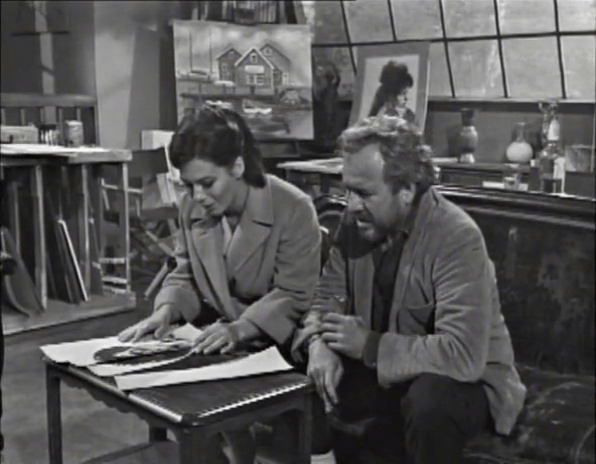
Shrouded in darkness and torn to pieces.
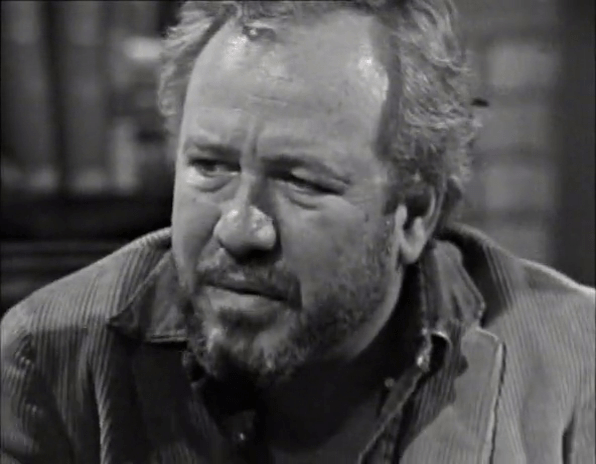
Then he wonders why his daughter asks questions.
In a, er, more obvious demonstration of the writing change, Sam wonders why Maggie didn’t let him run away when he had the chance, even though Roger gave him that same chance a few episodes ago, and Sam was quite resolute about standing his ground.
Though, of course, it may be that he was putting on a brave face, or his resolve has since withered after Malloy’s visit. It can be damaging to assume any change in a character’s attitude is the result of bad writing. Sometimes there are nuances and critics are thinking too hard.
We’ll have plenty of chances to yell about bad writing, believe me. This week is an adventure.
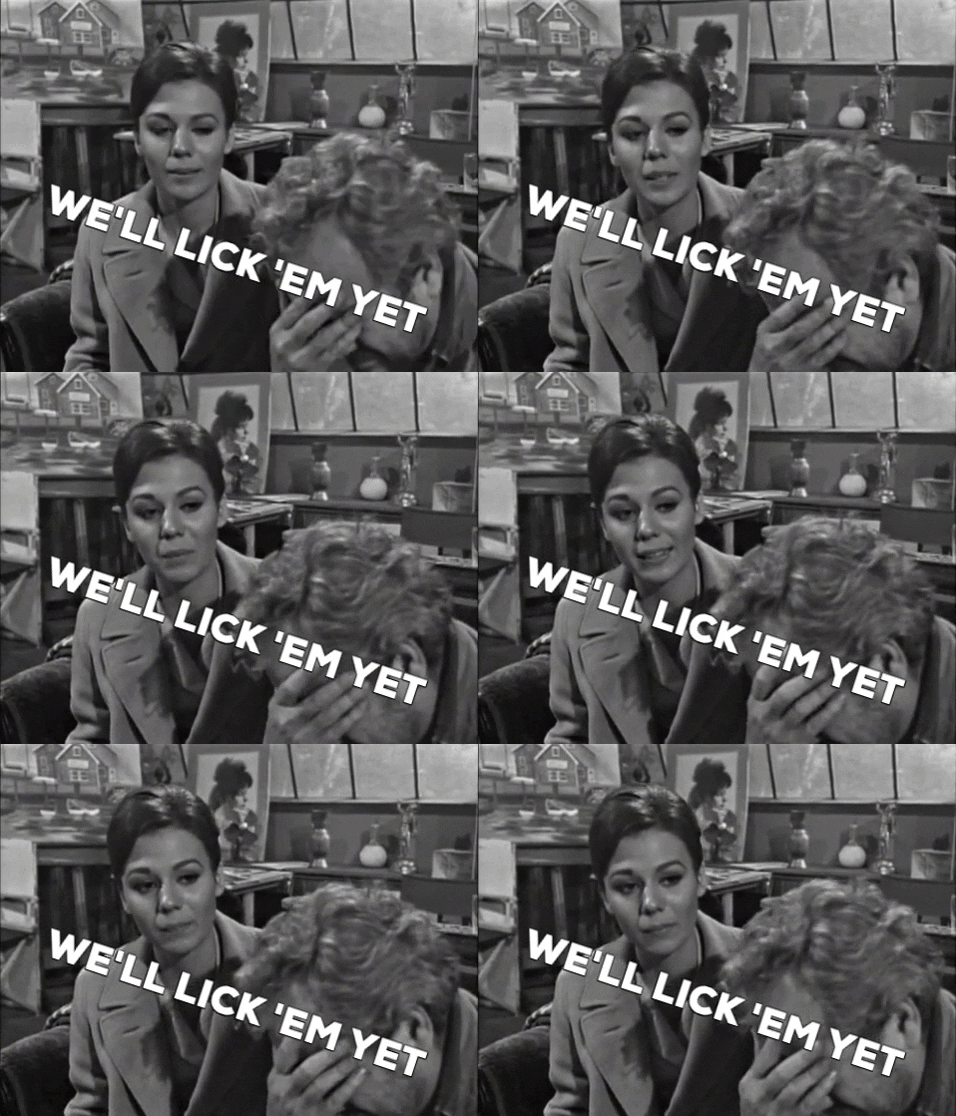
There’s, like, a squeaking noise from somewhere off-set as KLS says that. This episode is cursed.
Maggie finds the shopping list, which appears to have been written ‘landscape style’.
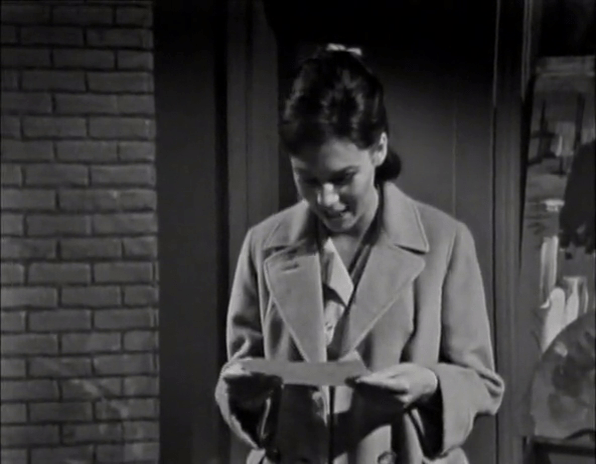
Given the relative ease with which she finds it, literally just getting up, walking to a table, and picking it up, Sam sees this for what it is: an attempt to check on him to make sure his kidney hasn’t exploded, or he’s tried to drown himself in the tub.
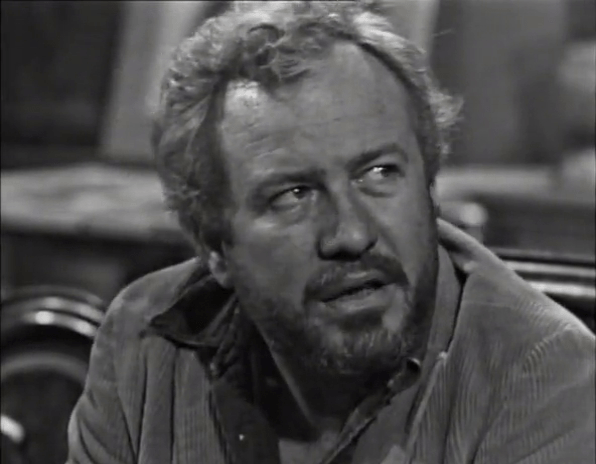
Maggie wonders if she can get anything for her father, who isn’t having it.
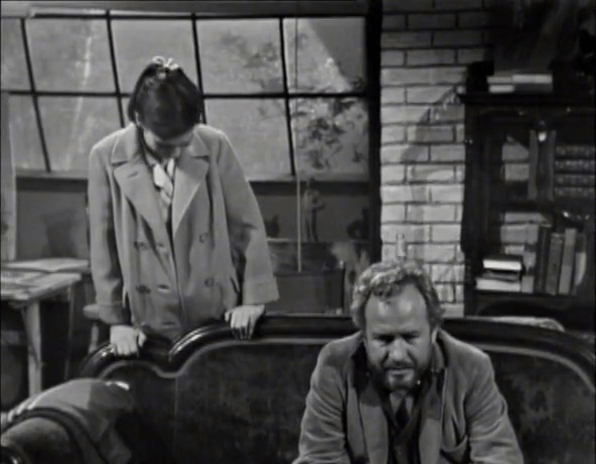
Look, she meant a bottle of Pepsi, Big Guy, not the Elixir of Life.
I continue to point out, however, that there is an undercurrent of guilt to Sam’s rude and dismissive treatment of Maggie that just wasn’t there when he was played by the other guy. You can tell he’s really more angry at himself for getting into this mess in the first place, moreso now since his encounter with Malloy.
Still, doesn’t mean he’s inexcusable.

In case you were wondering if Women’s Lib would come to Collinsport with the new writer.

Seriously, it’s the primary beverage for every single person in town. Not even Roger’s sherry habit can dethrone the stuff.
Maggie muses she’s heard enough from all her coffee-crazy customers that she might as well go into blackmail, and Sam Keeps it Cool.
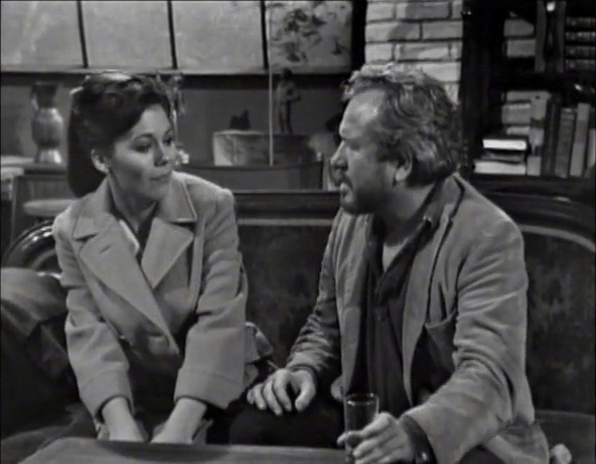
I wish I could tell you people will eventually learn how not to lose their shit over little things like this, but I would be lying. It’s a soap.
Sam claims that the only reason for his despair is creative frustration over Burke’s portrait, as if that explains why he just railed at Maggie for not letting him run to Timbuktu. Sam worries he might be losing his touch…
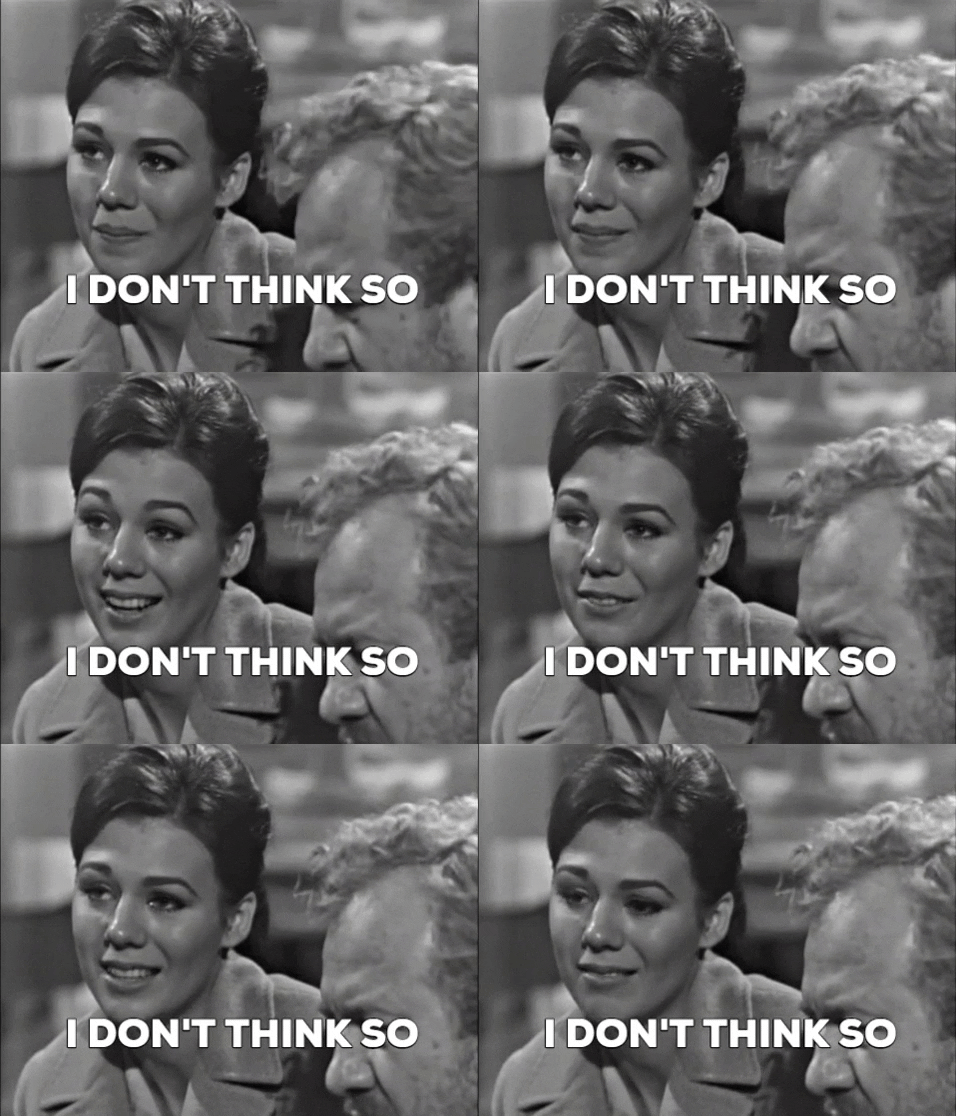
Maggie, continuing to be on the pulse of this business, deduces that Sam is really panicking about Burke, not his portrait. Again, it’s not like he made this difficult to figure out, but still.
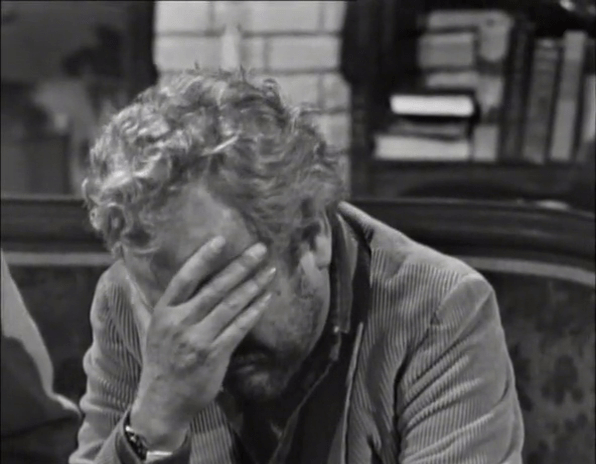
Dave Ford’s hands are so tiny. Or maybe they aren’t, and his head is big. Such dainty things, anyway. I’m sorry, that wasn’t me being horny, I just noticed his hands. I don’t get horny for hands ANYWAY BACK TO THE PROGRAM
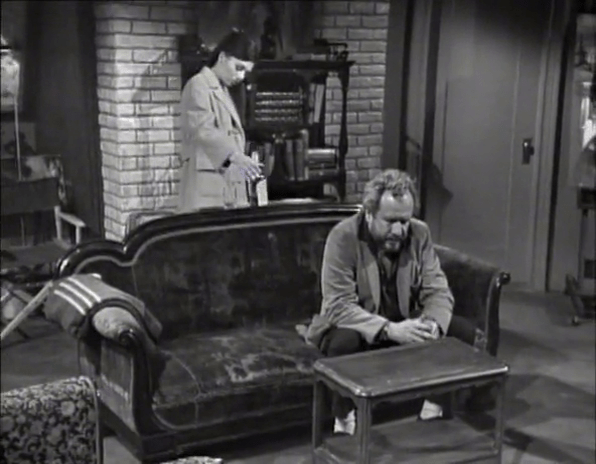
Funny story that…
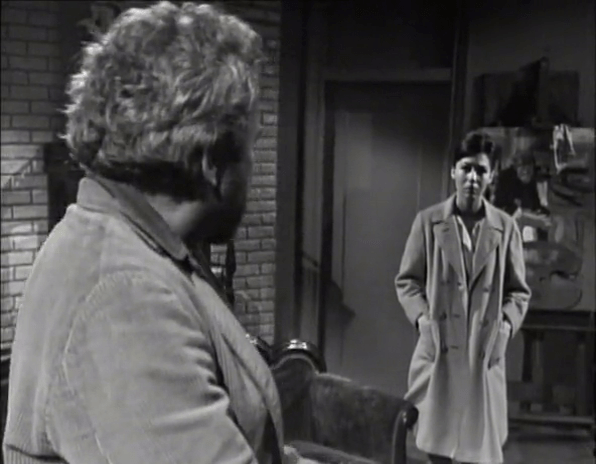
Sam insists it wasn’t Burke. He likes Burke!

Yep, that is certainly how unsuspicious people speak. So unsuspicious that Maggie immediately realizes Sam is talking about the accident from 10 years ago and, therefore, the “injustice” Sam speaks of must’ve been done by Roger.
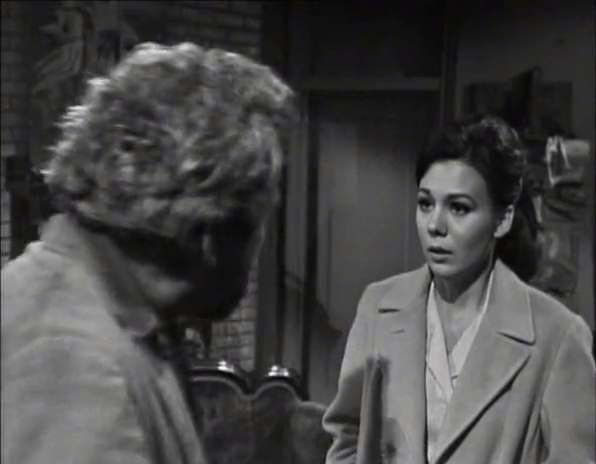
And he storms off, so it’s not like she has much choice.
OR DOES SHE?

Maggie calls the great house and, whoever she was hoping would pick up, I’m fairly certain she ends up disappointed.
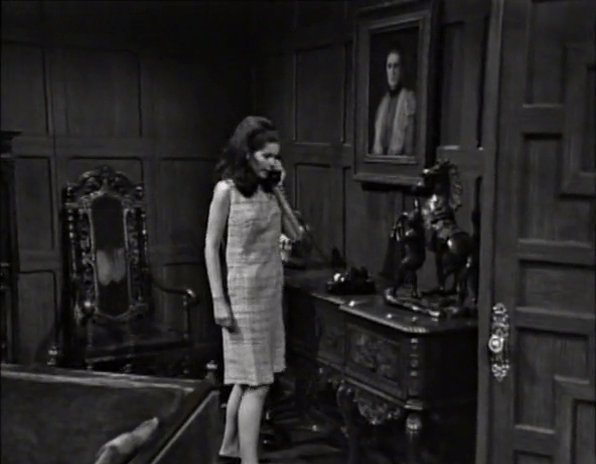
Hey, Designated Protagonist! Though, for the record, Francis Swann will utilize Vicky, sometimes in ways not even Wallace did. Her irrelevancy doesn’t set in for a good while yet.
This is the first time Vicky and Maggie have spoken since…er…the donuts thing, I think? And then that was mostly waitress banter. Look, she was still wearing the wig. Still, Maggie was the second (third, if you count Mr. Wells, but don’t) person Vicky met in Collinsport, and the first person to behave in a remotely friendly manner to her, warnings of kooks notwithstanding. It’s nice to see them interacting again, even if other the phone.
Maggie wonders if Roger’s around.
I’m sorry, when? Vicky’s been here three days and four nights and Roger has never been to work on any of them. As far as we’ve seen, it’s surprising Vicky’s reaction isn’t perplexity that the guy has a job at all.
Speak of the devil…

There’s this bit where Vicky begins to speak, but then Louis Edmonds speaks, and then Alexandra Moltke says her line. There isn’t a single scene in this episode where somebody doesn’t step on somebody else’s line. It’s fairly impressive.
So Vicky gives Roger the phone and…
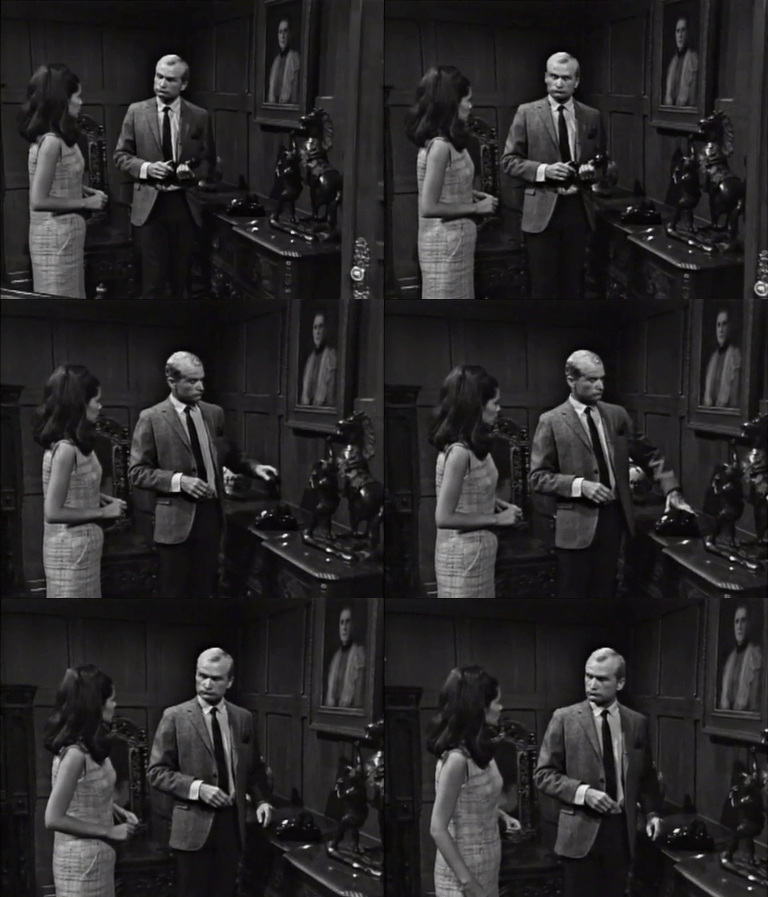
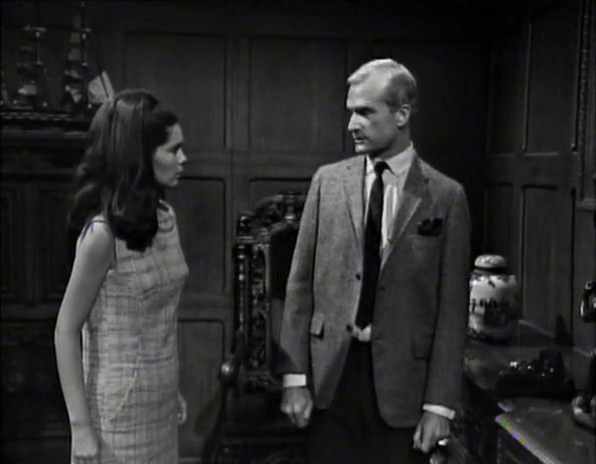
You know how he loves his work, whatever that might be. Vicky is rightly cross about this abject dickery.

Having escaped that encounter without getting his teeth knocked out, Roger is accosted one more time before leaving the house…
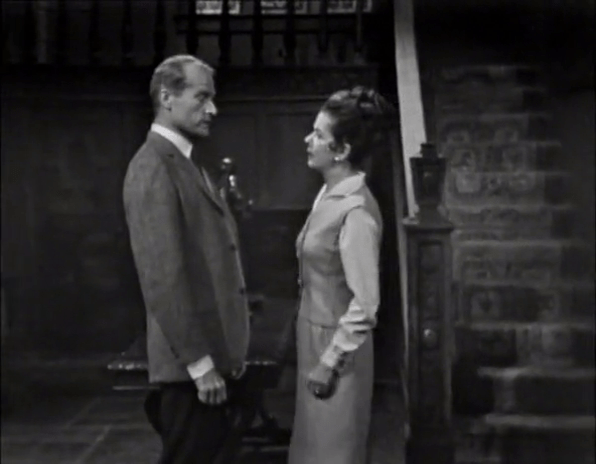
It turns out Roger couldn’t give less of a shit, despite his earlier boasting about saving her from the local sex predator. Liz learns from Vicky that Carolyn has some kind of date, perhaps with Joe Haskell.
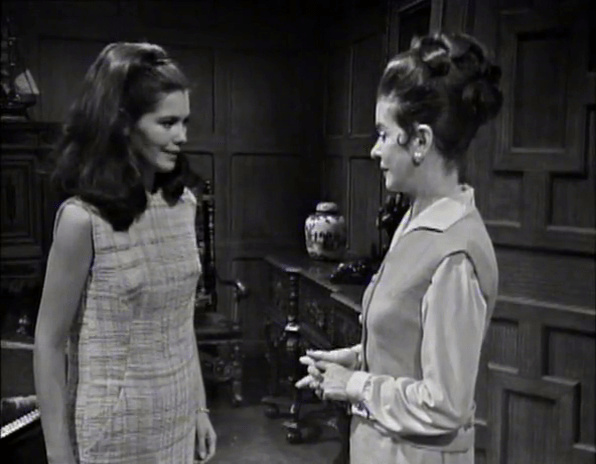
Besides being a weird thing for a 20-year-old to say about a guy who can’t be more than two years older than her, this seems willfully ignorant of that time he showed up drunk and called Liz a sexless matron. Yanno, that thing that happened last night? That, friends, is an inconsistency.

Freudian slip. We know what she thinks of that Devlin pig. Vicky, again strangely ignorant of Carolyn’s inexplicable horniness RE: Burke just last night, and that business with her ring just this morning, says she’s sure Carolyn’s interest in Burke is a meaningless passing phase and there’s no need to worry.
After Vicky goes, Liz, you guessed it, picks up the phone.
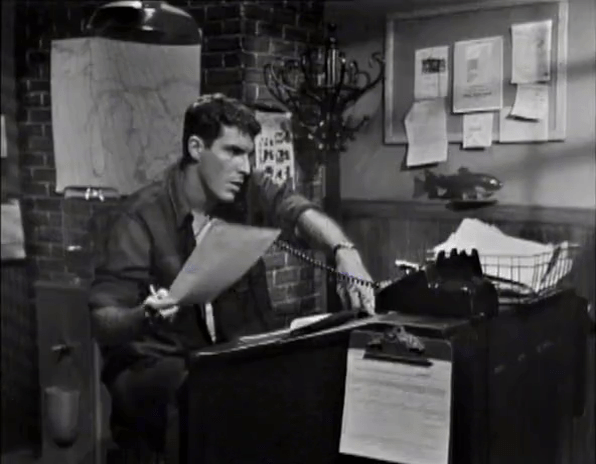
A new set! Mind you, we’ll literally never see Joe Haskell’s office at the Collins plant ever again, which is probably why it’s so small, but it’s still worth noting what effective detail there is in it. My favorite thing is the weird plastic fish on the wall.
If you’ve been with us since the beginning: I’m sorry. Also, you will remember that Joe was given a promotion fairly early on, from just a fisherman to an actual desk job at the plant. There was some hand-wringing from both Carolyn and Joe about the possibility Liz convinced Malloy to promote Joe for the sole purpose of expediting his marriage to Carolyn, but Joe isn’t stupid and took the job anyway, because it’s not selling out if you need the money.

So, Swann is not ignorant of the drunk Joe thing. Which makes Vicky’s comments even more explicable. I mean, Joe is a nice…man, but that was a notable and recent…
Ah, whatever. He’s got hot arms.

Also, the clock in Joe’s office wants me to believe it’s 11:30 and…maybe it is, but that seems like very early considering the whole portrait sitting that happened before then.
Anyway, Joe says he never made a date with Carolyn for tonight and, confronted with this information in the face of her daughter’s mysterious absence, Liz…asks for Malloy. Who isn’t there, so…
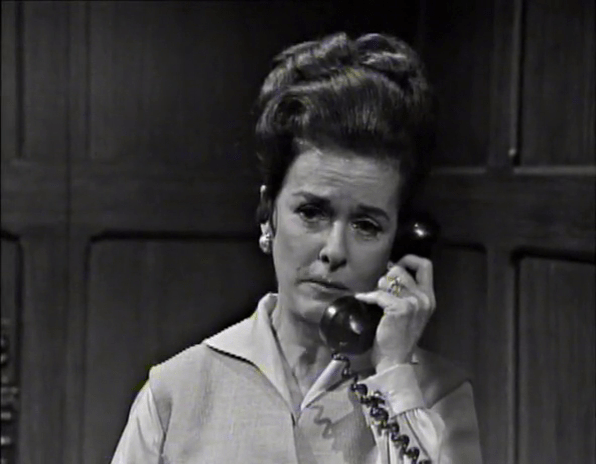
Well, Joe is the only other named cannery employee. Not counting Roger, but it’s not like he does anything at that place.
Back at Chez Evans, Sam is pouring another drink.

Positive for liver poisoning, I think. Maggie insists that her father’s problems are her problems and, since she seems to be the sole breadwinner in the household, she would appear to have a point.
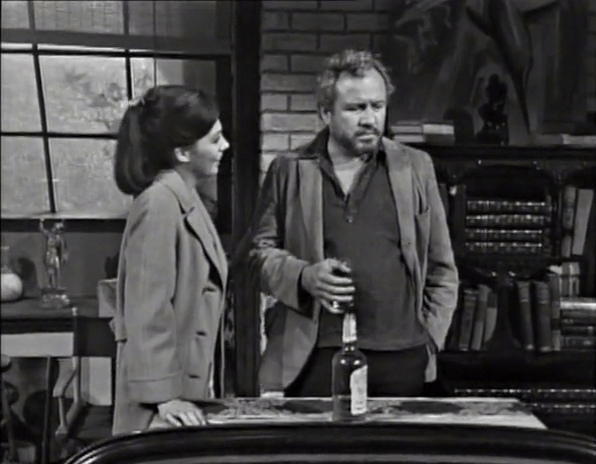
Your concern is wasted, honey. Maybe the new writer can give you some friends.
Maggie casually reveals she tried to call Roger and Sam reacts as you’d expect.
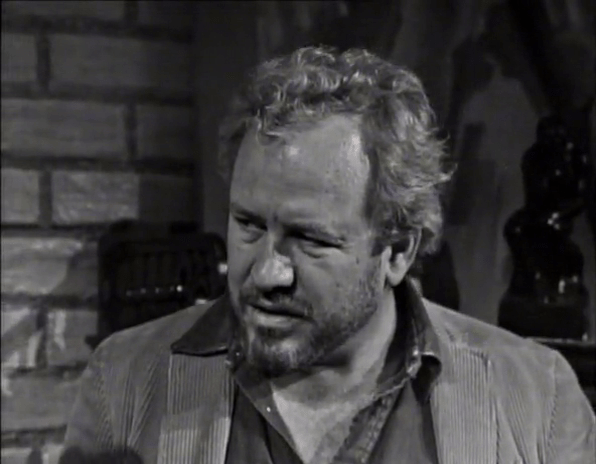
That is what she said, yes.
Maggie reassures him, saying Roger never spoke to her anyway.
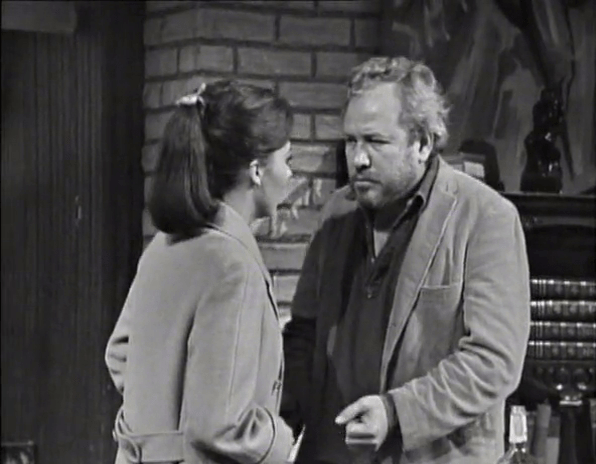
Yeah, he’s real busy with that job of his.
Sam reiterates that he told Maggie to stay out of this and “your infernal prying will be the death of me yet” which is just great. Like, when haven’t our parents accused of “infernally prying” into their private affairs? It’s part of growing up.
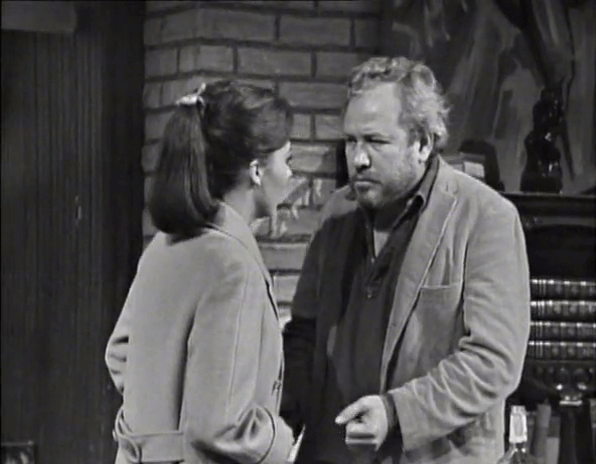
I guess we’ve just tossed the subtlety script out the window.
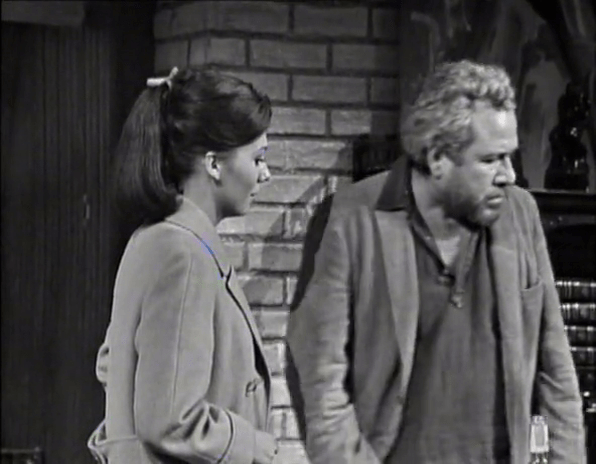
In his defense, of the two eateries in this town, the diner is fancier than the booze den named after a giant undersea mammal.
Maggie seems honestly hurt, and well she should be.
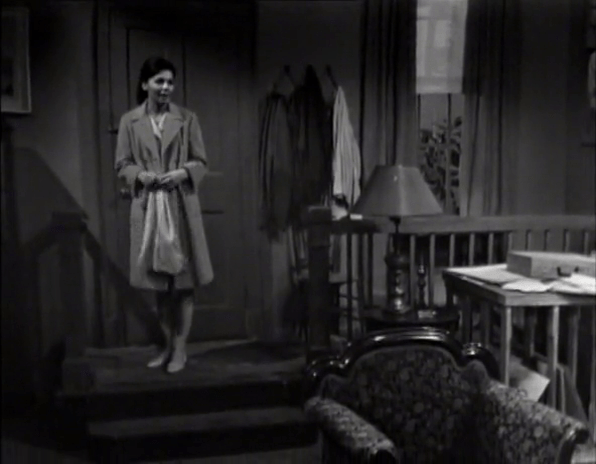
Sam Evans, you son of a bitch, hurting my baby like this, I don’t care how sexy your hands are, I will come for your ass…
Act IV begins with, you guessed it…
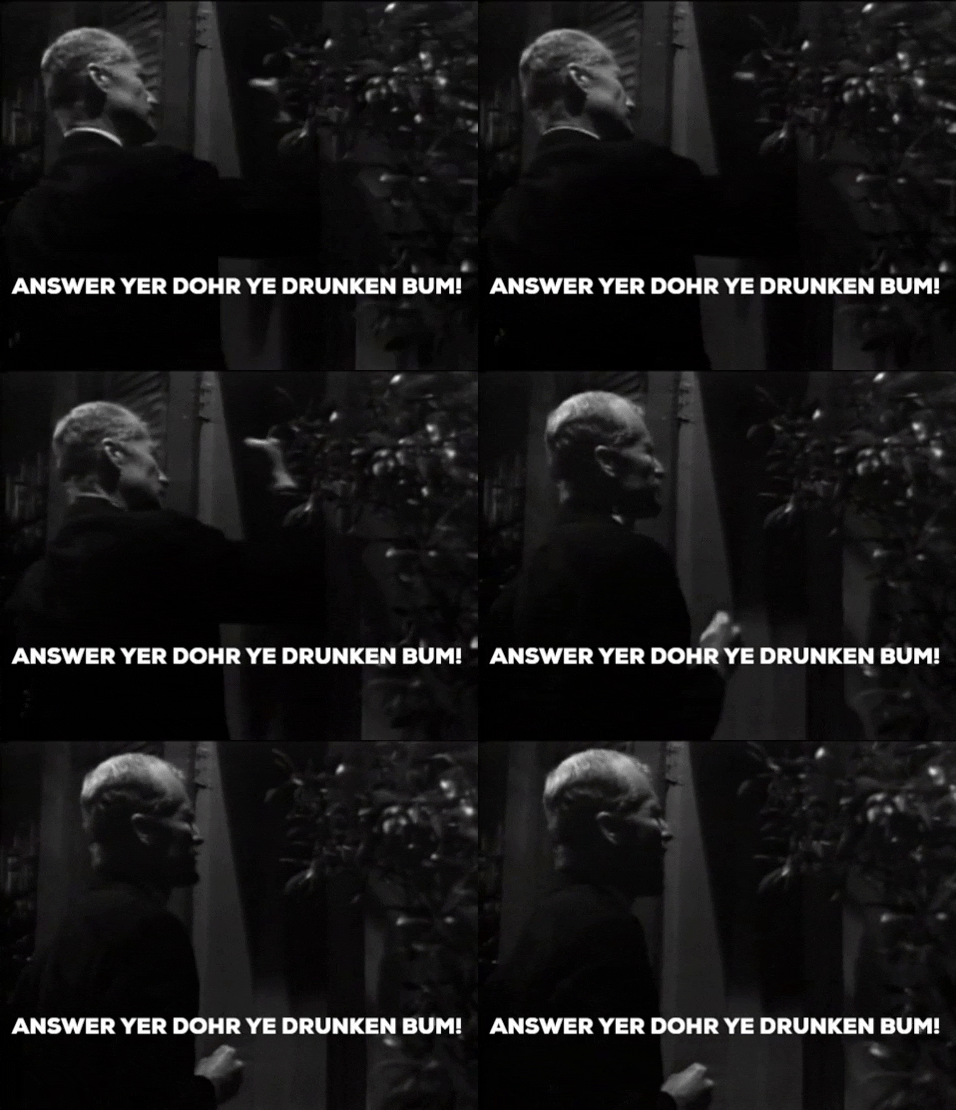
But in daytime now, and this time he’s actually at home.
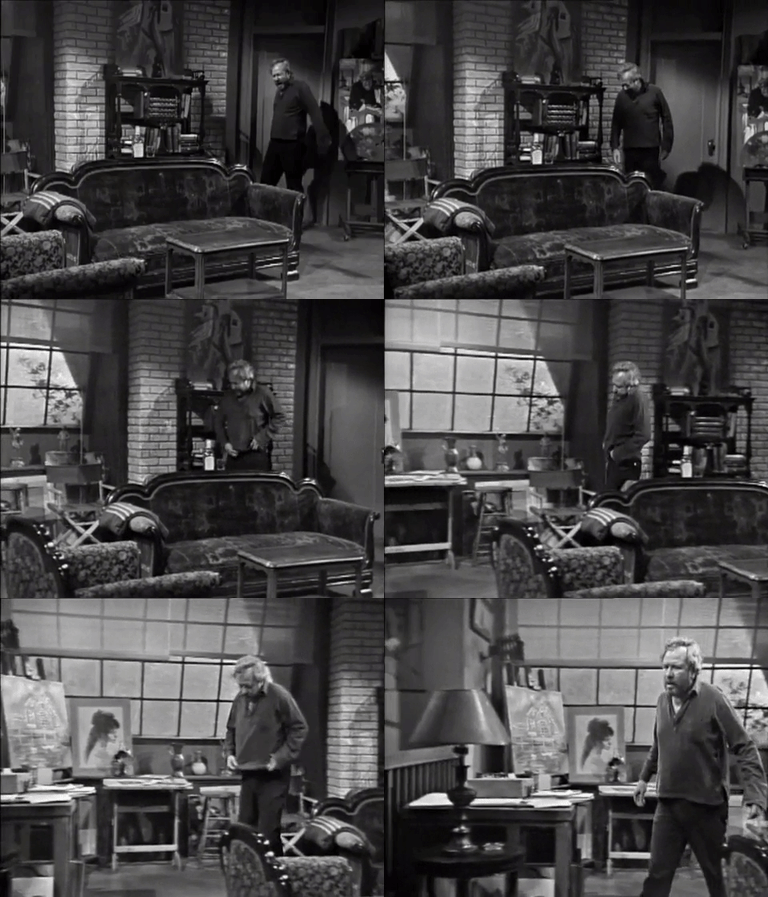
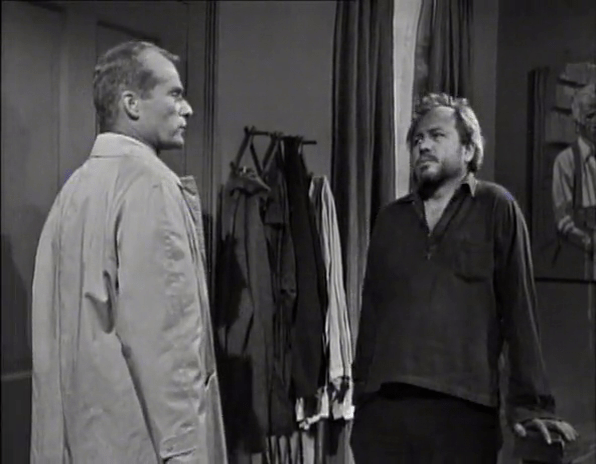
The appropriate response is “Shouldn’t you be at work?”
Sam attempts to get a drink, and Roger is not having it, sir.

Transcribed as pronounced.

Roger says that with a straight face, as if he totally wouldn’t have tried to bribe Sam if he weren’t so susceptible to greed.
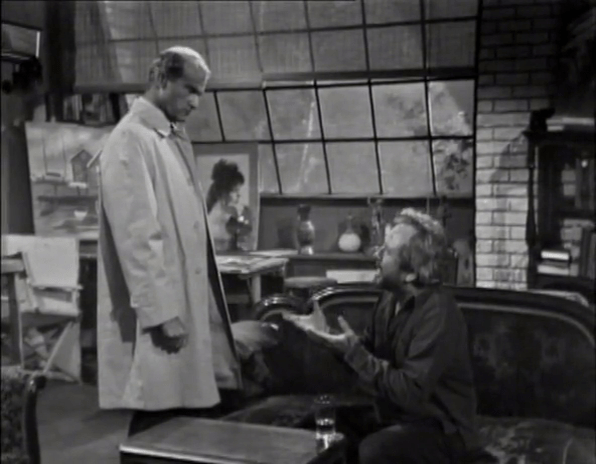
Whenever somebody gets nostalgic for the days when all media was made by men, this must be what they’re talking about.
Sam insists he didn’t tell Malloy a thing, nor did he say anything to Maggie…
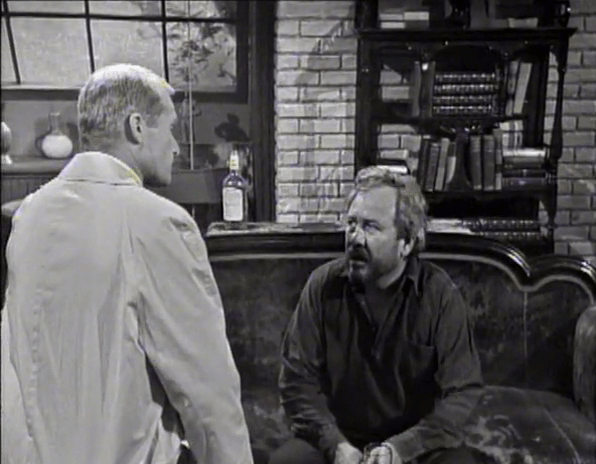
And now things take a new dimension. Because, at present, Maggie doesn’t know anything, but Roger doesn’t believe that.
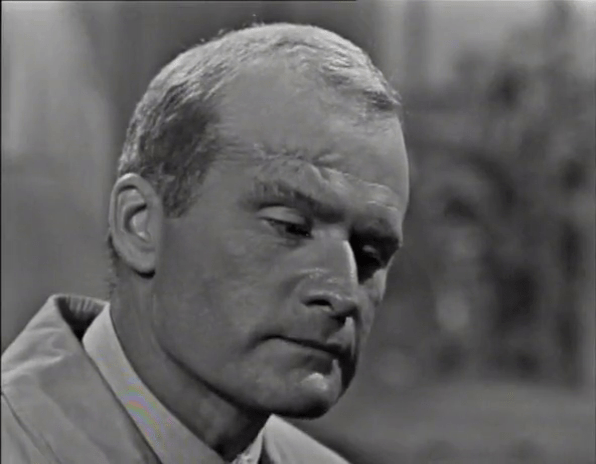
So far, Maggie has existed on the periphery of the Burke Devlin drama. She knows nothing, only has suspicions and the increasingly erratic behavior of her more and more paranoid father. But now, she has in her possession a letter that, unbeknownst to her, is her father’s confession to a horrible crime. Roger knows that letter exists, just not who has it, and there is nothing stopping Maggie from reading it short of her father’s desperate plea not to…unless the unspeakable happens.
For the first time, it seems like Maggie may not only be privy to part of this drama… She might be caught up in it. And dangerously.

Like, Sam is actually disgusted at the horrible things his alcoholism and fear makes him do. How refreshing.
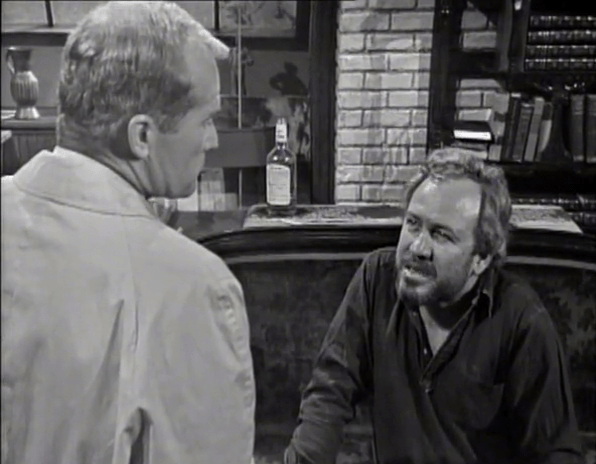
In case you’ve forgotten it’s all-but-confirmed Roger beats his son.
And it’s that comment that gets the righteous fire stoked in Sam’s gut.
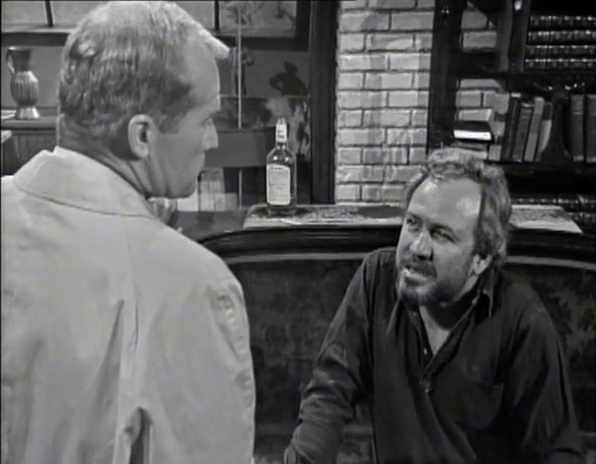
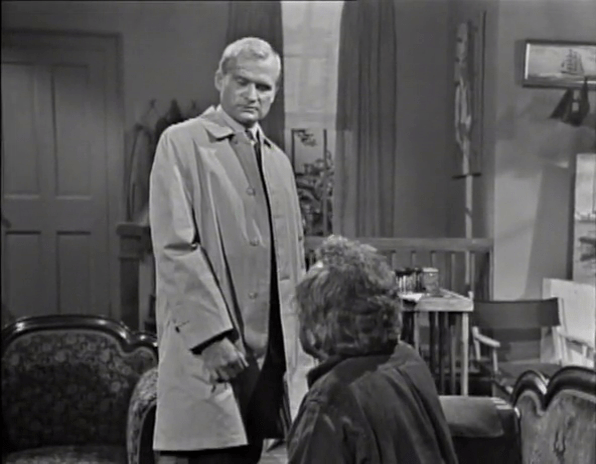
I…I’m not so sure that follows. I mean, Roger is kind of stymied because of that letter, but Sam could kill Roger and half the town would suspect Burke while everybody else suspected David.
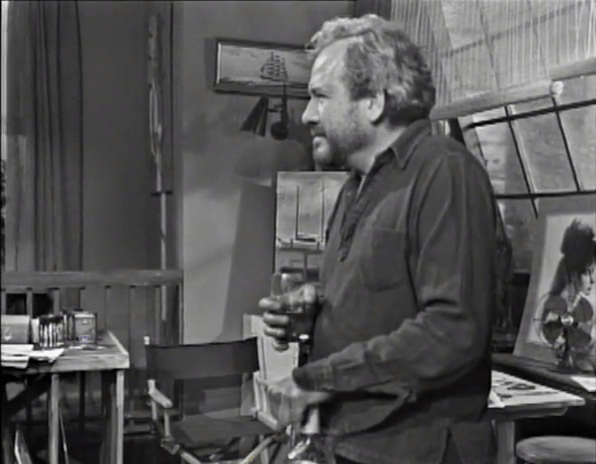
That’s the spirit.
If it feels like they’re gearing up to do something in a big way, don’t panic…they are.
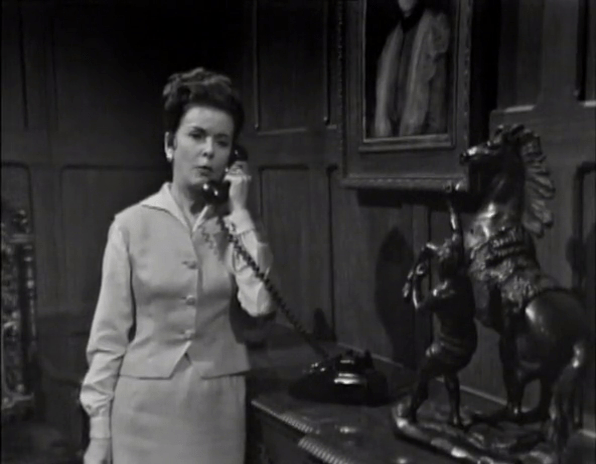
This time, Liz is trying to get in touch with Ned Calder by a different number. The guy literally told her he wasn’t interested in going back to work for her, and it’s the same day and she’s trying again. I’m half sure this counts as stalking.
This attempt is aborted by Vicky who, you may have forgotten, is in this episode.

There’s this hilarious bit where Vicky begins to wonder why Liz doesn’t get out more and has to stop herself, ashamed, when she remembers that self-imposed prisoner thing.
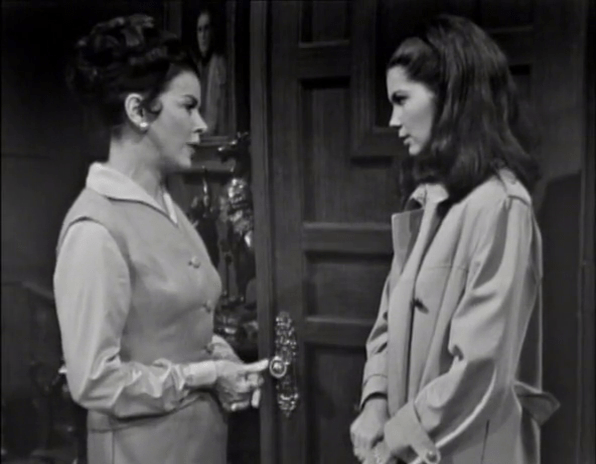
Like, Francis Swann learned that about Elizabeth and was like “This shit’s crazy! So amazing. She never leaves her house! Whoa.”
Liz addresses this as you would expect.

In Swann’s defense, it’s not like Vicky’s ever spoken about this with Liz. Among the many questions she’s volleyed at her, she presumably thought it impolite to bring up. So that it’s being addressed now is actually refreshing! Still jarring, but not quite as much as the random inheritance discussion which, you’ll have noticed by now, had nothing to do with anything else in the episode.
Either way, it gets batted aside as Vicky says it’s none of her business which I guess it isn’t, but…why do we even bring it up, then?
And then Vicky goes and, you guessed it…
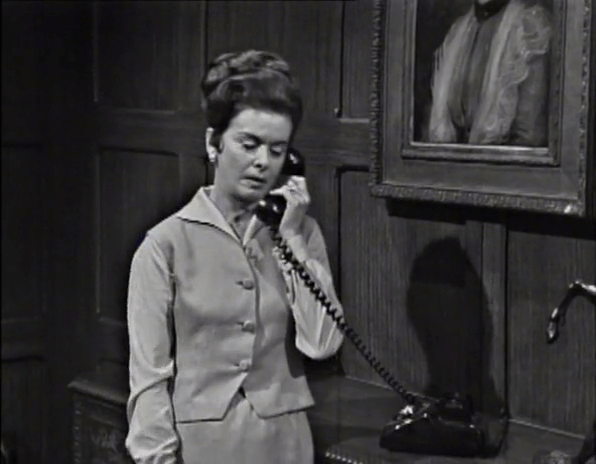
Lady, I think he gets it by now.
So Liz tries again to call Ned Calder and I CAN’T BELIEVE WE’RE ENDING THE EPISODE WITH THIS but she gets in contact with Ned’s secretary.
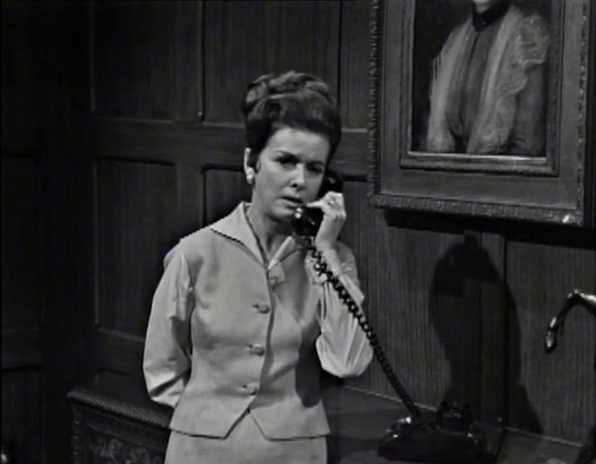
What the hell kind of question is that?
It doesn’t get an answer, anyway. Apparently, Ned isn’t around and oh! Someone’s at the d…
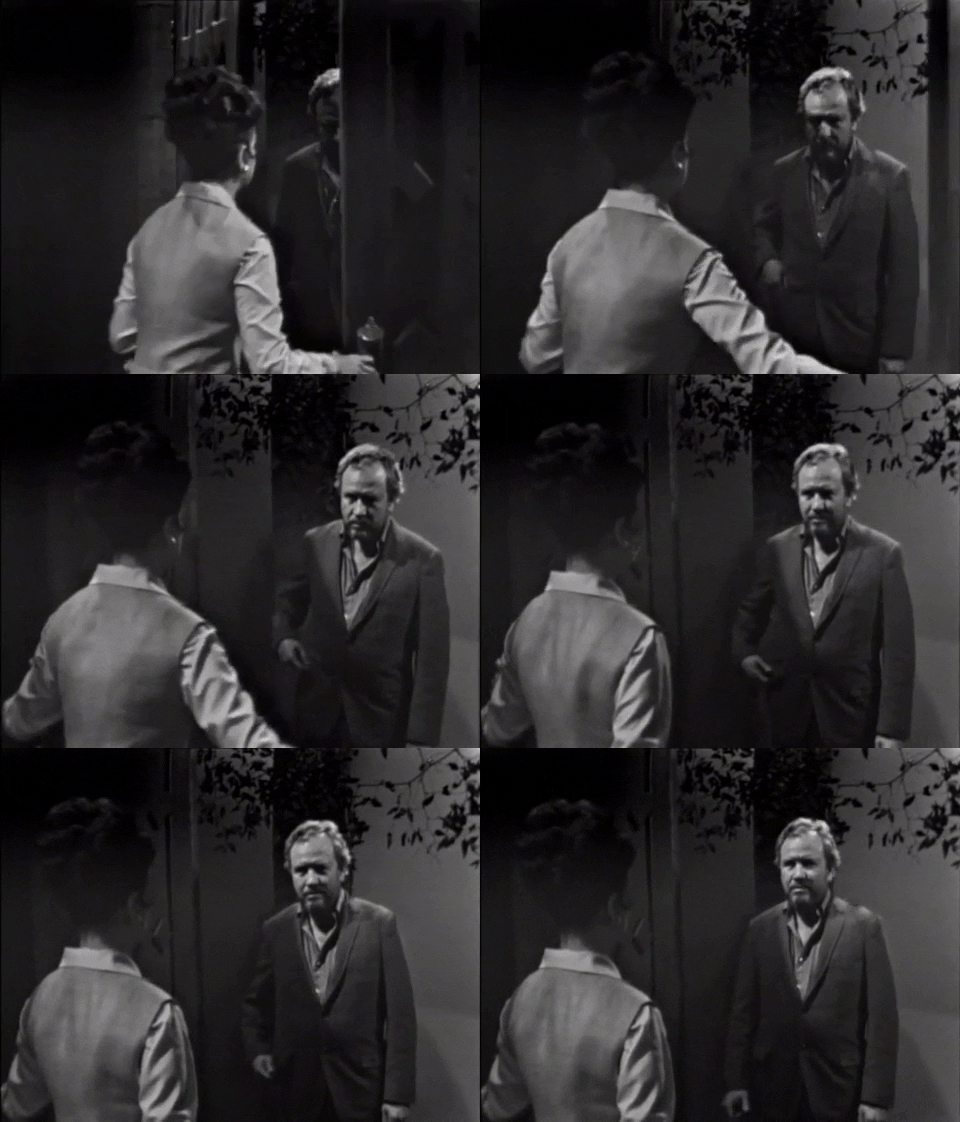
So maybe this is an improvement.
This Day in History- Monday, August 22, 1966
The majority Hispanic National Farm Workers Association merges with the mostly Filipino Agricultural Workers Organizing Committee to create the United Farm Workers Organizing Committee. Unions aren’t scary.
The Red Guard Revolution continues in China, with ultimatums to purge Western goods, habits and generally everything from society or else.
Charles Schultz’s Peanuts strip introduces the character of Peppermint Patty, beloved pseudo lesbian.
Behind the Scenes Shenanigans
As addressed quite extensively above, this is the first episode not written by Art Wallace. No other writer in the show’s run will ever come close to writing as many subsequent episodes.
Wallace’s tenure on Dark Shadows isn’t done, either. He will return for a full week of episodes starting Episode 46, and will be credited as “story creator and developer” for almost the rest of the show’s run.
 Kooks of Collinwood
Vicky’s dress is reasonably hip.
LikeLike