
In today’s big Friday episode, Victoria Winters will learn a shocking secret.
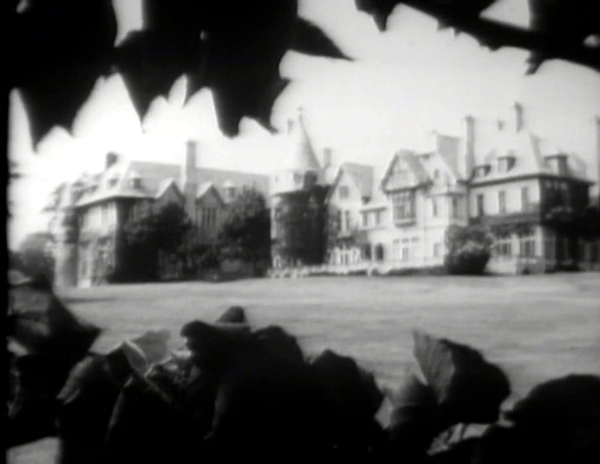
No, not that one. Today, we are more invested in the relationship of convenience developing between a small child and a mentally impaired fugitive. It’s called a soap opera, maybe you’ve heard of them?

Dark Shadows is taking bold risks as it nears the end of its second 13-week order. Things aren’t looking so good, ratings-wise, which has led to a serious reevaluation of what this show is supposed to be about.
This is how a fairly cut-and-dry drawing room murder mystery transformed inexplicably into the saga of a crazed, unpredictable hulk of a man whose unpremeditated act of violence precipitated a spiral into madness.
Essentially, Dark Shadows has decided to shock people. Sure, maybe you’ll offend some old spinster somewhere by making the nine-year-old the murderer’s accomplice, but it’s just as likely even more spinsters get a secret thrill out of wondering whether the kid’s neck’s about to get snapped.
Because people like to be shocked. We may get upset at cheap contrivances, but there’s still a little kick we get out of the salacious, no matter how it’s executed.
And, as I brought up the last time David visited old Matthew at the Old House, we enjoy seeing children placed in dangerous situations. Possibly because we subconsciously hate children, or possibly because we envy the imagined wiliness and freedom of our lost youth. I don’t know, I’m not a media analyst, this is just a side gig.

This segues into a mini soliloquy about the nature of fear.
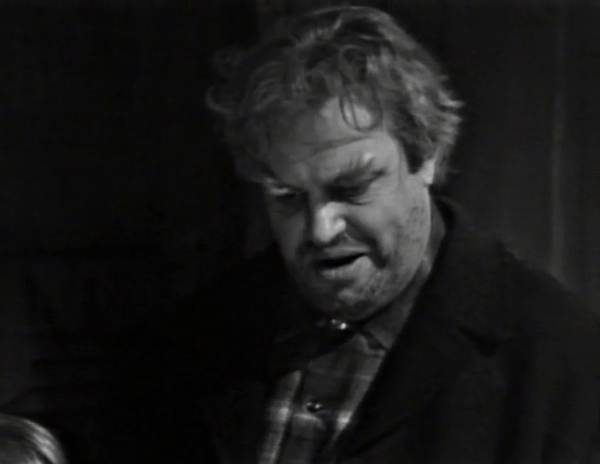
So, let’s take that odd pronouncement as the first indicator of two things:
- They’re taking Matthew in a new direction for the last couple of weeks of this story.
- We have a new writer.
About a month after Ron Sproat joined the team to replace Art Wallace, Francis Swann has now found a replacement as well in the form of Malcolm Marmorstein.
Marmorstein, who passed away last November, was a New York-based writer who, like Ron Sproat, had been head writer on one soap opera before Dark Shadows, as the first head writer of NBC’s The Doctors in 1963.
Marmorstein had one writing credit between 1963 and 1966: one episode of ABC’s TV ‘filmed play’ anthology Directions called “Will the Real Jesus Christ Please Stand Up?”. I can’t find any actual copies of this episode, but there is a contemporaneous New York Times review that isn’t very flattering. Here’s an excerpt that is also the one time Marmorstein is mentioned by name in the article:
The author, Malcolm Marmorstein, attempting to register a protest against lavish Biblical spectacles in show business, opened his play with a scene in which Jesus Is reading a copy of Variety. The setting is an audition of actors to play Jesus in a TV special. The play’s point, of course, is that the director of the special would not recognize the true Jesus if he saw him.
NYT
So, I don’t know about you, but I think Mal wasn’t exactly in Kansas anymore by December ’66.
Marmorstein is kind of notorious in Dark Shadows fandom for a couple of reasons, most notably stubbornly claiming to be the sole inventor of Barnabas Collins (cringe), and for soliciting his services to help Tim Burton make his terrible movie adaptation, only to be ignored (king). He is also treated as very dull. Which…let’s be real, he has a tendency to write very dull scripts. But I think people who make this criticism must only be familiar with the post-Barnabas years of the series, because Francis Swann is indisputably the worst writer to ever pen a Dark Shadows episode.
And, anyway, as a debut, this Marmorstein script is quite strong, even as it establishes the Marmorstein house tradition of taking 20 minutes to get to a story beat that could’ve been addressed in five. It’s a playwright thing.
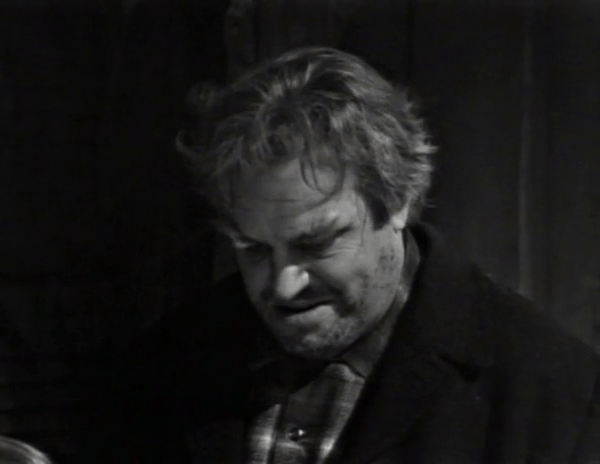
I feel like Marmorstein was told this was the spooky soap opera and just did whatever came natural, because there’s no other explanation for why Matthew is telling David how fear works like he’s a Batman villain or something.
Anyway, it’s a new day again for the third episode in a row. That’s a record, but don’t worry, we’ll be spending some time on this one.

“And ready to leave!”
I feel like the main reason for the accelerated timeline since the Matthew reveal is so they could create a reasonable enough in-universe gap between Vicky being menaced by Matthew to her departing Collinwood for the weekend trip in Bangor she arranged with Frank five minutes after escaping the maniac’s clutches.
I said at the time that this trip seemed more like something Frank wanted to do, and it may have been insensitive of him to broach the subject right after Vicky almost had her neck snapped by the psychotic murderer, but maybe I was uncharitable and Vicky really does look forward to spending time with Frank Garner, in which case she is entirely beyond help.
Well, that’s no way to talk about the…er…Cross Insurance Center and historic Bangor Police Department.
Okay, so she’s right, the roast is entirely warranted.
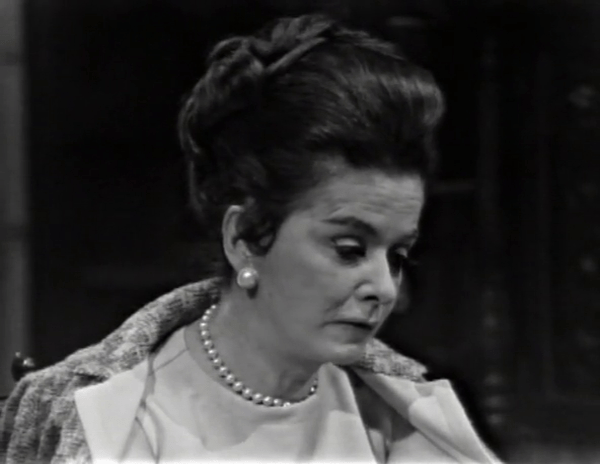
Elizabeth rightly wonders why Vicky is so excited about taking off for Bangor.
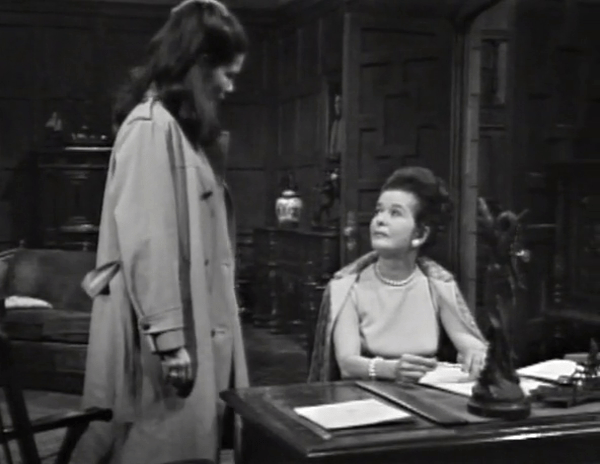
You can see Liz’s spirit leaving her body. She’s already regretting she asked. It doesn’t help when Vicky starts talking about a concert she wants to go to “at the conservatory”. This is why you don’t start treating the help like one of the family. Half of them will become deranged murderers and the other half won’t shut up about banal daytrips to D-tier cities.
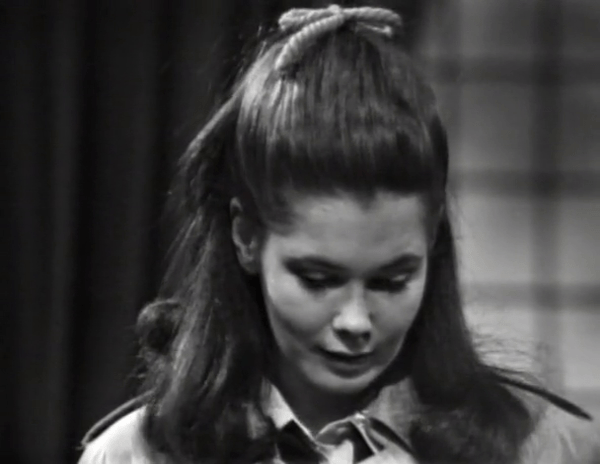
What…what other things? I assume this is supposed to be a reference to Burke kissing her yesterday, but that event is not referenced once for the whole episode or a few after this, and it’s very bold of Marmorstein to assume I’ll be looking out for subtext in Victoria Winters’s dialogue.

Spending time with Frank Garner is bound to make any girl question her sexuality. Or, at least, I assume that’s what she’s talking about. A lot of this script is people spouting vagaries that don’t necessarily track to anything that’s going on around them.
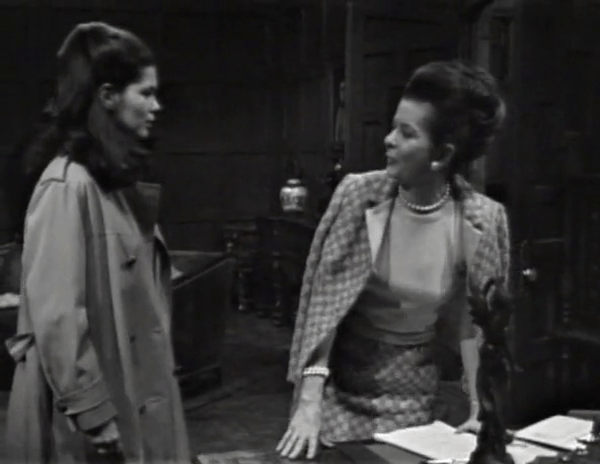
One nice thing about this is how we get to see Liz behaving kind of like a mother figure to Victoria, a further reinforcement of the little governess’s acceptance into the Collins family. Joan Bennett gets to show off a natural warmth that the character doesn’t often get a chance to project, and we get the added bonus of feeling second-hand reward. We’ve been here so long, enduring this journey at Vicky’s side, that it’s as much validation for us as it is for her to really be welcomed into the great house on the crest of Widows’ Hill.
And then we get this all-time great ‘What the fuck is this line’ moment. Liz suggests Vicky take advantage of her time away to “forget the bad things that have happened at this house”, then going immediately to:
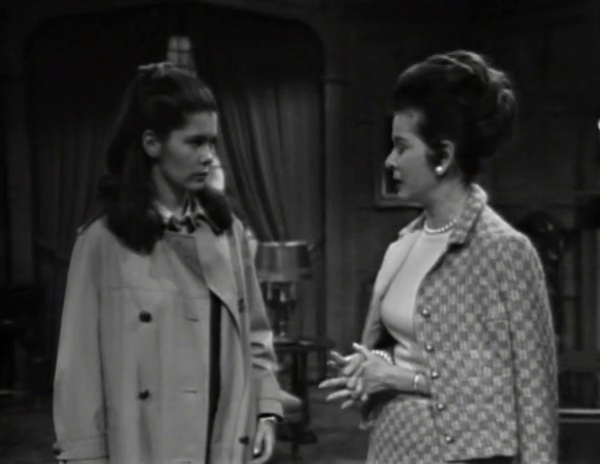
To this day, I have no idea what anybody was thinking with that. Liz just blithely restates that Matthew is ‘the cause’ of Malloy’s death, then immediately pivots to pitying him, and then wonders ‘what’s happening to him’, like he’s got brain worms or something, and, ‘where can he be?’ all in the same tone of dull surprise. And I can’t even blame Joan Bennett for that. I don’t watch Dark Shadows for ‘natural dialogue’, but I cannot conceive of any narrative universe where that line makes sense except as a heavy-handed segue to give us the answer to “What’s happening to him? Where can he be?”
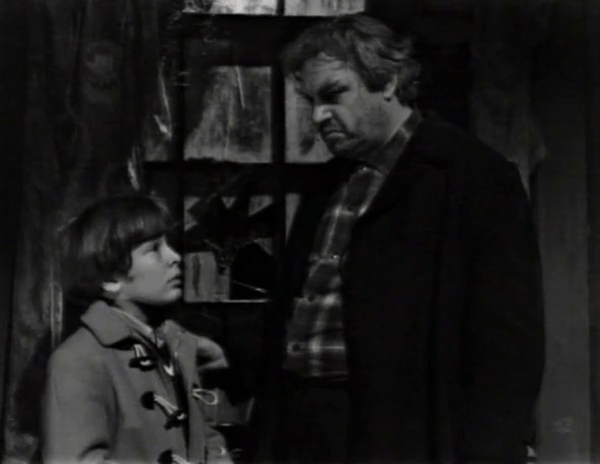
Matthew thanks David for allowing an “old man” to have his dinner. I might as well point out that the wiki says that Matthew was born broadly in the 1920s, meaning he’s at least a decade younger than Elizabeth and no older than 46 when this is all supposed to be happening. In fact, Thayer David was 39 when he played Matthew. I think we’re supposed to imagine him as much older than his actor, since “18 years ago” when he started working at Collinwood, he would’ve been 21, which only makes his weird parasocial relationship with Mrs. Stoddard creepier than it already is.
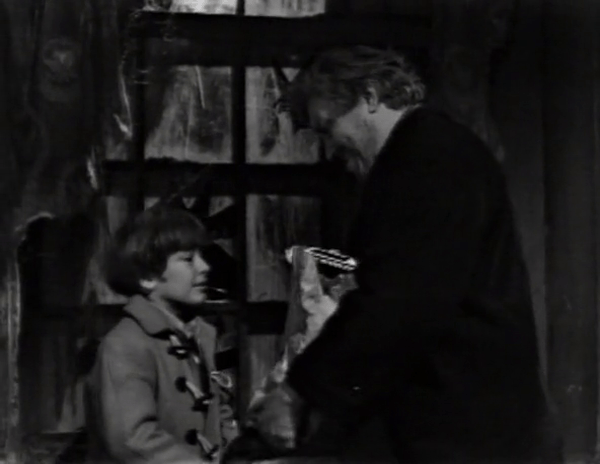
The culture wars have found Dark Shadows. First point of contention: the decline of the junior murder accomplice.
Riffing off my earlier points from this week, David comments how people underestimate how clever he is, which is pretty true since he remains the only character on this show to have successfully gotten away with (attempted) murder. I mean, unless you count Roger with that stupid manslaughter thing, but we all know it’s only a matter of time and writer investment before they wrap that up.
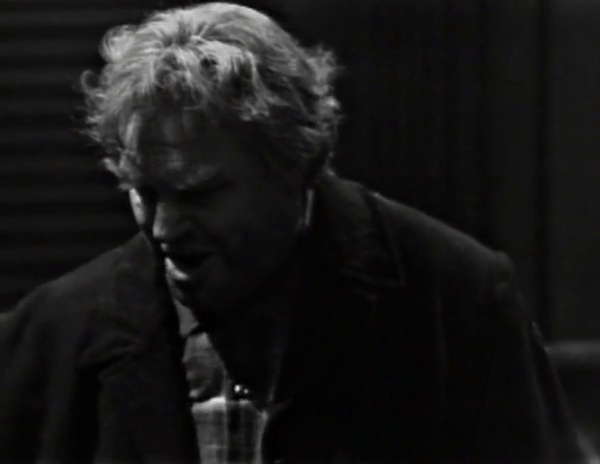
Okay, so back to the aforementioned subject of the new direction for Matthew. Matthew heavily implies that he has gotten away with doing exactly what he’s praising David for doing: playing dumb. Which raises the question…has Matthew been faking all this simpleton stuff?
If he is, it’s certainly a retcon, and not even a very subtle one, given Matthew losing his cool and blurting out the truth to Vicky last week makes much more sense if you accept Sproat’s characterization of him as a well-intentioned, guilt-ridden fool. If Matthew is really a calculating mastermind, it’s hard to believe he’d have made such a freshman mistake.
But this isn’t a one-off on Marmorstein’s part. Both he and Sproat will be portraying Matthew like this henceforth. I tend to believe this decision was made in an effort to make Matthew a more compelling antagonist. If nothing else, I guess it’s good that someone back there realized the optics of Elizabeth’s meathead servant being punished for acting in her own interests didn’t do much for the Collinses of Collinsport as characters we should root for.
Suffice to say, it’s hard to root for the downfall of a man with the intellect of a child. You end up pitying him, just like Elizabeth has been. But if you reveal that the man has been playing on everybody’s assumptions about him (even if the reasons don’t make a lot of sense), you sympathize more with the Elizabeths who’ve been duped.
They’ll get better at this whole ‘monster’ thing, I promise.

The vitamin craze was still fairly new in the 1960s. Children David’s age may have been forced to gulp down chewables with names like “Chocks” and “VI-DAYLIN” and “Super Plenamins Junior”. It’s a wonder our grandparents didn’t all join the Fantastic Four.
Or, well, maybe your parents. Or you. Technically, my parents. I’m a younger millennial descended from late boomers. Generations are a crock. And I’m pretty sure ‘VI-DAYLIN” was too.
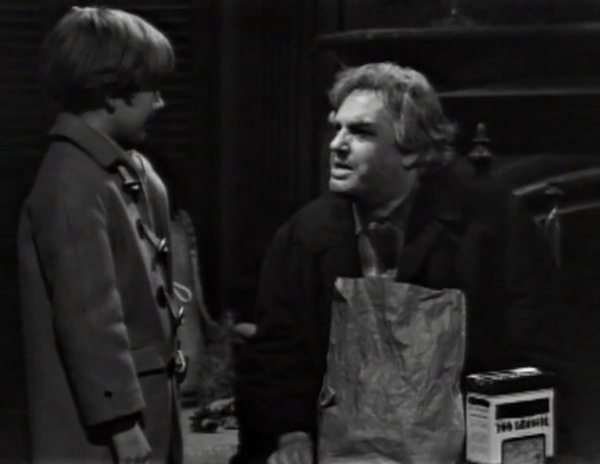
Like Matthew’s a dog or something. They’ve got to commit to what flavor of reasoning human Matthew is. I’m not sure I can keep up. Mind you, the decision to stick around and trust David at all doesn’t seem like something a shrewd adult would do, even if he were afraid of being caught by the cops after leaving the Old House. But Francis Swann wrote that episode and he’s gone now, so we’re on our own here.
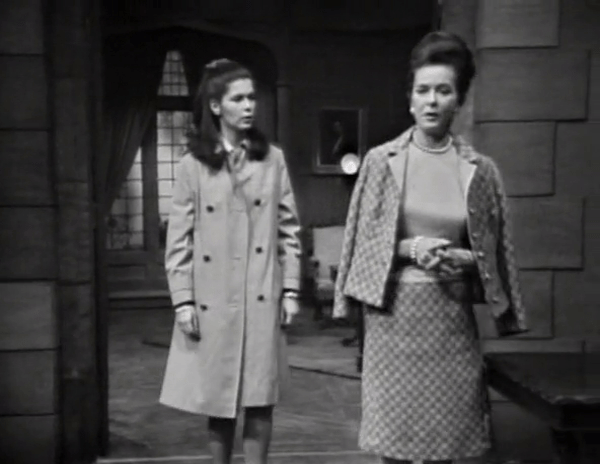
“It’s very hard to think about the future when everything depends on the past.”
This opens a fairly nice bit of introspection on Elizabeth’s part, as she warns Victoria against being too bogged down by the experiences of her past.
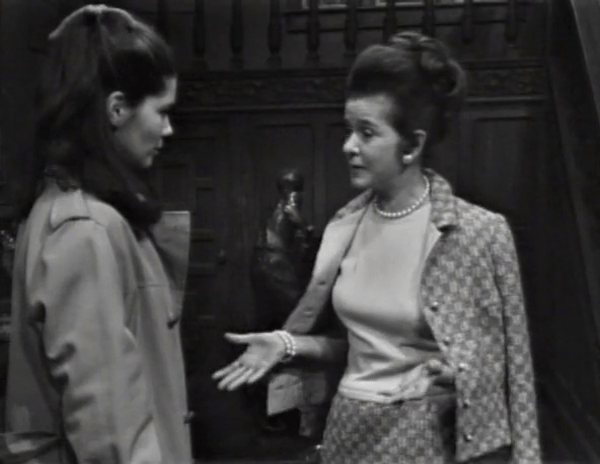
I like this very much, with Elizabeth warning Vicky that her future can be derailed by a fixation on her past. The contentious relationship of past and future is one of the tentpole themes of Dark Shadows throughout its entire run. In this period of the show, you can see it in Vicky’s search, in Burke’s scorched earth vendetta, in Carolyn’s desire to escape the heavy burden of her ancestral home, and most significantly in Liz’s 18-year isolation in the great house.

It’s a great dichotomy, especially given Liz’s new role as Vicky’s surrogate mother. It’s been discussed before how Joe dreads the thought of Carolyn never being able to escape Collinwood and ending up growing old alone in it just like her mother. But now Liz herself expresses similar concerns for Victoria.
The past isn’t any one singular thing. Vicky thinks it holds the answers to everything. But it could also trap her, completely robbing her of her future. And isn’t having a future just as, if not more important than remembering your past?
Welcome to the driving question of Dark Shadows. I’m not even kidding. It’s the most consistent theme of the show, rivaled only by ‘revenge is bad’.
Piling on the nice moments (because Marmorstein wants me to forget “What’s happening to him? Where can he be?” very badly, I think), Vicky takes issue with Liz’s self-deprecation.

“My strength? You think I have strength?”
Wait, Elizabeth Collins-Stoddard doesn’t believe she’s a strong person? Was she watching the last episode? The one where she swore to fight Burke to the point of ruin just to set a good example for the kids? The new writer’s been here one day and we’re already stacking on continuity errors.
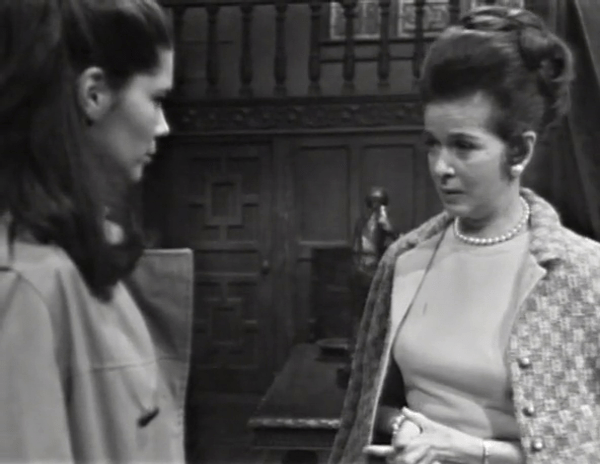
Ah, a classic Marmorstein-ism. Some puffy dialogue that sounds profound but really means nothing. He’s excellent at it.
Regardless, great scene all around. Marmorstein writes Elizabeth as a warm and human character without implying she’s weak and stupid like…er…certain other writers we’ve had on this program.
Elizabeth and Vicky promptly realize that David never showed up for lunch. This would be the third time in as many days when he’s mysteriously vanished into the woods with no good explanation, but somehow neither woman thinks it’s anything stranger than another of his trips to the Old House. Victoria offers to go and fetch him back, since she has time before her bus leaves.
That marks the first mention of the Collinsport bus line, which gets a bit more mileage as we head into the last pre-Barnabas story. I don’t know why Vicky isn’t taking a train to Bangor. She got here on one after all. Even better, you’d think that since this was Frank’s big idea, he’d give her a lift and maybe treat her to dinner when they got there, but that would be the upstanding thing to do.

Yay, corporal punishment. But at the same time, I guess it’s nice that Vicky’s learning to be assertive with the kid. There’s only so many times you can let a nine-year-old try to kill you before he begins calling the shots.
Vicky takes off, pausing to leave her suitcase in that disused nook off to the right of the front doors, seen up close for the first time.

Obviously, the camera lingering there tells us the placement of that suitcase will be important eventually. And, given where this all appears to be going, it’s not much of a mystery how it’ll be important. That’s the magic of a Marmorstein episode. You can see how it’s all gonna end halfway through, so you can switch off the TV and go to the shops for the rest of the half-hour.
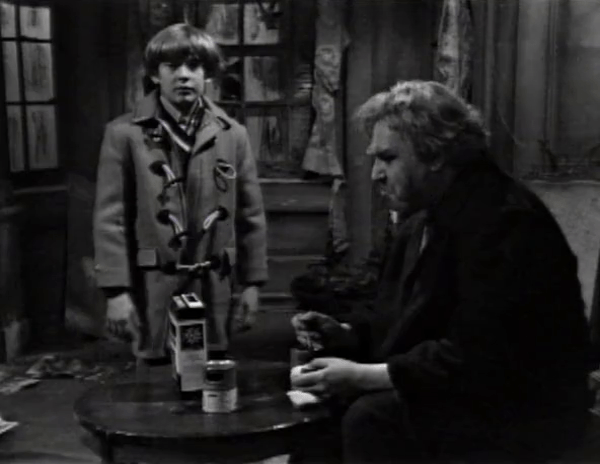
Matthew says as he eats out of a can of…I don’t know. Dog food?
David proceeds to lean into his new role as Matthew’s life coach.
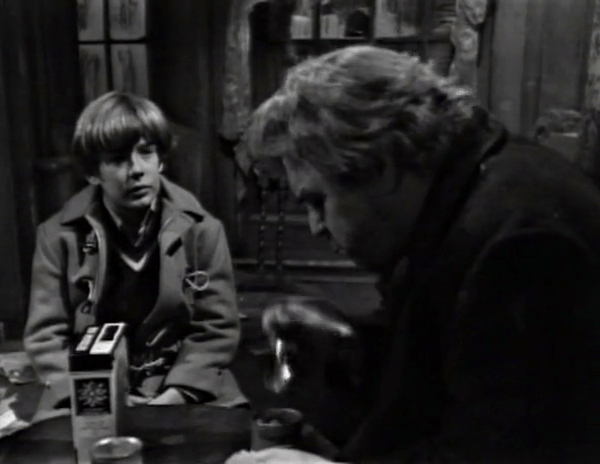
I’m sure that logic holds. It’s not like David’s always coming here and people are always going out to look for him at this exact spot because they know he likes it so much.
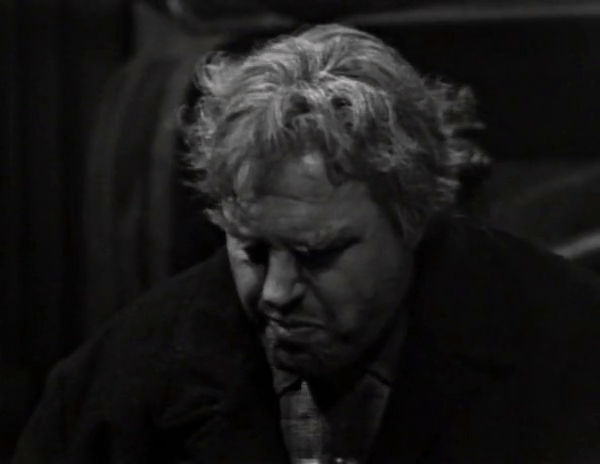
This is as good a time as any to remind you that Thayer David is an excellent performer. His character has metamorphized three times since he started on this show and he’s handled each rotation like it was nothing. This is what used to be called being a professional, and it’s a good thing Dark Shadows is stuffed to the gills with them, or else we’d be in some serious trouble.
Matthew confides in David that there’s a spot in the Old House that ensures Matthew will never be found. We know he’s talking about the hidden room behind the bookcase. David, naturally curious and believing he knows everything there is to know about the place, wonders what the secret is.
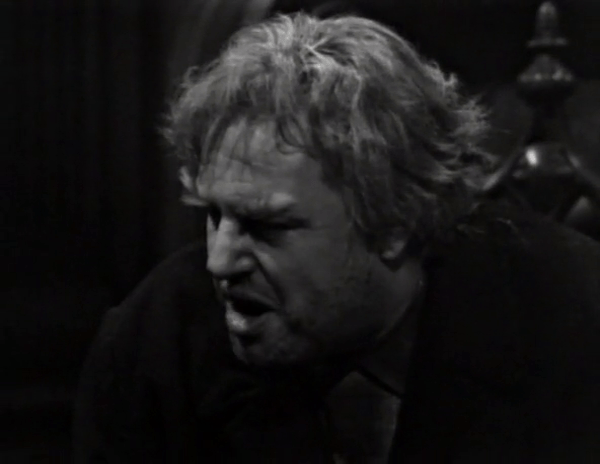
He’s a natural. You almost forgot Matthew is out of his mind. He has such a gentle, easygoing manner with the child. You also end up forgetting that it’s different from the curt, servant-to-young-master manner of all Matthew’s previous scenes with David. Thayer David saw the pivot in how the character was to be portrayed, shrugged, and jumped into it.
And you believe every second.

At which point, David suggests raiding his father’s liquor cabinet, an idea that Matthew apparently sees no problem with.
I also end up wondering what is supposed to be done with the silverware David brought Matthew. Is he going to bring it back home to clean it? Is Matthew gonna hold onto that spoon he was using to eat the dog food? Is it just gonna sit on a shelf in the secret room getting crusty and gross indefinitely?
At this point, the fellows hear Vicky calling for David and quickly make to hide.
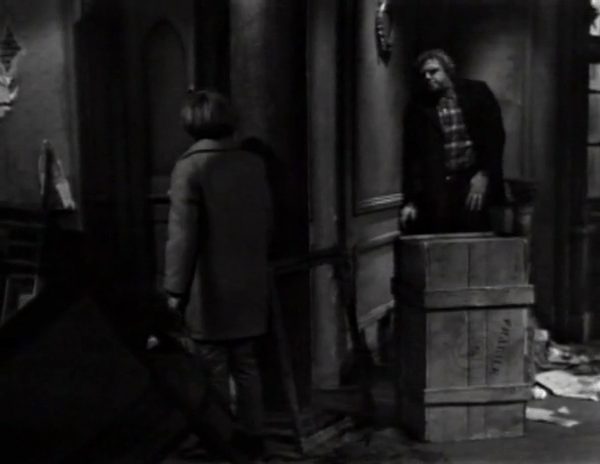
David claims he was simply searching for ghosts and, because he is David, Vicky has no reason to doubt this. I can’t even be mad at her this time.
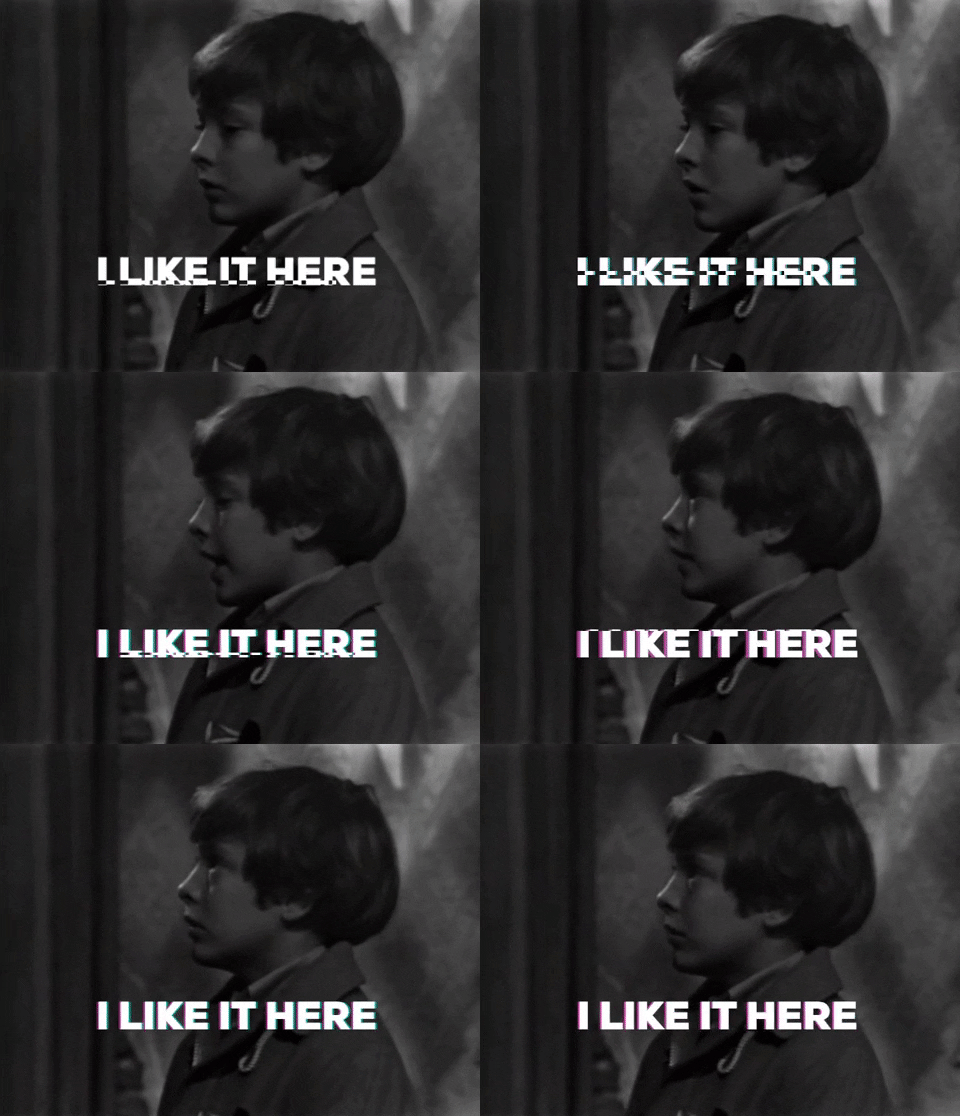
We get another Marmorstein original: peculiarly manufactured tension, coming in when Vicky notices a crust of bread lying on the floor, left over from David and Matthew’s meal. David executes a smooth recovery, claiming he was simply eating it himself.
Vicky bends down to investigate the mess…
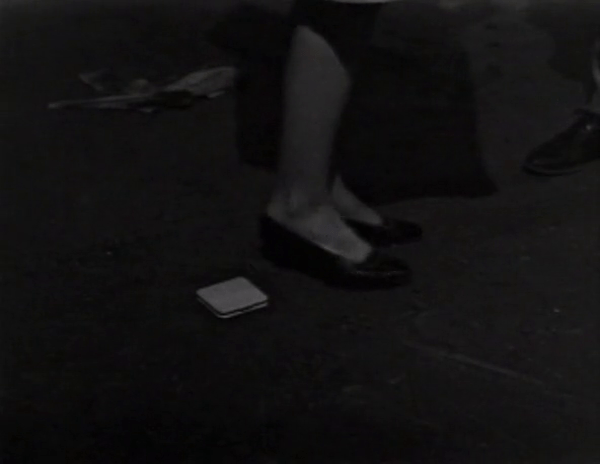
And, in so doing, drops her wallet. Probably best not to think how bending slightly at the waist caused her wallet to fall out of her coat pocket. It’s one of those actions best understood in the context of folklore: like Sleeping Beauty’s enchanted spinning wheel and the Tree of Knowledge of Good and Evil.
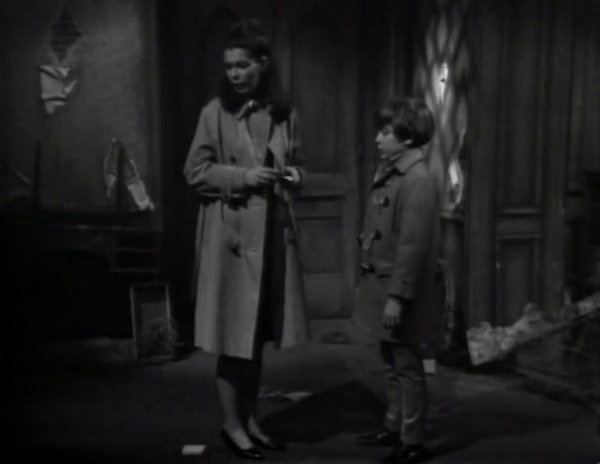
I like that Vicky is very concerned about the potential for an ant infestation at the moldering ruin in the woods. I think it speaks a lot as to her sensibilities.
David takes advantage of this statement however to cannily talk about all the rats that will no doubt be lurking around here after dark.
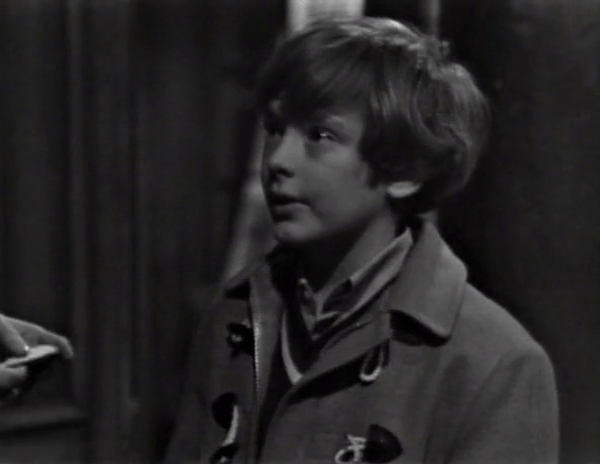
He’s adorable.
So Vicky, sufficiently cowed, ushers David out of the house. He makes sure to linger long enough for a big old bellow…

Mal was doing so well having me believe that Vicky wouldn’t get suspicious and then he has to go out of his way and have David send out a big blaring clarion that there is somebody else in this room and he is making arrangements to meet with him later.
But it’s fine, because Vicky doesn’t notice. Maybe she thinks he’s talking to the ghosts.
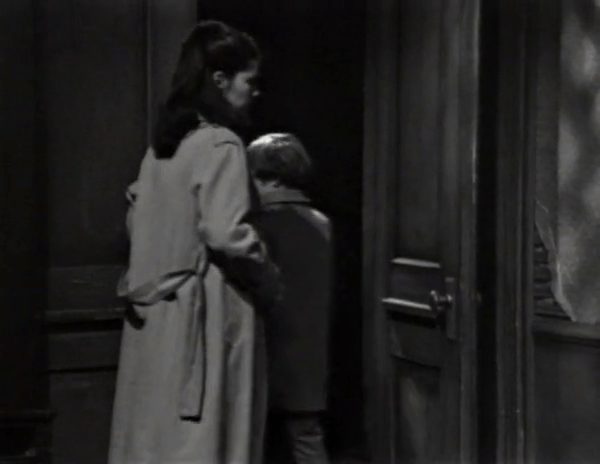
Eventually, they’ll realize this set is used too often for there to be no dressing outside the door. Eventually, but not today.
And then Allegedly Smarter Than He Looks Criminal Mastermind Matthew Morgan walks over to Vicky’s dropped wallet and picks it up.
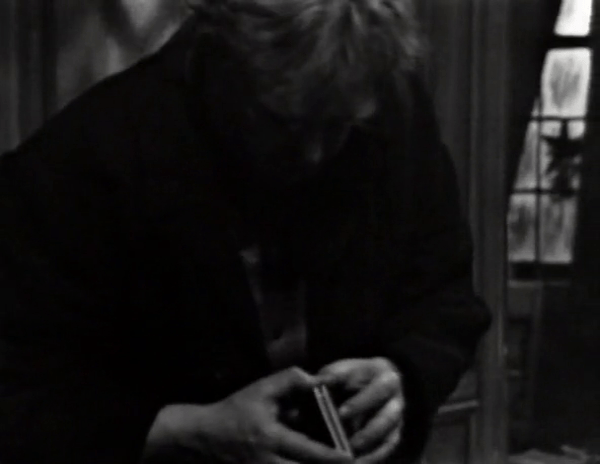
It’s possible Matthew figured he could use the cash in her wallet for when he inevitably has to leave the Old House. But you’d think he’d consider she’d notice it was gone, especially since she kept loudly talking about how she’s taking a trip tonight and will presumably need that wallet. Indeed, it isn’t important for the plot that Matthew take the wallet, only that Vicky leave it behind.
Vicky and David return to Collinwood as Liz gets off the phone with an offscreen Sheriff Patterson, who gives her a non-update on the manhunt for Matthew. Liz proceeds to exposit to them.

All the other states? Am I to understand there is currently an all-points out for Matthew in Honolulu?
I do like this pleasant fantasy that the police would go this hard to find one escaped murderer. Life was either simpler in 1966, which we all know was absolutely not true, or general audiences were more primed to believe in comforting fictions about society’s institutions.
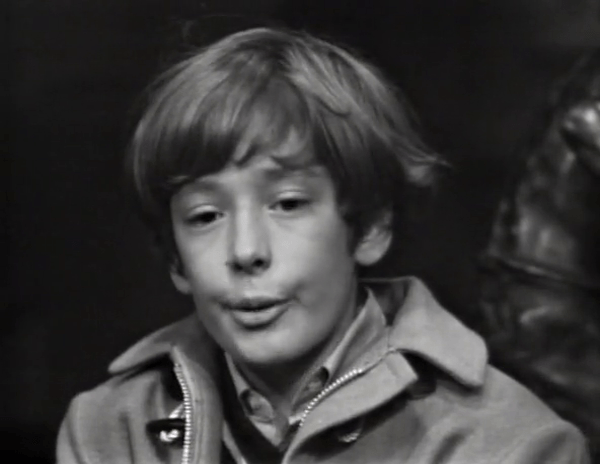
David proceeds to explain that he believes Matthew is cleverer than they give him credit for, and also that maybe he has “friends helping him” and that they may be “hiding him someplace”.

Somehow, nobody thinks this is more than idle chat, but this does give Elizabeth another window to bemoan how sorry she feels for Matthew. Which could be an indication of how these peoples’ preconceived biases about the people they feel are subordinate to them end up blinding them to serious and grave truths about what’s actually going on.
Or it could just be fictional characters being oblivious for the sake of the plot. Obviously, this isn’t a Marmorstein original, but you might as well have a good idea of how the next few months are gonna go. At least Sproat has some indication of how to move a story along.

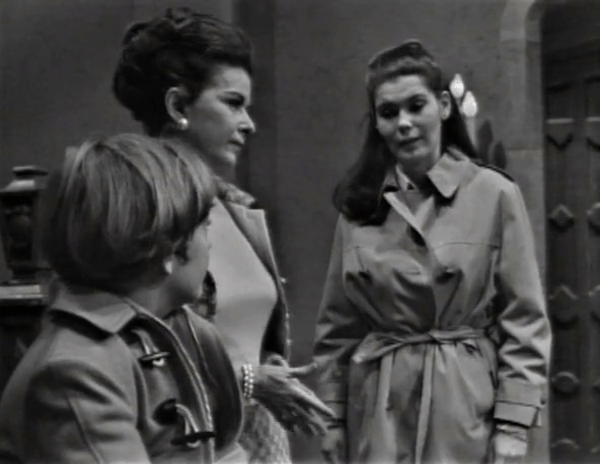
At which point Vicky, get this, notices her wallet is missing. To her credit, she abandons the playbook of the first couple of months and does not accuse David of robbing her.
David, ever helpful, suggests she lost the wallet climbing over “the old fence” which must be a sort of accessory attachment to the “Old House”, alongside the “Old Barn” and the “Old Abattoir Supply Warehouse”.
It’s important to note that David honestly doesn’t seem to understand that Vicky may have lost her wallet at the Old House. Which is fair, because the means by which the wallet did fall out of her pocket continues to defy explanation.
So, Vicky takes off to find the wallet before her bus leaves, and you already get an idea of where the episode is going to end, so there’s no real point getting there anytime soon.
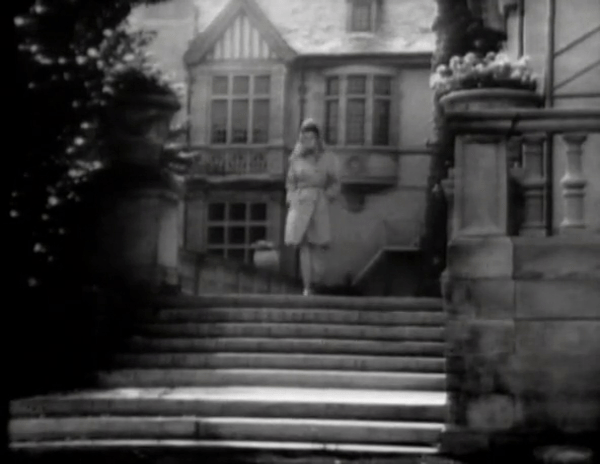
Act IV opens with Liz scolding David for causing Vicky trouble since she only lost the wallet going out to bring his wayward self back home.
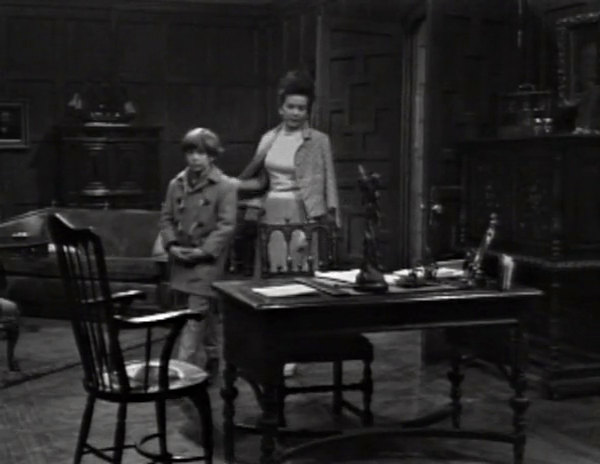
Themes! This is what I meant by Marmorstein’s first episode being pretty decent. Not because of anything that happens in it, but because there’s a more playwrighterly discussion of themes. We saw it with Vicky and Liz’s talk about the past, and now we see Matthew and Liz both reminding David of the responsibilities he has.
So, again, David is positioned as the centerpiece of a moral lesson. A very macabre moral lesson. I’m not sure if that Jesus play Mal wrote had anything to do with this, but I’m sure it couldn’t have hurt.
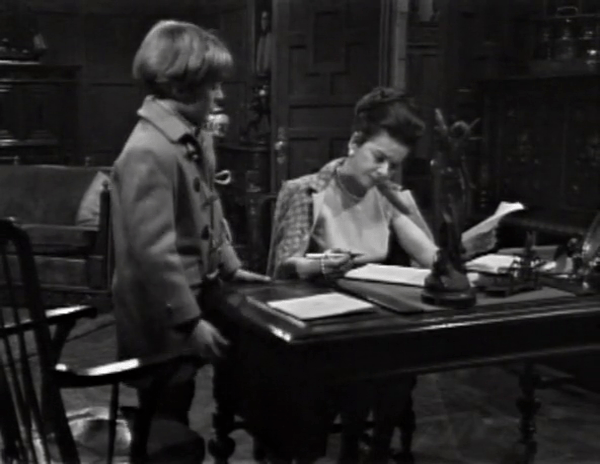
Besides being a very strange thing to say to a child, this also doubles as a deep dive back to David’s long-standing conflict between the Collinses and Burke Devlin. Indeed, in that episode, it was Matthew himself who noted to David that loyalty to family (especially his Aunt Elizabeth) must always come first.
Liz tells David that you’re supposed to be loyal to people who love you. But obviously it isn’t as easy as all that. Liz might believe it is, because her love is limited only to members of her family. She never leaves the house, it’s not like she has any potential conflicts of the heart to deal with.
Poor David isn’t sure anyone loves him.
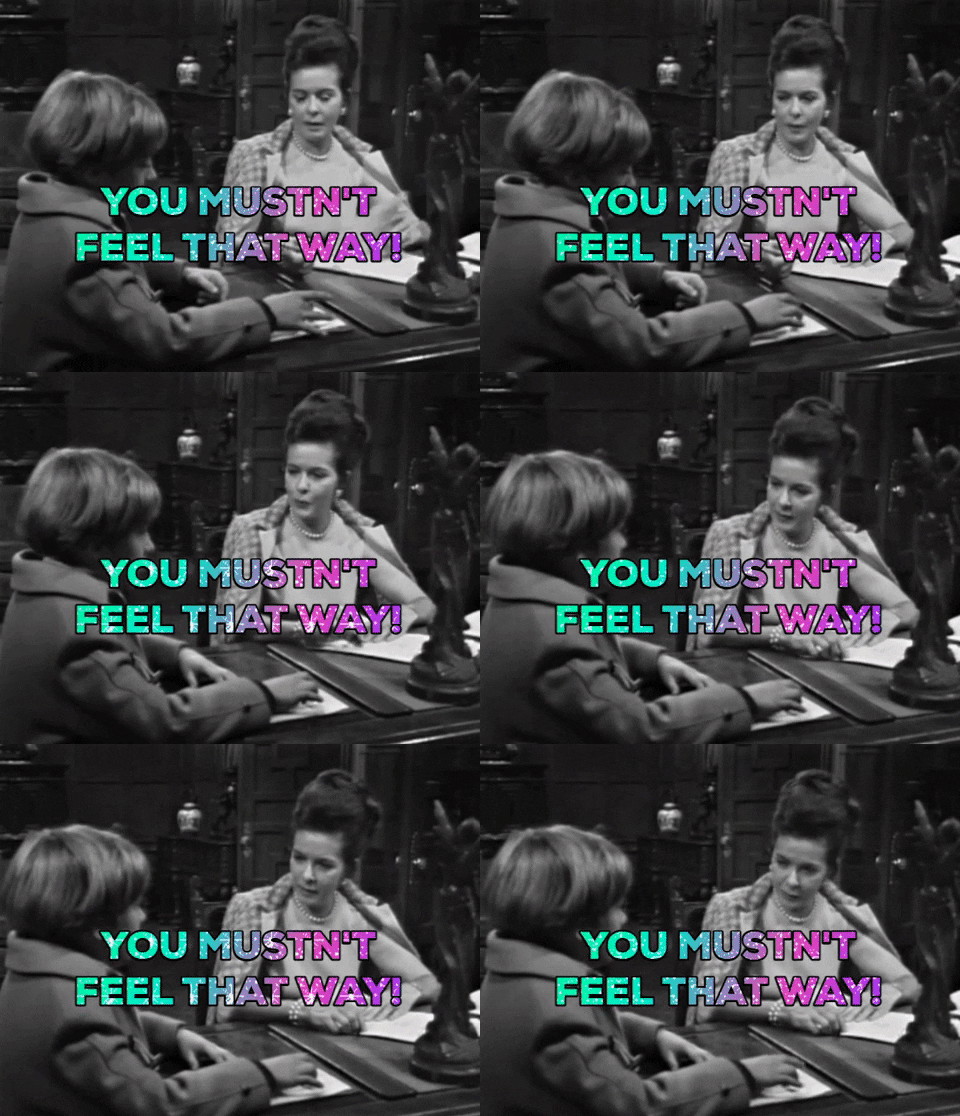
In what really is one of the sweetest moments of the first year, Liz tells David she loves him very much. Indeed, she’s the only member of the family who does seem to unconditionally love him, so is it any wonder he currently thinks nothing of aiding and abetting a fugitive murderer?

Reminder that David is only helping Matthew because he still wants to believe his father is the real murderer. Roger has never shown him any love, so why should David return the favor?

Which is a lovely way of looking at things, but we can’t all be as organized. Obviously, David is wrong to trust Matthew. Is he wrong to trust Burke? That one is harder. Likewise, even if Roger is innocent, does that mean David owes him anything after all the harm his father has done to him and even his mother? These are multilayered questions. A playwright’s questions.
Mind you, the writer Mal replaced was a playwright too, but I don’t think he had any Jesus teleplays under his belt.
Elizabeth loses a great deal of points by saying David has to give Roger a chance, as if they haven’t been around each other for the kid’s entire life. I’m not sure in what world that argument makes any sense.

And we’re back.
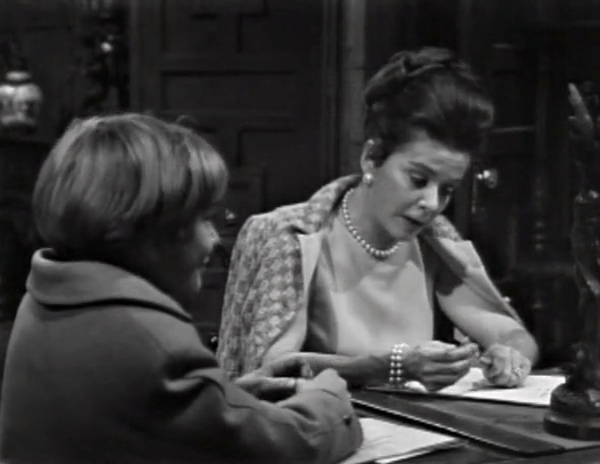
I’m sure the Nazis thought the same thing, Liz.
Which raises the question…maybe David is loyal to Matthew because he believe they have mistreatment by his father in common? He’s wrong, of course, but it makes all his actions considerably sadder and, therefore, more appropriate.

How long until David’s conversion?
Anyway, it’s a great scene. This nine-year-old child holds his own against a bona fide movie star and they both have a great time.
Anyway, Vicky goes to the Old House and finds, not her wallet, but something else.
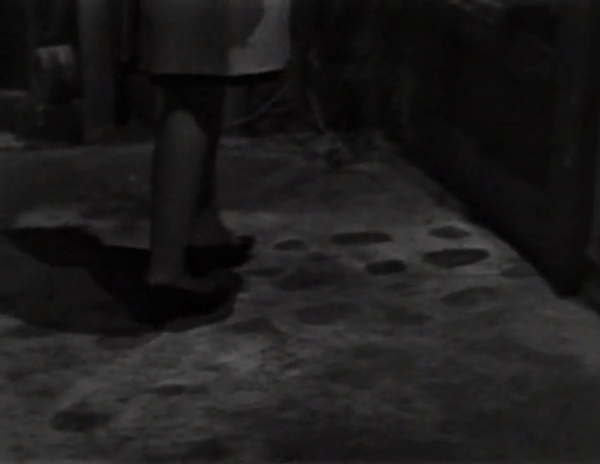
So, Vicky finds these inexplicably clear footprints and follows them to the bookcase which we know to conceal the secret room. But before she can make any further discoveries…

We now return to our regularly schedule Peril.
Behind the Scenes Shenanigans
Malcolm Marmorstein joins the writing team as Francis Swann’s replacement and Ron Sproat’s cowriter. For the rest of 1966 into the Barnabas era, the two writers will generally each write half-a-week blocks of episodes, as opposed to the full week blocks done by Swann and Art Wallace.
This Day in History- Friday, December 1, 1966
Burmese diplomat U Thant agrees to a second term as U.N Secretary General. He will serve in this capacity until 1971, so essentially the entire run of Dark Shadows, making him Barnabas Collins’s U.N. Secretary General.
Lebanese Prime Minister Abdallah El-Yafi resigns. He will be replaced next week by Rashid Karami.
British Prime Minister Harold Wilson and Rhodesian Prime Minister Ian Smith negotiate post-colonial demands. The Rhodesians reject the British “Tiger Pact”, which would’ve meant Rhodesia remain a British colony.
 Kooks of Collinwood
One thought on “Will the Real Matthew Morgan Please Stand Up?”