
THE TIME: November 28, 1966
THE PLACE: Jumble sale at the Church of St. Tintin on the Vine, Anytown USA.
THE PRINCIPLES: Eudora Pecksniff, robust in years, lover of surprises, and Eugenia Spendthrift, reticent in years, preferer of normalities
Eudora: Oh, Eugenia, I do love the charitable works.
Eugenia: With that hat you’re doffing, I believe it.
Eudora: Oh, but I do hope I can get back home in time for my program!
Eugenia: I thought they’d taken that fool show off the tube!
Eudora: Oh, no, no! That was just for the football! See, they don’t play my programs when there are men watching.
Eugenia: They oughtn’t play it where anyone can watch.
Eudora: Well, today they’re going to bring the show back! And now we’re going to learn how it all happened!
Eugenia: Drink, I suppose. Those Hollywood types…
Eudora: No, not the show! The murder!
Eugenia: Oh, that.
Eudora: I did say they’d figure it out by Christmas! And, oh Eugenia, I must say, it was a real whizzbang.
Eugenia: Quiet, you old horse! There are children about!
Eudora: I’m sorry, I get excited.
Eugenia: You told me months ago, you’d figured out who the murderer was.
Eudora: Oh, I did! They made it quite simple, you see, because he was the man who had the metal pen the night of the deed!
Eugenia: I thought they were done with the metal piece!
Eudora: No, no! That was a different metal piece! This was a pen! Why a sterling silver filigreed…
Eugenia: Quiet, you fanatic, people are staring.
Eudora: I’m sorry, dear, I get excited. Well, anyway, we all thought that the murderer was the man with the pen. Indeed, I bet Georgine Fitzgibbon 50 cents!
Eugenia: Who did that old bat think did it?
Eudora: Oh, she thought it was just an accident and the man fell into the ocean and died and all this is Much Ado About Nothing!
Eugenia: Tripe. Tripe, I say.
Eudora: Well, as it happens, we were both wrong, so nobody gets 50 cents.
Eugenia: Well, then who was it?
Eudora: The big gorilla man! But I’ve no idea how, why, or wherefore, and that’s why I simply must get home before that Dickie Clark goes off the air!
____________________________________________________________________________
For the last five months, Dark Shadows has been betting the farm on a murder mystery story to save flagging ratings. As an experiment, this has been very hit or miss. Indeed, the biggest ratings spike during the entire storyline occurred with the arrival of the ghost of Josette Collins in Episode 70, and that had nothing to do with the mystery story.
It doesn’t help that the internal narrative of this storyline hasn’t been very coherent. Who can blame poor Eudora for putting 50 cents on the identity of the killer? For a long time, it didn’t even feel like they wanted there to be any mystery about who murdered Bill Malloy, with Roger Collins spending the entirety of September and October 1966 all but turning to the camera and saying “I’m a nefarious man”. It seemed more like a race for the other characters to get the idea.
And yet here we are, at the end of November sweeps, and the heroine is facing off against the man who has tried to kill her three times in as many nights.
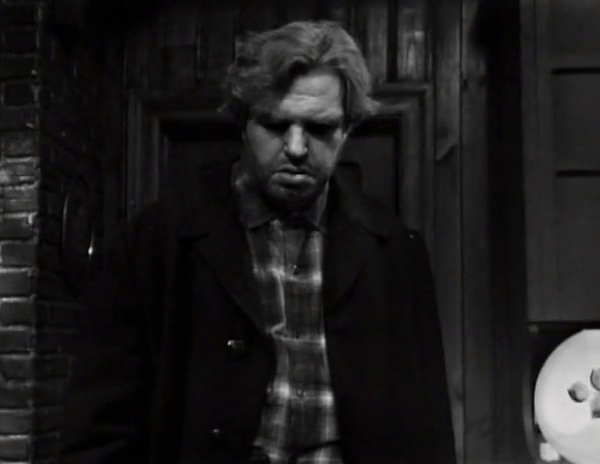
I hinted at this in my post for the last episode, but this is gonna be a heavy post on what we might as well call “procedure”. We’re talking storytelling decisions, production decisions, and even genre influences.
Because, no, you haven’t been hallucinating. This story was set up in a very obvious way for about a month and then it just decided to change it’s mind. And that’s how we have Victoria Winters cowering in Matthew’s cozy cottage after he has, completely unprompted, exclaimed that he “had to” kill Bill Malloy.
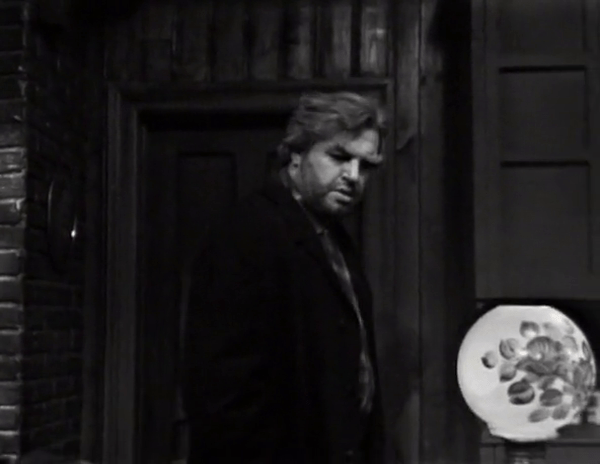
No, but I guess it’s good that you did.

Let’s begin at the beginning. Matthew is gonna explain things to Vicky, and I will explain them to you as he does, but before we get into that, I will direct your attention to a little document called Shadows on the Wall, written by a fellow you might remember: Art Wallace, this show’s original writer, who departed at the end of October.
Well, I can’t strictly direct your attention to Shadows on the Wall because there do not seem to be any copies of the Dark Shadows series bible currently circulating the market. And who can blame the lucky owners? Those things are expensive.
Thankfully, there are various DS sources that have provided a fair enough accounting of major developments within the bible, especially with regard for Wallace’s original plan for the first 26 weeks, splitting the first half-year of the show into two major story arcs.
As you may already have understood, this ‘two major story arcs’ thing didn’t exactly persist. We’ll dispense with the second 13-week arc for now (something resembling it will only become relevant well beyond 13 weeks hence) and concentrate on the first.

Sure you can. Indeed, I’ll bet there isn’t a single soul on this set who has the barest recollection of where this show was supposed to go circa the beginning of September.
As envisaged by Art Wallace, Dark Shadows’ first major arc would’ve been concerned primarily with the return of Burke Devlin, seeking vengeance for the manslaughter charge that sent him to prison.
Yes, that was actually supposed to be a storyline and not just a loosely connected series of poorly explained vignettes.
Indeed, things were fairly streamlined in this vision of the narrative. Something resembling the suppository saga is included as an early challenge Victoria Winters is confronted with, but it’s quite clear that it wasn’t intended to take up an entire month of storytelling. We’ve discussed before that the most likely reason the story was prolonged that long was so they could cast two roles that had been vacated early in that storyline: Sam Evans and Matthew Morgan.

Tiny aside: there was no character corresponding to Matthew in Wallace’s bible. In fact, he was the earliest such character to exist, being introduced at the start of the second week. It would be 61 episodes before the next regular character not envisioned by Wallace (Mrs. Johnson) would show up. Well, unless you count Sheriff Patterson being introduced as a replacement for the bible-attested Constable Carter. That narrows the gap to 48 episodes, which is still pretty impressive.
So, who came up with Matthew?
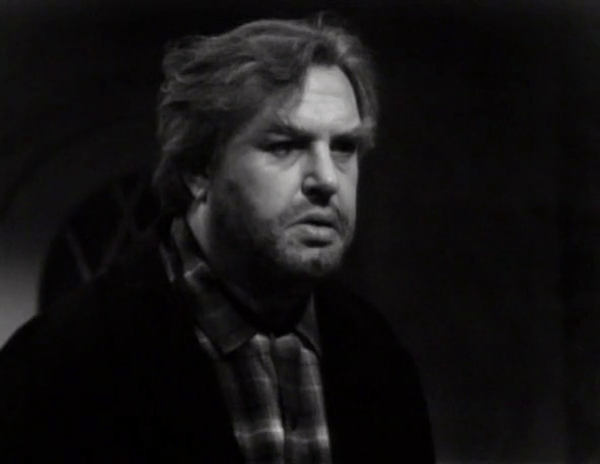
Just stick a big ol’ pin in that for now. We’ll return to it. For now, we’re back in August 1966. The prolonged suppository saga has finally whimpered to its ignominious end and the necessary characters have gotten new faces. The woeful Mark Allen has been replaced by the grandiose, sweeping and delightfully charming David Ford, who spends the next few weeks dominating every scene he’s in as the show suddenly remembers it has a story to tell. Meanwhile, the competent, but unfortunate George Mitchell has been replaced by Harvard-educated thespian Thayer David in particularly ghoulish makeup. While both actors transform their characters to the point they’re completely unrecognizable, it seems plain that one transformation was caused purely by an actor’s unique vision. The other was a calculated behind-the-scenes decision.

So, stick an extra pin in Matthew. This is great, all these pins, and it’ll be a year before we even have voodoo dolls on this show.
So, yes, once the suppository story had wrapped and the very vital character of Sam had been recast, Wallace was able to progress with his original vision for the Burke Devlin arc. You recall that Vicky shortly after began making plans to have dinner at the Evans house, at her new friend Maggie’s invitation. Roger kept determinedly trying to keep her from doing this, because he feared the blubbery alcoholic Sam would end up letting slip about his part in the manslaughter case for which Burke was sent to prison 10 years ago.
As we’ve already discussed, there was no Murder of Bill Malloy in Wallace’s bible. At the same time, it’s hard to see what Malloy was supposed to be used for. Possibly as an eventual love interest for Elizabeth, but if there are any deeper bits on Malloy than just a brief character synopsis in that bible, I haven’t been able to find it.
Instead, we bypass the whodunit stuff and go right to Vicky’s dinner with Sam and Maggie which, had Wallace had his way, may even have happened the very next in-universe night from the suppository saga, a night which instead became the last one Malloy had alive, with the pivotal dinner episode not happening for six weeks after the suppository saga’s climax in Episode 30, and two weeks after Vicky and Carolyn saw Malloy’s body at the foot of Widows’ Hill in Episode 50.

I’m not sure that’s how they said it, exactly, but whatever, back to the story.
We know what happened in Episode 60. Vicky found the painting of a woman who looked just like her, a woman named Betty Hanscom who, it turned out, had died some years before Vicky was even born. While this was a frustrating narrative dead-end in and of itself, Sam also told Vicky and Maggie the full story of the manslaughter case, spelling it out on screen for the first time. Then Burke showed up and began making wild accusations, publicly suggesting for the first time that Sam had something to do with his conviction, a theory he only has thanks to the efforts Bill Malloy had been making just before his sudden disappearance and subsequent death two nights previously.
But, in Wallace’s original vision, Malloy never got himself involved in helping Burke clear his name, so Burke had no way of knowing Sam’s involvement…
Until Vicky Winters hears Sam rambling about the whole thing while she’s at his house.
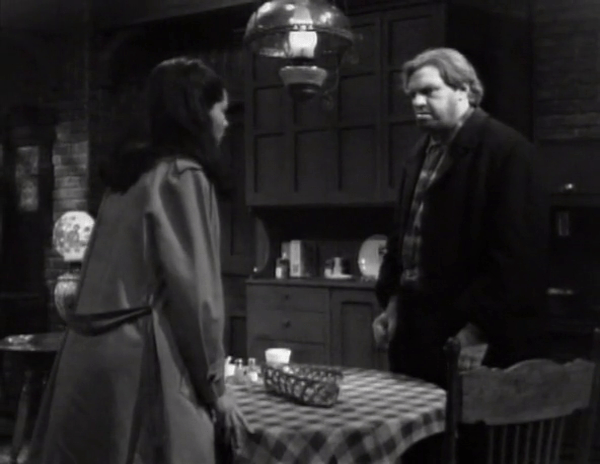
In case you’re wondering, I’ve been writing over the first two minutes of the episode. They really are debating the pros and cons of Matthew killing Victoria and hiding her body. Just in case you were worried there was some high drama going on.
So, yeah, Vicky is clued in to Sam’s involvement in the manslaughter case based on “drunk ramblings”. This sounds like one of those ideas I’d put in an outline for a project, with the unspoken understanding that this plot detail is difficult for me and maybe I’ll figure out a better way to address it when I get to it in my draft. So I won’t be too hard on Wallace, assuming that, if he’d had his way, he may have derived a more elegant development for this significant story beat.
I should also point out that these ramblings do nothing to incriminate Roger Collins. But Roger, just like in the finished version (see his “Florida strategy”), thinks Sam has and, therefore, that Vicky knows something. In Episode 62, Roger responds to this (as well as increasing fears that Vicky may be able to crush the alibi he’s provided for the time of Malloy’s death) by trying to convince Vicky to leave. This doesn’t work, but it’s alright, because later that same night Vicky looks Burke in the face and tells him she believes Roger left Collinwood when he said he did, thereby providing Roger a pretty good alibi that keeps him off the hot seat for several weeks until that stupid pen turned up and dared to make the show interesting again.
In the bible, Roger handles his suspicions in a more…direct way.

She’s right. None of us did. Indeed, Art Wallace hadn’t even thought of Matthew back in preproduction. If any member of the cast was meant to have murder in his heart, it was Roger Collins.
So, once Roger gets the (inaccurate) idea that Vicky now believes he was responsible for the manslaughter for which Burke was sent to prison, he hauls her out onto the grounds and…blurts to her that he’s guilty.
So, yes, it’s kinda like what Matthew did last episode. Just switch the crimes around and pick a more dramatic backdrop.
And why have this dramatic altercation occur on the Collins grounds rather than in the great house? Why, so Roger can attempt to hurl Vicky off Widows’ Hill!
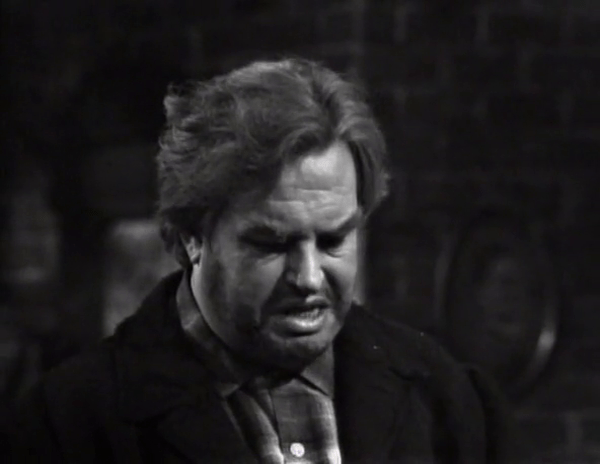
The thing is, they’re writing Matthew like a concussed dancing bear, but Ron Sproat is still intent on making him somewhat humane. Like a child who realizes they’ve done something wrong and is ashamed. There doesn’t seem to be any of this apparent in the original characterization of Roger Collins, who in his bloodless fury attempts to dispatch with the girl governess the same way Josette Collins took her own life 130 years before.
Roger’s attempts are foiled when David (who is just crouching in the bushes for some reason, I guess) gives a cry. Roger is startled and it ends up being he who plummets to his death on the rocks at the foot of Widows’ Hill.
Following this, presumably, Vicky is able to tell Burke the truth and clear his name. I think it’s kind of odd that Burke is so uninvolved in this version of the storyline about his revenge, but we’ll just chalk that up to first draft problems. I’m also not sure what this does to the relationship between Vicky and David; if maybe he cried out to help Vicky get away from the father he hates so much, and if this incident was supposed to be the thing that began improving things between him and her. It also seems much more likely in the bible than in the finished product that David would’ve ended up being Burke’s son rather than Roger’s, thanks to Rog’s supervillain status.
But, as we know, things haven’t quite turned out that way on screen.
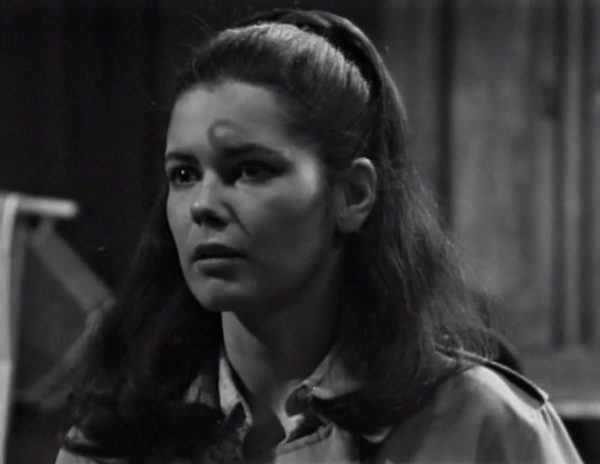
Yeah. What about him?
So, there are multiple factors at play here, with many moving parts. I personally think the final showdown between Vicky and Roger on Widows’ Hill would’ve been a particularly contrived way to end the show’s first major storyline, so I’m glad they ended up not pursuing it. Instead, the plan seemed to be to transform it to fit a new context, adding more intrigue and danger to the narrative and creating a more recent violent crime to bring the threat of violence much closer to home than the 10-year-old accidental death of some man they mentioned once and then never again.
Enter the Murder of Bill Malloy, the saga that was supposed to save the show from cancellation 10 weeks into that first 13-week order. There was already no hope of the Burke Devlin drama concluding within those first 13 weeks anyway, not when the hunt for Nu!Sam and Nu!Matthew had taken up approximately a month.
And, as I’ve remarked, the story began with great promise. The feeling of some danger ‘Slouching Toward Collinsport’ the night of Malloy’s death, the idea that pieces were beginning to fall into place. Some commentators have thought it out of character for Malloy, the ultimate Collins loyalist, to offer to help Burke throw Roger into prison, but I think it makes perfect sense. Malloy was loyal to the Collinses, especially Elizabeth. He would do anything to protect her. His quest was compelling television, and Frank Schofield sold the hell out of it, making for a stunning two week stretch where he was basically the main character of the show.
Everything was done very deliberately as they set events in motion for the coming murder mystery drama. Malloy’s fiery altercations with Sam and Roger, the mysterious meeting where Malloy promised Burke he’d reveal the “hole card” that would help them cook Roger’s goose, Vicky overhearing a phone call in which Roger asked someone to meet with him, even the business with the silver filigreed fountain pen Roger confiscated from Carolyn, only to discover missing from his own person when he showed up at the meeting.
This was clearly well-thought out. Even the introduction of Francis Swann, a writer with experience in the noir genre, seemed deliberately calculated to help subtly change the tone of the show. Swann, who writes his last episode later this week, seems to be the only Dark Shadows writer to have been deliberately hired because of specific genre-based strengths.
So, we will dispense any illusions about the Murder of Bill Malloy having always been intended to be a “Clueless Mystery”. At the onset, there were quite a few clues, and they all pointed in a definite direction.
Let’s have a rundown, yes? You might remember, for the first month or so of the murder mystery story, I kept a running list of significant times pertaining to the night of Malloy’s death. Here is, I believe, the last one I did (or one of the last; it’s got all the important stuff at least), from Episode 62/The One Where Roger Tried to Send Our Girl to Florida:
- 8:00 – 9:00: Burke sees Malloy at the Blue Whale. Malloy tells him about the meeting and the “hole card” that’ll be waiting there.
- 10:00:
- Malloy sees Roger at Collinwood at around 10:00 to make him go to the meeting. It is apparently a 10-minute trip from Collinwood to the cannery, presumably by car.
- 10:10: Malloy leaves Collinwood and subsequently visits Sam to tell him about the meeting.
- 10:20: Malloy returns home and is observed by Mrs. Johnson.
- 10:30:
- Burke is still at the Blue Whale. He is observed by the bartender and “one or two” other patrons.
- Sam leaves home and heads to the cannery on foot.
- Roger makes a phone call, asking somebody to meet with him. This is observed by Victoria. He will later lie to the sheriff, claiming this call was to the Coast Guard for a “weather report”.
- At about this same time, Malloy is at home. Mrs. Johnson observes him taking a phone call. He departs within the half hour.
- 10:35: Victoria hears the front door slam. It is assumed this is when Roger leaves Collinwood.
- 10:45:
- Burke drives from the Blue Whale to the cannery.
- Presumed time of Malloy’s death, judging by his stopped watch.
- 11:01: By now, Roger, Sam and Burke are all at the cannery for the meeting.
- 11:20: Elizabeth calls Malloy and gets no answer.
- 11:30: Burke goes in search of Malloy, to no avail.
- 12:00: Roger returns to Collinwood. Liz is waiting up for him.

Oh, yeah, I skipped the three minutes it took for Matthew to explain what happened. Don’t worry, we’ll go back to it. I just don’t want us to be stuck in the first act for the entire post. It’s not like there’s much else happening in this episode besides this belabored villain monologue.

You can easily split the saga of Bill Malloy into three acts: procedure/phenomenon/peril. I call them the three Ps.
Everything from the beginning of this story (and, indeed, even its lead up, beginning with Sam blurting incriminating things to Malloy in Episode 40) through to the very end of the first 13 weeks with Episode 65 is very analytical and procedural in its nature.
The biggest testimony to this procedural nature is the above included list of very precise, or as precise as possible, times, which we were provided with (often many times, because they wanted us to remember) to chronicle the movements of the significant players the night of the murder.

We talked a bit about procedurals in last Monday’s slog of an episode. The procedural is called such because it relies on ‘process’. The most popular television procedural is the police procedural, which describes the criminal justice process.
This does not lend itself well to soap operas.
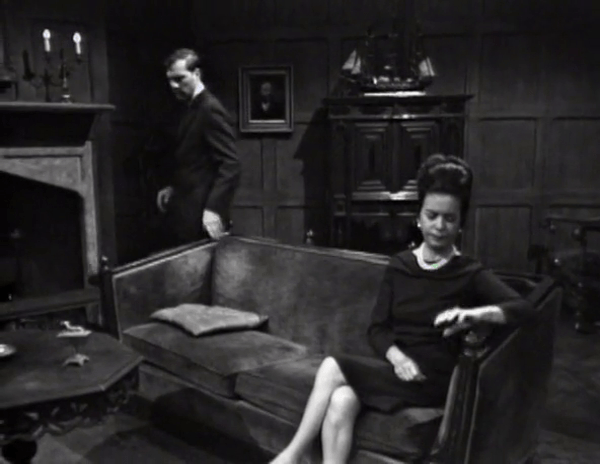
[See, I’m also saving you from more Frank; thank me later.]
Soaps don’t care about process. Process is cold and analytical. Soaps are continued narratives that work best when they describe the hot and bright moments of spontaneity that form between familiar characters. To put it bluntly: a procedural cares about method, but a soap cares about mood. You can craft a foolproof murder mystery, but it’s nothing if the characters aren’t affected in a strong way.
Which has been a consistent problem around here. Everybody liked Bill Malloy, so we’re told. But we don’t really see it. Liz, who was closer to him than anybody else outside Collinwood, was sad when he died, but she wasn’t distraught, and her emotions more quickly pivoted to concern and nervousness that her family may be caught up in his death somehow. Carolyn got a beautiful moment when she was allowed to reflect on Malloy’s death and the dreams he never got to realize, but that was just one scene very early on. As recently as two weeks ago, she was lightly remarking she can’t be sad forever.
Malloy’s death has been a minor inconvenience to these people. Burke only cares about Malloy dying because he was supposed to help him clear his name. Sam only cares because he became a person of interest in the investigation. Maggie only cares because her father is involved. David only cares because the ghosts told him his father killed Malloy and he wants to see his father in handcuffs. Victoria has no reason to care at all, and it’s her goddamn voice that narrates every episode.
The only exception to this rule has been the irrepressible and delightful Mrs. Johnson, who mourns Malloy like a lost husband, and is filled with grief for him and anger at the Collins family for putting him on the path to his demise. She is the only one who regards Malloy as a human who lost his life.
Compare to famous soap opera deaths. When Cassie Newman died on The Young and the Restless, the entire canvas blew up. Every character was affected. Sharon and Nick mourned their daughter. Nick was driven into the arms of Phyllis, who’s son was in large part the reason for Cassie’s death. Everyone had deep, human, conflicted feels about the death of this young girl.
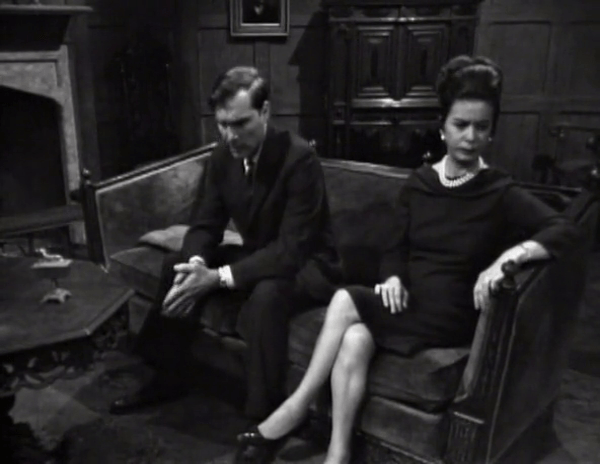
So, that’s one problem. It’s easy to believe Malloy was killed off to increase the presence of danger. By combining his murder with the decade-old manslaughter case, an old threat gains new life and a heightened sense of urgency. Someone was killed to keep Burke from getting his vengeance. That automatically raises the stakes.
But Malloy wasn’t well-integrated on the canvas. He was the most disposable member. He wasn’t romantically paired with anybody, he wasn’t part of either of the core families, and his occupation kept him connected to the Collinses, but also apart from them. So, right away, you lose the biggest factor in investing yourself into a fictional death: emotional investment.
And without that, all you have is process.

And, to be fair, we got lots of juicy process. Patterson showed up like gangbusters one week into the story and immediately began proceeding like nobody’s business. He interrogated the three men at that meeting all in the course of one week, assembling the timeline, gathering alibis and comparing motives, learning from Burke the purpose of the meeting, drawing conclusions from the autopsy and the tide charts to determine the manner of Malloy’s death and narrow down the likeliest point for him to have gone into the sea. This was all done in the one-week span between Malloy’s body washing up in Episode 55 and Vicky visiting the Evanses in Episode 60.
So, how did we go from all that cop action to…
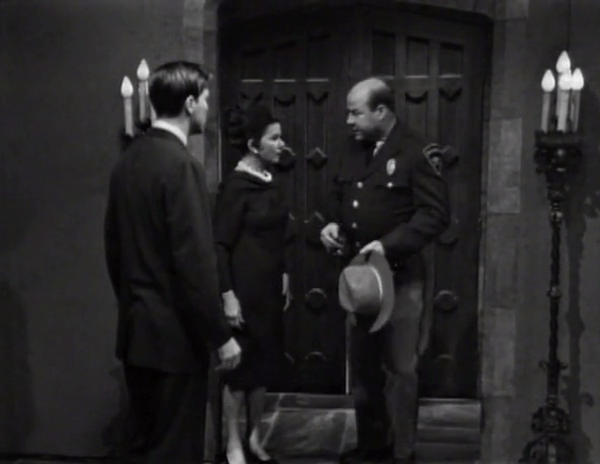
Indeed, why was Patterson so defanged somewhere around, oh…the 70s, let’s say?
Because procedure wasn’t working. Dana Elcar is fun and great. He’s snarky and sharp and is a seasoned professional. But he’s a cop doing cop things on a serialized program that airs five times a week. You can’t sustain that. The procedural may get you 13 22-episode seasons on CBS, but you can’t tell a soap opera that way. You need action and spice. Humans experiencing human emotions. There’s a reason this storyline got stale so fast, despite starting with such promise.

It also didn’t help that this thing very easily could’ve been resolved in an hour-long police procedural episode. It isn’t like the culprit was hard to figure out.
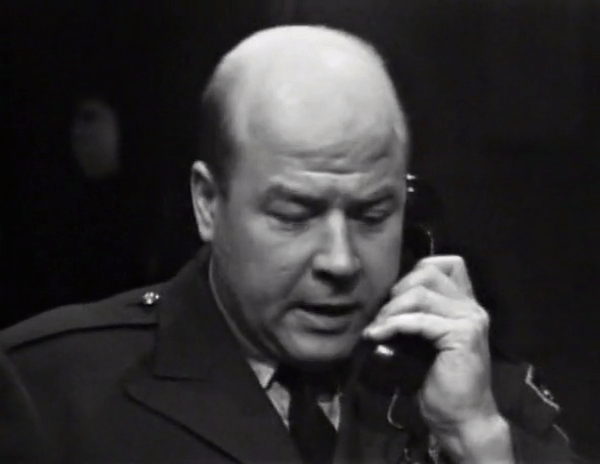
Seriously, who the hell is Chris? What happened to Harry? This is why you don’t get invested in people.
While Patterson calls for all the king’s horses and all the king’s men, let’s talk about how Roger was obviously the murderer.
Which he was. I mean…how couldn’t he be? He had the most obvious motive to want Malloy dead. He had the fuzziest alibi; even Victoria multiple times couldn’t be certain she’d heard him leave at 10:30, which even then wouldn’t completely exonerate him. He notably acted all carefree after arriving at the meeting, despite acting like a pissing wreck before leaving the house, almost as though he’d handled his problem on the way to the cannery. He lost the sterling silver filigreed fountain pen on the way to the meeting and, after Vicky found it, went to extraordinary lengths to get rid of it, knowing it would incriminate him.
For added effect, David’s crystal ball told him Roger killed Malloy before anybody even knew Malloy was dead and I have to believe that counts for something.

You can’t blame Patterson for being confused. It’s like all the facts we were given have been suddenly rendered meaningless.
Consulting the series bible, it seems clear where the synergy was here. It didn’t make any real sense in Wallace’s original vision that Roger would randomly blurt the truth about his complicity in the manslaughter charge to Vicky. But by creating a new threat and upping the stakes, things become more realistic. It’s easy to believe that, instead of being worried Sam said something to Vicky when she had dinner with him, Roger’s panic comes from multiple quarters: Burke investigating Malloy’s murder, Sam wanting to prove his innocence, and the ever-intrepid Victoria always caught in the middle. Roger doesn’t have many organic reasons to be worried about a decade-old secret coming out; but a desperate murder he committed just days ago? That changes everything.
You can imagine the escalation in the episodes following Burke’s visit to Collinwood in Episode 66, the beginning of the 14th week, as Roger becomes increasingly worried about losing Victoria’s support in the investigation. You can imagine (we even saw) him trying increasingly desperate ways to get rid of her.
And then…Carolyn suggests he start being nicer to Vicky and he takes her on a breakfast date to explain to her how fish tubes work.
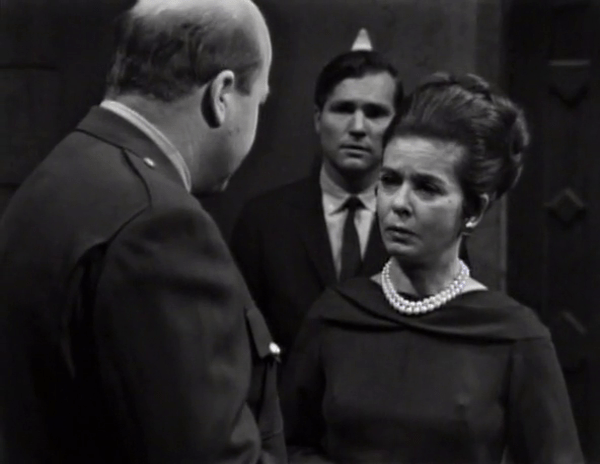
I usually try to synch these snippets with wherever my spiel has taken me, but I’m just pausing here to tell you Liz mentions some barns on the Collins property, so maybe Patterson telling Matthew to resume his work on the “Collins farm” that one time wasn’t a weird blooper. I mean, we’ll later learn they own cows, so…
But anyway.
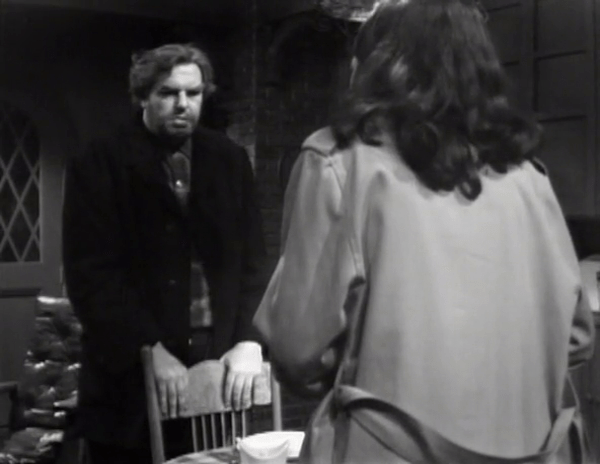
So, you can easily pinpoint where the trajectory of the narrative changed, the point where Roger went from cold-blooded villain, to the drawing room farce character frantically trying to cover his own ass.
The fact of the matter is that Roger Collins is just too much fun. That is to say, Louis Edmonds is just too much fun. Like Dave Ford, Kathryn Leigh Scott, and Clarice Blackburn, Edmonds’s particular strengths as an actor forced the writers to change the character’s direction. Roger was too likeable. As Carolyn once said “he has more charm in one earlobe than all the people in this icky, sticky town”. He’s the type of character you love to hate, the unctuous, grinning snob who you want to see brought down a peg.
But you don’t want him gone. Because he’s funny. And sometimes, you almost feel bad for him. I think the suppository saga was another indicator here. Roger is immediately the least sympathetic member of the family, and yet we spent a month watching him run around with a band-aid on his head because his son tried to kill him. Whatever Roger’s many problems, that’s still rough.
So, at some point in late September – Early October, the gears began shifting behind the scenes. This murder mystery story was supposed to save the show. They had been renewed for another 13 weeks, so that’s a good thing, but the new problem is the guy they’d planned to kill off since before they even started filming is just too good to let go.
If only there was a convenient scapegoat. Someone less charming, less roguish, less attractive and polished. Someone…
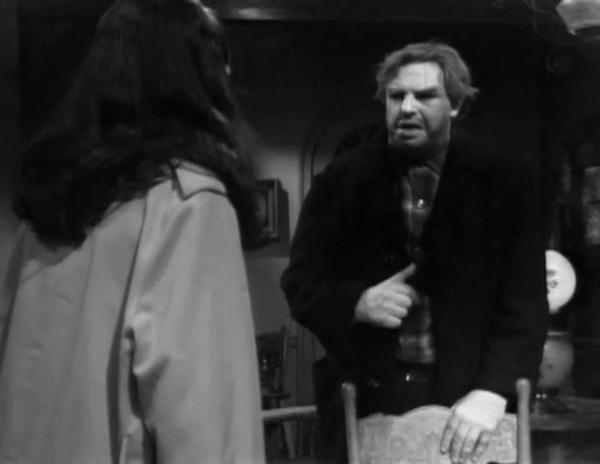
Enter Matty Boy.
But wait! You exclaim, Matthew was introduced long before Malloy was dead! He was even recast well before you claim they changed the identity of the murderer!
So now we get to return to those big pins we stuck in Matthew before. Let’s double back.
I can’t be certain the original reason for creating Matthew Morgan, a character who, again, was not part of Wallace’s original vision and yet was introduced as early as the sixth episode. I think the explanation could be fairly mundane: Collinwood is a big house, and it has to have at least one servant, even if Liz dismissed most of the rest of the staff 18 years ago.
Curtis and Wallace’s original idea may have been to use Matthew later, around the time of the elusive second 13-week arc outlined in the bible, when greater attention would’ve been paid to the mystery of Elizabeth’s past and the events 18 years ago, now that the events of 10 years ago had finally been properly elucidated. This would explain his slavish loyalty and devotion to Elizabeth, and the timing of his hiring in the wake of her husband’s disappearance.
But plans change.
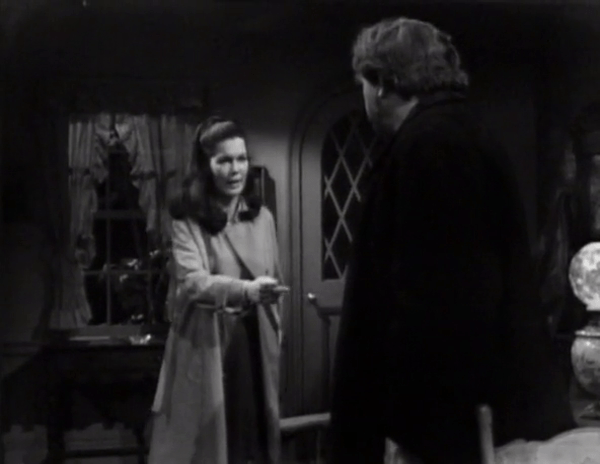
George Mitchell, Matthew’s original portrayer, was dismissed after only three appearances, clocking in his last episode at the very start of the suppository saga. While it seems reasonable that priority was placed on finding a Sam recast, Matthew’s replacement, Thayer David, debuted only three episodes after Dave Ford’s Sam, in Episode 38…
Which, coincidentally, was also about the time they began setting up what would become the Murder of Bill Malloy.
There were also obvious stylistic choices which had been made in gussying up Matthew. It’s almost as though he were meant to be a separate character entirely from the tiny, gruff, but seemingly good-natured Matthew we were introduced to in the show’s first month. Thayer’s Matthew is big and brutish and scary. They gave him these weird prosthetics that they only toned down a few weeks later to make his brow big and give him these ape-like jowls.
Essentially, monster makeup. He even acts more like a monster. At the end of his first post-recast appearance, Matthew tells Burke he’ll kill him if he tries to cause trouble for the Collins family.
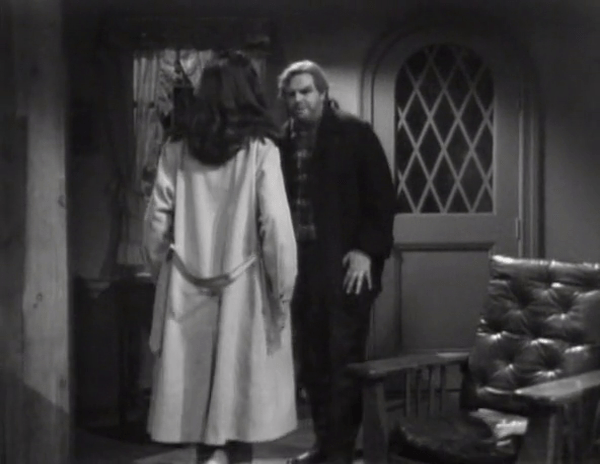
And the thing is…I make fun of Thayer’s peculiar affectations as he plays this character. But he’s scary. This…these scenes in this episode that I am mostly using as background noise for this post…is all very scary. He’s unpredictable and dangerous. He paces around the set, constantly menacing Victoria. You never know when he’s gonna snap. He’s out of his goddam mind.
He’s a maniac, you see. A monster. Dark Shadows’s very first.
Well, okay, second if you count David, but this is…this is considerably more monstrous than the suppository stuff.
Thayer David is a skilled thespian. I can’t imagine how he felt to have this role. This was a man who’d performed Shaw and Shakespeare. He’d been directed by Orson Welles as King Lear ten years before Dark Shadows was ever a thought. He’d played Oscar Wilde and Grumio. Two years before this, he’d had a major role in The Crucible. He was a massively educated man and a deep feeling poet of a person.
And on Dark Shadows, he was a goon.

Let’s review the actions of post-recast Matthew Morgan.
- Episode 38: Vows to kill Burke Devlin if he keeps “causing trouble” for the Collins family.
- Episode 51: Lies to everybody about seeing Malloy’s body at the foot of Widows’ Hill.
- Episode 53: Admits to Elizabeth that he saw Malloy’s body at the foot of Widows’ Hill and subsequently pushed it back into the ocean to keep people from gossiping or something.
- Episode 54: Repeats this story to the sheriff and is somehow not charged with any crimes.
- Episode 63: Blames Malloy’s death on Burke and cryptically tells Carolyn there will be no more trouble for her or her mother.
- Episode 64: Strangles Burke in the middle of an Applebee’s. Is arrested but not charged with anything somehow.
- Episode 70: Makes a fuss about David going to the Old House.
- Episode 75: Objects to Roger’s jokes that Matthew could kill Burke if he continues making trouble in the wake of the coroner’s verdict.
- Episode 77: Tells David his Aunt Elizabeth is always right and Burke sucks.
- Episode 81: Heavily threatens Mrs. Johnson about interfering with the lives of the Collins family.
- Episode 90: Freaks the fuck out when David tells him Vicky saw Malloy’s ghost.
- Episode 98: Continues to threaten Mrs. Johnson about asking questions.
- Episode 102: Freaks the fuck out when David tells him that Victoria has figured out Malloy was murdered.
- Episode 104: Enters the room just after Roger suggests to Liz that a psychopath is trying to kill Victoria Winters.
- Episode 107: Tries to kill Victoria Winters.
- Episode 108: Admits he killed Bill Malloy.
Helluva resume, huh? It’s safe to conclude we were always meant to regard the actions of Matthew with suspicion, even way back at the beginning of the storyline when Roger was definitely intended to be revealed as the murderer. There’s just no way to walk back from him admitting to pushing the body back into the sea. His difficulty lying to Elizabeth is also a major point of contention in those episodes. That’s why he tells her the truth. And I do believe that, at that point, that was the truth.
Because, again, Matthew was the goon.
Recall the telephone conversation Vicky overheard in Episode 46: Roger was tersely agreeing to meet with somebody. This was after Malloy stormed out of Collinwood to make his next stop at Sam’s place. Two weeks back, when Roger told Vicky his thoroughly uncompelling story about what happened that night (which we are apparently now supposed to accept as the truth), he claimed he was speaking to Malloy on the phone to meet with him at Lookout Point.
But it didn’t sound like he was speaking to a man he feared would destroy him. It sounded like he was arranging a meeting with a subordinate, preparing a situation that he was in control of.
It sounded, you see, like he was calling for reinforcements.
That, you see, explains everything. If Roger premeditated Malloy’s murder and had Matthew’s help to get rid of the body after it had gone into the sea. Roger knows Matthew’s loyalty to the family, he knows he’d do anything to protect the Collinses, even if he doesn’t personally like Roger that much.
It also explains why he pushed the body into the sea, but at the same time ended up admitting it to Liz the next day. He knew how Malloy died. He may even have felt guilt for covering up his death. When he told Liz the truth, he was, at the time, telling the truth.
It also explains why he keeps irrationally blaming Burke in the weeks following the murder, up to and including his trying to kill him in Episode 64. He can’t blame himself, and he can’t blame Roger, so he scapegoats Burke, probably because Roger explained the situation to him from his point of view.
Matthew is even utilized as a henchman character. Roger is kept front and center through the whole story. We understand his motives and his actions. Focus is placed on him. Matthew, however, makes only one appearance (post-recast, that is) before the murder, just enough to let us know what his deal is now. We can understand why Matthew is suspicious without him being explicitly treated as the central suspect. Matthew is instead simply a vital piece of the puzzle, a key component in explaining how Roger did it.
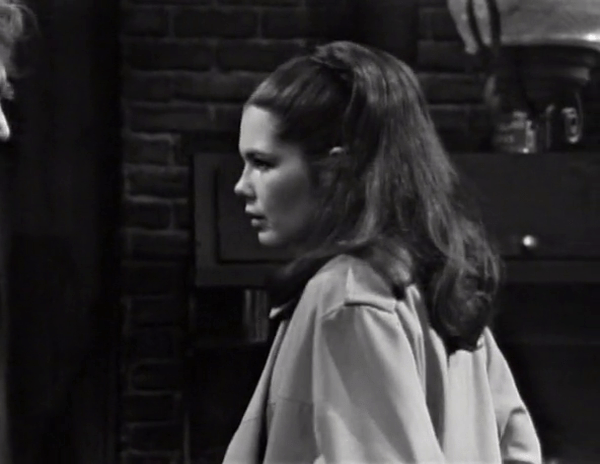
This is after he explains that he was also responsible for trying to break into Vicky’s room. Yeah, that wasn’t Roger either. No, it doesn’t make any sense, but we’re past that now.
Why and how did we get past it? Because, around Episode 70, Dark Shadows dropped the ‘procedure’ and moved on to ‘phenomenon’.
Phenomena are strange, unusual occurrences. They often defy explanation. As a nascent supernatural soap, Dark Shadows will soon learn to make bread and butter of phenomena of all kinds. That tradition started in the Bill Malloy story, with the first unambiguously supernatural event occurring in Episode 52, when an unseen hand opened the Collins family history to Josette’s entry.
This was a desperation move, done near the end of that initial 13-week order. Ratings did begin to spike, and that incident became a trial balloon for Episode 70, which introduced the eerie, delightful haunted house setting of the Old House, and the actual appearance of the ghost of Josette Collins. This itself became a trial balloon for the appearance of the ghost of Bill Malloy to Victoria in Episode 85, which marked the first time Dark Shadows’ plot had been directly influenced by supernatural phenomena.

While the book incident occurred in the midst of all the dry procedural stuff, by the time we’d gotten to Malloy’s ghost, things were definitely changing. While it can be hard to say when, exactly, the choice was made to make Roger innocent of Malloy’s murder, I think Episode 71, when Roger begins actively courting Vicky’s friendship, is the most significant point along the road.
Roger was still a skeevy bastard, but there was sort of an irrepressible glee to the whole thing. Even when he manipulated David into locking Vicky in the East Wing, there was a sort of roguish impudence to his behavior. Mixed signals, of course, the last scripts of Art Wallace desperately clinging to the villain he’d created, only to be defeated by Edmonds’s own idiosyncrasies.
Before that, we even had a rare Matthew/Roger scene in Episode 75. While you could interpret their conversation as being subtext, with Roger gleeful that the case appears to have been closed, they speak too freely about Malloy’s death that it seems highly unlikely they could’ve been in on it together. By then, I think, choices had definitely been made.
So how to explain Roger’s extremely suspicious and damaging behavior with regard to the sterling silver filigreed fountain pen?
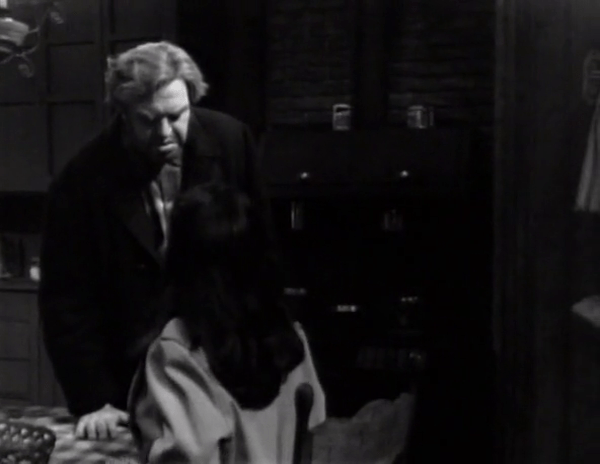
The easy explanation: Roger shifted effortlessly from prime suspect/culprit to prime suspect/red herring. The focus on him was manipulated, taking everything that screamed he needed to be the murderer and changing it to create a dramatic subversion.
Needless to say, this is bad writing. While they did ramp up incidents of Matthew being suspicious (his two nearly identical conversations with David in Episodes 90 and 102 for a start), none of this detracted from the fact that Roger still behaved like a murderer trying to cover his tracks, culminating in a very weaksauce explanation in Episode 107, an explanation so weaksauce that it seemed it had to be an invention just to cover Roger’s ass.
Except it wasn’t. A double subversion.

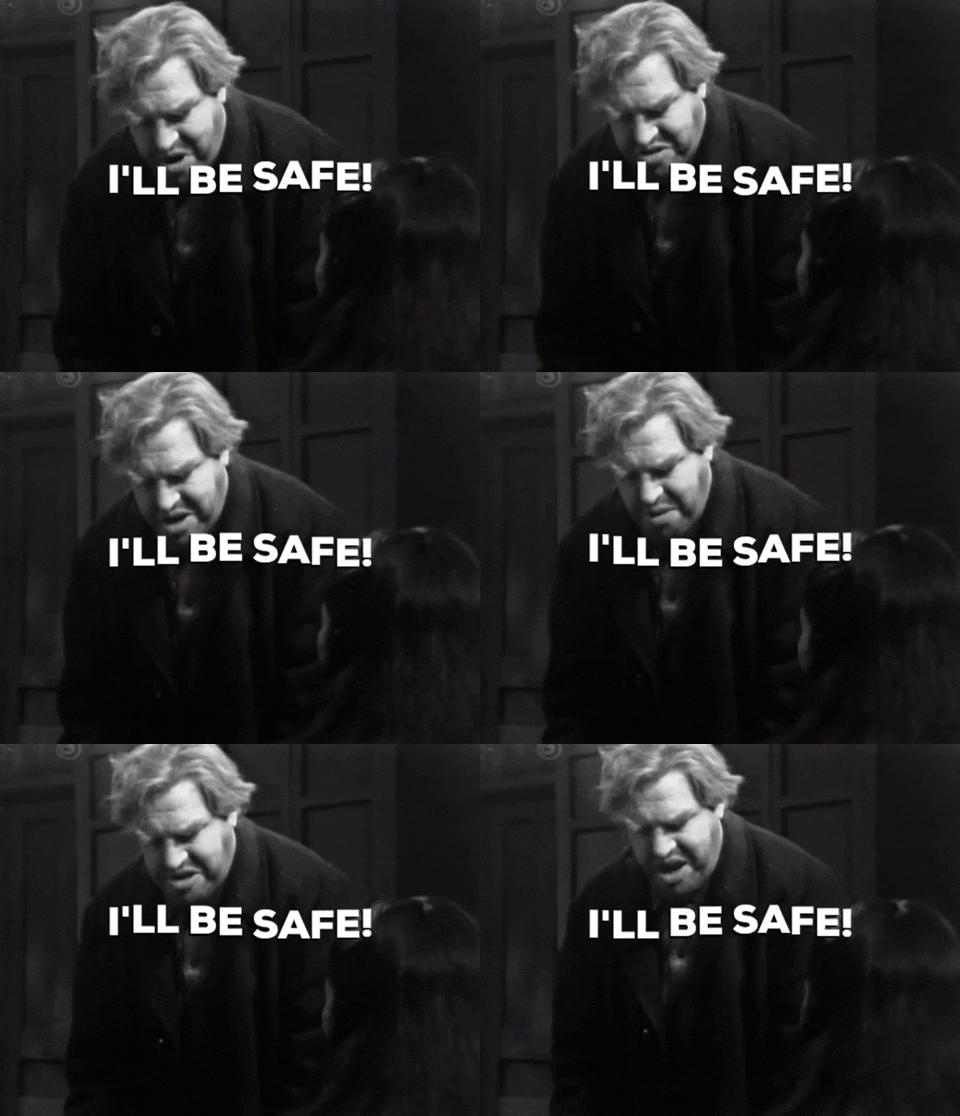
Brief status check to inform you that we are now discussing murdering a girl and dumping her body in a cave on daytime television. This show was groundbreaking long before the vampire showed up. For better or worse.
So, yes, the method began to matter less around the time we began chasing pens. The pen was always intended to be the clue (the “finger of suspicion”, as Mrs. Johnson would’ve called it) that damned Roger, and it was still treated as such while the story was reworked. It’s unclear to what effect Wallace’s departure from the show in the midst of this had to do with anything. Who knows? Maybe he was incensed at the liberties that had been taken.
Roger’s incriminating behavior likewise became just a plot device. A way to prolong Roger’s role as the prime suspect until Matthew was unveiled as the ‘real’ killer. Precise times and dates no longer matter, then, because no times had ever been appended to Matthew’s movements that night during the procedural period. The entire structure of the mystery no longer makes any difference. Instead, it’s all about the atmosphere or, rather, the phenomena.
Instead of times and testimonies, we got haunted corridors and ghostly apparitions. A ruined old house in the woods. The caretaker with the flickering gas lamp stalking slowly up the steps. A day trip to Bangor (that was, admittedly, in the bible, but we’ll talk about that some other time) and a tense confrontation in a rundown shack.
Without editorializing too much…I’d say this is a good thing. Atmosphere is Dark Shadows’ greatest asset. It’s a shame they had to show their ass with these retcons, but the journey was fun.
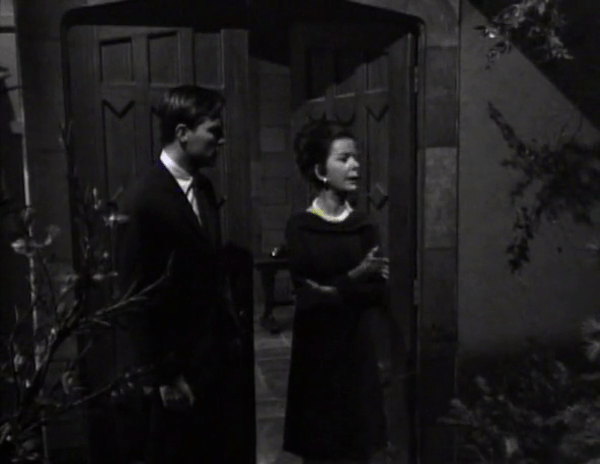
So, while we still have an act and a half in the episode, and before we get into discussing phase three of this story, now’s as good a time as any to tell you how the whole thing did happen, as Matthew described to Vicky back in the first act.
So, the first thing Matthew tells us is…
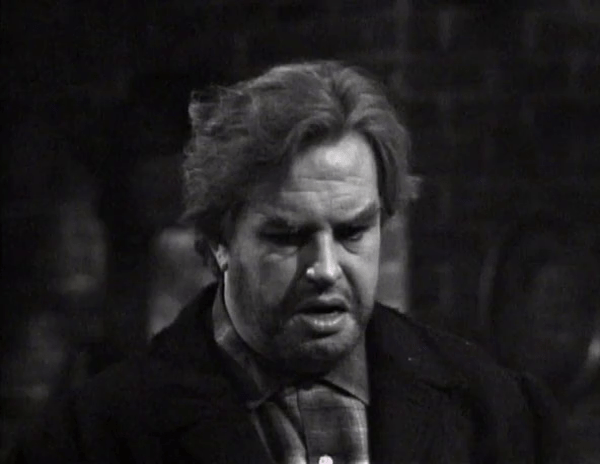
So, it’s already a bad day for anybody hoping to be rewarded for their detective work.
But this retcon isn’t as severe as the others. After all, the coroner’s initial verdict was that Malloy had died accidentally due to drowning. There had been no rock to the head or anything like that. This also renders all Burke’s talk about how the coroner had acted in fear of Collins family’s influence moot, so it’s a good day for public servants all around.
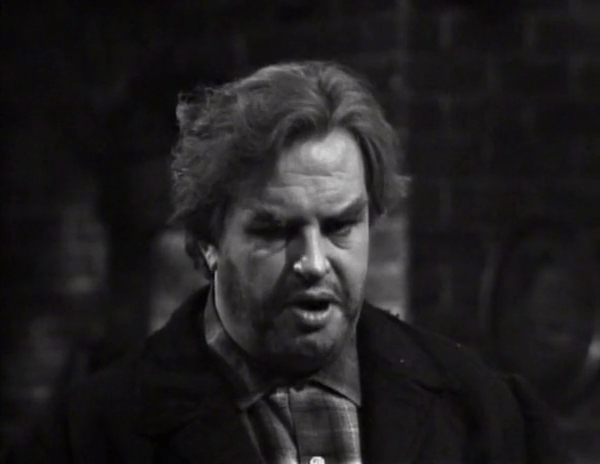
So, Matthew followed Malloy from Collinwood. Don’t ask where Malloy’s visit to Sam fits into this.

Matthew’s reference point for this was Malloy and Liz’s confrontation in Episode 44, where he all-but told her he was going to do whatever it took to save Elizabeth and the dignity of the Collins name, even if it meant Roger was ruined. I should emphasize, as well…
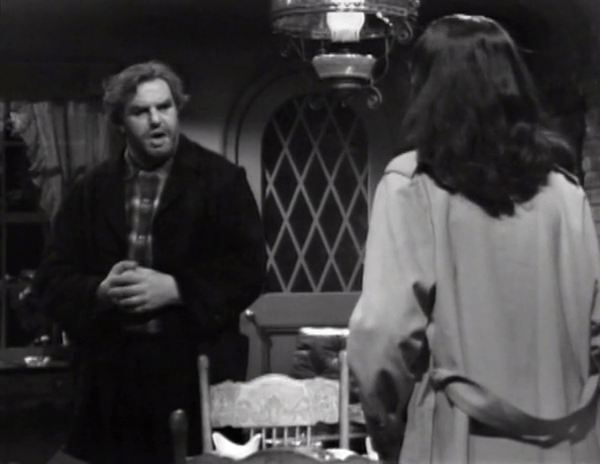
Matthew had no idea what Malloy was planning. He did not know about Burke and Malloy’s alliance. How could he have? He wasn’t in any of those episodes. He just knew, somehow, that Malloy was going to cause trouble for Mrs. Stoddard, and he had to stop him.
So, Malloy went out to Lookout Point for that last minute meeting apparently arranged with Roger over the phone. Matthew got there first.

They had a struggle and Malloy lost his footing, plummeting to the sea below.

Matthew proceeded to push the body into the sea. This is as good a time as any to point out that at no point in any of this do they mention how Matthew also pushed Malloy’s body back into the sea after it washed up at Collinwood. Maybe they want us to forget that happened, to make the retcon more acceptable.
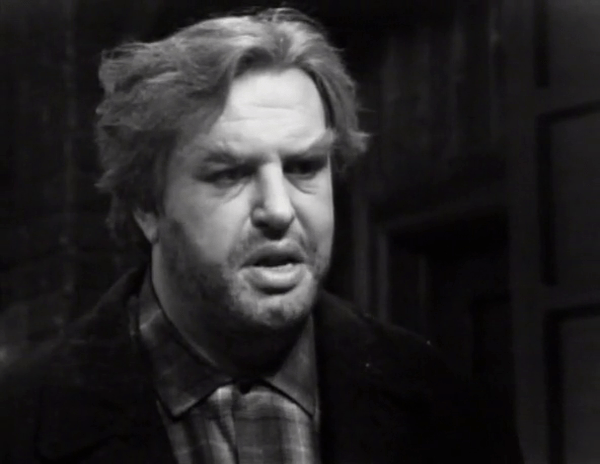
And then, shortly after this, Matthew lay in wait and saw Roger arrive at Lookout Point, where everything happened just as Roger told Vicky.

But it’s what we have, and there it is. But, you see, it’s an afterthought. Trying to make a proper murder mystery out of five-day-a-week program is just not sustainable. Even modern soap mysteries are more about spectacle and atmospherics than logical method. Because soaps are made for the heart, not for the head. And they’re better off for it.
So, Liz tries to call Matthew to see if he’s had any luck searching for Vicky. We get a dramatic shot of Matthew and Vicky staring at the phone, which is up against some new stretch of wall that makes me question the shape and structure of this building.
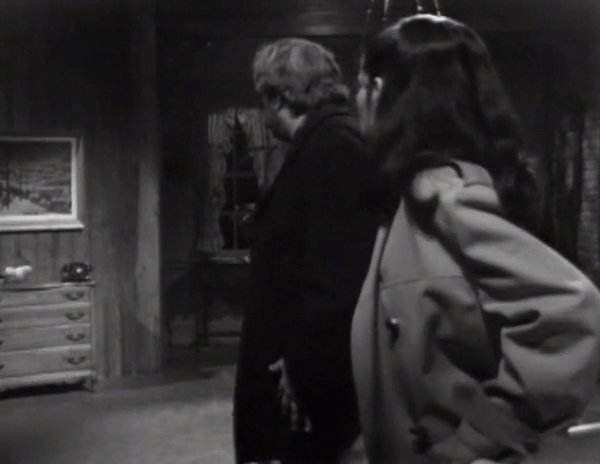
These two have a very civil conversation about how Matthew can’t answer the phone because he’s supposed to be out looking for Vicky and speaking to Liz would interfere with his plans to snap her neck like a twig. And then Vicky tries to run for the phone and Matthew beats her to it.
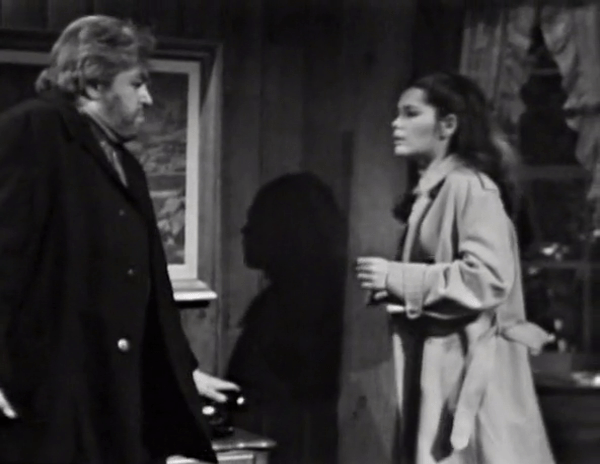
Which brings us to the Bill Malloy Structure, Act 3: Peril.
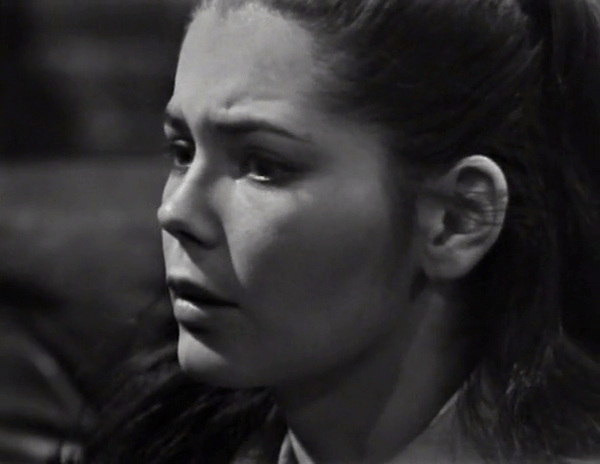
Ron Sproat has a reputation among Dark Shadows fans for being particularly peril-prone. To wit, before Sproat joined the team at the start of November, there had been only one instance of a woman being placed in a perilous situation: David locking Vicky in the East Wing in Episode 84, penned as part of Art Wallace’s final week on the show, back in the midst of the ‘phenomena’ period of the storyline, when facts and figures were being well-superseded by more eye-catching atmospheric spectacle.
We began edging into the ‘peril’ section when Vicky first saw the duplicate silver filigreed fountain pen in James Blair’s possession, which led to her suspecting Burke, which led to her summoning Roger for help, an act of dramatic irony as, unbeknownst to Vicky, it was Roger who had the pen at the time of Malloy’s death, not Burke.
This escalated into the three successive attempts on Vicky’s life over the last two weeks, with the very last one, the ‘stone urn’ being pushed off the roof of the Old House toward her, occurring two episodes ago, and being the incident that ‘revealed’ Matthew as the killer.
‘Women in peril’ are, of course, somewhat old fashioned as a dramatic device. The damsel in distress trope is warn paper-thin, and was hackneyed even at the time this episode aired, a time in which the role of the American woman in fiction was changing rapidly to keep up with evolving notions of what it meant to be a woman in modern society. Soap operas would end up being fertile ground for new, bold stories about women’s issues, with interracial marriage, abortion, free love, class struggle, lesbianism, bisexuality, and even pap smears all being the basis of soap storylines within the next half decade.
The revolution will eventually come to Dark Shadows. But for now, it’s November of 1966, Vicky is being menaced by a monster, and her love interest is determined to save her.
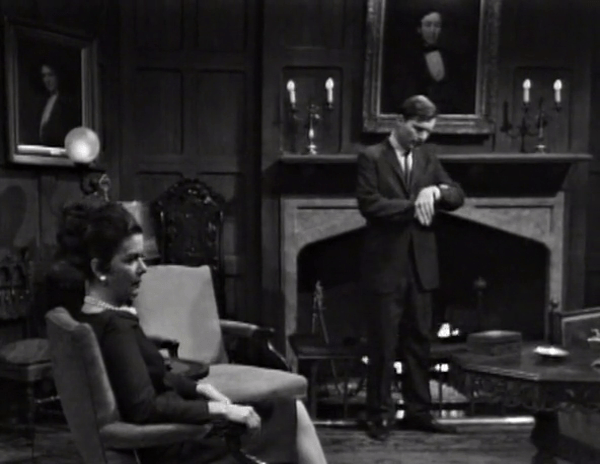
So, another problem is that Frank Garner is not a proactive character. I don’t know why Burke isn’t here. We’ll see him a little later in the week, but for now Frank is being positioned as Vicky’s love interest, which means that, by any rights, it’s his job to save the Woman in Peril.
Yet, so far, all he’s done is sound condescending to everybody he speaks to, question the sheriff’s method, and underestimate Elizabeth’s knowledge of the property she’s lived on all her life.
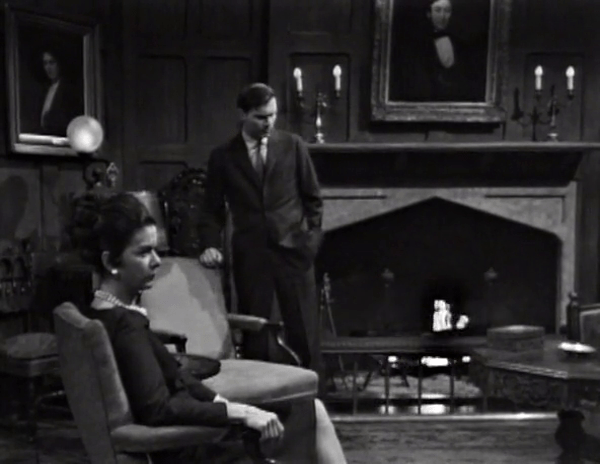
Groundbreaking stuff, guy.
So, the allure of ‘peril’ is supposed to be that we all have a secret desire to be subjugated by a monster and rescued by a man.
Well, all is subjective. I mean…this is reductive of course, but we’re all entitled to our sex fantasies, right? Obviously, not all women dream of being rescued by men, and not all men dream of rescuing women. But lots of our…em…collective mythology comes from the minds of men. And almost all our mythology comes from real mythology. Which is full of kidnappings.
And being abducted is scary. Which is why women in horror stories are always being abducted. And horror is supposed to get your blood racing, which is also what romance fiction is for. And lots of romantic fiction is also about dangerous men who the heroine isn’t societally supposed to find attractive…
Soaps are romance narratives. Dark Shadows is a horror soap. The math works out.
And, hey, kudos to Sproat. He’s been on the team for a month and he’s already figured out that the best way to get some action around here is to put the main character in life threatening danger.
The trouble is, if I were being menaced by a lumbering madman, I wouldn’t want Frank Garner to come to my rescue. Like, I’d want a refund.
I could buy Burke as the romantic hero, no problem. And, anyway, he could afford to gain some hero points.

There’s no sense recapping this conversation. It’s essentially all about narrowing down the suspects and ruling out Roger and Sam as having anything to do with Vicky’s disappearance.

They are? On what grounds? Because Frank complained? Can Sam sue?
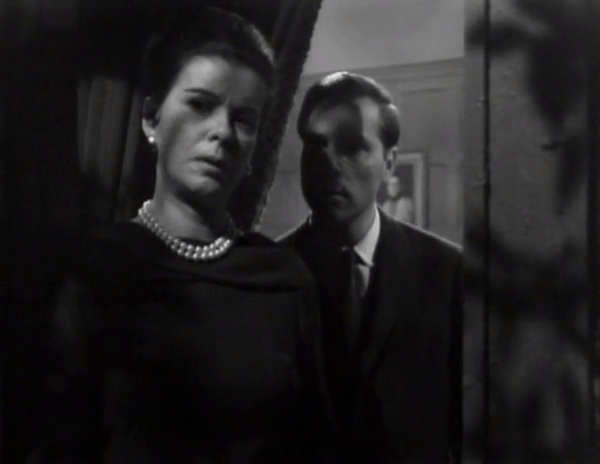
Huh. See, look, Frank made a significant observation that hits closely to what the truth is. It’s like he’s actually doing something, but with none of the proactivity.
But, yes, enough of that. Back to the peril.
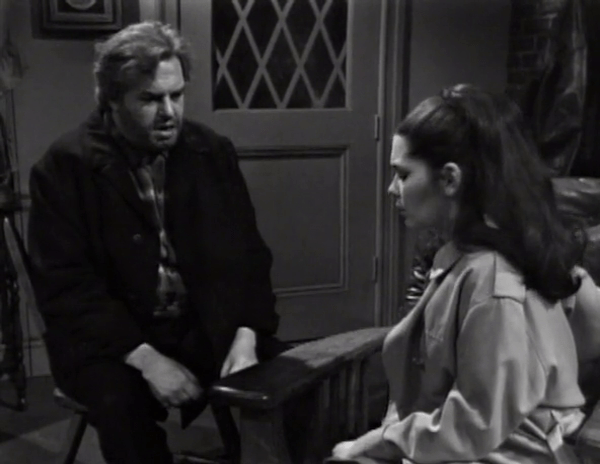
Does she get a vote on this? Look, they’re sitting across from each other like it’s a conference. It’s adorable.
Matthew then tells her that he has killed once before: a sick dog. It’s about now that you begin to appreciate why it may be better that the climatic conflict is between Vicky and a deranged ape-man rather than between Vicky and a hysterical aristocrat.
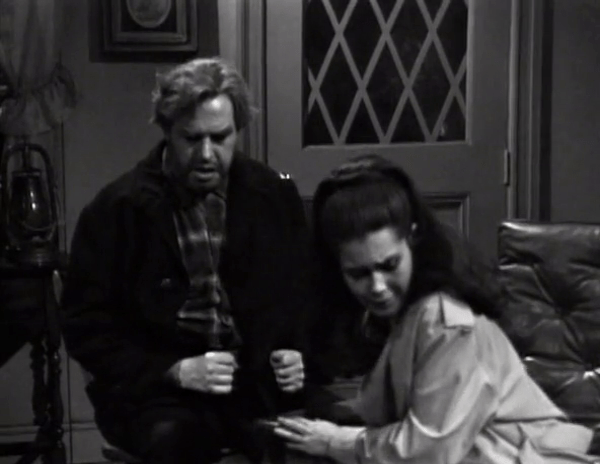
This is thoroughly distasteful television to have on when the kids get home from school. Isn’t it marvelous?

ABC Standards and Practices will, eventually, begin issuing memos telling the writers to tone down scenes in which you might by chance observe gay subtext between two characters, but somehow this was allowed to air on afternoon television. But, really, if there’s anything you take from our discussion today, I hope it’s an appreciation for the disparate elements that come together to make your favorite shows wo…
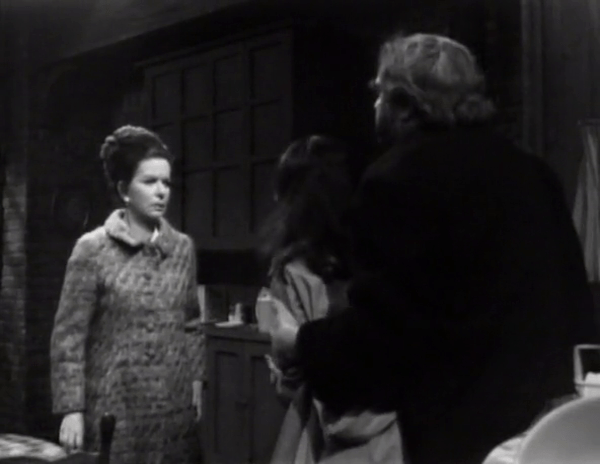
Well. Didn’t see that one coming.
This Day in History- Monday, November 28, 1966
Ntare V, 18-year-old King of Burundi, is overthrown by his Prime Minister, Army Captain Michel Micombero who, five months earlier, helped him depose his father in a coup in what appears to be the textbook definition of ‘palace intrigue’. Micombero would go on to abolish the monarchy and become the first President of Burundi before staging a genocide against the Hutu tribe. How presidential.
The Soviet Union begins its Soyuz program, launching a new series of unmanned space vehicles into orbit. The first capsule will be automatically destroyed in orbit following technical difficulties.
Truman Capote’s notorious Black and White Ball is held at New York City’s Plaza Hotel. The party boasts a guest list 480 strong, including Norman Mailer, Lauren Bacall, Jacob Javits, Frank Sinatra, and Mia Farrow. The party will go down in history as “The Party of the Century”.
 Kooks of Collinwood
2 thoughts on “Howdunit?”