
Let’s talk about teen soaps. What’s that you say? You don’t want to? They suck? They are derivative nonsense that sets television as a medium back?
Well, tough luck, because Dark Shadows is a teen soap.
Sure, it’s not what you would think of as a teen soap. It’s not 90210 or One Tree Hill, and certainly doesn’t share major tropes and themes with those tentpole dramas. Dark Shadows is now remembered as the quintessential supernatural soap opera, a much narrower subgenre whose daytime contemporaries include only two shows: NBC’s zany Passions, and General Hospital spinoff Port Charles. And neither of those lasted very long…just as Dark Shadows didn’t last very long, by soap standards at least.
But Dark Shadows ended up becoming massively popular with a core audience of teenage girls. Barnabas Collins, while far from the most, er, photogenic fictional vampire (though certainly one of the most charming, given the anemic offerings of recent years) was a cultural icon in the late ‘60s, making this show the most influential soap anywhere until Gloria Monty would save General Hospital from death’s door in the late ‘70s.
So, if we judge it by its audience (at least its contemporary) audience, Dark Shadows is easily a teen drama. But these first four months have been far from what you’d expect from a show targeting a key demo of teens just come home from high school.
But that’s what it was supposed to be. And if you want proof of that, just look at what was the last thing ABC had airing at 4:30 on weekdays.
Never Too Young is generally agreed to be the very first teen drama, as it was the first show of any genre with a predominant teenage cast, focusing on their love lives and travails as any other soap would. Premiering on ABC in September 1965, it predates the originally youth-focused Love is a Many Splendored Thing by one year, British drama Grange Hill by a decade, and Degrassi Junior High by over 20 years.
Now, being first means there’s no precedent for what you’re trying to do, so it’s probably best not to be too hard on Never Too Young. Still, I’m not known for my charitable view of old television, and just about every person connected to this program is dead, so I’ll just say the show itself wasn’t very good.
The show’s greatest utility seemed to be dragging in real-life musical acts to perform at the local nightclub the teens would go out dancing too. Most of these groups were very much of their time, with the exception of Marvin goddamn Gaye and Paul Revere & the Raiders, a band remembered today solely for being mainstays on Dick Clark’s revolutionary Where the Action Is variety program, which aired right after Never Too Young in its first season and, later, after Dark Shadows.
There aren’t many surviving episodes of Never Too Young, but the stories seem very by-rote to the modern observer. Rebellious teens, strait-laced parents, lots of in-fighting and squabbling over who had who’s girl first. Given America had only realized teenagers existed as a marketable demographic about a decade earlier, this is essentially ABC execs reenacting the ‘How do You Do, Fellow Kids?’ meme. It’s tailored to a very specific idea of what a teenager is and what a teenager likes, giving it a cynical unauthentic veneer that even Marvin Gaye and whoever the hell Freddie Cannon is can’t salvage.
Maybe that’s the reason the show barely scraped nine months, getting canned in June of 1966.
But at least Never Too Young tried to market itself to the audience most primed to be watching it in its timeslot. Dark Shadows, as we’ve seen, instead went with the direct opposite approach, linking its late afternoon airing, not to rowdy teens, but to the dusty cobwebs and whispered ghosts of the gothic genre it was very deliberately invoking.
And maybe this made sense. After all, Never Too Young was set in Malibu. You were much more likely to find Paul Revere & the Raiders there than at the Blue Whale. Collinsport is a world onto itself, separated from the Swingin’ Sixties, for better or worse.
Still, there’s only so much of alcoholism and arguing middle-aged men you can take before things get stale. Dark Shadows has attempted to alleviate this staleness by elevating its supernatural aspects from subtext to plain text, with the apparition of the ghost of Bill Malloy to Victoria Winters two weeks ago.
But ghosts may be good for creating spooks and scares, but they don’t do much to get hormonal teenagers worked up.
So it’s a good thing that, in Episode 94, Dark Shadows looks to what came before it, and poaches its best asset.
Never Too Young had three writers over its short tenure. One of them was a playwright named Ron Sproat. While his stage credits weren’t as extensive as our own Francis Swann’s, and he certainly had no Hollywood credits as Swann did, Sproat had the distinction of not only knowing the soap opera genre, but knowing what young people wanted.
And now here he is, on Dark Shadows. Writing. Thank Christ.
Yes, this preamble was all to introduce the newest writer to the Dark Shadows team, the first new name since Swann himself joined Art Wallace in Episode 41. Wallace departed the show with the near-perfect Episode 85 but, thankfully, the woeful Swann only had one full week as the sole writer on the team.
Sproat, while perhaps not the fan favorite Dark Shadows writer, is the most consequential. He is the first writer to join the team that will make it into the Barnabas era, and it’s his style that will come to define the remainder of Dark Shadows’ first year, and much of what comes later.
Sproat is also the first Dark Shadows writer to have any experience with soaps prior to the show, thanks to his Never Too Young credits, so it’s tempting to assume he was brought on to, well…
Make Dark Shadows something teens would want to watch. And he succeeded. Eventually. Not in the way anybody expected him to, including most likely himself, but who cares, right?
I mention this because Sproat gets right into it in his first episode, writing an extraordinarily proficient script that highlights his strengths, plays to themes old and new, and proves why he’s better than Francis Swann six ways from Sunday.
Suffice to say, this is the teen soapiest episode yet, even though only one of the characters is a teen, and her status as one is questionable at best.
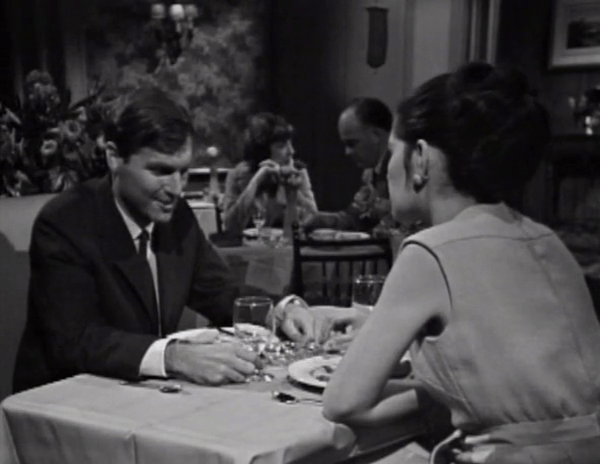
Right from the top we have Victoria’s monologue reminding us of her recent struck-up friendship with a…
From here, we go right back to Collinsport, where the monologue concludes…
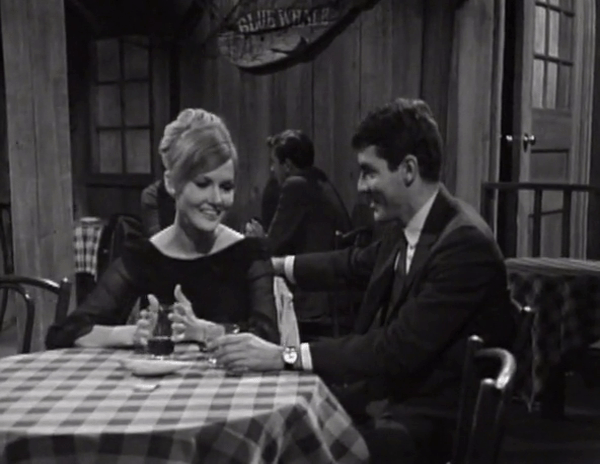
Right off the bat, we’re orienting on the young couples of the program, both already-formed, and lying in waiting. There’s no May-December stuff here, no worries about manslaughter, murder, or attempted murder. While those big themes and storylines will make occasional appearances in this episode, what we’re really here for is young love.
Every single character under 30 and over 10 is in this episode, and all 20 minutes are dedicated to their wants, needs and desires. For Sproat, this might have been playing it safe, utilizing tools he was familiar with from prior work. For Dark Shadows, it’s damn near revolutionary.
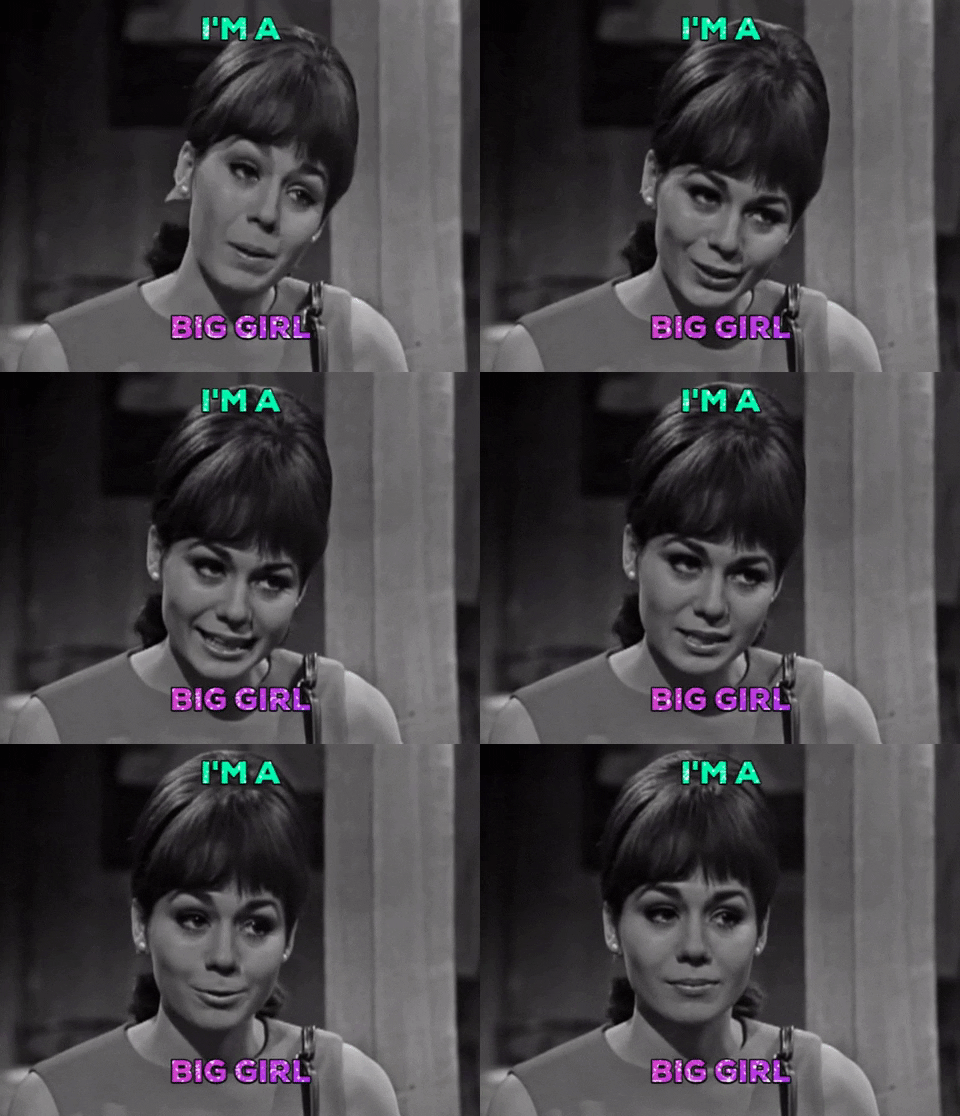
Still, much as things change, so they stay the same. Observe the first spoken dialogue: Carolyn laughing at Joe for exposing human weakness to her.
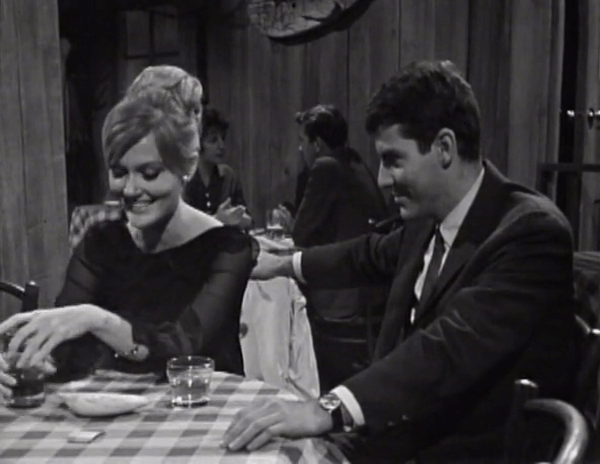
The Perils of Carolyn Stoddard are kind of like, oh, gravity. It’s always there, weighing down on you, keeping you from visiting Saturn, but after long enough you forget about it, and only eggheads bother trying to figure out how it works.
Since I’m an egghead, I suppose I’ll take a crack at it myself.
From the beginning of the show, Carolyn was ground zero for “relatable character for teens to latch onto”. She’s introduced doing a stupid but trendy dance to bootleg surf rock, she complains to her mother about how she hates her life but doesn’t want to do anything to change it, and she is courted by both the steadfast Nice Guy Joe Haskell, and the rugged Bad Guy, Burke Devlin.
The problem is, Carolyn is a very unpleasant person. When Art Wallace was writing her, this was a feature as much as it was a bug, as Carolyn’s more erratic and generally awful behavior was usually written off as a consequence of her deep fears of maturing, manifested in her reluctance to get married to Joe, which led to her acting out, most usually by seeking out Burke.
But in the hands of Francis Swann, Carolyn has turned into an irrational psychopath, getting into it with Joe for such inexplicable offenses as having to do the job for which he is paid and also for wanting to have his own private business enterprise instead of laboring under her mother’s thumb for the rest of his life. It’s gotten to the point where it’s hard to tell exactly what Carolyn is upset about at any given moment, but part of the Perils of Carolyn Stoddard is that you can tune in at any time in the first 100 episodes and rest assured that Carolyn is definitely upset with him about something. If she isn’t upset with him right away, know that she will be by the end of the episode.
The Perils have recently taken on a new angle with the introduction in Episode 78 of a fledgling romance between Joe and crackerjack Girl Next Door Maggie Evans, easily the most woefully under-utilized character to that point. Joe and Maggie’s dance in that episode, and a subsequent dinner date two weeks later, showcased the delightful chemistry between Joel Crothers and Kathryn Leigh Scott, easily making them the most enjoyable and, therefore, rootable couple on the show.
However, the Perils of Carolyn Stoddard are an Ouroboros, a great monster constantly digesting its own tail. For this reason, Carolyn reached out to Joe in the previous episode, after her mother lectured her about Being an Insufferable Bitch (well, not in so many words, but…) and pointing out Joe is a real prize. You’d think if Elizabeth really believed that, she’d want Joe as far from her daughter as possible, but you know the things she does for her family.
Joe, for some reason that I guess Swann decided to leave to his new co-writer, agreed to go out on a date with Carolyn that evening, keeping in mind that he and Maggie aren’t really together (as much as Maggie wants them to be), and their prior dinner date was more of a friendly social engagement between the two of them.
So…does Ron Sproat have what it takes to slay the Ouroboros, liberating both Carolyn and Joe from the dance they’ve been dancing for all these weeks?
Let’s see.
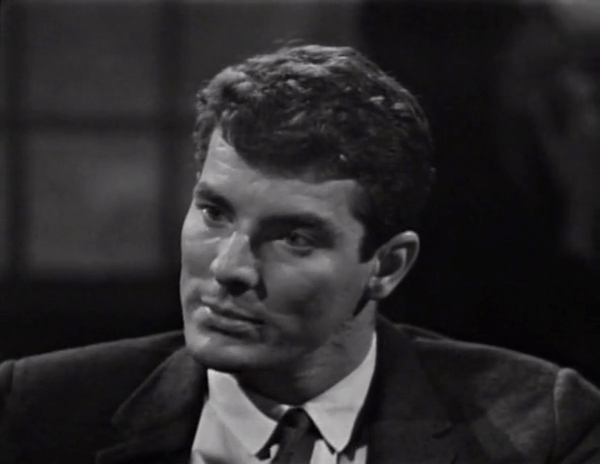
This, we assume, is a skill gleaned from years of experience. I cannot recall a single time in our experience of these two as a couple when Carolyn seemed thoroughly invested in Joe as a person.
At least this time, the reason isn’t Carolyn’s irrational horniness for her uncle’s ex-boyfriend.

And…cut to titles.
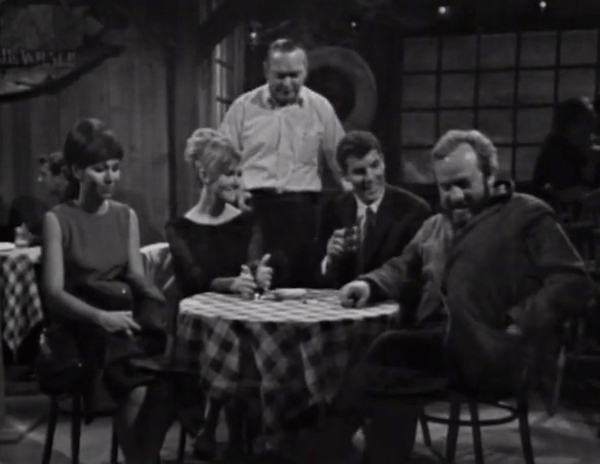
Here, with these two young people sitting at a bar, jukebox rock playing in the background as their conversation turns from jokes to fears to rumors of hauntings and ghosts, we get a glimmer of what Dark Shadows’ earliest audiences tuning in that first Never Too Young-less week back in June may have been expecting: a teen drama married to a ghost story.
It’s only the beginning.
The topic of Vicky’s apparition is bandied about. Joe, much like Burke before him, is a Man and therefore Doesn’t Believe Any of That Stuff.
GIF: You’ve gotta be kidding.
It’s an interesting thing that, in the wake of the Malloy apparition, every woman who had heard the story is more willing to believe it than her male counterpart. Burke was condescending to Vicky when she told him her experience. Roger is haughty and crude to Elizabeth about it, though this is just as likely motivated by his usual terror for his own wellbeing. And here, Carolyn expresses a more cautious belief that Joe, nonetheless, dismisses as nonsense.
But because he’s Joe he does it nicely.

He means Collinsport. It seems someone makes this mistake every week.
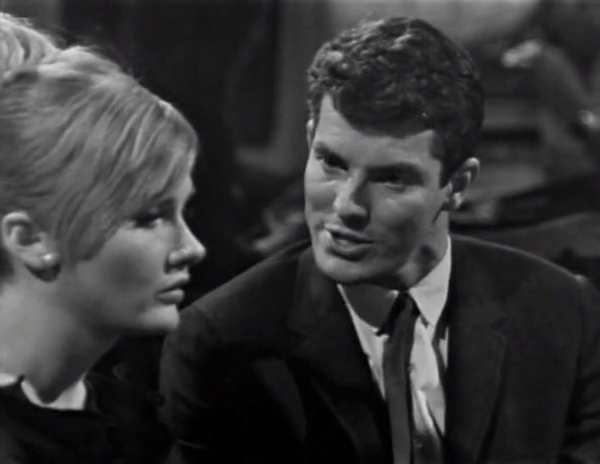
Perhaps not eager to be reminded of that last point, Carolyn insists they change the subject.
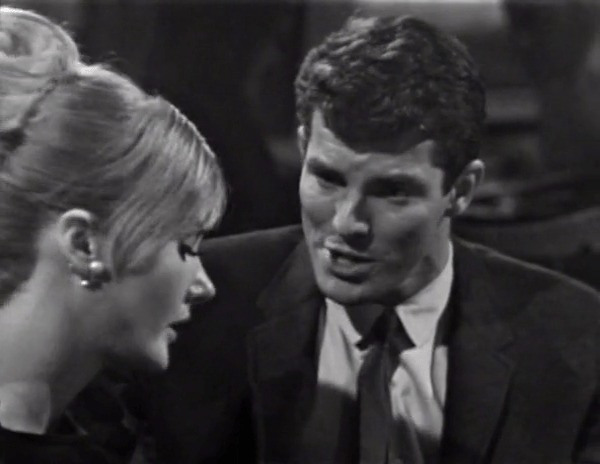
See? He only has pure motives for spitting in the face of the vengeful undead.
Joe suggests they instead talk about the status of their relationship which, as you can imagine, he’s understandably very confused about.
Sadly “us” is Carolyn’s least favorite subject. She prefers “me”.
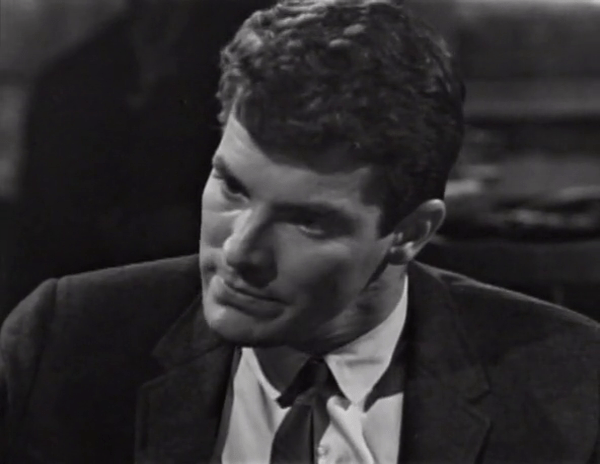
Carolyn proceeds to apologize to him for her latest tantrum, at the same time tacitly reading him for going out with Maggie afterward.
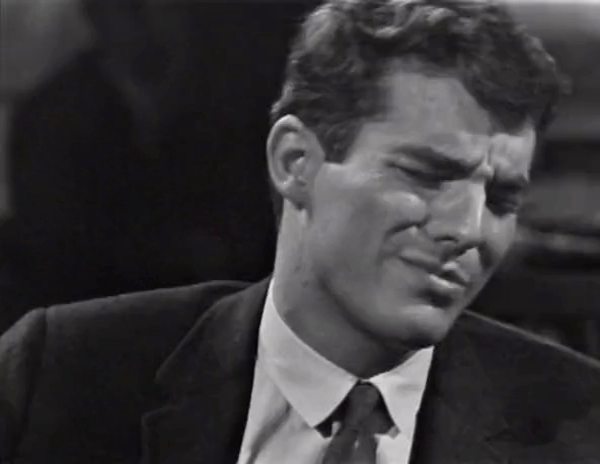
Joe tells her that there’s nothing going on between him and Maggie and I’d just like to take the opportunity to point out this is Ron Sproat’s first episode, and he’s already made a clean timeline of references to events going back almost a month. Francis Swann joined before the show was two months old, and he still couldn’t keep straight what happened a week before he started.
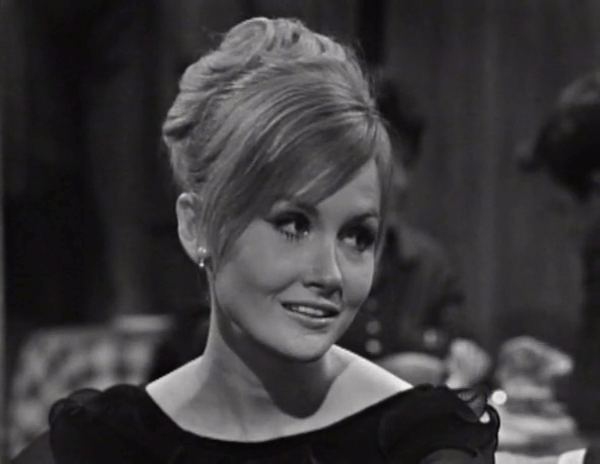
This reads like she just learned what an apology was five minutes ago and immediately began thinking of how to weaponize it.
Joe tells Carolyn he “just wants to be sure of” her, which is such a delightfully soapy piece of dialogue, delivered with aplomb by Joel Crothers.

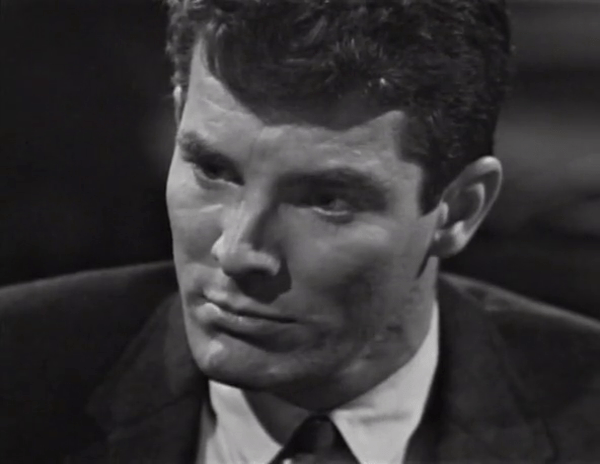
Let’s put a pin in there for around 10 minutes from now.
Carolyn proceeds to turn this back on Joe, wondering if he doesn’t want to be with her, at which point the Other Woman enters with perfect timing…
And her Dad, because this is still Dark Shadows and we have to have at least one lovable old stage personality hanging around the kids.
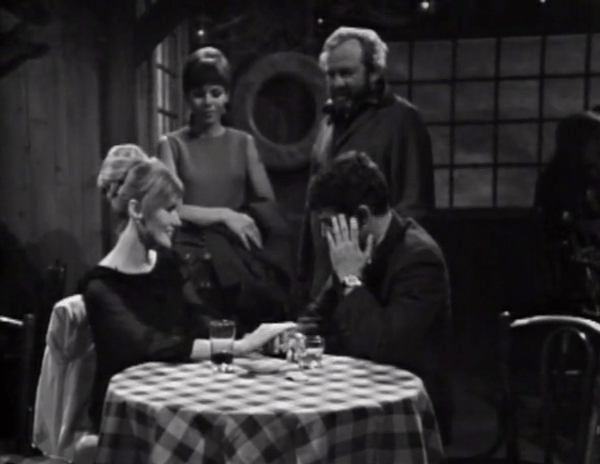
It’s been almost two weeks since we last saw Sam, but Dave Ford is able to remind me immediately why I love him so much. Who else would be able to make a father talking about his daughter going with him to the booze hole he gets plastered at every night so delightfully charming?
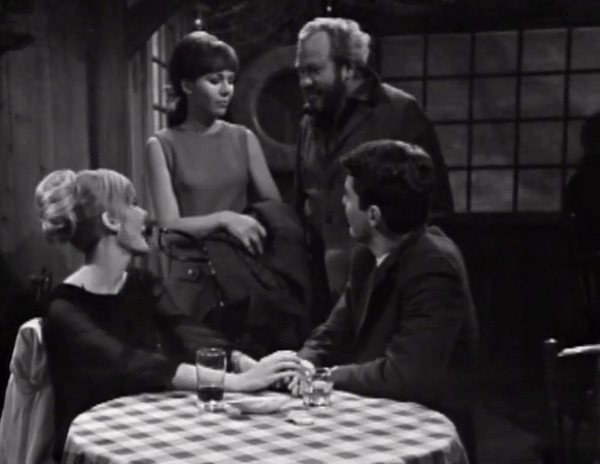
Regular reminder that Dave Ford and Nancy Barrett were by now having a very un-secret affair on the set, so I’m half tempted to think the “cold, blowy” night line (at least, Carolyn’s end of it) is some sort of ad libbed innuendo.
Carolyn surprises everybody by inviting the Evanses to sit with them, which is exactly what you do when you are Not Bothered by your man being friends with other women.
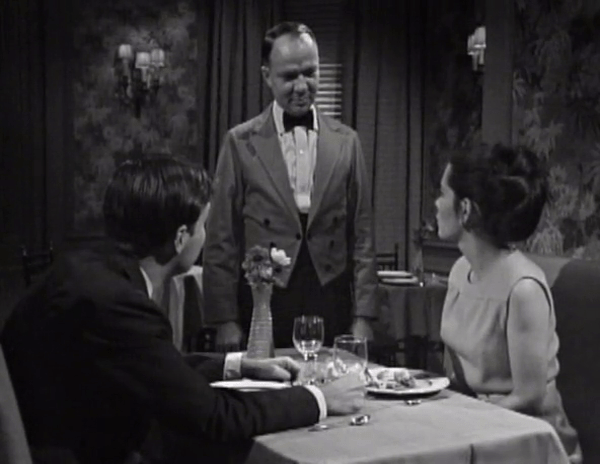
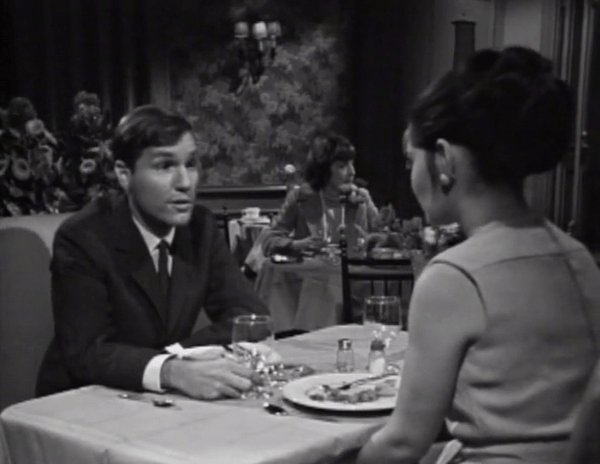
It was lunch before, but now Vicky and her new friend/ally Frank Garner are sitting down to dinner at the hotel restaurant. I have to assume they went somewhere between Tuesday’s episode and this one, but neither of them give any indication that that’s the case.
Frank, if you’ve forgotten, is one half of the firm of Garner & Garner, Elizabeth’s lawyers, and the son of Richard Garner, the other half. He has been so taken by Victoria, or (allegedly) her story, that he is determined to use all the resources in his power to help her solve the mystery of her origins.
Also: Frank sucks major ass. His introduction has been rushed and sloppy, with nary a beat passing between his first piece of dialogue and the first indication he is being set up as Vicky’s other romantic option, besides Burke.
Since this is only Frank’s second episode, Sproat only has a little bit of precedence to go on, and can perhaps claim as much, if not more, control over the character as Swann. Will he be able to salvage this dismal character?
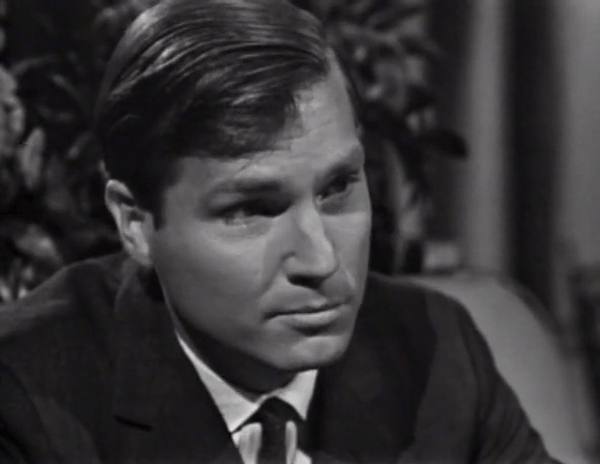
I understand he’s using a generalization here, but I can’t hear ‘foundling’ without thinking of ‘younglings’ and reflexively laughing/feeling sorry for Natalie Portman.
Vicky goes on to tell a story about the origins of her great motivation to discover the truth about her past.
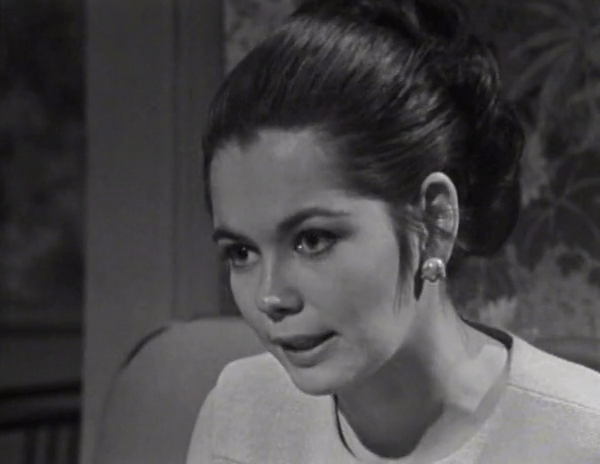
This is a very smart decision on Sproat’s part, and immediately sets him apart from Swann in his earliest days. Whereas Swann plundered Wallace’s bible for material he could use as fast as possible, Sproat invents something which he works naturally into the script. This anecdote serves as a human motivation for Victoria, useful for making her quest relatable both to new viewers who may not have any investment in the storyline otherwise, but also for old viewers, for whom the meandering slog of Vicky’s search may have become boring and passe.
Vicky’s story is also notable in the level of vulnerability it gives her. Once you divorce it from all the nonsense, Vicky’s quest is very sad. She was abandoned as a child and has, throughout her life, been betrayed, intentionally or otherwise, by people who were supposed to take care of her. At every step she is thwarted, tricked or manipulated by people who probably don’t even know a thing about her to begin with. She has no say in anything. Even her repeated attempts to leave Collinwood have increasingly, by her own edict, been left up to others.
She is a young woman forever adrift, bemoaning the loss of something she never knew. And may never know.
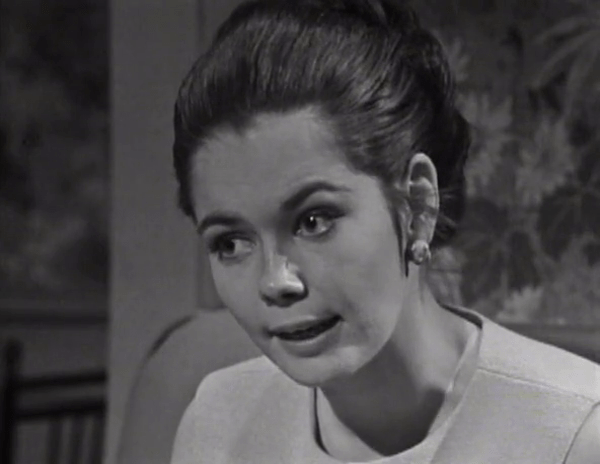
I wonder…you’d think Sproat would’ve come onto the show, especially at this time when Vicky had been closer than ever before to the truth, with the intent of resolving the mystery of Vicky’s origins, right? You might imagine his plans were eventually waylaid by the evolving story. That is, after all, the accepted gospel among Dark Shadows fans.
But what if Sproat never intended to get to the truth? To resolve the mystery of Betty Hanscom, and B. Hanscom, and how they were related, and who, if anybody, were Vicky’s mother and father, why she was left at that foundling home with that note, who sent her money every month until she turned 18…
What if that’s why he had Vicky comment that she knew she’d never find it? Preparing herself and the audience for the possibility that, as in life, some mysteries are just never to be solved?
We’ll revisit that later, unless I forget. But I wrote it on a Post-It and I put the Post-It next to my Christmas card box, so I’m unlikely to forget it.
I’m going to throw up.
It is, but you’ll have to wait about 200 episodes to find out for yourselves.
Joe selects the ‘romantic’ Blue Whale juke setting for an excuse to sweep Carolyn out onto the dance floor, where he asks her why she gets off on being such a messy bitch.
Well, not in so many words…
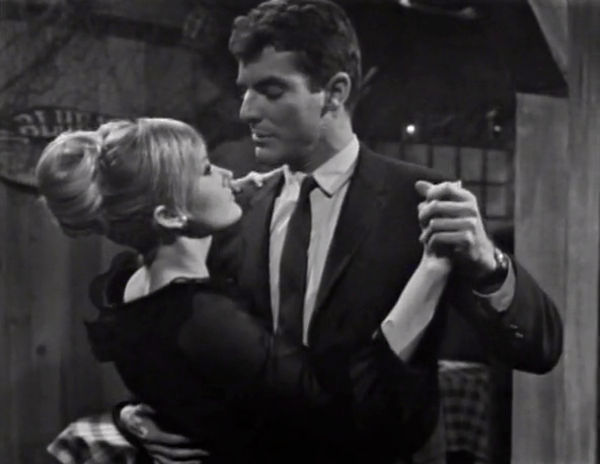
Carolyn claims she was being ‘polite’, which is a real laugh and, for added, belly-slapping effect:

Put a red flag in that for about five minutes from now.
I will say that Carolyn’s bitchiness here is, at the very least, less psychotic and more the behavior of a petty rich teenager who doesn’t want to admit how insecure she is about her desires. It reads more like it was written by someone who had experience with women outside of letters to the editor in certain special magazines.
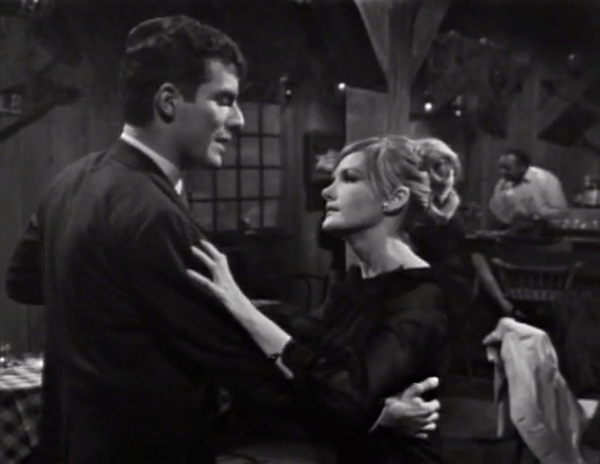
You can tell this guy’s written romance before. I don’t care how well he did on Never Too Young, it’s still better than I’m accustomed to on this program.
The camera smoothly pans over to where father and daughter are sitting, and we get an ace exchange:
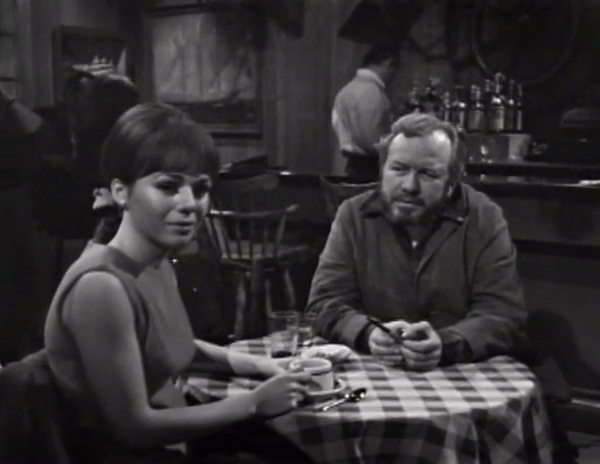
Another great thing about the Carolyn/Joe/Maggie triangle is it gives Sam a new angle as a character. Rather than constantly trying to cover his ass against the likes of Roger and Burke, Sam is also a father concerned about his daughter’s infatuation with a man he doesn’t think she’ll be able to attain and, perhaps, fears the consequences of her attaining.
To this point, we’ve been used to Maggie having to always look out for Sam. It’s nice to see the shoe on the other foot.
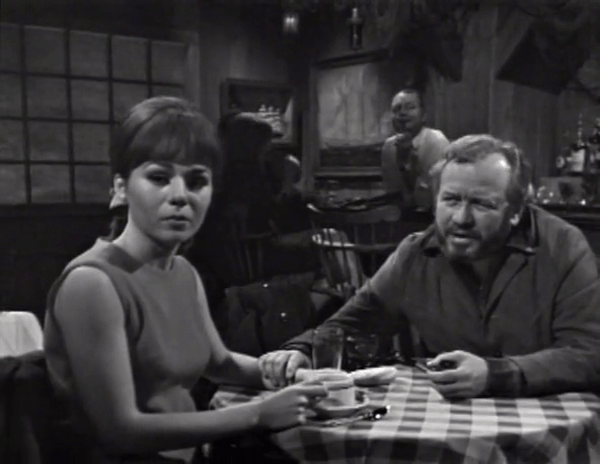
These warnings of the concerned parent are straight out of the average teen soap, melded perfectly with the established context. Sproat is rising to the challenge effortlessly. He may as well have been writing this show for weeks.
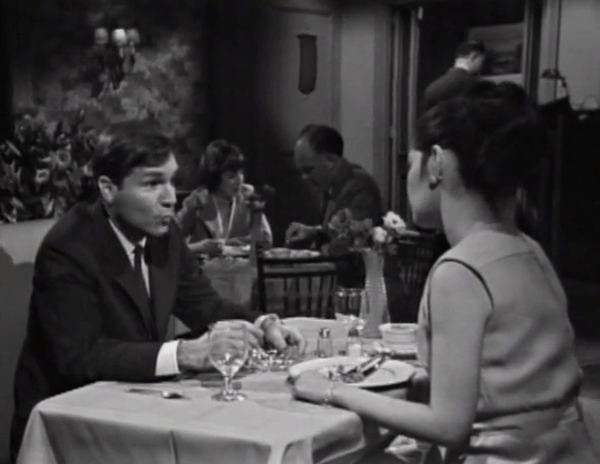
Mark this as the first time the new writer required me to suspend disbelief.
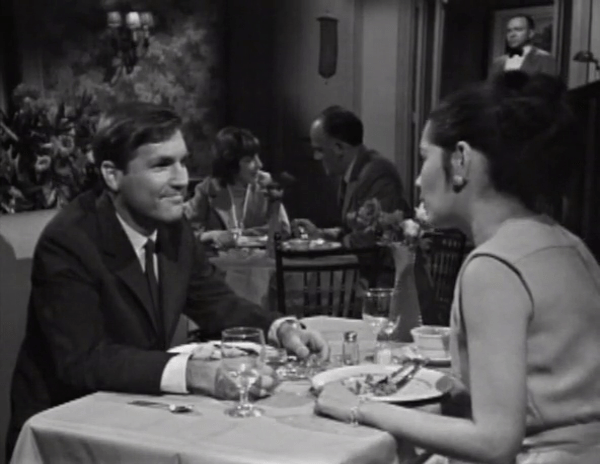
At least Vicky’s acknowledging this. He’s already had two meals with her at the exact same table and he’s the only one who seems to have gotten more comfortable between them. He’s probably mentally picking out the wedding cake as they speak. I’m not sure what could make this more uncomfortable…
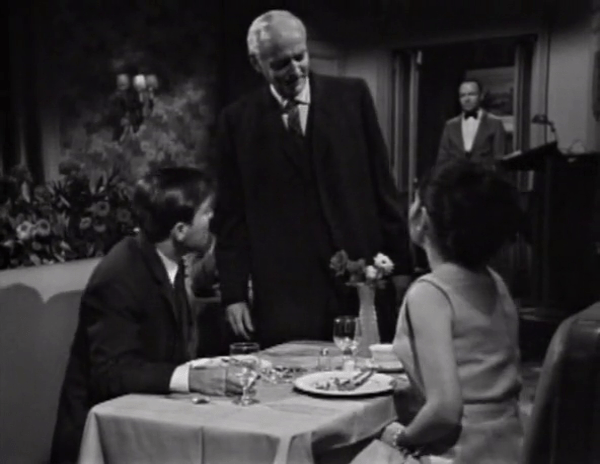
So now Frank’s dad is gonna crash things and just sit down at the table too, because why the hell not.
It seems like Richard Garner is here to remind Frank to do his job, but he doesn’t seem to be in any hurry to get him back to the office. Hugh Franklin smiles prettily and says something about probates and then just sits down like a Victorian chaperone.


Release the Franken, amirite?
Hopefully, this joke is absurdly dated by the time this post goes up. Regardless…
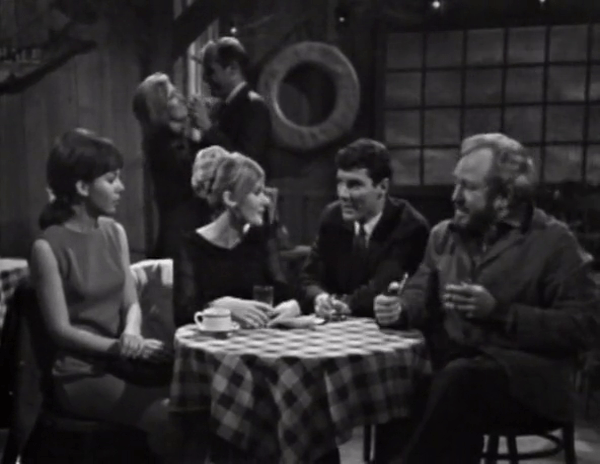
The blink-and-you-miss-it namedropping of Eagle Point has to be one of the most absurd re-watch bonuses of all time. I’m sure nobody around at the time was anticipating ever having to use the place again. I wonder if it was attested as a geographical location in Wallace’s series bible, or if it’s just a name Sproat invented for a throwaway line in his first script.
Joe tells Carolyn they haven’t done that “since we were in high school”, which is an indication that they went to high school together, something that’s impossible if we go with Wallace’s originally intended (but never stated onscreen) age for Carolyn: 17, given Joe is supposed to be around 21 or 22, closer in age to Maggie, who is 23. This is the first indication of Carolyn being aged up, something that will be explicitly confirmed by 1967 at the tale end of the pre-Barnabas era. The best thing is, Sproat probably had no idea. He presumably just thought it natural that Carolyn be in her early 20s, as her actress was, and as the other characters in her age-range were. If you told him Carolyn, who to this point had been torn between Joe and a man her uncle’s age, was 17, he probably would’ve had no idea what you were talking about and assumed you were trying to sabotage his new job.
Anyway, Maggie gets uncomfortable with the increasingly familiar talk between Joe and Carolyn, which I guess is a win for Carolyn’s latest psyop. She even feigns concern for Maggie’s departure, convincing her to stay. It’s deliciously diabolical, which is an upgrade from whatever the hell was going on in Monday’s episode.

I love the muted bemusement on Carolyn’s face, as if this is the first time she’s ever been made aware of the existence of a ‘6:30 AM’.
Sam, continuing to be a real king, insists on walking Maggie home…once he’s had his next drink, of course.

Another great thing about Dave Ford is you can never tell if he’s flubbing up a line or playing to his character being drunk 80% of the time.
After Sam goes to get his last drink, Maggie wonders where Vicky’s been, prompting Carolyn to describe her little mini-vacation and, with it…
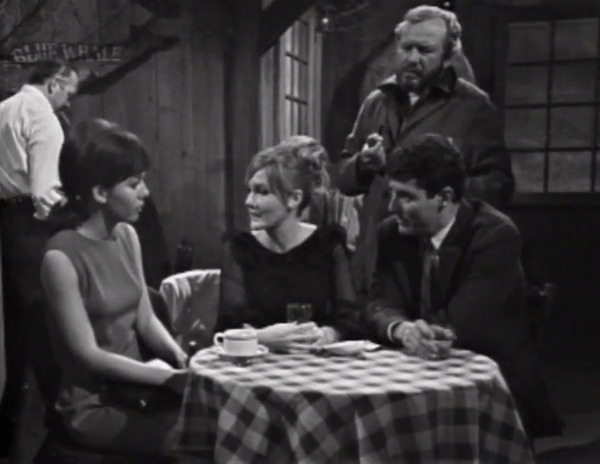
This is overheard by Sam as he returns to the table.

This is the one instance in the episode where any connection is made to the primary storyline of the moment: the murder of Bill Malloy. Sam is clearly taken aback and unnerved by the tale of the apparition, despite Maggie becoming the one female character yet aware of it not to give the story the benefit of the doubt (a testament, we assume, to her salt of the earth sensibility). However, he isn’t sweating crazy as Roger is, which is another point in Sam’s favor as it continues to become very unlikely he has anything at all to do with Malloy’s death…
And conversely more and more likely that Roger has everything to do with it.
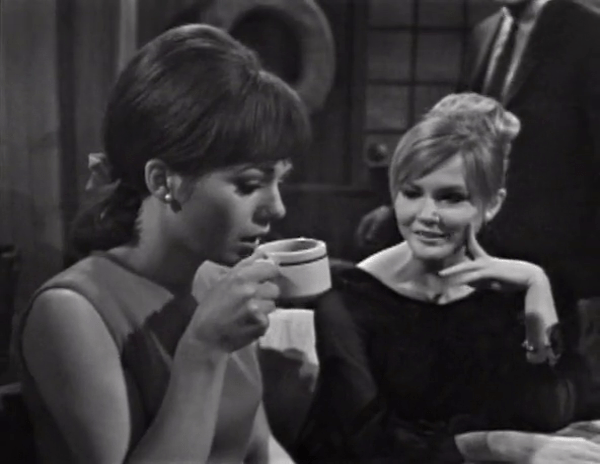
This moment passes fairly quickly, however. Maggie wonders if Vicky will be lonely in a strange place with nobody around, and Carolyn, channeling her great Bitch powers, informs her…
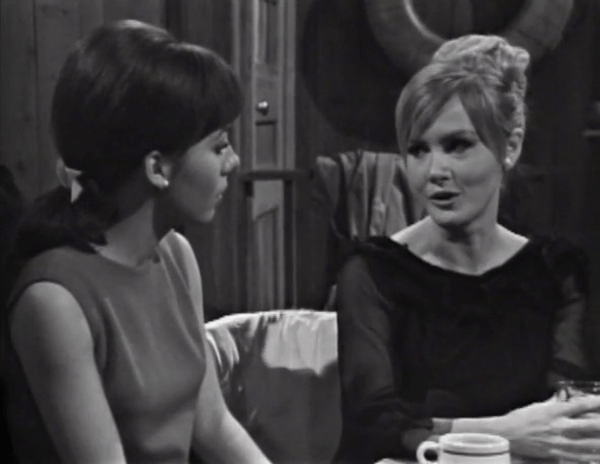
This is the kind off material Nancy Barrett eats right up. You can see how much fun she’s having.
Likewise, you can see Joel Crothers perk up just as much as he character at the dish of steaming hot tea that’s been spilled.
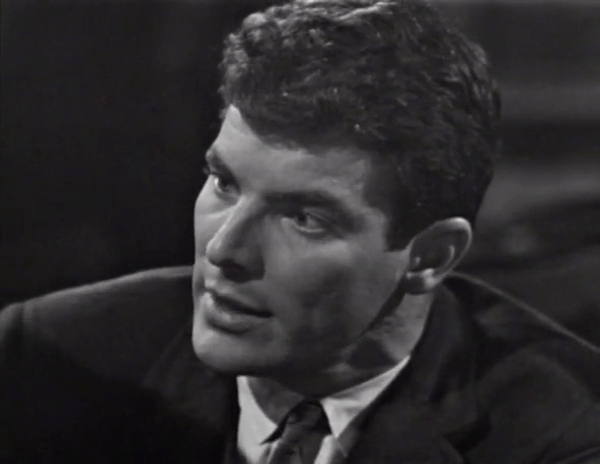
The drama is percolating like Maggie’s most violent coffee.
Joe forcefully “asks” Carolyn for another dance and we get a moment of perfect catharsis.
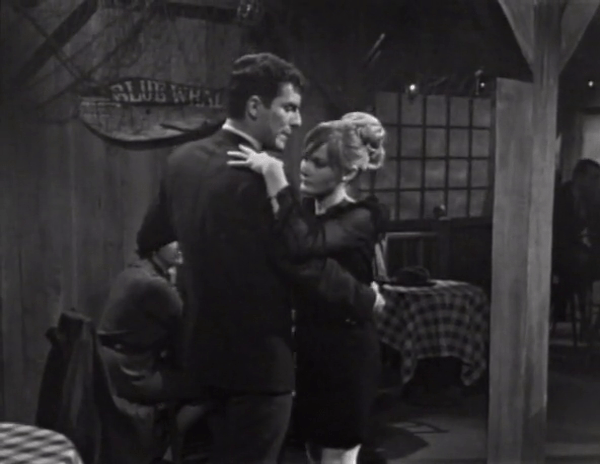
Joe realizes Carolyn only asked him out tonight because she was mad at Burke going to Bangor with Vicky. This isn’t conjecture. This is exactly what happened, whereas the delirious Carolyn of last episode wanted to admit it or not. Sproat hasn’t been her one whole episode and he’s already making waves in the impenetrable fortress that is (well, are) the Perils of Carolyn Stoddard.
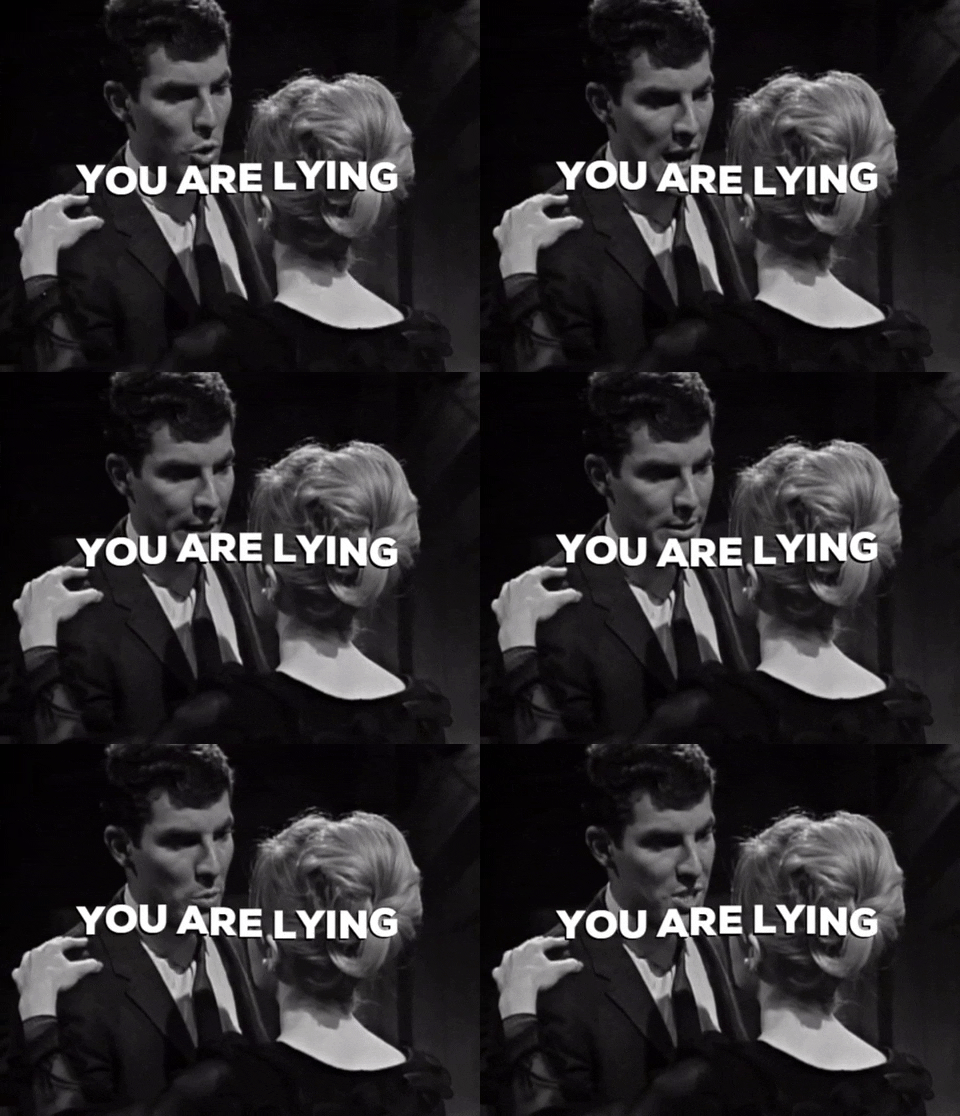
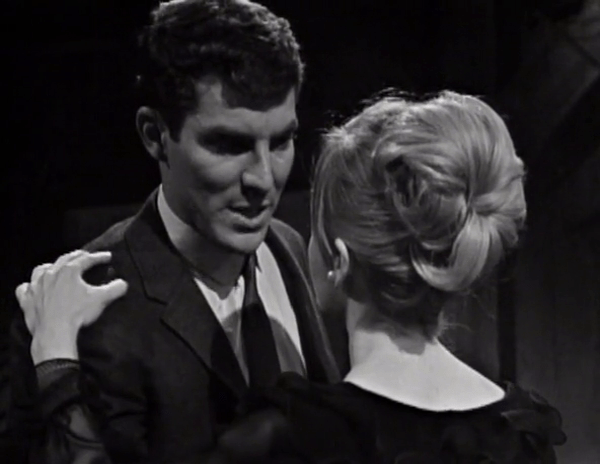
It cannot be understated how much both these characters and the show as a whole needed this moment. Joe appears finally to have had it with Carolyn’s nonsense and he’s letting her know it, all while the Other Woman looks on, watching her rival’s own machinations bring her down.
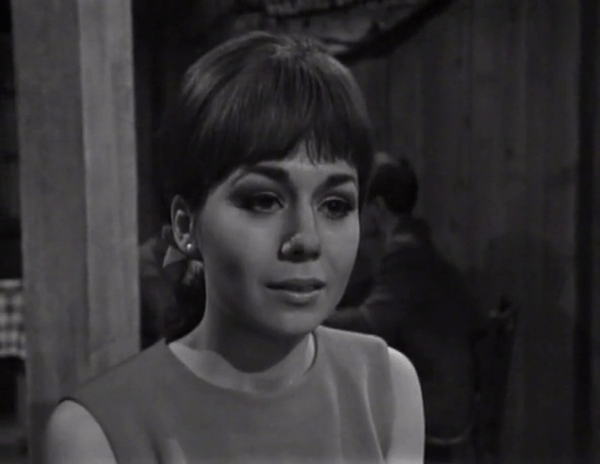
Carolyn storms out in a pique, Joe going after her, presumably because he’s still too upstanding of an individual to let her walk all the way back to Collinwood. And that’s how Act III ends, with the most explosive fight between these two yet and, for once, one not started by Carolyn’s own insecurities, but by Joe calling her out.
It’s been a long time coming. But we’re there now.
And, because you can have too much of a good thing, let’s see how Vicky’s handling her new option:
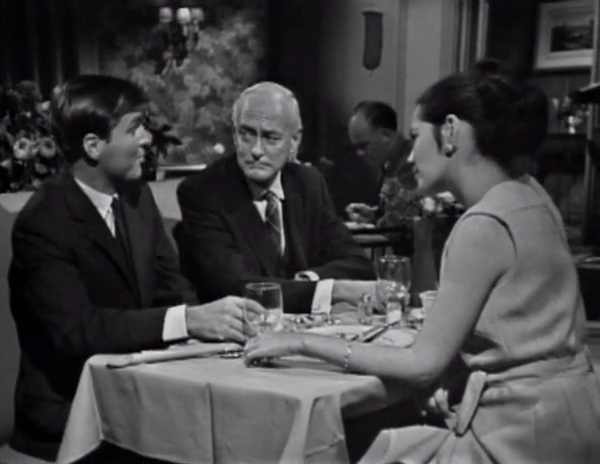
The best part of this is Richard immediately excusing himself from the table, as if even he can see the con his son is pulling her and wants no part in it.
He pulls Frank away and, rather than telling him to keep his tooter in his trousers, reminds him of the elderly widow they serve, which I guess comes to the same thing. But not before throwing his own bit of bile into the ring:
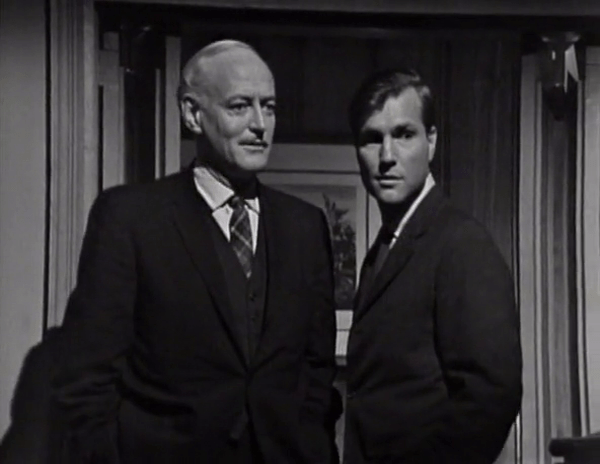
This is nasty but, on the bright-side, it’s the only bit of old-man-on-young-girl we’ve gotten this episode, which is a marked improvement, considering.
Frank complains about his father’s “pessimism” over the quest for “Ms. Hanscom”. I’d like to point out that Vicky’s quest is technically for “B. Hanscom”, who it seems to have been agreed was the male Collinwood butler. “Ms. Hanscom”, Betty, is supposed to have died 25 years ago. But, again, if they were to retcon that, I wouldn’t be too upset, given how abruptly that piece of information was doled out at the time.

This presents a conflict: Richard is a loyalist to the Collins family, Elizabeth in particular, as we already saw with his informing Liz of Vicky’s coming to see him back in Tuesday’s episode. Frank has no such impulse and is more than ready to do whatever it takes to help Vicky, solely because he’s in love with her.
So there is a dramatic impetus, the potential for a rift between father and son. Of course, like everything else to do with the Garners, it’s hampered by a burdensome and slipshod introduction that appears to be moving too fast to be properly sustained.
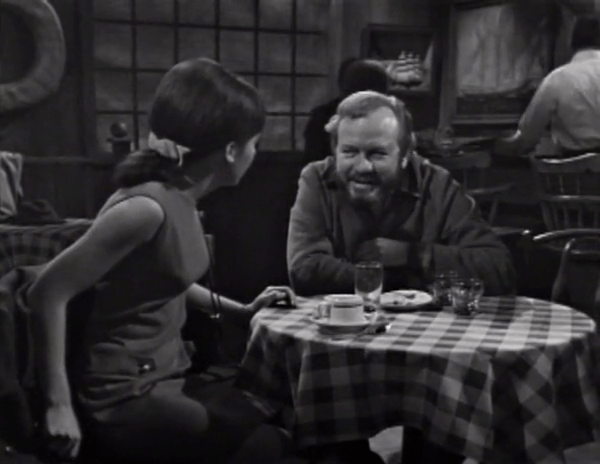
Maggie is so used to her father’s alcoholism that her response is essentially an exasperated chuckle. Sam lightens the mood by telling Maggie he needs the drink because of…
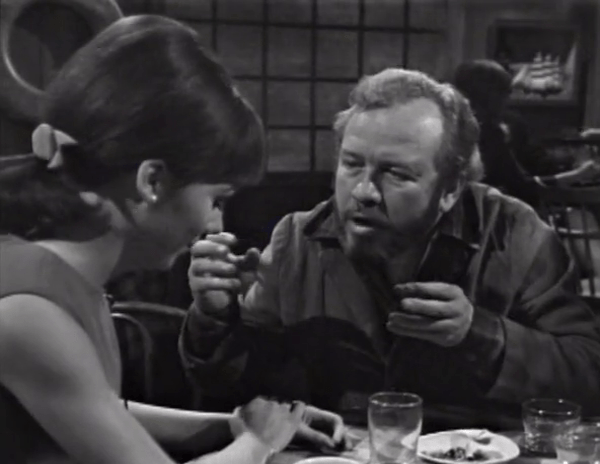
This is almost word-for-word a line the as-drunk Sam said in his last appearance in Episode 85, so either Sproat is calling back to it, or Ford is improvising with something he already had in the ol’ Rolodex.
Joe returns from seeing Carolyn home. Sam sees an opportunity:
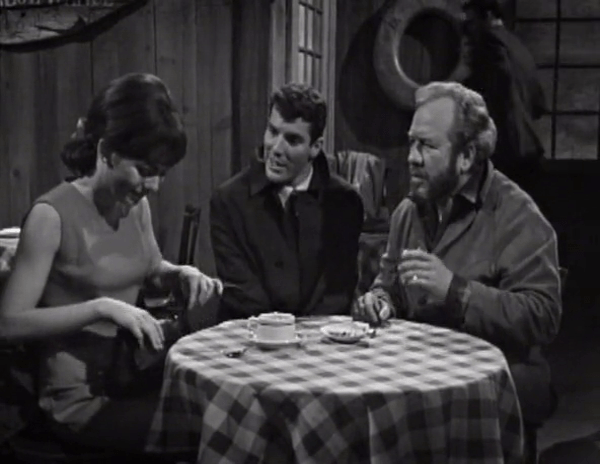
So, either Sam is now fully on deck for these two, or he’s too drunk to care. Either way, I stan.
When Maggie points out Sam was supposed to walk her home, he prattles about going out for a walk in a way that does sound pretty suspicious and is possibly a set-up for something sinister, but could just as easily be nothing because Dark Shadows is still Dark Shadows, no matter who’s writing it.
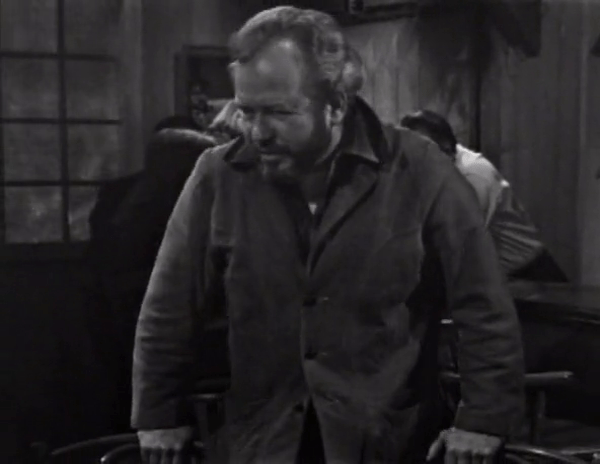
But I really think he just wants his daughter to get lucky.
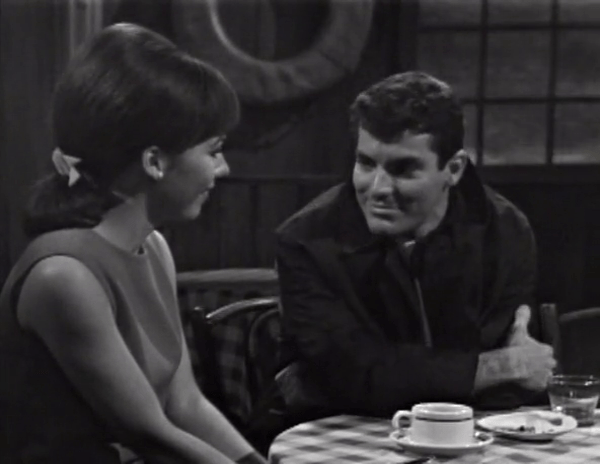
The best and most notable thing about this very soapy, character-driven episode is that Sproat immediately figured out what the quickest path to victory was on Dark Shadows at the moment: Maggie and Joe. Whatever else he came up with in future, the best thing from the pieces already available was that couple.
And he ran with it.
Maggie asks Joe why he did come back.

Happy times: I think there’s hope for us yet.
This Day in History- Thursday, November 3, 1966
Famous tee-shirt man Che Guevara arrives in Bolivia under a false identity to lead a guerilla war against the government. He will eventually learn that the Bolivian Communist Party doesn’t want a violent revolution and decides to just do it himself which doesn’t end very well for him at all, really. But it was great for his brand, considering.
 Kooks of Collinwood
One thought on “Les Affaires de Collinsport”