
Despite a rote mention of Collinwood’s age…

And its long-dead founder…
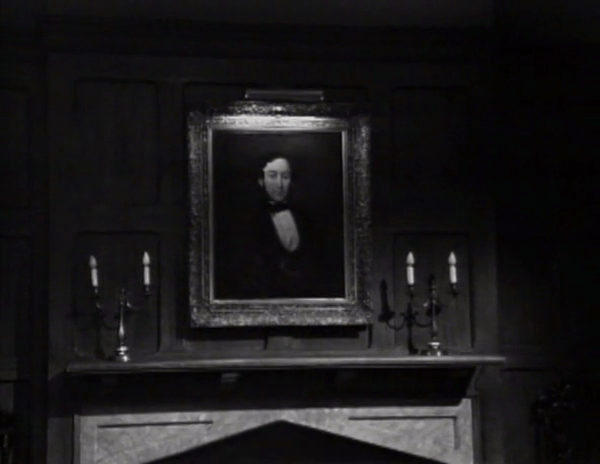
Today’s Dark Shadows steps away from the dusty, grim ghosts of the past today and spends time in a sector that, for almost as long as the hauntings of the great house, has gone inexplicably unexplored.

This show’s handling of Burke Devlin’s quest for revenge and the total destruction of the Collins family, while not handled entirely as poorly as Victoria Winters’s search for the secrets of her past, has been…not good.
Moving slowly enough in the first two months, we learned only that Burke is planning to acquire various pieces of real estate owned by the Collinses in the Collinsport area, and that he has been doing research on various debts owed by the family, intending that, in true Count of Monte Cristo fashion, he should buy the debts for himself.
Even these fits and starts of movement were waylaid by the murder of Bill Malloy at the end of August, kicking off a murder mystery storyline that has dominated the show for close to 40 episodes and currently shows no sign of letting up.
For a while, Burke’s revenge melded with the search for Malloy’s killer, as he suspected Most Likely Suspect Roger of being the culprit. His various attempts at vigilante investigating, however, consisted of nothing more than turning up uninvited at peoples’ homes and screaming at them about how They Won’t Get Away With This, with “This” variably meaning whatever Burke felt most strongly about at the time.
Last week, Burke seemed to have latched onto the pivotal clue of the sterling silver filigreed fountain pen, but all of its various movements and appearances for the last several weeks have not been influenced or affected by him in the slightest. So Burke has been left to continue his inappropriate affair with Carolyn Stoddard, odd cultivation of David Collins’s friendship and…
Well, he got Mrs. Johnson hired. I guess that’s something nice for him.
The fact is, the entire central column of Burke’s revenge was the financial devastation of the Collinses, and we’re nowhere nearer to that happening than we were forty episodes ago.
Which is, coincidentally, about the same time we saw Mr. Blair.
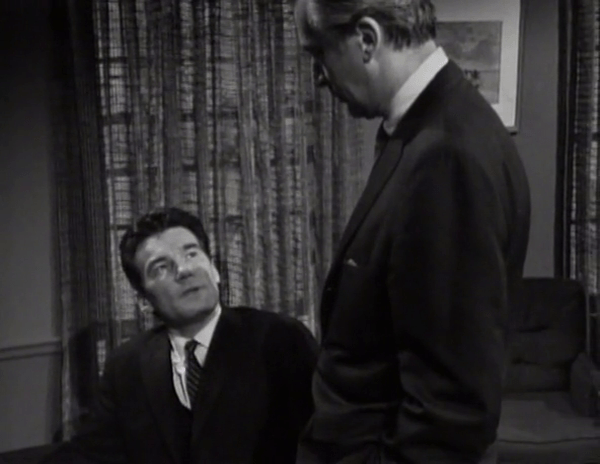
So, my first comment is if you’re going to be talking about “cost figures” on your TV show, you might want to hire a more charismatic guy than John Baragrey.
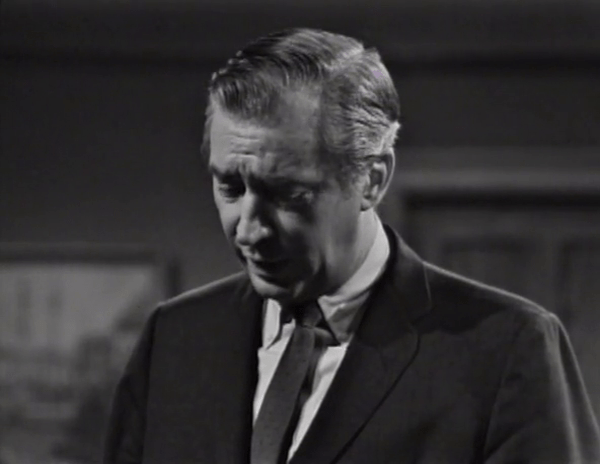
One of the most prolific character actors from the first 20 years of television as a medium, Baragrey was introduced as James Blair at Burke’s Bangor business trip in Episode 42, where he was established as an associate of Burke’s other banker, Stuart Bronson, who we met once in Episode 27 and will never hear about ever again.
Baragrey’s presence is soft, reassuring and very much suited for an accountant. The trouble is, this makes him very boring, and while such a trait is expected from a real banker, it doesn’t make for particularly compelling television, which this storyline was already struggling to be in the first place.
Blair informs Burke that his bid is on on the “Logansport fishing industries”, and if you’re wondering what the hell these people are talking about, good for you.
Logansport has occasionally been mentioned as the next neighboring town to Collinsport. Joe and Carolyn went to a movie there with Burke in tow, not that we ever got to see that. This, however, is the first mention of the town having its own cannery which, apparently, has been defunct for some time. Likewise, this is the first we’re hearing of Burke planning to buy this cannery. Until now, it’s been all about acquiring Collins properties and Collins debts. By introducing the Logansport thing, Burke suddenly has an in-universe path to putting strain on the Collins finances.
Needless to say, it’s shameful from a storytelling perspective that we’ve had nearly 90 episodes to advance all of this, and yet this beat, as well as various others, will be thrown out at the audience, half-beaked in one 20 minutes span, but that’s just Dark Shadows for you.
We go to Collinwood, where Roger and Elizabeth are talking about more compelling things.
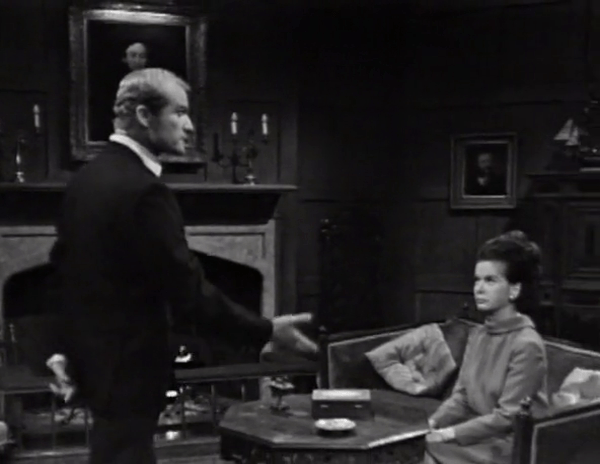
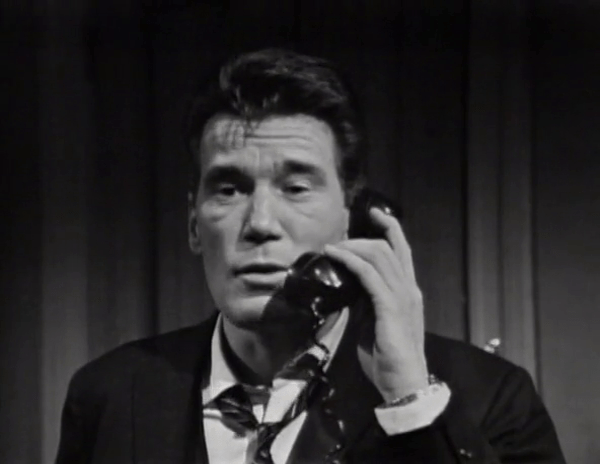
It’s shocking, I know, but for once, the subject of this show’s ostensible protagonist is more interesting than what’s happening on screen. This half-hearted discussion of Vicky having “delusions”, such as her seeing Malloy’s ghost, is cut short, however, by what else by the ringing of the phone.
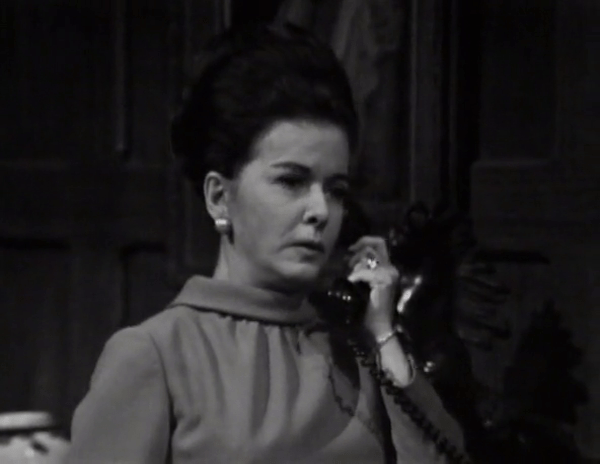
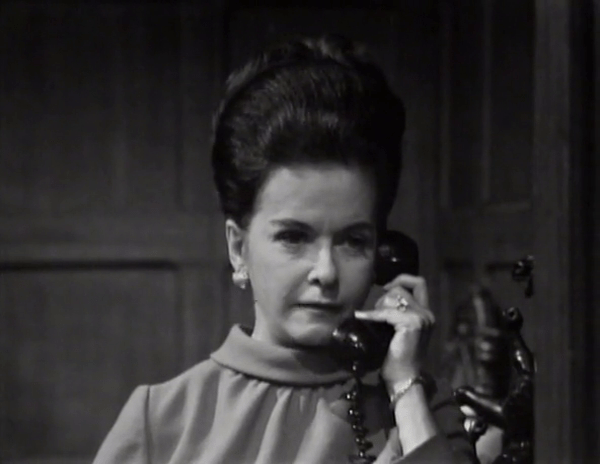
Joan Bennett is the cast member most often relegated to the dismal role of carrying on a conversation with a non-existent person on the other end of a telephone call. What makes this sadder than it already is is the fact that she’s the biggest name in the cast, and the only one to have ever earned the title of “movie star”, unless you count Louis Edmonds’s, er, spirited turn as the villain in a terrible spy movie a couple of years before all this.
This time around, Liz is having a conversation with a “Mr. Garner”, earlier established in a phone call by Burke to the then-likewise-invisible Mr. Blair to be half of “Garner & Garner”, Elizabeth’s attorneys. This phone call allows Joan Bennett to make up for the relative draught of these scenes by giving us all the show-stoppers in one sitting:
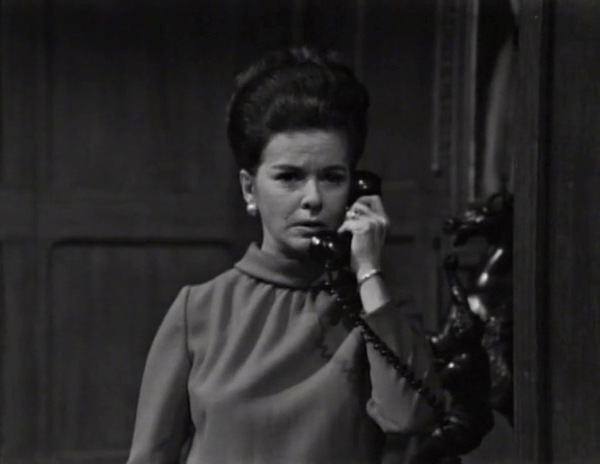
It transpires that Mr. Garner is calling to inform Liz about the bid Burke has put on the Logansport cannery. Liz and Roger proceed to outline the trajectory of their scenes for the remainder of the episode by describing to each other what Burke is doing and then playing without introspection directly into his hands.

I know they occasionally like to remind us what a fair and considerate employer Elizabeth is, but it does kinda stink that the notion of simply having a local competitor (i.e.: destroying the sardine monopoly the Collinses apparently have) is enough to strike terror into her heart. It’s another of those moments where we’re reminded that there is nobody to root for in this little feud, which is cool sometimes (the love-to-hate ruthlessness of Blake Carrington on Dynasty, for example), but not when the story itself is so boring that you were already tuning out before you realized everybody involved is a major dick.
Elizabeth immediately begins grandstanding about topping Burke’s bid, only for Roger to point out Burke will just top hers in return which…yes, that is how bidding works. Is Roger’s point that Burke has more liquid cash than the Collinses? I mean, given he’s an investment banker, that’s probably true, but it just brings to mind that time Burke offered to buy Collinwood and Roger immediately started simpering that maybe senpai Devlin had a point.

It becomes clear pretty quickly that Burke is counting on Liz to bet more than she can afford to acquire the Logansport cannery. After all, that would only expedite his other plan to purchase the Collins debts. And if she doesn’t outbid him, he still ends up acquiring a major business that instantly becomes the Collinses only competitor. There’s no way he can lose.
Which is another reason this isn’t working out the way Dan Curtis and Francis Swann want it to. There’s no tension. There isn’t even a time crunch!
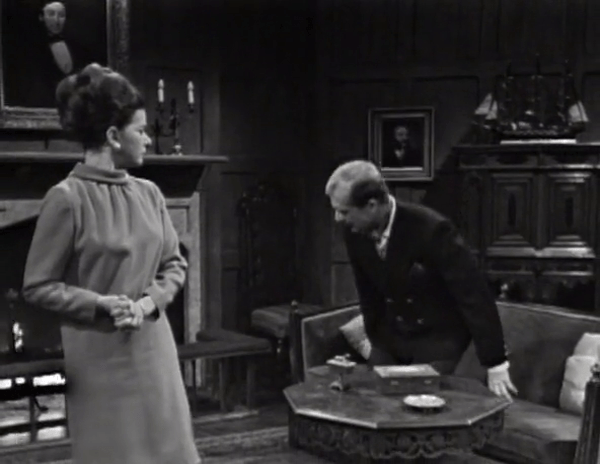
Roger freaks out at what a short amount of time this is and while it is…technically, for us in the real world, we’re on the 10th in-universe day in Collinsport, and it’s taken them exactly four months to get there. Without a change in this show’s pacing, it’ll be another 90 episodes before the Logansport deadline. We don’t have a guarantee of things moving so sluggishly (indeed, they won’t, exactly), but the audience to this point has no faith in this show’s ability to close that kind of gap with any urgency. Which is another blow to this thing’s efficacy.
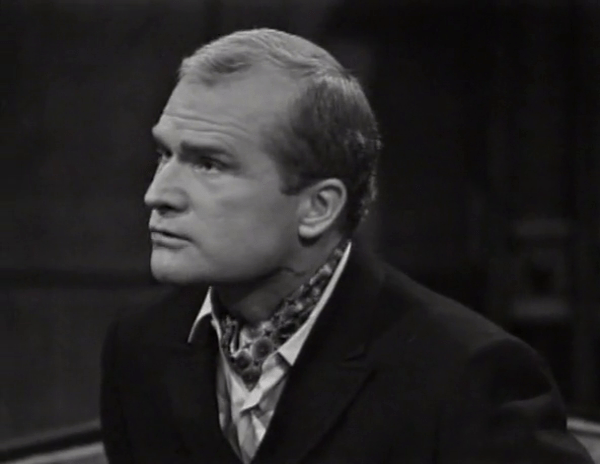
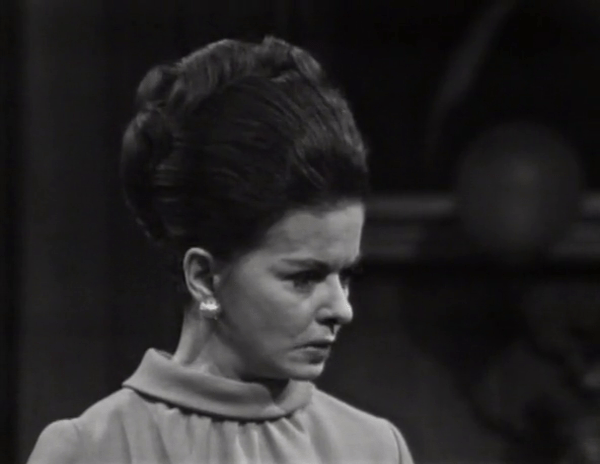
We’ll never get any concrete examples of a time when Roger was dependable in any way. We already know he’s a major slacker at business and blew all of his inheritance on frivolities, both of which have been established in episodes written by Francis Swann, so I have no idea what he’s getting at.
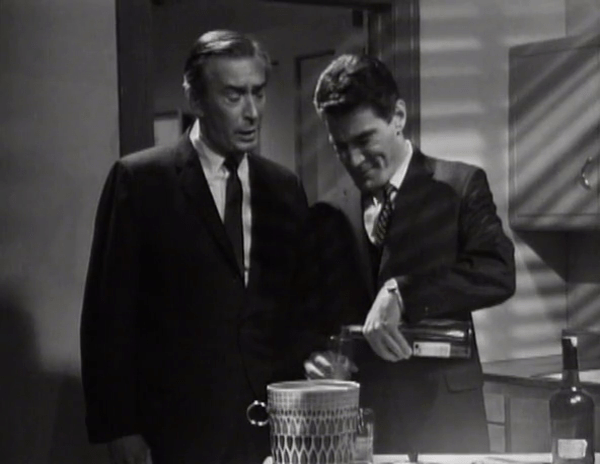
This episode is one of the worst in terms of characters in each half seeming to anticipate what’s going on in the other. The fact that every page of this script is laden with either impenetrable business talk or indecipherable nonsense doesn’t make it easier.
Burke dismisses Liz with more of his trademark misogyny, and with that, it’s time for the unveiling of the next element of his plan.
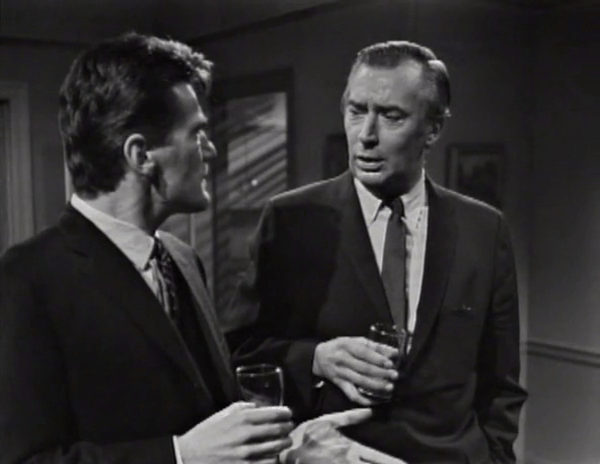
Snooty ice queen Blair may have a point. But don’t worry, Francis Swann had a great idea five minutes ago and is entirely willing to air it out now with no build-up or grace.
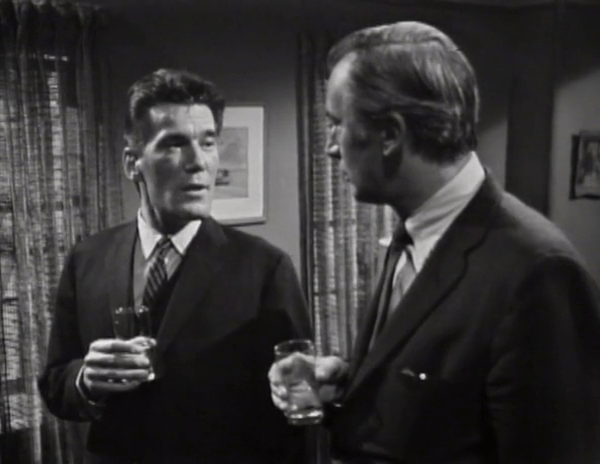
With all the timing of a German farce, Burke’s point is subsequently illustrated by a call from the front desk, informing him that he has visitors for a heretofore undiscussed meeting:

Burke has invited four top men from the Collins plant for a business meeting, in what is our first look, outside established character Joe Haskell and the now-deceased Bill Malloy, at the types of salt-of-the-earth individuals that make the Collinses all their money.
They are homely, uncharismatic fellows, with names like “Zeb”, “Ezra”, and most notably…
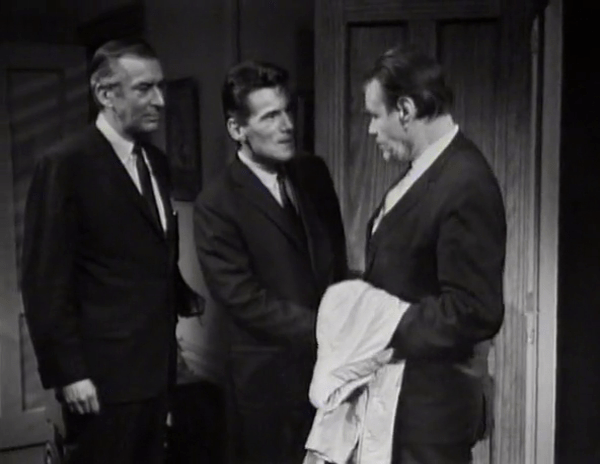
Amos Fitch is the only one of these four guys with any dialogue and, therefore, the only one worth discussing in any capacity. Like Blair, he is played by a seasoned character actor, in this case, one George Mathews. Also like Blair and his three silent colleagues, he isn’t going to be winning any beauty contests anytime soon.

Something else that may destroy your faith in this show’s ability to tell this story is watching the central actor in it gradually lose his hold on the script.
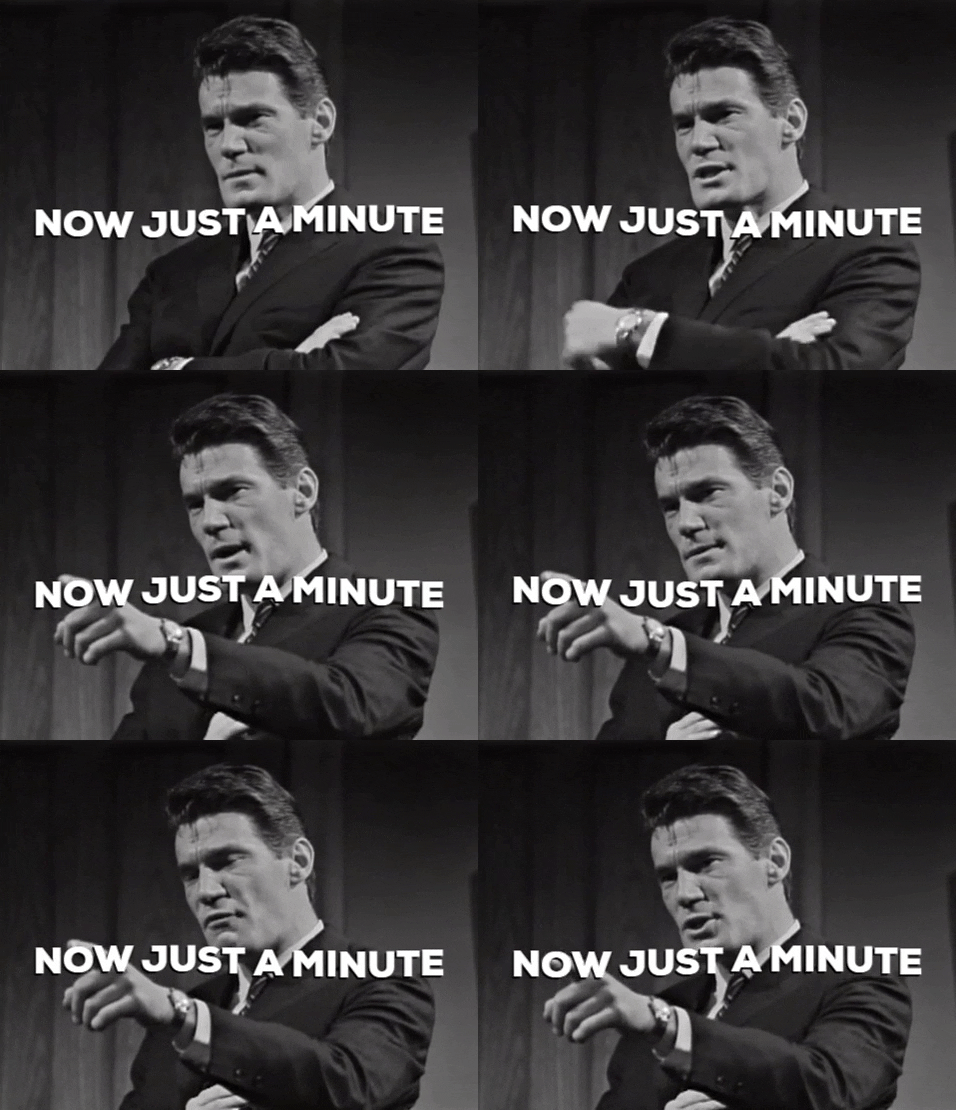
Mitch Ryan says each of those three sentences as if they were its own separate line of dialogue and he wasn’t sure which of them was actually in his script.

Given how excellent Mitch’s scenes were in the last two episodes he featured in, I guess it’s only natural he’s falling over himself this go-around. And who can blame him? It’s a very talky chain of scenes on a crowded set, in which Mitch must play negotiator, salesmen and (most grievously) expositor general, describing an entire slate of affairs that, for Mitch Ryan as well as us at home, are entirely intangible and unexpressed by anything we’ve actually seen be played on the show.
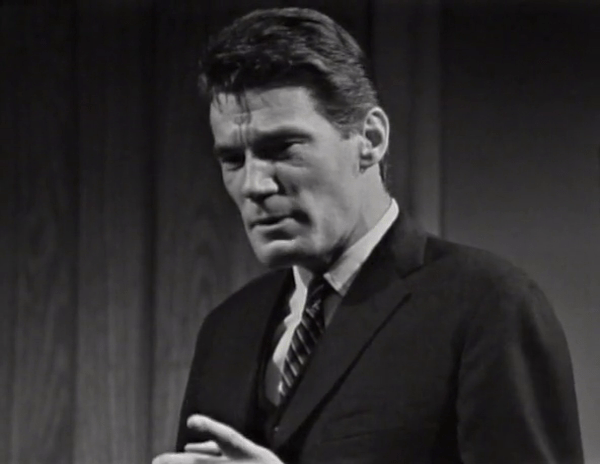
Well, of course he knows he can do it with their help, he just said he knows they can make it into a first rate outfit.
Regardless, that’s Burke’s latest maneuver: luring the Collins plant’s best guys to work at his new enterprise. Mr. Fitch, the only one who matters, isn’t convinced.
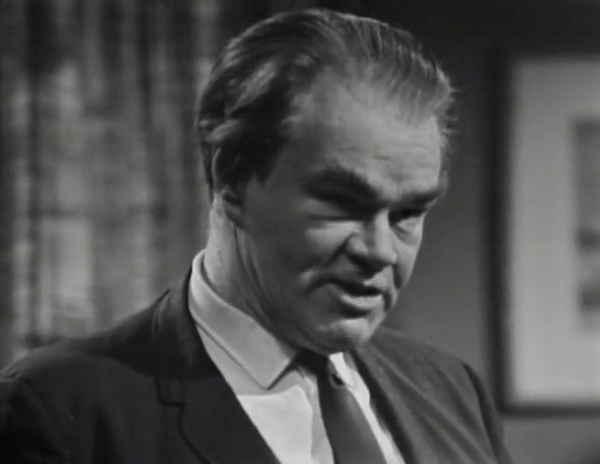
I give Francis Swann a lot of flack, but this is a very utilitarian piece of dialogue. We know everything we need to know about this guy and there is no reason for any of this to go on any longer.
And yet it will.
I should also point out an internal problem with this ploy of Burke’s: Amos Fitch has a point. While it might make one kind of sense to bring the most seasoned men from the Collins plant to work at Burke’s new enterprise, such men are older and less likely to jump into a new business venture when they are already comfortable. Burke would do better to court the attentions of, as Amos puts them, “younger men”, like, oh…
Joe Haskell.
I know Joe turned down Burke’s very first overture to spy on the Collinses for him way back in the first week. But time has passed and, as Joe’s relationship with Carolyn has suffered its worst blow yet, he may be more willing to ally with one enemy to stick it to another. Imagine the drama that would cause, with Joe joining the Logansport plant, perhaps having been promised a quicker path to independent enterprise through it. Maggie would encourage Joe’s ambition while Carolyn would despise him for it, etc.
The Logansport cannery would then be positioned as the place where the younger, brighter men worked, in contrast to the stuffy old Collinses. New money vs. old money. Burke could let all the young guys smoke dope on the boats and pleasure themselves with the fish tube.
Since I’m yelling, let’s try something else…why isn’t anybody talking about the guy who was killed?
Bill Malloy was the manager of the fishing fleet and cannery. He was these guys’ boss. How is his death not being mentioned by anyone in this scene? Talk of the line of succession, at least, and who’s next in line for Malloy’s job?
Or why doesn’t Burke capitalize on all the ballyhooing he’s been doing around town and mention all the evidence implicating Roger in the murder of a man these guys most likely respected? This is the time to weaponize the thing Burke’s been talking about for all these weeks, and yet the only mention of Malloy was that throwaway discussion of Vicky seeing his ghost earlier in the episode.
Instead, we get Burke and Blair promising the guys some sort of profit sharing thing which, while lucrative, isn’t half as interesting. We don’t know these guys. We don’t care what they think. They’re just utilities. If they want us to be invested in them, more poignant dramatic choices need to be made.

That is, as soon as he figured out just what that is and how to say it.
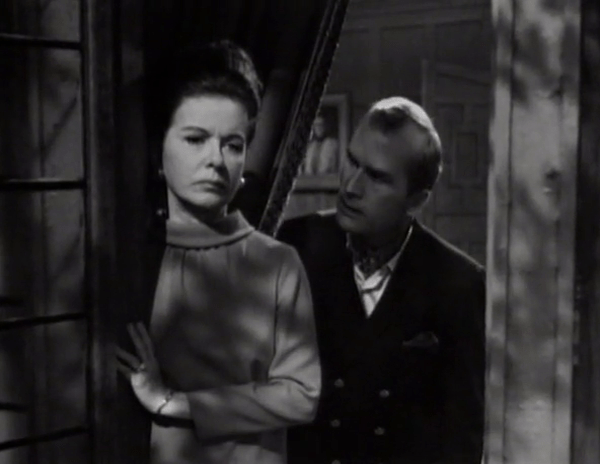
Roger would know, of course.
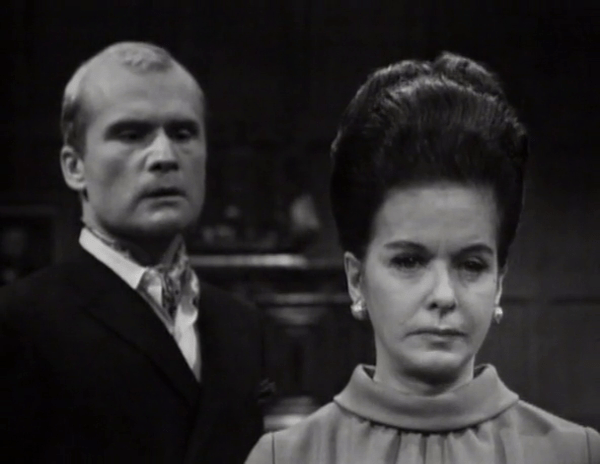
The obnoxiousness continues apace, with Liz dropping some poorly refined dramatic irony on us:

By which she means the very men Burke is at this moment trying to buy. It isn’t cute.

This whole thing is such an unapologetic stinker. I’d like to imagine it would go down easier if some time had been spent building it up, rather than just shelving Burke’s whole plan for two months, but I’m not so sure of anything could’ve spared us this godawfully clumsy execution, especially now that we’ve been introduced to an actual ghost which has promised a new, unexpected and even exciting furtherance for the previously stagnant Bill Malloy story.

With the cigarette, the drink, and the jacket off, we’re supposed to get the impression Burke is under a lot of stress, but I don’t think Mitch is acting here.
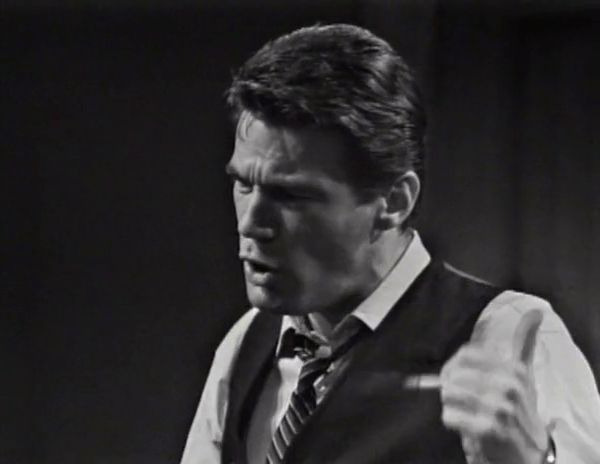
There’s an interview with Dan Curtis, in fact the same one I cited last time, where he talks about this scene, describing it as Burke talking about “some thing with the cannery” before adding “it was some story that just wasn’t working out” (which, let’s face it, it isn’t).
Significantly, Curtis mentions a point where Mitch Ryan was supposed to have some big sweeping speech, only for Mitch to completely lose track of his lines, at which point he goes “You know what to do, Amos!” and departs the set, at which point a desperate Curtis yelled out “FADE TO BLACK”, marking an abrupt end to the scene, the act, and also the entire storyline.
This is that scene, but it doesn’t happen exactly as Curtis remembered back in the late ‘80s or early ‘90s when that interview was filmed. Mitch is obviously floundering through a substantial piece of dialogue that was definitely supposed to be a dramatic ultimatum. The idea seems to be the suggestion that, once Burke succeeds in ruining the Collinses, there’ll be no more jobs anywhere but at Logansport.
This intention is hampered by Burke confusing the names of the two towns, Collinsport and Logansport, not once, but twice, confusing “proposition” and “offer”, and also omitting the actual main idea of the speech: that there will soon be a lack of jobs in Collinsport. Without that, it all becomes a meandering word salad and Mitch, seeming to realize this, pivots things to George Mathews, with “You know what I mean, Amos?” (not “You know what to do, Amos!”, as Curtis remembered), which is the equivalent of a stage actor asking for his line during a production.
Naturally, respected character actor George Mathews is taken aback by Mitch’s complete abdication of his responsibilities as a performer and gawps in shocked silence for a while before he either consults the Teleprompter, or checks to see if somebody is bringing out one of those vaudeville canes to drag Mitch off the set.
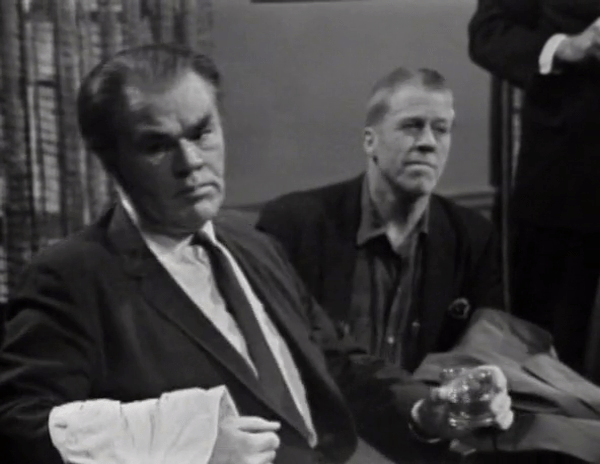
So, there is no immediate fade to black. Mathews seems to recover himself enough to remember the end of the scene, which is Amos declaring the Collinses will not be so easily taken out of business (dialogue that would only have made sense if Burke has stated, or even implied, that he intended to put them out of business in the first place), that he is happy working for them, and he has no intention of having any part in Burke’s scheme. It’s only then that Amos leaves and we FADE TO BLACK.
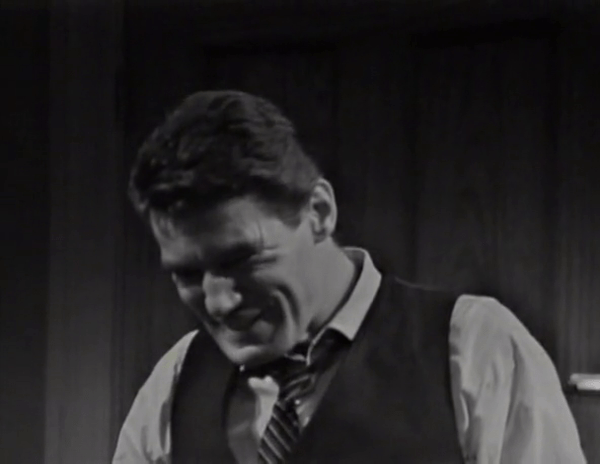
Obviously, that was the high point of the episode. It’s all downhill from here.
Act III begins with more of Liz and Roger just happening to discuss what’s already going on in the other end of the episode. You know. By coincidence.
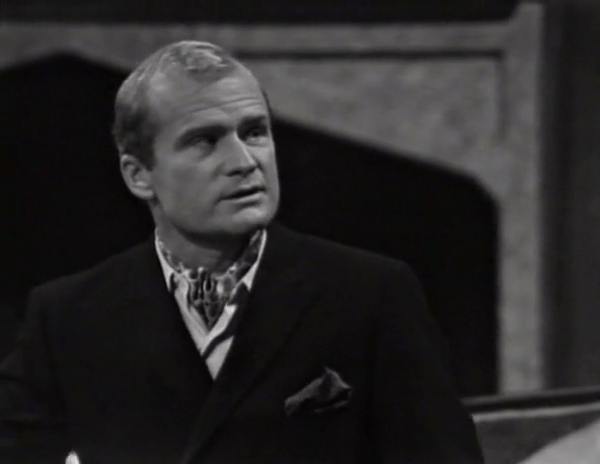
It’s kind of funny that Roger is the one who figures Burke will try to poach men from their business. It’s probably supposed to illustrate that he’s the cynic and she’s the idealist, but she isn’t much of an idealist in the first place, so it just looks like Roger is smart and Liz isn’t which…
Isn’t borne out elsewhere.
Their conversation is interrupted by a visitor.
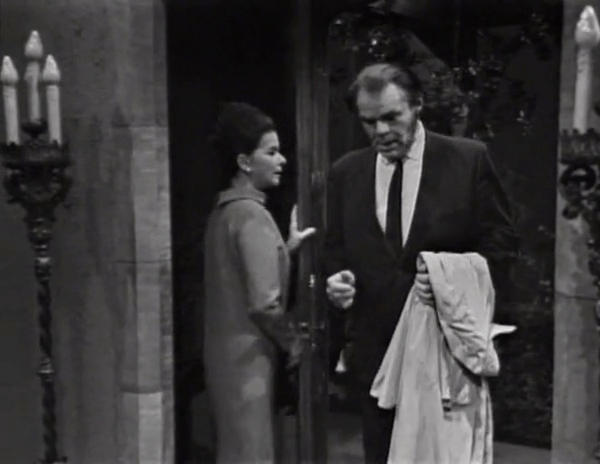
Elizabeth acts like it’s totally ordinary for Collins fishermen to show up at Collinwood, despite it previously being established that Bill Malloy was the one who came up to the house to do business with her. We aren’t given any hints or clues if this is the first she’s seeing him in 18 years or whatever because none of it really matters and the whole gambit was already ruined by Mitch pissing himself mid-speech. They’re basically just spinning their wheels until the episode ends.
Amos does his due diligence by licking the boot pressing on his neck, tattling on Burke to Elizabeth and Roger, which I’m sure will earn him a schoolyard beating from Ezra and Zeb and Chronotacoan, or whatever his name was.
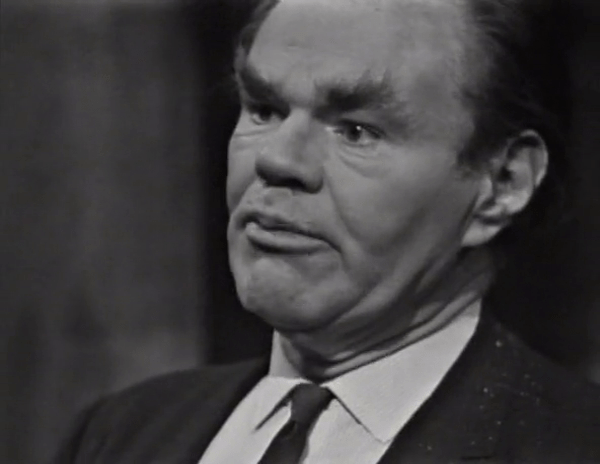
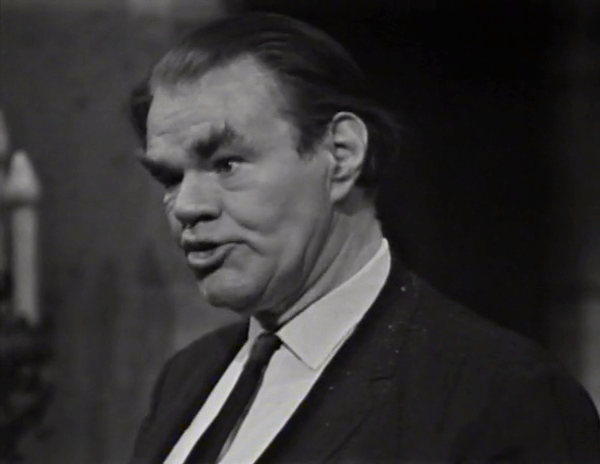
It turns out the other men stayed behind and, therefore, are likely to be swayed by Burke. Amos was the one loyalist.
Again, I don’t know how they expect me to give a damn about any of this. The loyalty or treachery of Amos frigging Fitch isn’t what’s been keeping me tuning in for 89 episodes, nor do I have any great hope this development will spur any compelling changes in how the already established characters behave.
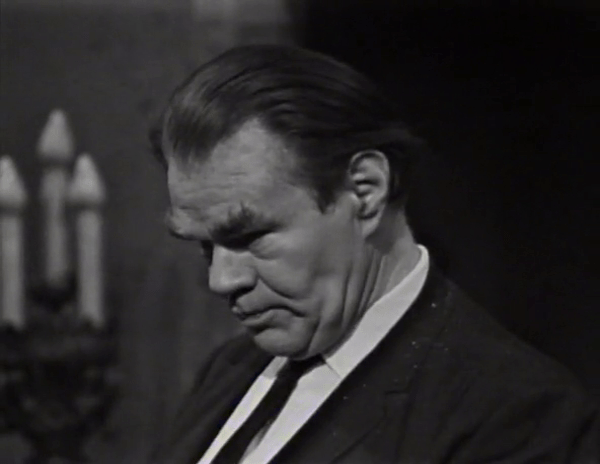
Well, he tried to say that.

That’s the exact same thing she tells Matthew whenever he’s sufficiently debased himself for her, if you want to know how much Elizabeth values her workforce.

There isn’t, apparently, even though a few suggestions come to mind:
- Appoint Fitch manager of the fleet and cannery immediately to reward him for his loyalty.
- Send Fitch among the other three men to negotiate higher paid positions for them at the Collins plant so they won’t be swayed by Burke after all.
- Promise everybody at the plant free rides in the fish tube, as incentive.
But Elizabeth isn’t as creative as I am, I guess. She bids Amos farewell and he leaves Collinwood, and the show, forever, because Dark Shadows lost interest in this whole plot at the same time Mitch Ryan did.
Which I’m sure raises a lot of questions about how they handle Burke’s revenge going forward.
Yeah. Doesn’t it?
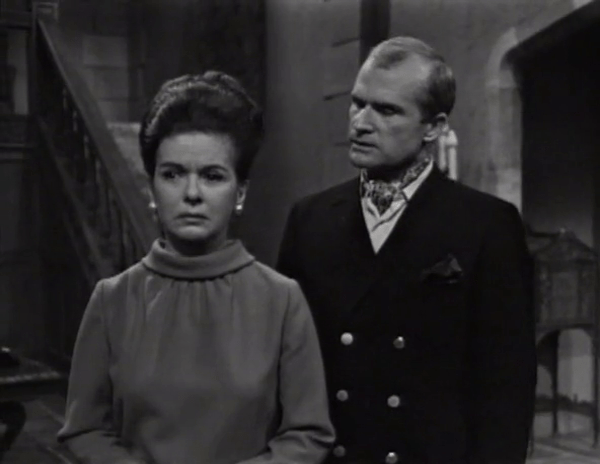
I’m glad we have Francis Swann to explain to us what he just wrote.
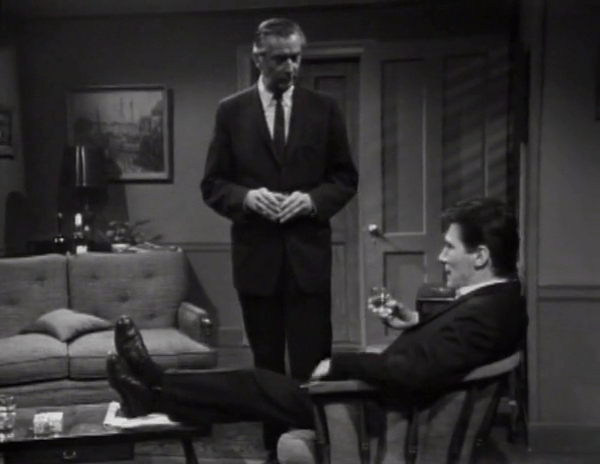
Well, he hit something, sure enough.
Blair plays Devil’s Advocate, pointing out that Burke wasn’t as convincing as he thinks, not for all the reasons we’re aware, but because he may not have convinced Fitch because again, every character is somehow innately aware of what the other characters are doing, solely so they can talk about it and pad out the script.
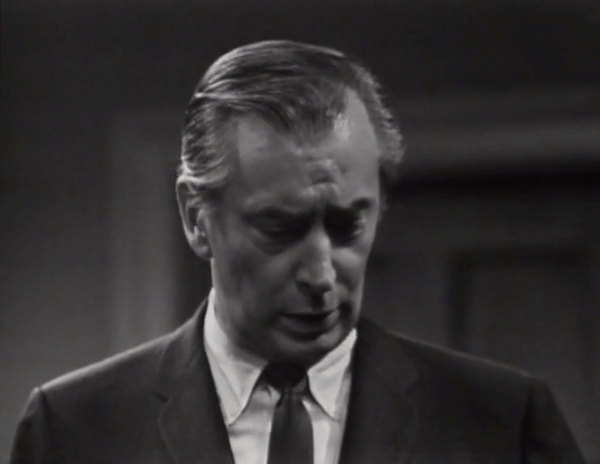
And would you believe it, that’s exactly what happened. What an empath old Blair is.

No comment.
It turns out Burke is imminently convinced that he convinced the other three guys and that’s just great for him, I’m glad this experiment made one person happy.
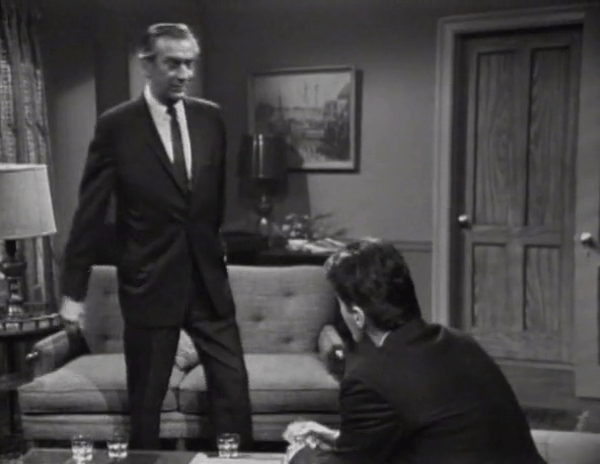
And only half his lines.
Blair declares his intentions to return to Bangor, and Burke reminds him…

He’s one to talk.
Burke then gives Blair an envelope with $1,000 in it as thanks for his “loyalty”, and when Blair seems about to object to this abject bribery, Burke shoos him off the set because he’s a brilliant business mind with an acute understanding of how to win people over.
There’s one final segment where Liz calls Burke to tell him She Knows What He’s Doing and they exchange some painfully on-the-nose ‘So this is war’ dialogue.
There are ways to do a business story well. There’s a reason they’ve been the bedrock of soaps for decades. It’s actually quite easy to fuse the dull legalese of business with the intricacies of family drama and intrigue.
Take a recent General Hospital storyline, one they aired from spring of this year (prior to COVID-induced shutdown) and resumed telling when they went back on the air in August.
The storyline focused on ELQ, the Quartermaine family business which does…er…things. The company was acquired in a hostile takeover by Valentin Cassadine, who achieved his goals by manipulating several characters for control of their shares. He promised to bankroll Lucy Coe’s cosmetics start-up, for one, made a deal with Samantha Morgan to secure her a less-harsh parole officer who would allow her to visit her badly-injured ex-felon husband in the hospital, and bailed Brook Lynn Quartermaine out of a predatory contract with her musical agent.
Each of these overtures affected different parts of the canvas, creating ripple effects that effected everybody in Port Charles, transforming the drab world of business talk into something personal, human and relatable that audiences would immediately and easily be able to translate as something meaningful.
You know it’s bad when I’m complimenting General Hospital.
Jesus be a third option.
It’s This Guy From That Thing!
Before he appeared on Dark Shadows to be debased and humiliated by the flailing of Mitch Ryan, George Mathews was among the most prolific character actors in New York.
His burly build and, er, Paleolithic mug may not have made him a leading man, but was perfectly suited for an endless parade of mobsters, bandits, pirates and cops.
After being denied a position at the US Postal Service, which I guess was a thing you couldn’t get a job at in those days, Mathews went on to the stage and, from there, to a marathon run of teleplays and anthology series going back as early as the 1940s.
His first screen appearance was in 1943’s Stage Door Canteen, when he appeared (uncredited) with Ray Bolder, best remembered today as the Scarecrow from MGM’s Wizard of Oz.
The film is one of those rousting wartime pieces. The stars (Edgar Bergen, Tallulah Bankhead, Judith Anderson, and even Charlie McCarthy, a puppet that people in the ‘40s treated as some kind of god) all played themselves in a slapdash plot about soldiers on leave. It was essentially a feature length USO performance. And Mathews’s role as a Marine is uncredited. I’m only talking about it because I think the whole thing is cute.
Mathews’s fist television appearance was in The Front Page, a (very) early TV movie, aired in 1945. In the ‘50s, he would find regular work on television for the first time, appearing in two different roles on early police procedural Suspense from 1949 to 1952.
The ‘50s also brought a variety of Western roles in films such as Last of the Comanches and The Great Diamond Robbery.
Given Dan Curtis was indulging a fetish for the mid-century work of Alfred Hitchcock at this point on Dark Shadows, even drawing direct inspiration from certain episodes of his thriller anthology Alfred Hitchcock Presents, it’s highly likely he was familiar with Mathews from two episodes of that series, both aired a decade earlier in 1956.
The ‘60s would bring roles on Dr. Kildare, Gunsmoke, Perry Mason, The Untouchables and The Naked City, which just about every actor we’ve covered for this feature appeared on at least once.
Mathews would retire from acting in 1972, a year after Dark Shadows went off the air. Interestingly, his very last role was a character named “Malloy” in 1971’s Going Home. Mathews would pass away from heart disease in 1983 at 73.
This Day in History- Thursday, October 27, 1966
As Dark Shadows closed off its fourth month,
Significant changes were occurring on the global stage, though the significance of some of these changes were not immediately felt.
The UN General Assembly voted overwhelmingly to end the South African Mandate over South West Africa, which had formerly been a German colony. The only nations who voted against the measure were South Africa and Portugal, who had a colony of their own, Angola, bordering the Mandate territory.
Erich Mende, the Vice-Chancellor of West Germany, resigns along with three other men. The Chancellor, Ludwig Erhard, left with a minority government, ends up resigning at the end of November.
Matt Drudge, the guy behind the Drudge Report (you know, that conservative Internet rag that only recently decided maybe the political climate they helped create isn’t very, yanno, good for anybody) is born in Maryland. I kind of thought he’d be older than my parents, but whatever.
It’s the Great Pumpkin Charlie Brown airs for the first time on CBS. It was shown annually since then for 35 years, switching to ABC in 2001. This year will be the first without any Peanuts specials airing on TV, the contract having expired, because we can’t have nice things.
 Kooks of Collinwood