
Time and time again, Dark Shadows keeps bringing us to the same place: Burke Devlin, avowed nemesis of Roger Collins and, by extension, his entire family, turning up uninvited (if not quite unexpected) at the great house on the crest of Widows’ Hill.
This has been the go-to Friday cliffhanger since the end of the second week, with Burke now making so many trips to Collinwood that I have lost count. He has challenged Roger, helped David, done verbal battle with Elizabeth, and even escorted Victoria Winters home from a breakfast date with his ex.
In Episode 76, Burke’s latest trip to Collinwood both makes use of the various cliches and beats of earlier visits and dispenses with them, creating what seems like the definitive iteration of these big dramatic battles, the one to end them all.
Not that it is that, but a gal can hope, yes?
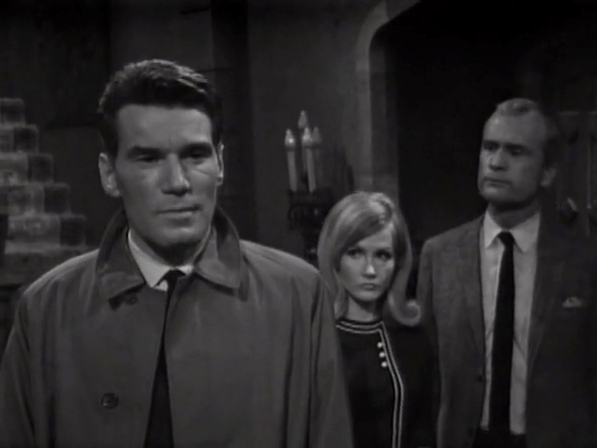
This time around, the Devlin has no time to waste on the usual targets of his trollery: Roger and Carolyn. He wants to go right to the Kahuna who, indeed, he was extraordinarily dismissive toward during his previous visit to this house…which was also written by Francis Swann. This episode is a quintessential Swann one, in that you will have to just Go With It when things start not making sense.
Burke wanting to see Liz over the others is an indication of the seriousness of his intention this time around. The revelation of the coroner’s verdict has untapped Burke’s anger in a way we haven’t really seen, not even during his two go-arounds as a prime suspect in attempted and actual murder.
Indeed, Roger’s demand to know what Burke is here for brings an unfiltered, honest answer of the kind we haven’t gotten in 75 episodes, indeed, for a question he has often denied to even acknowledge.
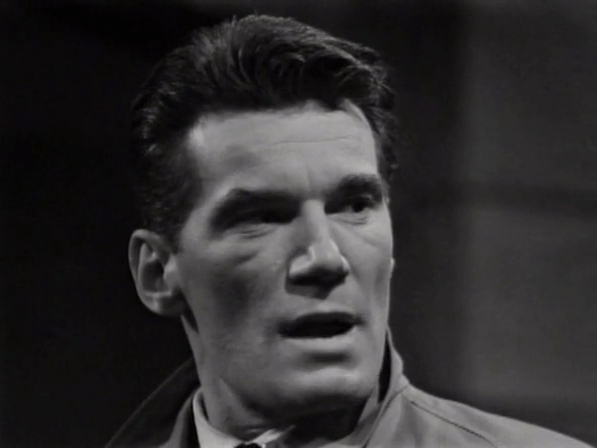
And there it is, plain as day. No poetic language, no insinuations. Burke just says what he wants and has wanted since the beginning.
So of course, these thickheads don’t believe him.
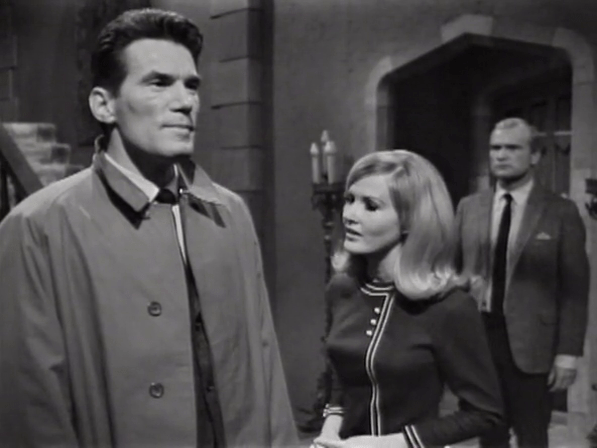
The thing is…this isn’t the first time Burke has insinuated to either of these two that he wants to own Collinwood. In fact, in his first face-to-face with Roger at the start of the third week, Burke wondered to Roger if Elizabeth was willing to sell the house. This, of course, was overshadowed by Roger getting into a comically non-fatal motor accident shortly afterward and the show spending the next three weeks milking that event for all it was worth, but it still happened. It hasn’t impacted the plot in any way by virtue of being almost forgotten, but it happened.
Soap opera convention, of course, mandates that the only things from Long Ago (even in young shows still in their first year) that will be important are the ones that people see fit to talk about. Even long-time viewers won’t remember things from the very first weeks if they aren’t repeatedly hammered in. The audience will remember that Burke wants to acquire Collinwood because he keeps talking about it, and even occasionally does things to further his plot, like today. However, they’re unlikely to remember Burke insinuating this to Roger because Roger himself hasn’t reflected on that conversation once in three months.
Something less forgivable is Carolyn being a transparent dumbass again.
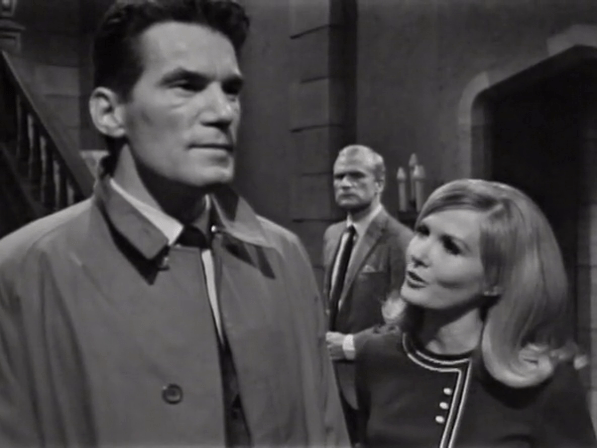
Yes, my dear, and he was lying, and multiple people all across the canvas…indeed, almost every single character, have pointed out to you the many reasons he could be and is lying, so for you to act like this is some big betrayal is rich as Mrs. Johnson’s famed sponge cake, and all its rich mayonnaise filling.
Burke’s response is totally douchey but, in this context feels like just what Carolyn deserves for being such a moron.
I call malarkey.
The thing is, here is Burke basically admitting that he led a teenage girl on with pretty lies. He is definitely aware she thinks he’s hot and has played into this multiple times in their every interaction, including this very in-universe day when she called on him at his hotel room. It’s really gross and he’s cool with that.

By ‘elected’, he means ‘into bed’.
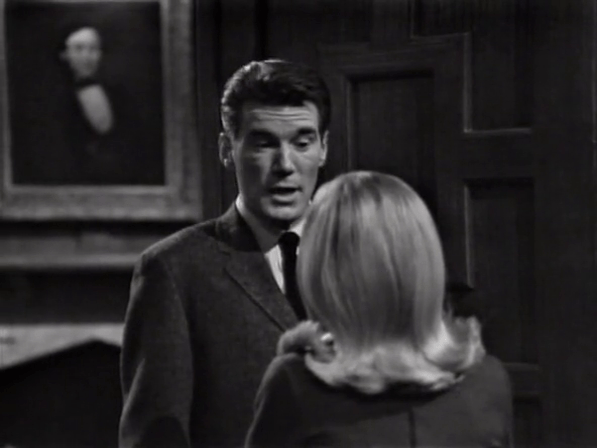
I sure can’t wait for him to hook up with the protagonist. There’s a couple I really want to root for.
Roger ushers Carolyn away and heads into the next room, where Burke again suggests he intends to expose Roger as being responsible for the death of Bill Malloy, coroner’s verdict be damned.
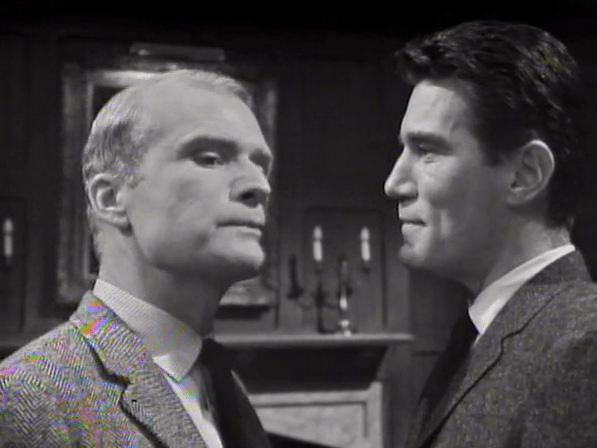
All of this stuff is immaterial to Burke’s visit. Malloy’s murder, the storyline that has animated him as well as the rest of the show, takes a backseat today in favor of Burke’s overarching ambitions to…negligible effect.
Carolyn heads outside to find Liz, who is just returning herself, having already been fetched by Matthew. As this is happening, Roger accuses Burke of being butthurt over the coroner’s decision and so deciding to “steal” Collinwood.
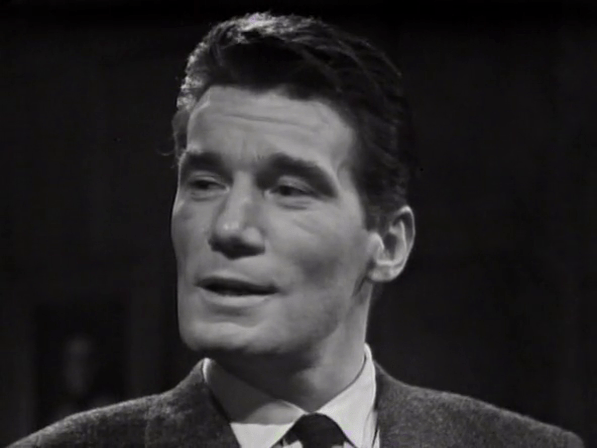
But he probably did steal from that “Indian chief” he broke a promise to. Remember that? Regardless.
So we come back to Burke’s primary motive: the five years he believed he wasted, serving a sentence for a crime he believes Roger committed. This, of course, has always been connected to his desire to catch Malloy’s murderer, since he believes Malloy was killed to protect the secret of the Collins family’s (specifically Roger’s) connection to the manslaughter case.
And yet, we know it isn’t that easy. Because, unless Malloy learned something big and dramatic in the brief interval between our last seeing him in Episode 46 and his death, it is know to the audience that the most Malloy knew was that Sam knew…something. Burke know also knows, with less evidence, that Sam knows something. Malloy never figured out what exactly Sam knew. So if he was killed to protect the secret, it for a secret he didn’t 100% know the truth of.
But I guess that doesn’t matter as much anymore.
Liz arrives and learns Burke desires to “raise myself to the status of a Collins”, an idea both siblings find ludicrous.
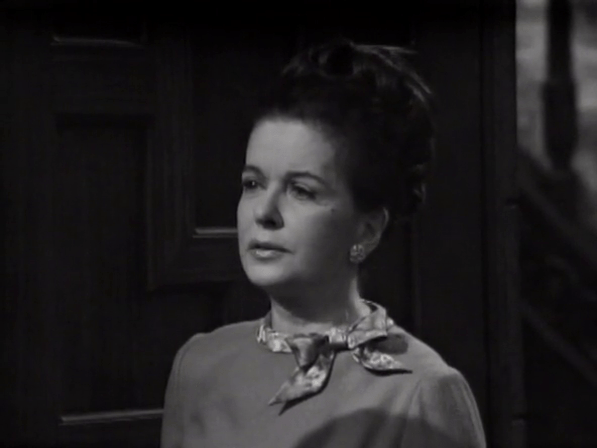
At which point, Burke makes clear that the emphasis in that sentence is “status“, not “Collins“. He finds little enviable in any member of the Collins clan. He just wants take what they have for the sake of taking, not claiming.
It’s hard to empathize with either side of this disagreement. Moral ambiguity is all well and good and, arguably, a necessity for a daytime soap, in which as the months and years go by, characters ought to grow and change, going from “bad” to “good” and vice versa, as dictated by the changes the various storylines put upon them.
HOWEVER
It remains true that the Collinses, who we are probably supposed to lean more toward (given we are invited to identify with them, and there house is the primary location of the series) are uppity elitist snobs. Elizabeth, who is usually the go-to sympathetic Collins in the face of her brother’s antics, employs very similar old money snobbery, but with none of Roger’s schoolyard bully inflection, making her insults all the more cutting.
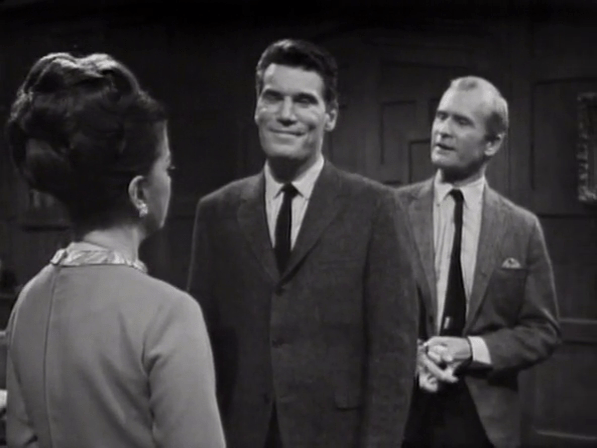
On the other hand, Burke is a rude, chauvinist pig. He has admitted to toying with Carolyn’s emotions and is essentially taking advantage of the death of a man who didn’t even like him to expose his enemies for imagined crimes. And, indeed, his revenge is shallow. He admits it himself. Through his poorly explained career as a venture capitalist with numerous international investments, he has more money that the Collinses and, therefore, needs none of the property he wants to take from them.
Burke references the euphemism “to make a silk purse out of a sow’s ear”, which is similar to another pig based expression: “to put lipstick on a pig”, essentially meaning to attempt (poorly) to make something fine out of something poor and rough. It is an inherently classist assumption, suggesting the superiority of old money like the Collinses against new money like Burke.
Of course, to the extent wealth can be earned. Without getting all Marxist or ancap or whatever the kids call it these days, Burke isn’t exactly Walt Disney here. Arguably, he isn’t even Warren Buffet. The man is wealthy off a chain of investments that apparently began when he met a “character” in a dive in South America five years ago. Do “investments” make one more self-made than successfully maintaining a family business? Sure, Liz hasn’t earned the Collins cannery, but she can claim its current success, having made all the decisions (through Malloy ore not) for at least 18 years and probably more.
This makes things even more dubious and, I think, it is for this reason that Swann will attempt to suggest Burke has some history earning his own money as soon as next episode. Because Burke is an All-American. And Americans have to earn their wealth, right?
Hm…
When Liz presses Burke to explain just why he wants to own Collinwood, Burke suggests he wants to found a “dynasty”.
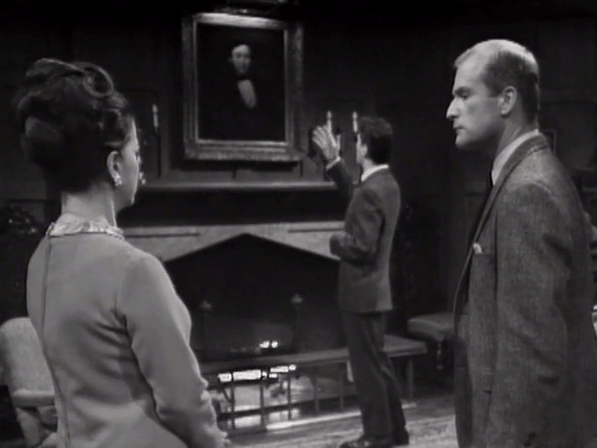
We’re still on that? Christ’s sake.
Anyway, Liz points out just what Roger told Burke back in the third week, if anybody present wanted to remember that: none of Burke’s intentions matter, because Collinwood is not for sale.
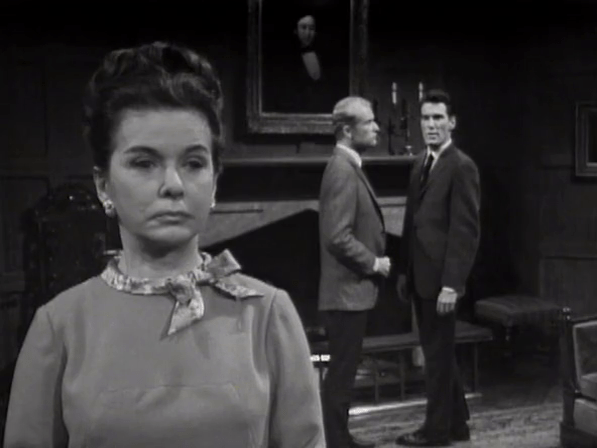
At which point, something very strange happens. Or not, depending on your interpretation of the character.
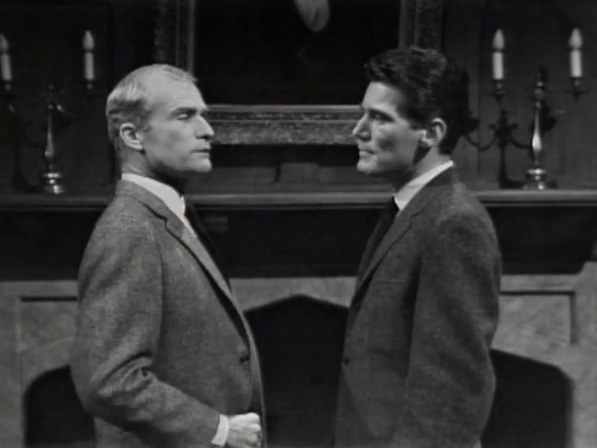
Roger Collins is a fickle asshole who believes in nothing. News at 11.
Victoria returns from her significant (even if she doesn’t know it yet) walk on the beach and is immediately assailed with more of the usual bullshit.
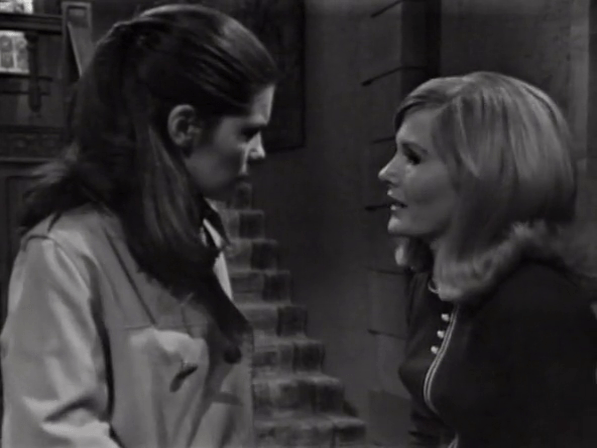
Carolyn could do this one better by admitting that Vicky has also been right about Burke. In fact, there is no self-awareness whatsoever, nor any acknowledgment f the fact that Carolyn was just this morning accusing Victoria of being a slut for Burke, right before she herself slipped off to see him in his hotel room.

Of course it doesn’t! He’s practically admitted it more than once! Vicky is also noticeably cavalier about this, indicating that she isn’t frightened of Burke, or terribly worried about his intentions. It’s a quiet bit of character writing, but in her easy dismissal of Burke’s threat, we get an indication of what could really make Victoria Winters special: she is Unbothered by This Bullshit.
Why should she care about the fate of a bunch of rich people’s property? Why should it matter? Intentionally or not, through Vicky’s indifference, we see how little this conflict really matters in the greater scope of the fictional world. It isn’t just us who feel this is all overbar the shouting. The heroine whose story we are ostensibly following also thinks so.
Even Burke is taking a break from all these hysterics to light a smoke in his enemies’ living room, just to show how little he gives a fuck.
This all while Roger is now trying to convince Liz that maybe they should just call it quits and sell Burke the house!

It took nothing at all. The moment Burke suggested paying more than necessary, Roger was all over the idea. Roger. Who is supposed to be Burke’s big enemy. Because he is, of course, a spineless lickspittle.
This shifts the onus of the conflict, not to Burke vs. Roger, but Burke vs. Liz. Roger would do anything if it meant getting Burke off his ass. Liz, however, has values, at least when it comes to the Collins name and legacy.
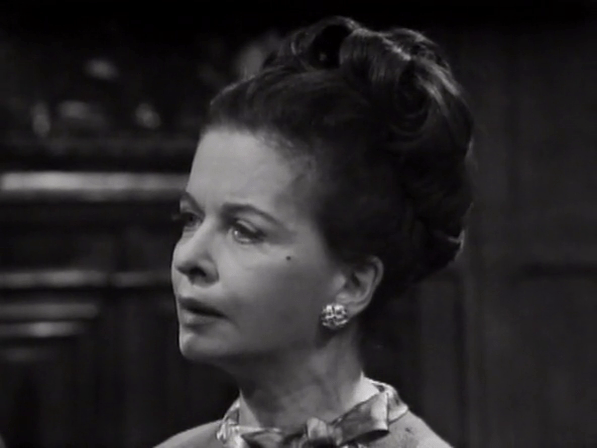
Legacy again. The Collinses are drowning in it, but Burke has no such legacy. And, however he tries to dress it, his primary goal is to acquire some for himself, even if it’s a legacy he never earned.
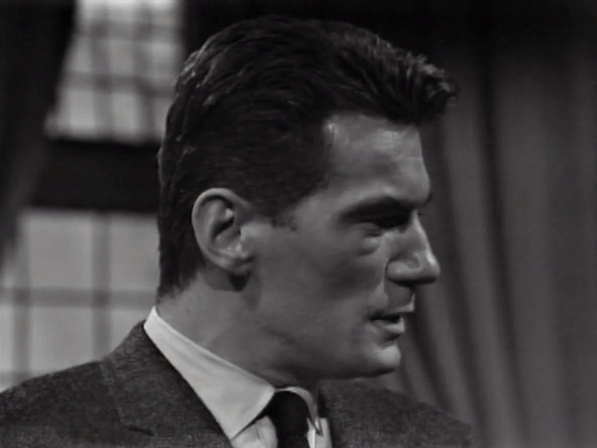
Went almost half the episode before screwing up a word. Great job, Mitch.
But, yeah, Burke just spells out his plan. After sitting on it for so long he just…tells them everything, complete with his own “There’s nothing stopping us now!”

And that’s a thing villains say. It’s what they announce to the world to show their hubris so that we feel good when they get taken down by the heroes. This whole episode…Burke dropping the mask he’s worn (however loosely) since the first episode to just tell the people he’s targeting that he’s targeting them is the equivalent of a supervillain monologuing about their nefarious plan.
Is that what this is? Some admission that Burke is to be seen as an overt villain? If not, what measures are taken to ensure we view him as still, in some ways, redeemable? Because his comportment to Vicky lately hasn’t been very effective in establishing him as an upstanding man.
But on the other hand, the Collinses aren’t ideal victims.
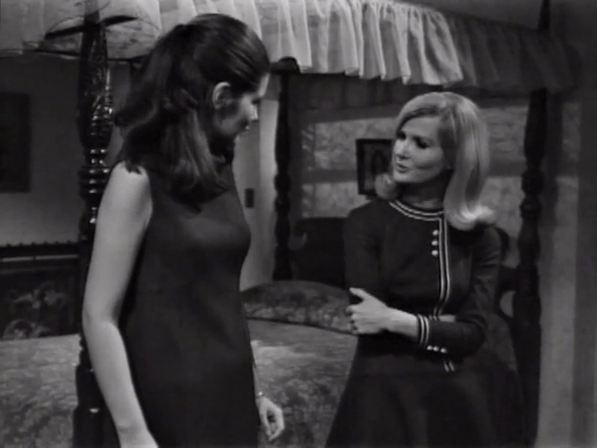
The stakes are skewey. The Collinses are wealthy. If the house is sold, they lose a possession, but they make lots of money. Were it not for Elizabeth’s insistence that this place has a special inter-generational significance and, therefore, great symbolic value as the family manse, there would be no stakes at all.
This makes things very lopsided and, again, makes it harder to feel sorry for the Collinses.
This comes up a lot in American soaps, where the central families tend to always be wealthy corporate types. The Young and the Restless is about dueling cosmetics companies, for example. Over the years, the fictional Newman Enterprises and Jabot Cosmetics have seen very many hostile takeovers, financial crises, and even some domestic terrorism incidents. The Newmans of Newman and the Abbots of Jabot will always be financially secure, no matter what happens to their companies. The real drama comes from the interpersonal conflicts between the characters. If, for example, (to riff off an ongoing General Hospital storyline), one character bribes a shareholder into standing against the rest of her family in a crucial vote. There are lots of story beats there concerning motivation, greed, loyalty and, above all, family. It’s stuff like that that makes the typical soap opera business story work.
Dark Shadows doesn’t have that.

What Dark Shadows does have, however, is (are) character parallels. The show is drunk with them. Here is yet another subtle bit of writing, especially for a writer so averse to such nuances as Francis Swann has historically been on this program. Victoria draws without saying as much a comparison between herself and Burke: that both have been drawn to Collinwood in search of roots, meaning, family, yet another thematic throughline that links the two characters who got off that train back in the first episode.
Anyway, back to weird outmoded expressions.
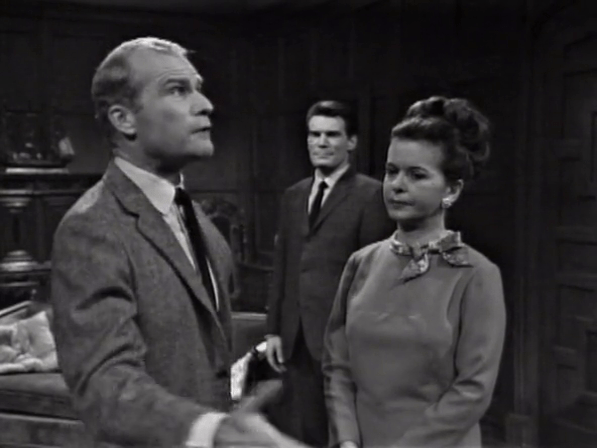
A notorious Days of Our Lives story from about five years ago centered around a marble (hence, white) elephant sculpture that some characters had acquired in Africa. It had something to do with blood diamonds. The story ended up dragging for months, leading up to a thoroughly unsatisfying resolution in which two people were locked in a boiler room by the titular character of the Hercules show from the 90s and then they fucked. I mention it now because the storyline ended up being a white elephant in line with the expression.
A white elephant is anything that cannot be gotten rid of. It derives from colonial occupation in Southeast Asia, specifically Thailand, Laos, Cambodia, and Burma. It was observed that monarchs in these regions would possess rare white elephants as symbols of their just and good rule. But the elephants, being sacred symbols, couldn’t be used for anything the way other elephants could, so you basically had a very expensive animal that served no practical use.
Collinwood is, Roger thinks, a white elephant. And he may be right. According to James Blair, the thing is a financial sinkhole. It’s dark and dreary, even in the words of Elizabeth, its big defender. And yet, as Elizabeth insists, it has a sacred quality to it, important as a symbol over anything else.
Burke suggests Elizabeth accept his offer to sell while she still can, and Joan Bennett hits us with another one:
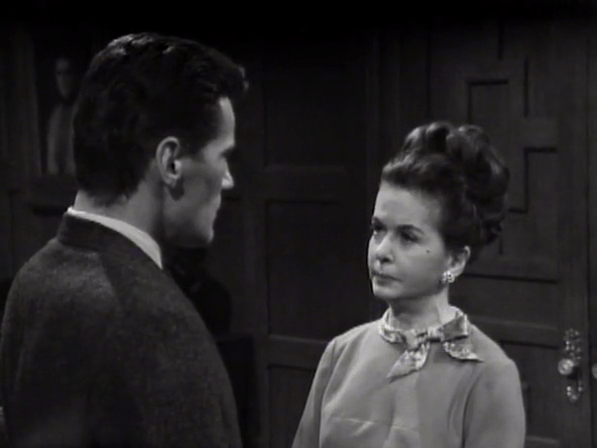
The stage is set for a classic soap opera business rivalry. Burke vs. Liz, who we have seen is a much more formidable foe than Roger, and certainly not one to tip her hand as much as her brother.
Roger does just this, in fact, ushering Burke out of the room in a desperate attempt to change his sister’s mind which we know isn’t going to happen. While Burke is waiting, he is approached by the goils.

No lies told. It’s kind of sad how we’re expected, only now, to finally buy Carolyn’s disillusionment of the man who has done absolutely nothing to earn the trust she has lavished him with. I would love a tale of a sheltered, naive heiress who thought she was hot shit thinking she could play with fire and not get burnt, only to realize Burke was using her the whole time…but that’s not what we got because of a combination of middle-aged male writers and, well, 1966.
Victoria wonders what Burke would do if he did succeed in acquiring Collinwood.
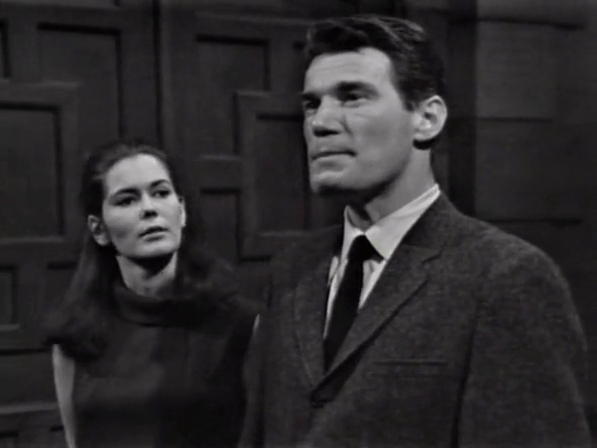
Don’t get excited, he’s just using that metaphor speak again. But there is a resonance in the idea of a greedy outsider seeking to exploit a haunted house only to be felled by the spectral inhabitants, so it’s not beyond the realm of possibility that the guys behind Dark Shadows are now pondering a scenario where Burke succeeds…and is in for a rough surprise.
There’s this weird tangent where Carolyn suggests Burke is doing this to spite Laura, as if it would matter to the one Collins not currently living here. It’s also weird how Carolyn insists “everybody” knows the story of the triangle of Burke/Laura/Roger (or else Burke/Roger/Laura) when she had to have Joe explain it to her some episodes ago, even when it would’ve made more sense for this to be a thing she would’ve known since she was, yanno, alive and living in the house at the time Roger and Laura were married.
And then there’s…this.
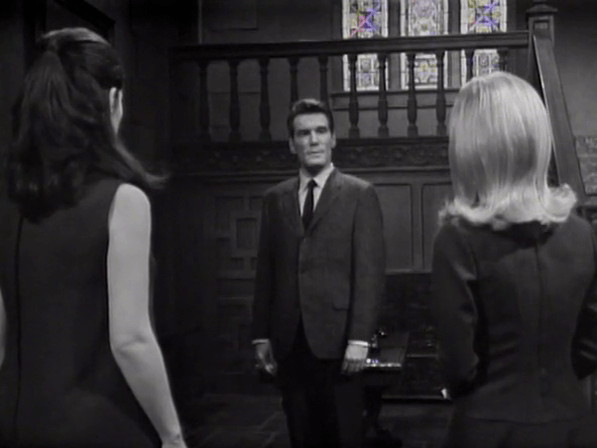
Burke suggests there’s a darker side to the mythos of Collinwood that, while it may not be printed in such tomes as the genealogy Josette Collins likes thumbing through, is well known to the common people of Collinsport.
It’s unclear what, in general, is meant by this. Presumably it refers to something very non supernatural: the cruelties of various Collinses past and, maybe, present. The idea that there is a dark, “secret history” of the Collins family that young descendants like Carolyn may not know, but old salts in town surely would, is another indicator of Dark Shadows tiptoeing ever closer from the gothic to straight-up horror, in the style of the old Universal spook films, and the thrillers of the ’40s and ’50s.
Speaking of throwbacks…

Roger has trouble believing that his sister cares so much about the family history and legacy, presumably because he has trouble caring about things that don’t directly impact his survival. Instead, he parallels Carolyn by bringing up a heretofore unseen spouse.
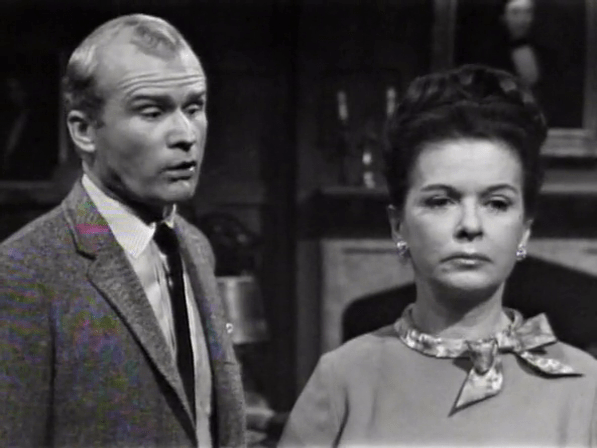
Roger suggests the common wisdom that Liz is waiting at Collinwood indefinitely for her husband to come back from…wherever he went is a fiction, indicating that he observed certain marital unpleasantness between Liz and Paul during his “holidays from school”. This is a pretty major piece of lore and it’s just gracelessly dumped in the last act, unconnected to anything, with not a second spared to examining it. That’s my show.
Liz invites everybody back into the drawing room to hear her pronouncement. When Roger objects to Vicky’s inclusion (was their fish tube breakfast that meaningless?), Liz comes to Vicky’s defense.

Isn’t it nice to be included?
Li begins by debasing some of Burke’s more pernicious assumptions.
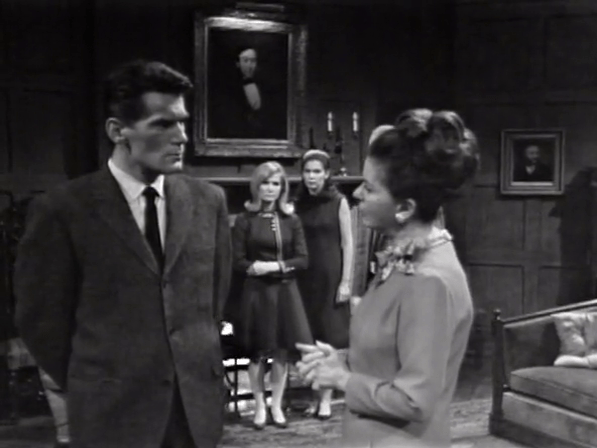
Liz suggests that Burke’s allegations against the Collinses over the last few days might just earn him a slander suit. Roger suggested this before too, but it’s more convincing when she says it.

And it’s war. You’re gonna love how they drop the ball on this one.
Burke starts to leave and Carolyn pursues.
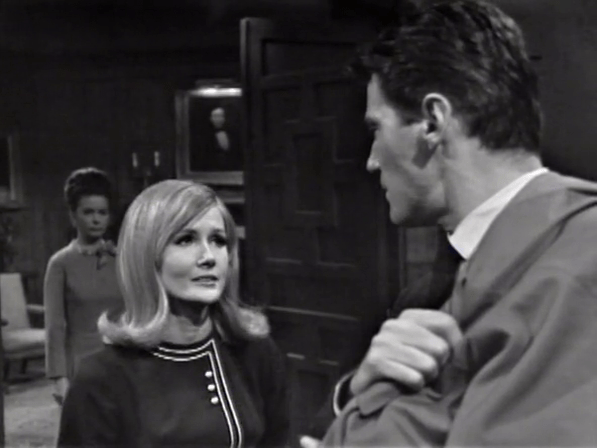
Worth a shot.
But there is one young lady not so willing to let this square-jawed son of a bitch treat her like yesterday’s potatoes.
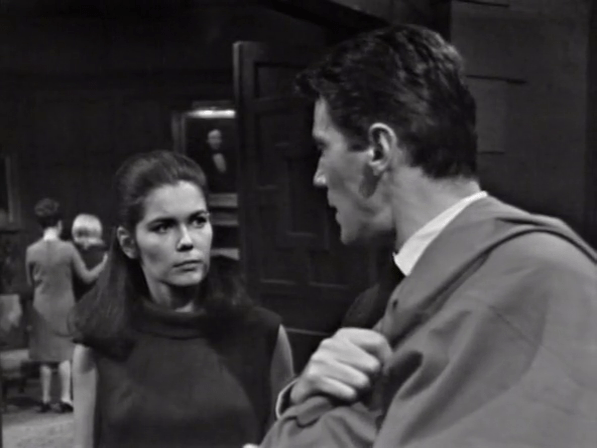
And, for the third time, Francis Swann delivers a subtle but illustrative piece of dialogue that shows just what is special about Victoria Winters, if only the show would fully capitalize on it.

Burke has a quip for this, but does little to diminish the effect of her words. Vicky belongs to nobody. She owes no one anything…in some ways, these people owe her. She doesn’t need a big gloomy house or a storied family legacy to assert dominance over others. She has herself, standing tall on her own. She can suffice, and will.
It’s as much a blessing as it is a curse.
Behind the Scenes Shenanigans
Perennial thorn in my side Francis Swann takes over the writing duties this week. Art Wallace continues to the trade off with Episode 81.
This Day in History- Monday, October 10, 1966
The first world conference on Communication with Extraterrestrial Intelligence convenes in Madrid. It was essentially an international conventicle of eggheads talking about aliens. We still have these, but it’s with podcasters who also believe yogurt will give you ovaries.
The Beach Boys release “Good Vibrations”, which will go on to be their all-time bestselling record, and one of the saddest scenes on LOST.
 Kooks of Collinwood