
We weren’t cancelled! Now what?
Dark Shadows takes several steps in this 14th week towards answering that very question. Even if it still staunchly refuses to answer others.
Like that one.
Regardless, we pick up on the heels of the repetitive and underwhelming cliffhanger that was Roger returning to Collinwood and finding Burke there waiting for him. The only thing different between this and other confrontations between these two characters is that now people are being accused of murder instead of manslaughter.
I ask myself that a lot, really. My central motivator at this point is that all Dark Shadows stories begin heating up around 30 episodes in, and we’re about halfway to that point for this one.
Roger wonders if Liz invited Burke to Collinwood, which is wild in assuming that she would take any kind of initiative at all.
I don’t think they ever will get to have that tea.

Victoria, probably wary of playing peanut gallery to another of these two’s couple’s spats, wonders if she should go, but Liz acts like that’s a silly thing to say and Roger outright acts like a dick, probably still pissed she refused his invitation to join his friends’ Florida sex cult.

Roger brings up Victoria gossiping to such people as “the waitress at the hotel café”, but I hardly see what that has to do with literally anything at this point besides giving Burke a chance to act all macho in defense of The Woman.
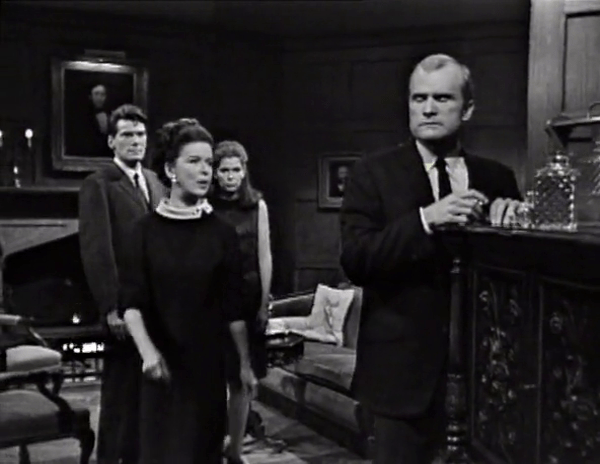
Which is admittedly quite a thing to hear in Mitch’s Ryan’s strong basso tone.
Liz points out without outright saying that we’ve been doing this far too much for anybody’s comfort.
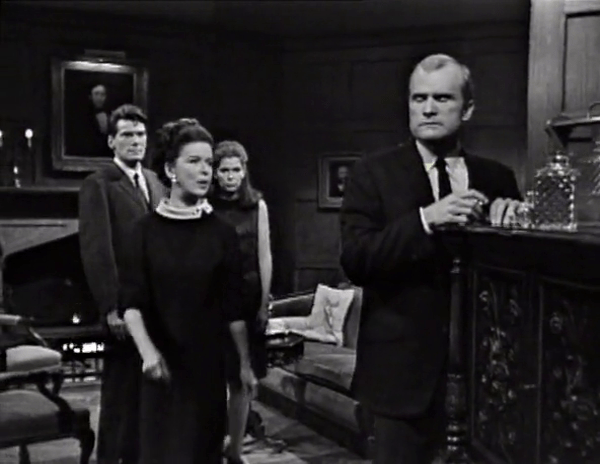
I’m sorry, Mrs. Stoddard, but it’s Monday and the primary goal is to resolve the Friday cliffhanger in as lowkey a way as possible to begin building up to next Friday.
Liz is initially resistant to Roger’s insistence that he speak to Burke alone, probably because she doesn’t want any undue sodomy going on in front of all the painted ancestors, but Roger won’t be moved and she caves. Vicky, intelligently, makes to follow…
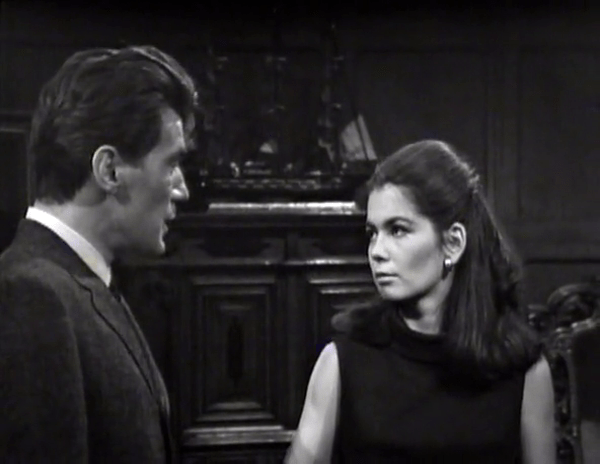
They really want to make “almost having meals” the Burktoria staple. I’m not buying it.
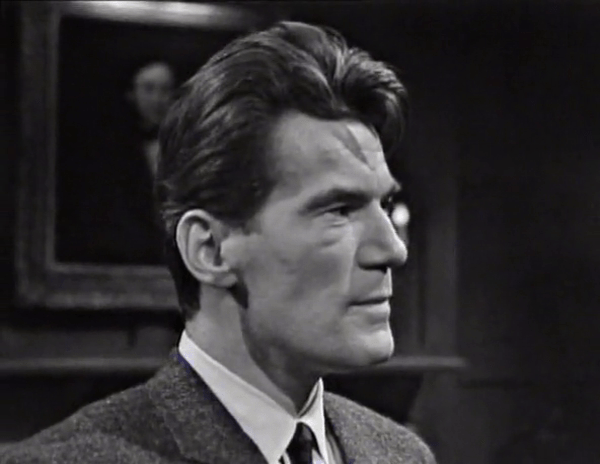
This, I can buy. The level of investment is so off. It’s so easy and fun to watch Burke and Roger go at it all the time, but Burktoria doesn’t even fill me with unpleasant feelings the way Burke/Carolyn (Burkolyn?) does. It’s dull as dishwater, and that’s a fact.
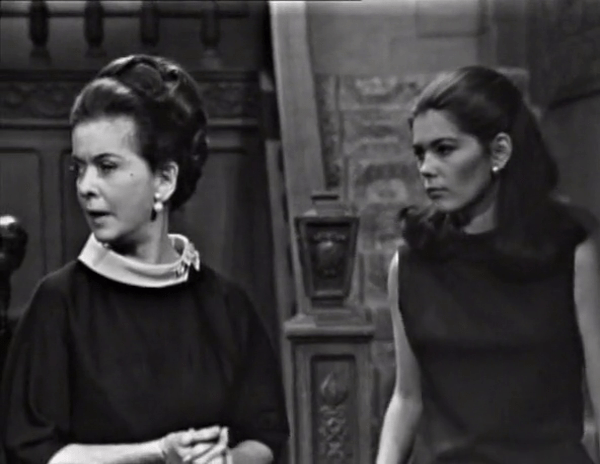
Matthew’s cleaned up worse stains.
Liz confirms with Vicky that Burke is “in control” of himself tonight, but clearly is still intent on clearing his name. I don’t know why Liz needed confirmation on that later point, but whatever.

This appears to willfully neglect that Burke is concerned about Bill Malloy just dying and, in fact, is determined to prove Liz is sharing a household with his killer.
Victoria notes that Burke believes the matter of the manslaughter and the matter of Malloy are connected as far as Burke’s concerned. This whole thing is just a placeholder, nothing really happens.
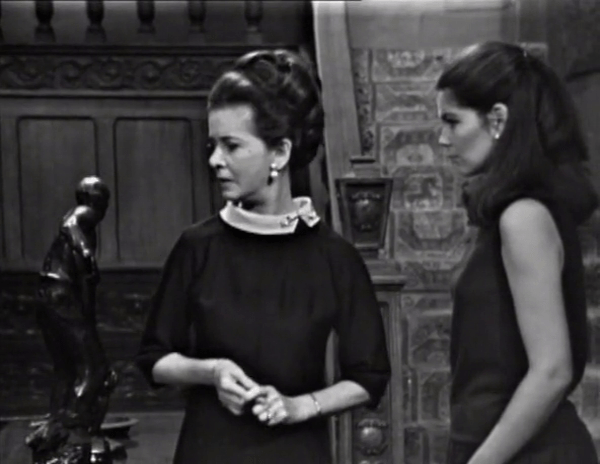
Emphasis hers.

‘Slander’ is a word which here means “the action or crime of making a false spoken statement damaging to a person’s reputation”. From Roger’s point of view, the allegations Burke made against him tonight at the Evans house are slanderous.
Slander is notoriously hard to prove in a court of law, as opposed to its written equivalent libel (libelous claim also sounds sexier than ‘slanderous claim’). For one, you have to prove that the party making the slanderous statement knew at the time that the statement was false.
Burke actually believes what he said was true, and Roger was the one driving the car that night. He can’t prove it because he was blackout drunk. Still, there is no way to prove that Burke knew the statement was false, because he didn’t intend it falsely and believed it himself.
So, no, there isn’t much of a case here and I like to think Roger knows that and is just blustering.
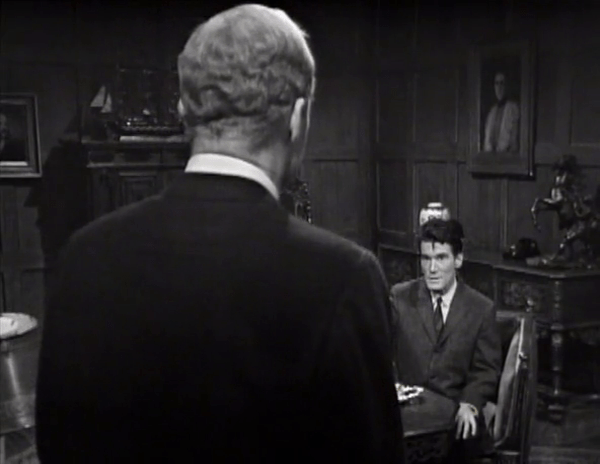
They really are like an old married couple. They’ve got one argument and a solid slate of never changing points to support their respective sides.
Burke notes that any evidence he might have to change the case died with Malloy.
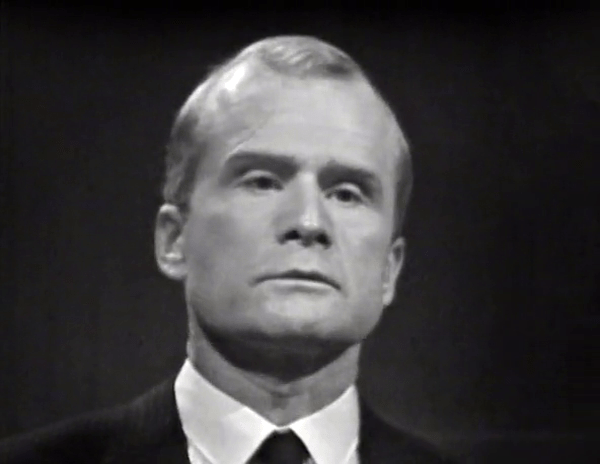
Smooth.

Burke notes that, materially, he has nothing to gain from pursuing vengeance. He is rich. Who knows, he may even be richer than the Collinses, if he’s in a position to buy up all their debts. Sure, he still went to prison…
Teenagers have served half their lives on weed possession. Five years for manslaughter is cherry cake.
But Burke wants to fuck Roger up. Fine, sure, whatever, I guess he’s entitled to that. But making it out that Burke has suffered in any excessive way is a little overbar. I think it’s the fabulous wealth and abrasive attitude that does it, but if Edmund Dantès had it, we simply have to follow the template…
Anyway, even if we do believe Burke’s case is facile and petty now that we finally know the whole story, it doesn’t matter because now Burke has a new thing to fuck Roger up over.
It sure seems that way.
So it’s more of the same. Roger insists Malloy’s death was an accident, Burke insists that makes no sense, Roger points out there is yet no evidence disproving that it was an accident, Burke thinks evidence is for pussies…

I’m sure this is supposed to make him sound badass, but we already saw how his “instincts” cleared Sam based on an accident of speech, so the impression we’re left with is he just makes split second decisions on thin grounds and is guided entirely by righteous indignation.

That’s just nausea from all the going around in circles.
At least everybody’s having a good time.
Roger notes that, if Burke’s belief as to the origins of the meeting are true, Sam has as much motive as he does. This is abjectly throwing his accomplice under the bus, moments after he doubled down on being a dick to him. It’s like Roger wants to be stabbed in the back from every quarter.
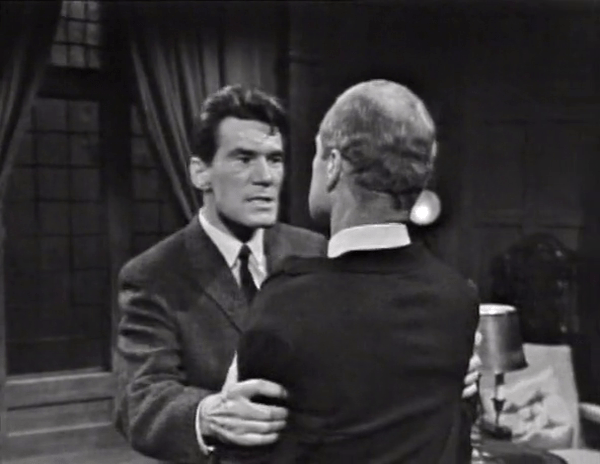
The other half of this episode is concentrated mainly on giving Vicky and Elizabeth something to do. They’re only in the episode (well, at least Vicky is) because they were part of the scenes from Friday and couldn’t be easily jettisoned.
So Liz finds Vicky writing a letter.

But no. Vicky, in fact, doesn’t have that many friends.

Finally, a piece of Vicky’s sad sack backstory that actually is sad rather than plain and uninspired.

Just when you think it can’t get any more pathetic, we learn about stamps.
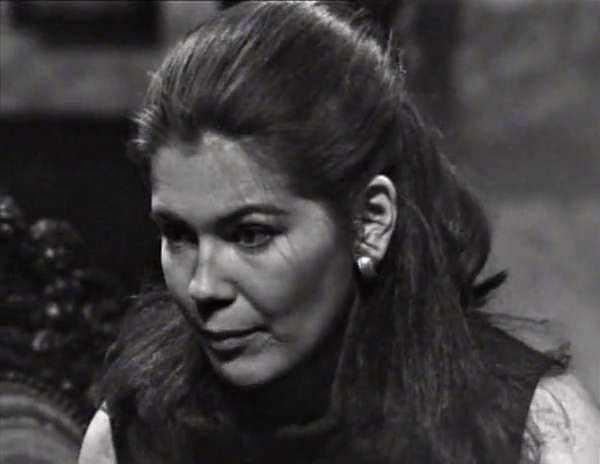
It’s really fucking sad. She was so lonely. She had nobody, and from the few stories we’ve heard about the other girls she grew up around, none of them were very friendly to her. No wonder she’s so desperate to find out where she came from. She’s never had anyone before coming here.
Something else I really love about this reveal, and I don’t know if it was intended (and, if it was, if it was devised by Art Wallace, or by Francis Swann, who is finally back at the pen this week), but the letters must be something of a personal diary for Vicky, with her telling herself the day-to-day adventures she’s had.
What do you wanna bet they all begin with ‘My name is Victoria Winters…’?
If that’s the case, it’s a beautifully subtle way of incorporating the opening monologues into the structure of the show’s narrative.
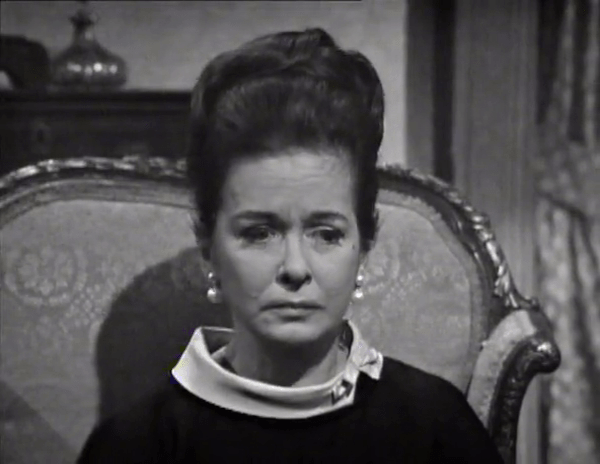
And here’s something else. The camera deliberately lingers on Elizabeth here, and she looks very pointedly aggrieved. Might she be experiencing shame at this story, regret for all Vicky went through? Could this be a quiet hint that Elizabeth was, in some way, responsible for Victoria’s childhood loneliness, and the connection she so vehemently denied back at the beginning exists after all?
Who the hell knows?
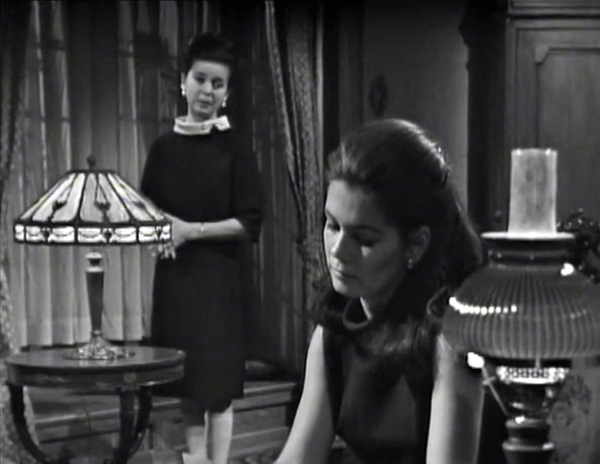
That would appear to confirm that these letters are meant to be the monologues that open each episode. Of course, we never get anything else like this again, but it’s my canon, whatever you say.
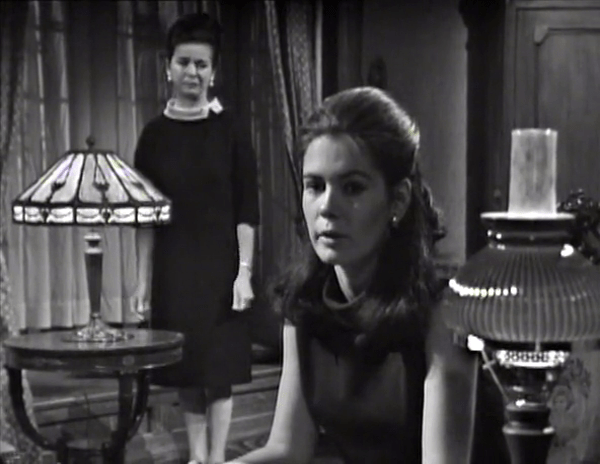
And even then, it’s not like she’s been a part of anything. More like a pretty accessory hanging off things that would have happened even without her presence.
Back in the drawing room, Burke is pressuring Roger to go through the events of the night Malloy died. I am on the edge of my seat.
I won’t restate the times Roger provides, because they are the same. Burke seizes on the fact that, between Malloy’s departure from Collinwood and Roger’s arrival at the cannery, there were 40 minutes in which Roger had nothing to do.

Pfft.
Roger mentions his newly minted excuse that Malloy gave him some business papers to review. He first tried this out with Elizabeth and Burke notes this is the first time he’s hearing of this magic detail. He asks the sensible question as to whether these papers can be “produced”.
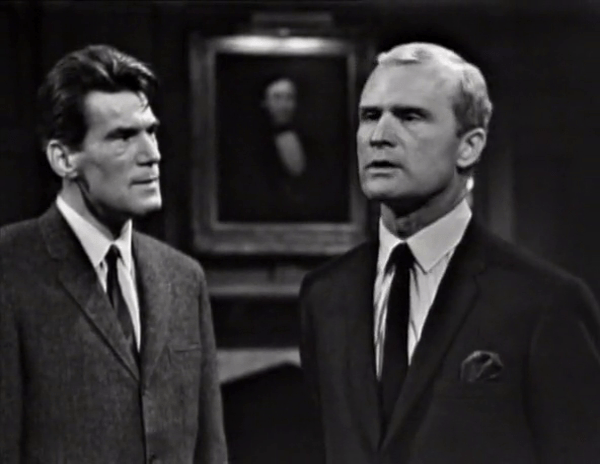
He just called the man who wants him dead ‘my dear fellow’ like it was an exasperated pet name. You cannot convince me they weren’t lovers.
Burke notes that while this is all good and well, there is nobody to verify Roger’s alibi. But, er, about that…
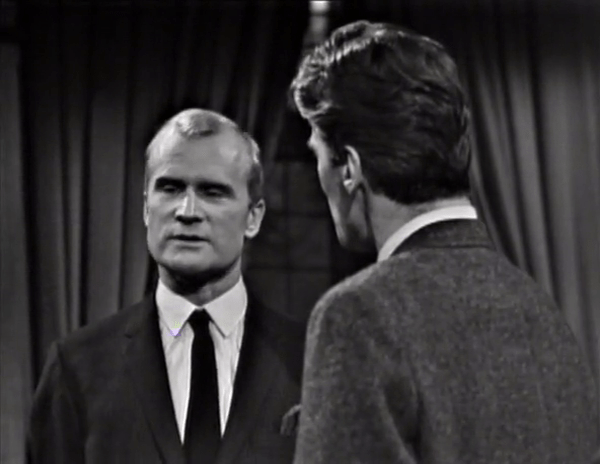
The invocation of The Woman gives Burke pause.
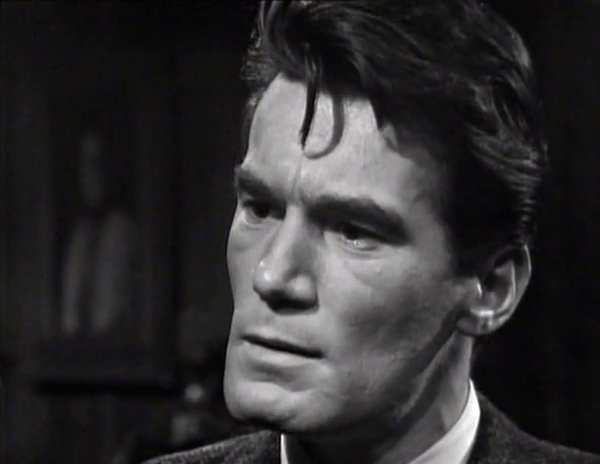
Recall how last episode Burke was all vehement as to how he didn’t want Vicky to “get involved”, as if there was any way for her to prevent that at this point. This revelation underscores that. Vicky is a part of the household, she is going to become relevant in the intrigues of the family, no matter what anybody wants. As much as Burke might like to think it, she isn’t a pretty bauble divorced from the world around her.
Roger tells her about how Vicky came down to speak to him that night. Burke, of course, wants concrete proof and demands Victoria be brought down to verify this claim.
So…yet again. We’re doing this…again. Vicky must play captive witness to one of Burke and Roger’s asinine disputes. Again.
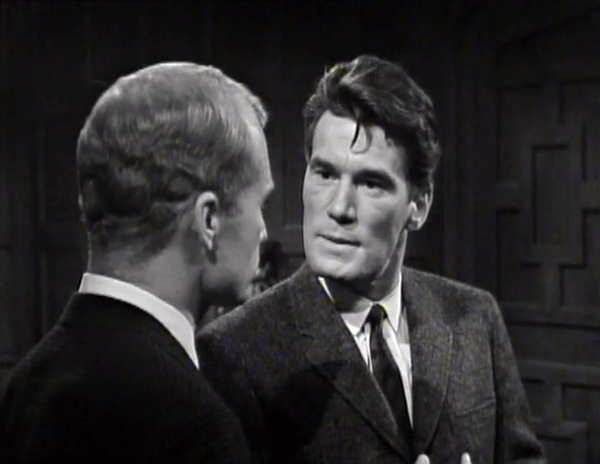
Or we could have a sleepover, I’m sure it makes no difference.
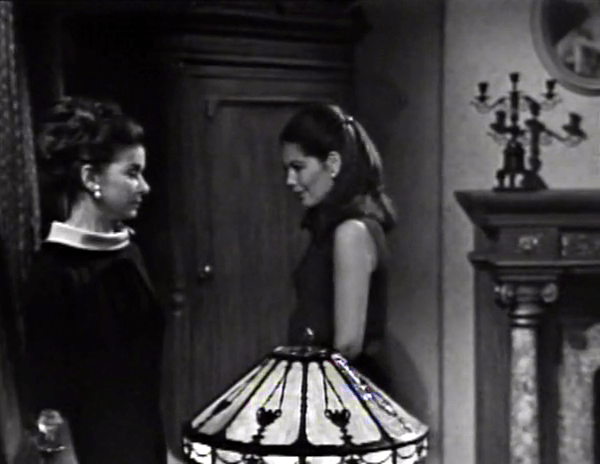
Besides cogent proof that the third person pronoun “they” was in use for singular people long before losers on the Internet claim it was invented by Cultural Marxism, this provides a lead in for Elizabeth to sympathize and empathize with Victoria in a way she (and we) have not yet seen.
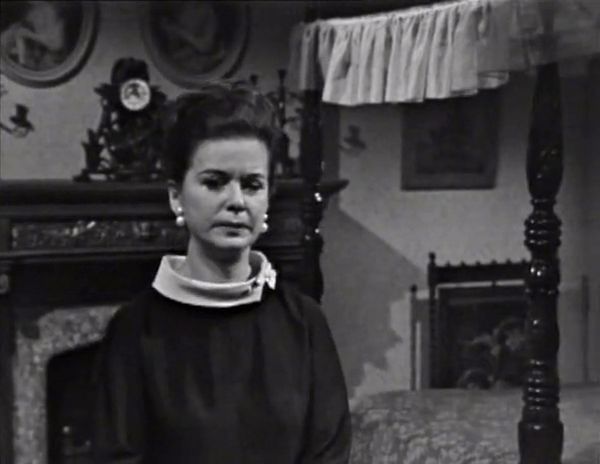
Victoria notes, however, that Elizabeth’s loneliness is self-imposed. She doesn’t have to be subjected to all this. She chooses to. Or does she? We still know as much about Elizabeth’s reasons for staying homebound as we do anything else: nothing.
Conversation turns to the subject of Vicky’s past and her search for her parents. Elizabeth asks a question I suppose she’s wanted to ask this entire time.

Joan Bennett plays this beautifully. You see Liz wrestling with these really ugly emotions. She’s clearly distressed and trying valiantly to hide how affected she is by all this.

But of course it isn’t. Because as long as the mystery remains, Victoria can’t know whether to embrace or reject her past, be remorseful of her childhood loneliness, or grateful for it. There is no choice. Liz chose the life she lives, or at least to everybody around her, she seems to have.
Vicky had no choice in her loneliness. Now she has to justify it. Or else what good was it for?
Roger arrives to summon Vicky to the latest iteration of this circle jerk.
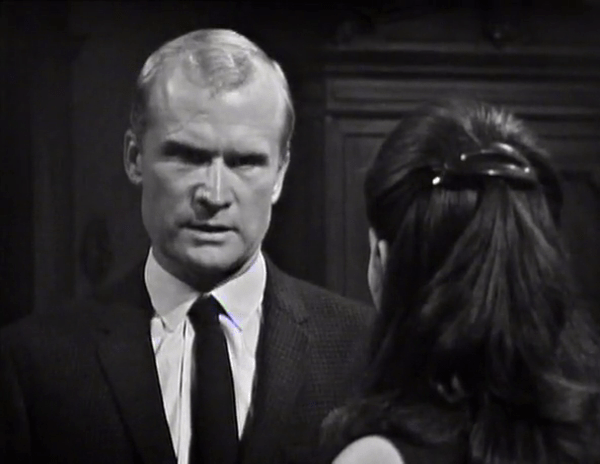
Did…did Roger, who has been the most adamant in insisting Malloy wasn’t killed, just say he was killed? Freudian slip? Line flub? Francis Swann forgetting what words mean? Nobody seems to notice regardless, so it’s clearly not the first one.
So now we get something Vicky does have a choice in: telling the truth.

Vicky isn’t sure exactly what time Roger left the house. Does she pretend she is and help a potential criminal evade suspicion? Or does she tell the truth, add fuel to a man’s vendetta, and forever cement Roger Collins as an enemy?
Roger doesn’t do much to help his case, of course, sending Liz out of the room and sitting Vicky down like a child needing a lecture.
So Vicky remembers that the telephone call she overheard Roger making happened at 10:30. Roger decides Vicky went back upstairs at 10:45, and he left the house at 10:50. These later points, however, elude Vicky, and she isn’t ready to vouchsafe something she can’t be sure of.
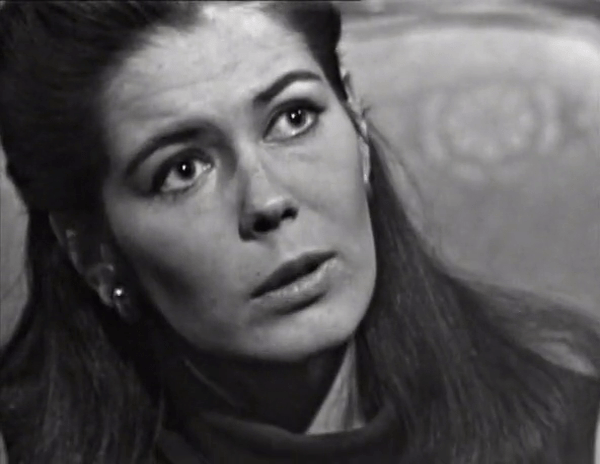
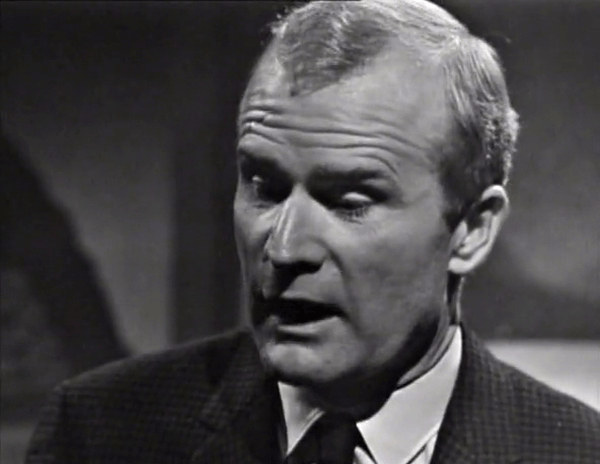
They end up pairing it down to common sense. Surely, if they finished talking at 10:45, it couldn’t have taken any less than five minutes for Roger to prepare to leave, so he must’ve left when he said he did.

At this point, I’m surprised he doesn’t ask for Vicky’s hand in matrimony and a dowry of the Collinses best milk goat.
Burke maintains he wants “justice” which Liz notes can mean different things depending on who’s saying it.
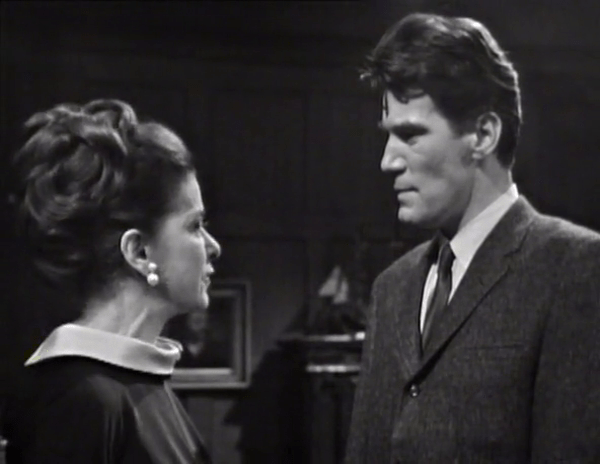
It’s nice that she believes her brother respects her enough to think twice before enacting violence on her friends.

So finally we’re talking about that. Burke doesn’t believe Matthew’s insistence that he went to the bar of his own volition, even though we have no evidence to the contrary.

So now Liz acts as though she hasn’t been told about the fight yet, which I could almost believe except for when Burke alluded to it last episode and Liz acted like she knew what he was talking about. But, you know, different writers, same piss poor grasp of continuity.
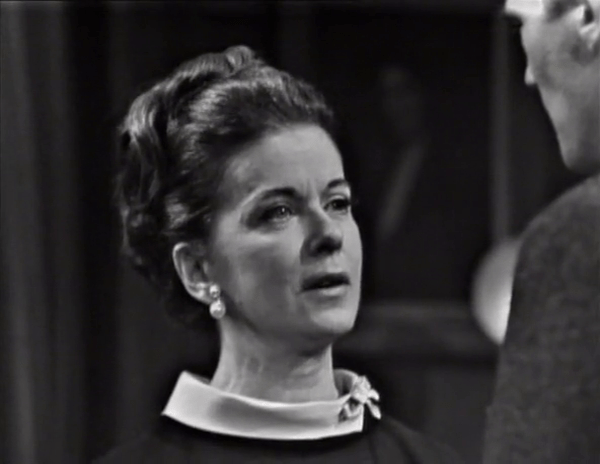
He can use a thesaurus, though, and he wants you to know it.
Victoria is trotted into the room.

Burke immediately sets about treating Victoria like a son of a bitch, seeming to resent her before she even confirms or denies Roger’s story.
Victoria affirms that, while she can’t be sure of the exact minute, she has every reason to believe Roger is being truthful about the time in which he left the house.
Then the camera has a stroke.

Like, they switched cameras from the one on Vicky to one staring at the stage lights. There isn’t much reason for the shot to be a wide of the group either. It’s just a line Liz is saying and, the moment it’s over, the first camera is back on Vicky. It’s wild.
Liz dismisses Burke with another sick burn.
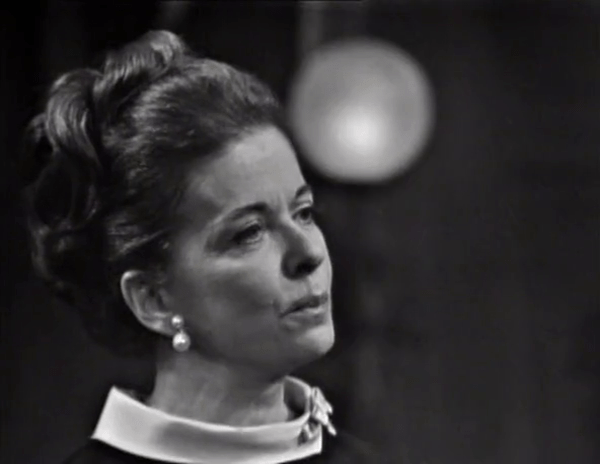
That describes a lot of people like Burke, doesn’t it? Generally, one isn’t invited to admire such people, but Dark Shadows is a weird show.

So don’t stop now, but I think Burke has disowned Vicky for telling the most measured and honest account of a 15 minute experience that she possibly could.
Yet again: Burke Devlin is an asshole. And yet he then seems to mitigate this by saying he “doesn’t doubt” Victoria. So why did he say that….other thing? Is it a warning? Is he trying to make sure she doesn’t start saying other things Roger wants her to say? Are we supposed to be frightened of him, on his side, on Vicky’s side? What is the point?
It doesn’t matter, I guess. Burke finally leaves.
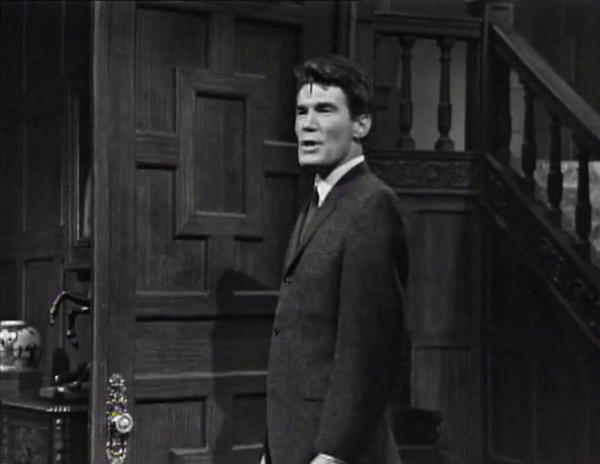
Oh no. Maybe his plan will finally go somewhere! Remember that thing? His plan? Crazy stuff, right?
This Day in History- Monday, September 26, 1966
Only 28 of the United Nations’ 118 members attend an address by South African ambassador D.P. de Villiers in a protest of the apartheid government’s continued administration of South West Africa.
Helen Kane, the singer who sued the “Betty Boop” creators for appropriating her likeness, died. The Fleischer Brothers, who created the Betty Boop character, had gone on record for being inspired by Kane in their design of the character, but it turns out that it isn’t a crime to be inspired by things.
Behind the Scenes Shenanigans
Francis Swann takes over from Art Wallace for the first time since Episode 55. He will write the rest of the week’s episodes.
 Kooks of Collinwood
One thought on “The Devlining: Part Eleventy-Six”