
Remember Victoria Winters? The governess who came to the great house on the crest of Widows’ Hill in pursuit of her past 60 episodes/close to three months/six in-universe days ago? You might recognize her as the girl who gets threatened by the boy she’s tutoring half a dozen times a day and has to regularly deal with the overtures of a leering older man.
All attempts at pursuing the original driving question of Dark Shadows would appear to have fallen by the wayside. The narrative that this happened because of a changing in writers is only half true. Art Wallace has written 50 of the episodes that have aired to this point, including this one, while Francis Swann has only ten. The entire suppository story was penned by Art Wallace, and that slog of a narrative served to embellish the stories of half the characters on canvas, except the lady who narrates every episode.
But now, at the end of the penultimate week of its original 13-week order, Dark Shadows shows signs of returning to its roots.

We’ve discussed before how Vicky’s belief she will learn something about herself at the Evans house is absurd and out of nowhere, to the point that you might think it was a desperate idea pulled out of somebody’s ass.
But no. Art Wallace always planned for Victoria’s search to bring her here. It’s even in his series bible.
It’s simply that a variety of screwy pacing decisions had him pushing that beat further and further along (it’s justifiable to assume something similar to the events of this episode were supposed to happen about six weeks ago).
Of course, six weeks ago was also when the suppository story finally wrapped up. After that, pieces were hastily arranged, roles that were vacated during that saga (Sam, Matthew, most recently the Sheriff) were all recast and events were put in motion to veer away from the bible in a major way for the sake of the flagging (really flagging) ratings.
Thus Dark Shadows became a murder mystery. It’s also, as of eight episodes ago, a haunted murder mystery, even though none of the actual characters have yet observed that.
But now the quest-turned-disappearance-turned-death-turned-pending murder investigation of Bill Malloy has been established. The primary figures have been delineated, the major suspects brought forth and questioned. Groundwork is laid.
So now, finally, back to basics, for what is basically 20 minutes of Art Wallace digging through his old notes and putting then in a script.
And you know what? It’s a great damn time.
We begin with the girls arriving for dinner.
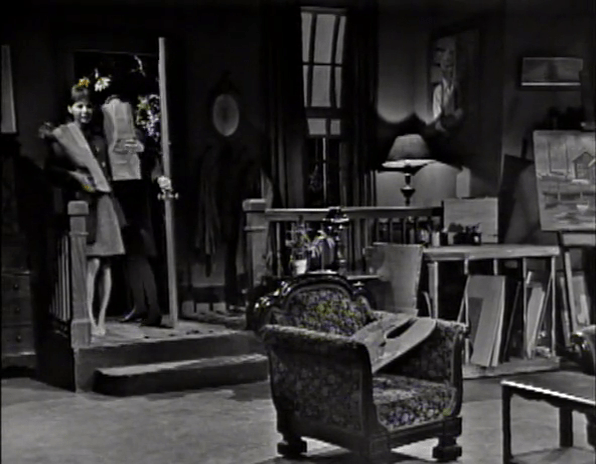
Maggie hustles off to find Sam, who is conspicuously absent. Vicky busies herself with the artwork.

Makes you wonder who was the last person (besides Maggie, I guess) to praise Sam’s work. Many of the paintings we glimpse around the studio are very nice.
There’s the obvious picture of the waterfront on the easel. It shows up a lot and bears something of a resemblance to the location footage of Roger looking unseasonably happy on the way to work.

I guess Sy Tomashoff or somebody picked them all up at a church jumble sale and figured it didn’t matter if they all looked like they were painted by the same (or even a good) artist because this is television in 1966 and nobody could foresee that one day a bunch of borderline obsessives would watch over all of these with magnifying glass and relentless patience.
Anyway.
So it turns out that, after being in this house for less than two minutes, Victoria Winters has, in fact, found something that might, in fact, be connected to her past.
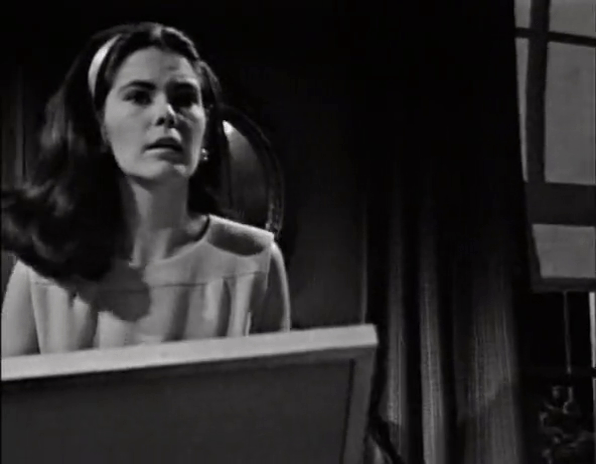
So Vicky shows Maggie the painting she found and, I have to admit, it’s easy to see why she thinks this might have something to do with her.

This is, of course, a watercolor image of Alexandra Moltke. It is quite literally her face. The fact is obvious even without the woman herself standing right next to it, so naturally Maggie doesn’t see the resemblance.
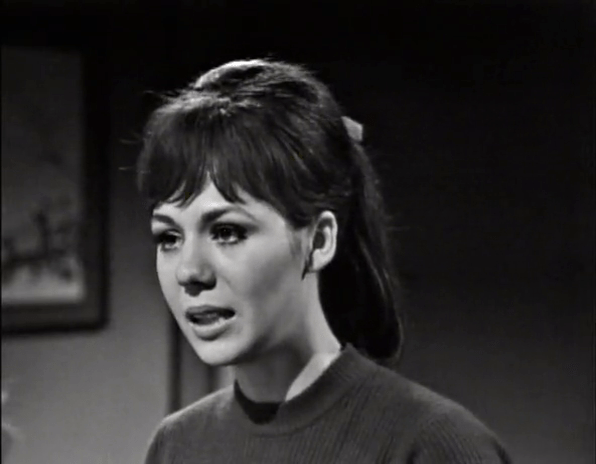
Now, I know this is a big moment in Victoria’s quest. It is, quite literally, the first lead she’s gotten in all this time, so I understand Art Wallace’s desire to have some kind of dramatic build-up with Maggie being slowly convinced of the resemblance, but…
Er. It’s not like it’s hard to miss.
Maggie is eventually convinced, which is a relief, but I can’t help but think there were other ways to make this build-up more organic so that Victoria doesn’t literally walk into the second house since she’s come to town and immediately find a vital clue.
But we’re lucky enough Victoria’s even found something. Asking her to be an active protagonist is a bit much.
Maggie has no idea who the painting is of, noting it was painted before she was born. She also, to put it kindly, finds Vicky’s attitude about all this a little excessive.

There’s a difference that emerges here between the girls. We’ve discussed before how Carolyn and Vicky are contrasted by their relationships to their families. Vicky has no history and is isolated by that absence. Carolyn is smothered by her family, its ghosts and legends and legacy. Victoria envies Carolyn’s family. Carolyn understands Vicky’s search, but occasionally seems envious of how she can just up and go whenever she wants.
With Maggie it’s a little different. They’re both working class young women trying to make their way in the world. Maggie is the closest thing to a normal person we have in Collinsport besides, I guess, Joe. Maggie’s family is unremarkable and consists entirely of one other person, a man who she loves and supports but is growing increasingly unsure of.
Maggie is cynical, not in the way of Burke Devlin and Roger Collins, but in the way of somebody who has had to support herself and her family for so long that there just isn’t time to heed Carolyn’s advice and follow her dreams. Who wants to run the risk of disappointment? There’s enough work to do as is.
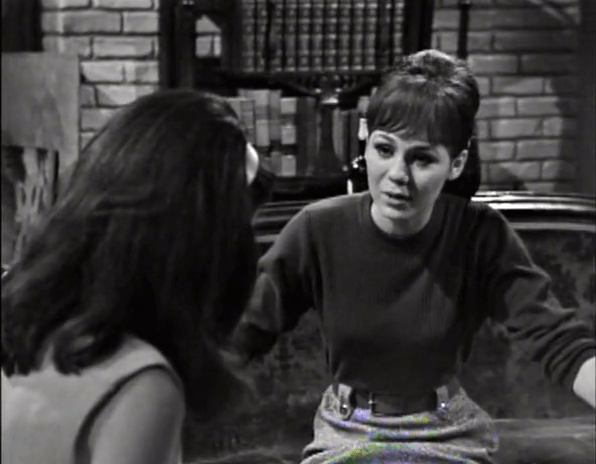
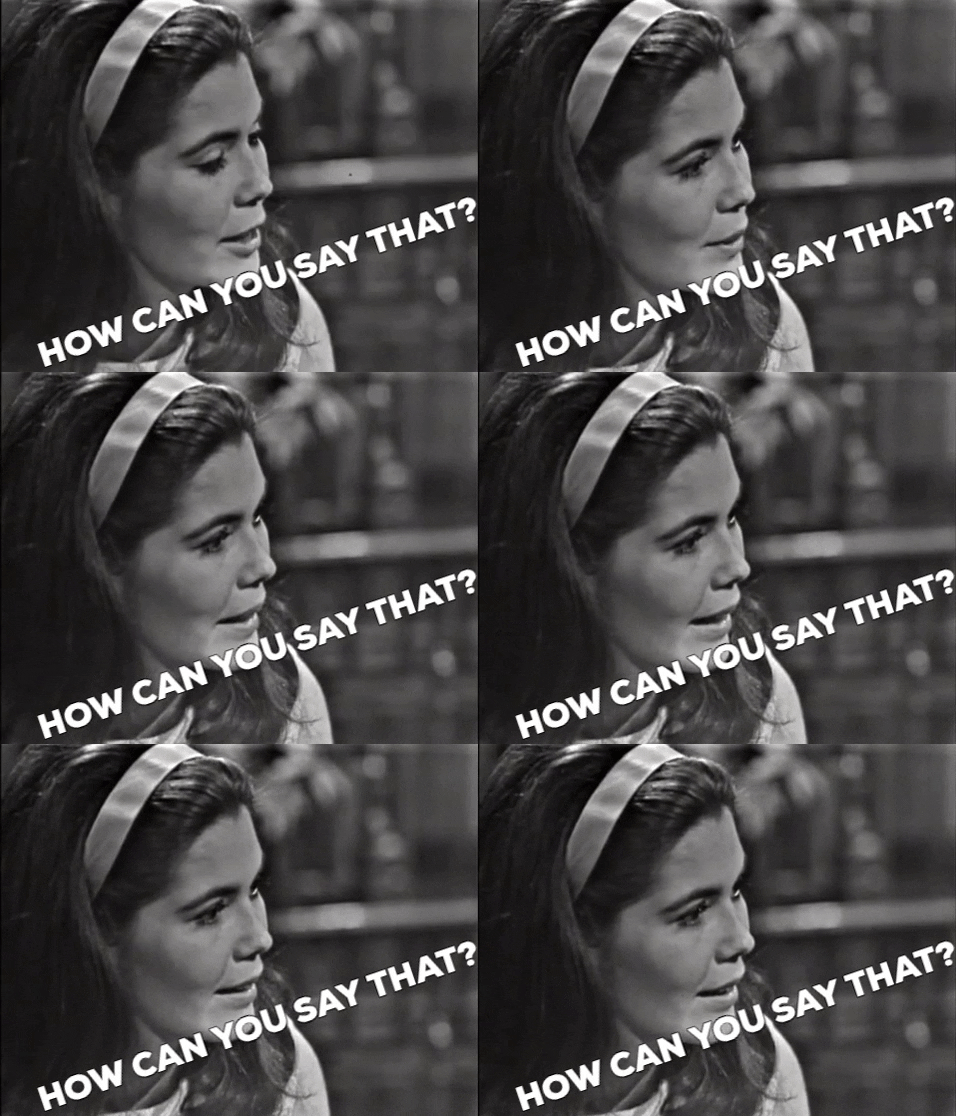
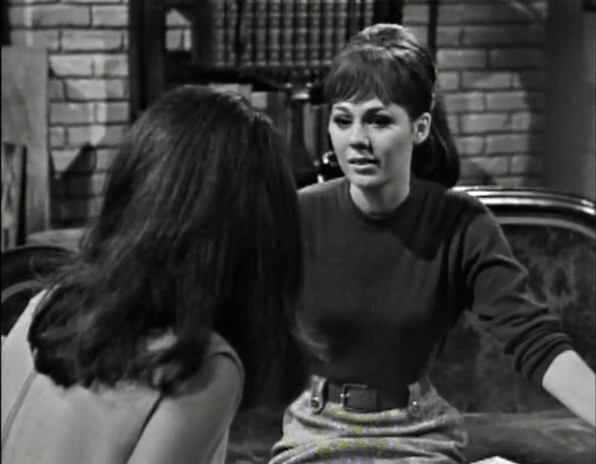
Maggie is increasingly less sure. And for a girl used to loss and disappointment, the rough and tumble reality of life…is it really worth it to dream? Sometimes you just have to play the hand you’re dealt.

Patterson is taking a call from his faithful deputy, who is almost done working on those tide charts. I’m not sure Patterson has told him he’s already got a tide chart done by a nine-year-old boy in, like, half the time. We wouldn’t want to hurt the dude’s pride.
Anyway, visitor.

Mitch Ryan is so tall, he keeps almost brushing the light fixture in the sheriff’s station set. This was a regular concern back in the Consteriff days as well. I seem to remember there’s a point a little later in this story where somebody does bump it. The constant threat keeps things interesting.
Burke continues doing nothing to improve his standing in the eyes of the police by acting as if he’s entitled to information about the investigation, specifically whether Patterson has yet spoken to Roger and Sam, which he has because this sheriff takes this shit seriously.
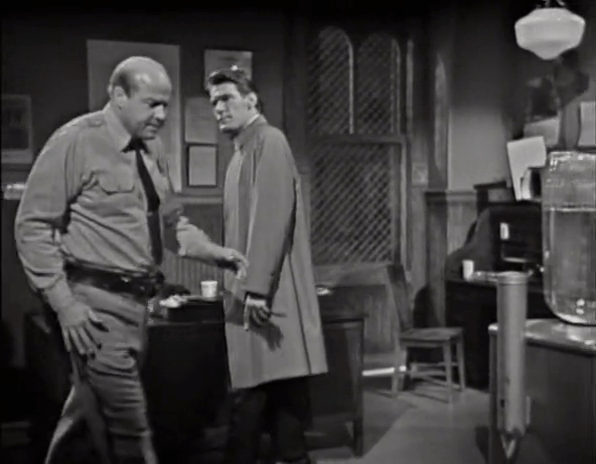
I will not make a comment on Patterson’s robust figure. We all know the last guy took his meals seriously too.
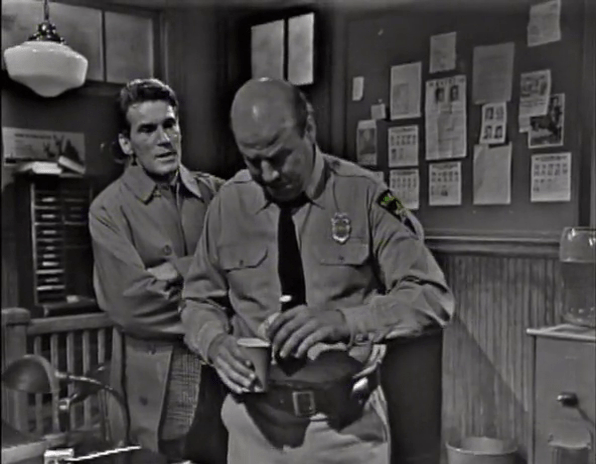
Patterson is pouring water from the cooler into his coffee. I have no idea why anybody would want to do something so abjectly disgusting. It can’t be because the coffee was too dark because the drink was shown in close up at the start of the scene and it was white as new-fallen snow.

Well, yes, it’s the Italian blood, I get very defensive about coff…
Oh, he’s talking about Burke. Yes, Burke is also pretty hot. About this.
Patterson reminds Burke that, if Malloy was murdered, Sam and Roger aren’t the only suspects.
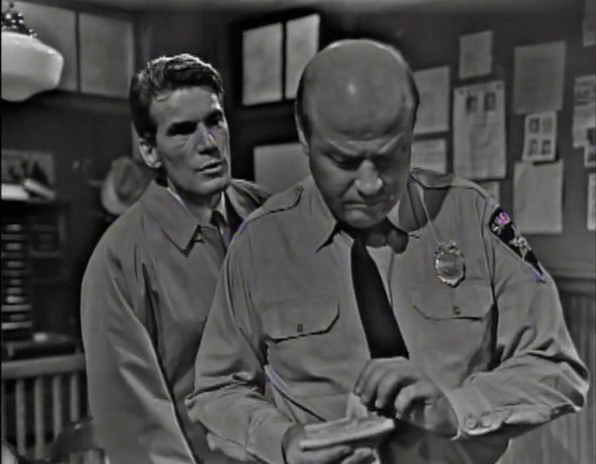
Way ahead of him, there.
Burke maintains he’s innocent and I won’t relitigate all the reasons he could be the killer here, but they remain the case. The real point of these scenes today is that Burke is Dark Shadows’ new vigilante detective.
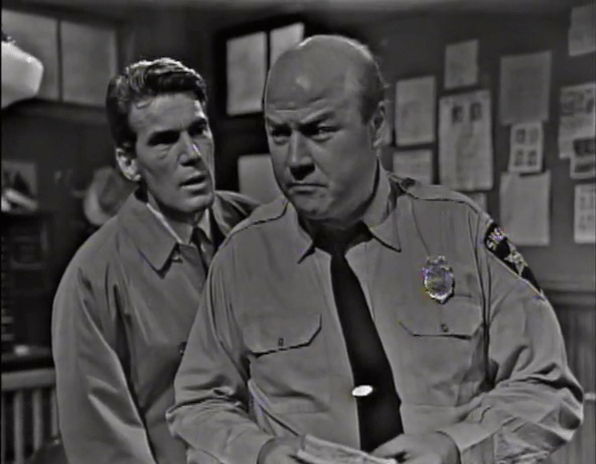
Anyway, Victoria is here to learn about herself. We learn things about her too.

Peeling potatoes is by far the most useful skill Vicky has. Have you ever done that? Really done it? The only kitchen task more exhausting is zesting lemons, but at least that smells good.
Anyway, we now get a rare Dark Shadows surprise: girls being friends.
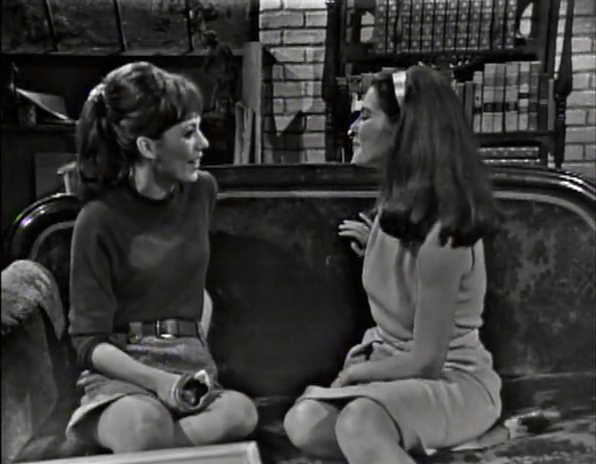
When you get two young girls together, it’s natural the first thing they’d talk about is kitchens, amirite, fellows?
This does give Alexandra Moltke a chance to do what Nancy Barrett and Kathryn Leigh Scott are always doing and be Not So Serious:
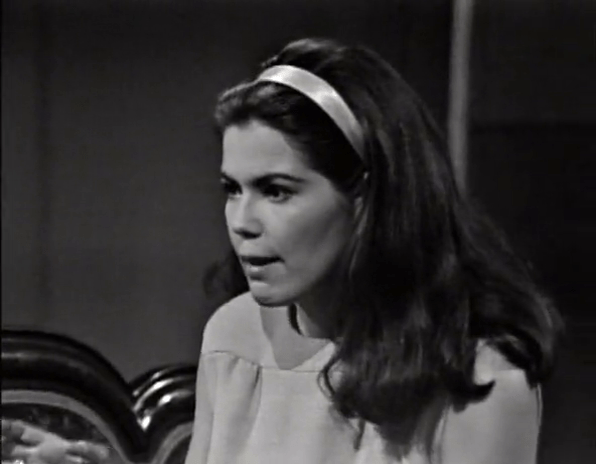
I guess it’s too much to ask that she be funny, but the effort is appreciated.
Victoria is surprised to learn Maggie has never been to Collinwood, as if the house is open to tourists or something.
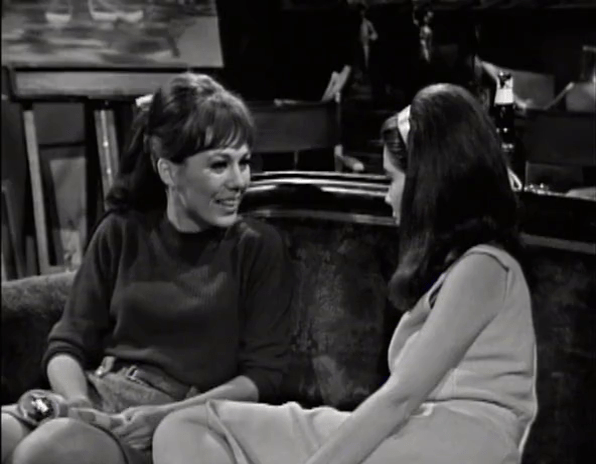
This presents Victoria with a chance to recount an anecdote you’d have every reason to think the show’s since forgotten about, namely Vicky glimpsing a shadowy figure in between flashes of lightning that may or may not have been Roger. That was 30 episodes ago. Yeah.
I don’t know why she doesn’t tell Maggie about the two times she heard a disembodied voice crying. Sadly, she can’t tell her about the invisible hand that opened that book because nobody saw that.
Victoria of course says she can’t be sure it was a ghost, but it’s all the same to Maggie who points out the shit coming out of Collinwood isn’t strictly supernatural in nature.
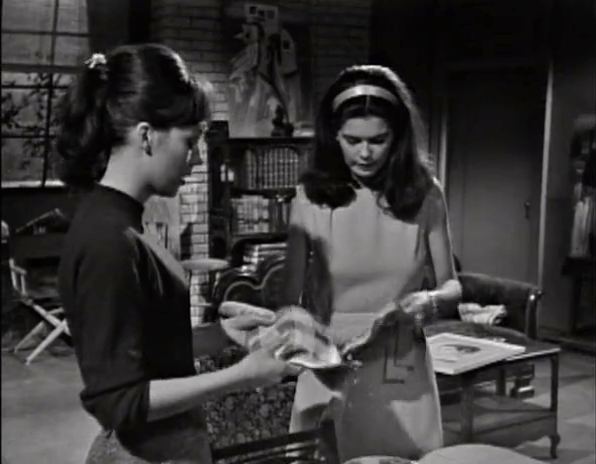
Here, Maggie reveals a surprising weakness.

We see here an indication that Maggie, who slaves away day in and day out at a demanding and unrewarding job only to go home to a drunk and dispossessed father who lies to her on the regular, has no self-esteem. She doesn’t believe she can handle the pressures (tensions?) of life at the great house.
But something tells me she’d be surprised.
Maggie tells Victoria that shit’s been stinking at Collinwood for 10 years (drink) when all that Devlin stuff happened. Vicky then says what we’ve all been thinking…
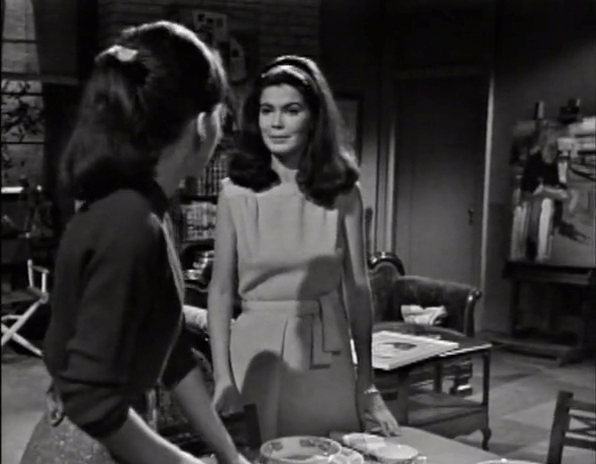
Sure is funny, that. I guess Art Wallace has the requisite shame because Maggie doesn’t go on a screed about the power of dramatic tension.
Before Maggie can say anything, the man of the (almost half) hour shows up.
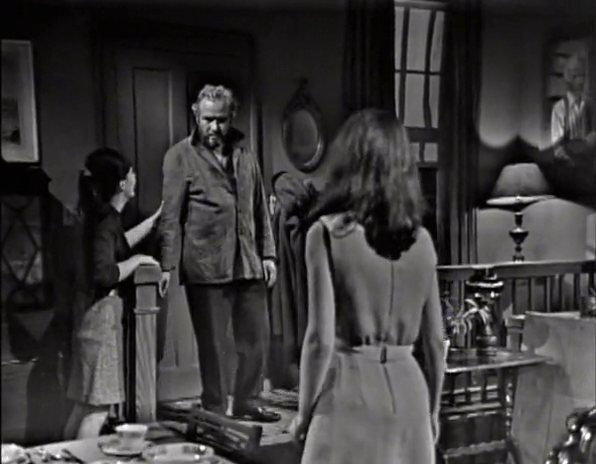
This is, of course, the fourth time Vicky has encountered Sam, but she didn’t know who he was any of those times. Don’t expect either of them to remark on that. It’s fine. There’s enough ground to cover as is.

Maggie never had a chance to inform Sam they were expecting a guest. You might think that constitutes rudeness, but the man spends all the waking hours getting wasted, so I’m not sure he gets a say in who turns up for dinner.
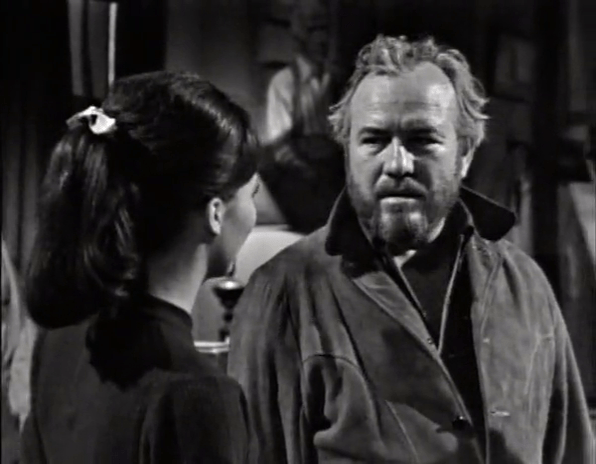
The polite way of saying “You smell like piss and beer”.
Back at the station, Patterson leaves to get something and gets surprised that the unobserved Burke took this time to snoop.
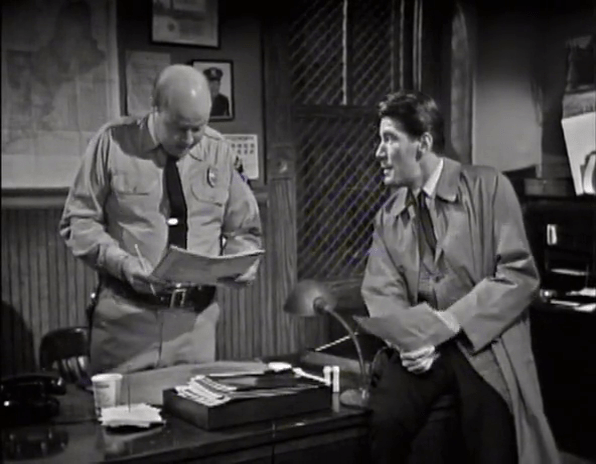
Calling Burke “boy” like he’s 25 or something instead of the same age as Roger. Mind, Roger and Burke are both played by actors even older than they’re supposed to be, by about ten years. Boggles the mind.
Patterson, you see, had been picking up HARRY’S tide chart. Burke, on the other hand, was reading the chart already on the desk.
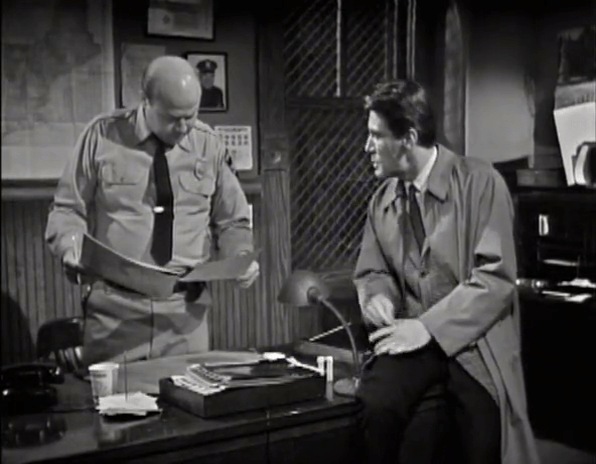
Close enough. Burke seems surprised to learn David has taken this particular detective case on, but he doesn’t make any comment about it for some reason.
Patterson notes that David didn’t do that badly either, as both charts more or less match, which kind of defeats the purpose of having two charts. What I would’ve done was have HARRY’s chart and David’s chart be very different. Patterson dismisses David’s because he is A Mere Boy, but Burke, knowing David is a clever little scamp (and also very desperate), believes his chart and, in so doing, discovers a clue the police don’t have.
But that would require doing something with this Burke Goes Rogue bit they’ve been teasing, so no dice.
Patterson narrows down three options for the spot Malloy would’ve gone into the water. One is obvious, one is unimportant, and the other has an absurd name, so you know it’ll be important later.
- Malloy’s house, which was on the water.
- Sim’s Cove, which is two miles north of the cannery and therefore considerably out of Malloy’s way
- Lookout Point, which is conveniently located between Malloy’s house and the cannery and would surely have been passed by Malloy on the way to the meeting.
Lookout Point sounds like the kind of place local kids go to makeout in the backseats of their cars, but no such reference is made to that here. Maybe that’s because there are only four young people in Collinsport and only one of them is a guy. There were those other dancing kids from the first Blue Whale scene, but I guess they quit this scene because suppositories are not Where the Action Is.
Burke suggests Malloy was killed going to the meeting, but Patterson remains adamant it remains to be seen if Malloy was murdered since, after all, Burke’s story gets less and less borne out by the minute.
Somebody’s lying. Two people, in fact, but you see why he’d be unconvinced.
You might wonder why Patterson hasn’t yet considered that Roger and Sam met earlier to agree on a story to tell the police, which is of course exactly what happened. I think we’re supposed to believe that, because as far as everybody knows, Roger and Sam have nothing to do with each other, no one considers the possibility.
This is very weaksauce, but it’s what we’re given.

So maybe both Roger and Burke suck at defending themselves.
Patterson makes the, from his point of view at least, cogent point that Burke’s story is, for now, just a story contradicted by the other witnesses and there is currently no evidence to support Malloy was murdered. His hands are tied.

Are we watching the same show?
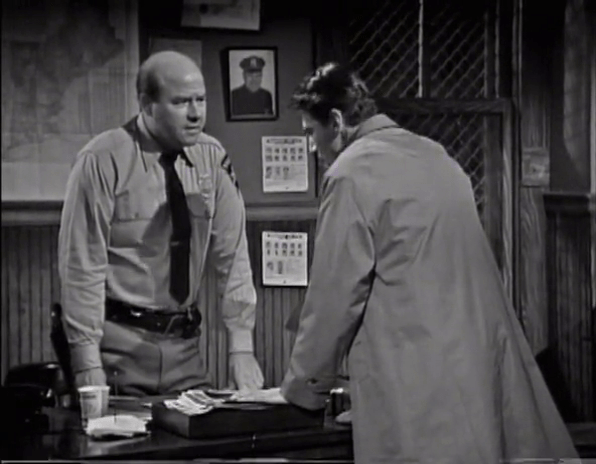
I love him.
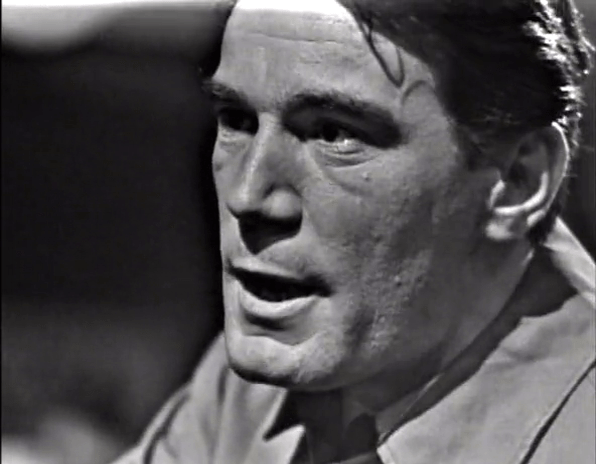
I think he missed part of that last line, but strong performance either way. That’s the thing with Mitch Ryan, he fcks up the script on a regular basis, but he does it with great feeling.
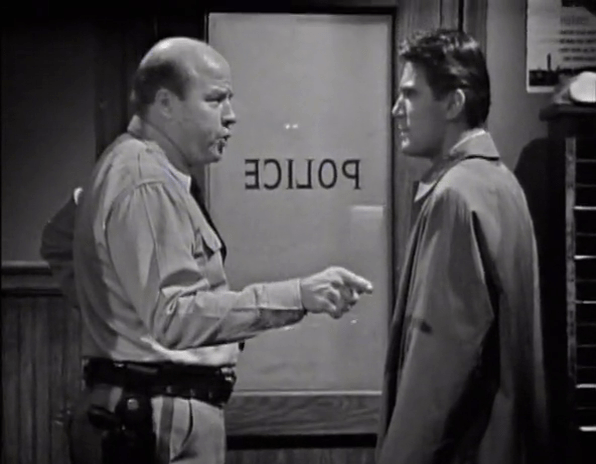
Burke begins to storm out, leaving Patterson to block his way with the most forceful words he’s yet used.
A more amiable interaction is underway at Sam’s place, with Victoria having just finished telling her tale.
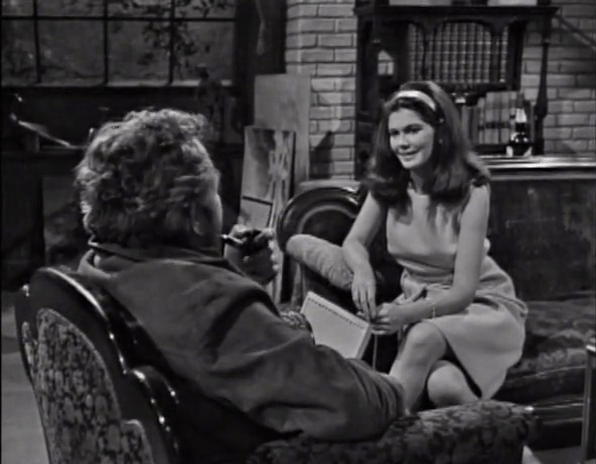
Now that’s a good liar.
This episode marks the first appearance of Sam’s pipe. He uses both that and cigarettes throughout the show, and both lead to very different degrees of trouble.
While Maggie puts the finishing touches on dinner, Sam confides that he’s glad Vicky is here.
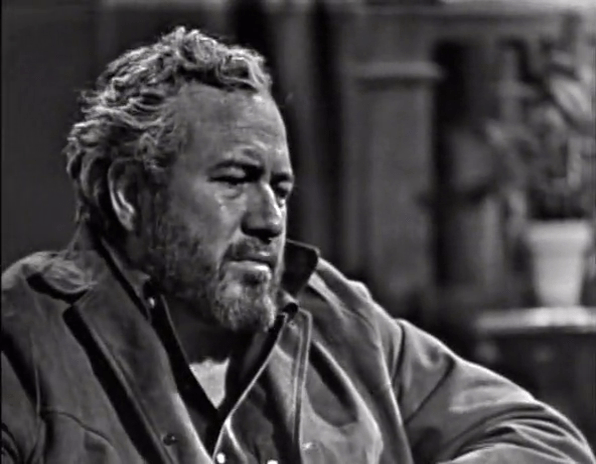
Sam evades the point when Vicky asks him why, I guess because he doesn’t want to admit he’s an acerbic dick whose constant stonewalling is wearing away at what remains of his only child’s resolve, but at least he knows what he’s doing.
And he’s glad she’s made a friend, which is also nice.
Vicky shows Sam the Painting, which gives me a chance to show you the Dave Ford Fucks Face.
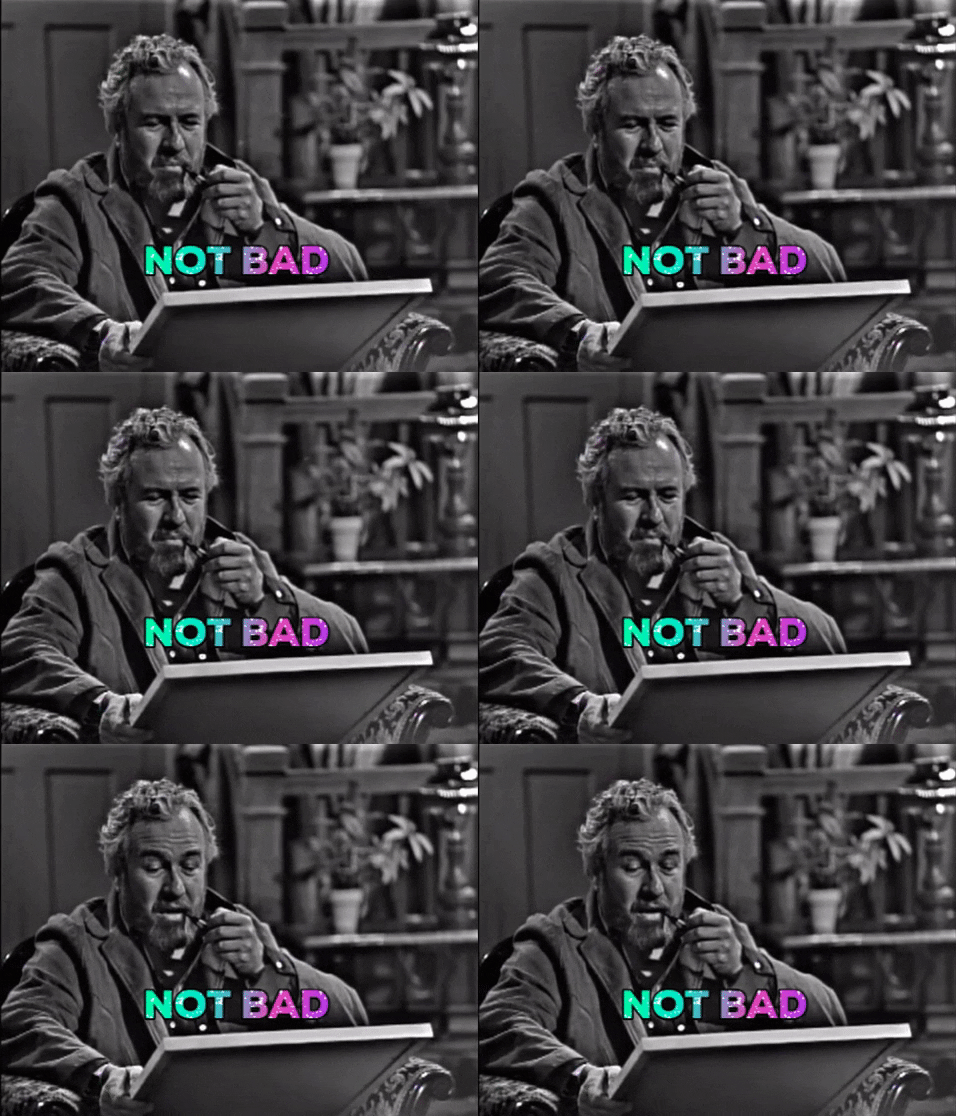
I bet.
Sam at least has the grace to note the very subtle (I’ll admit) similarities between Vicky and the woman in the painting. Dave Ford’s voice gets that slow, dreamy quality he affects so well as Sam gets lost in memory, trying to remember what he can.
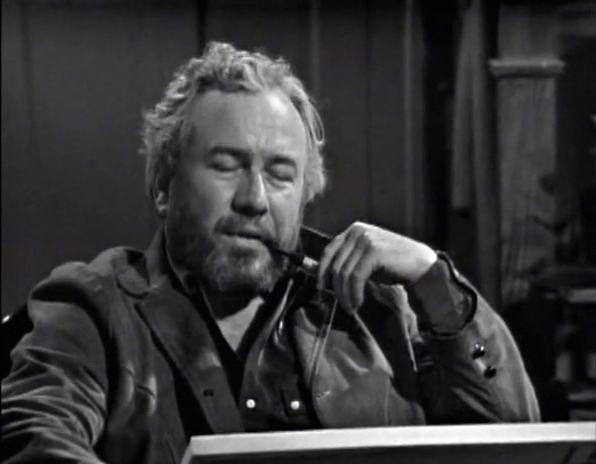
Her name, Sam recalls, is Betty Hanscom. You recall that John Dickson Carr novel with the character named Betty Calder? Something tells me Art Wallace was familiar with it.
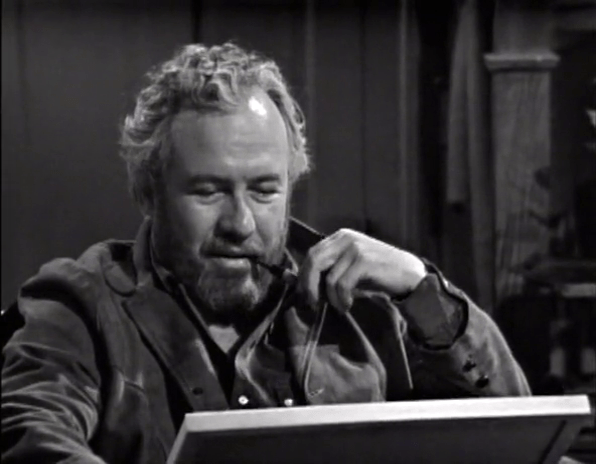
Oh. Uh…okay.
So it’s, er, implied that Sam and this Betty woman had some kind of affair back in the day. This raises an interesting theory that I am sure nobody in the contemporary viewing audience could’ve guessed (mostly because it’s entirely out of left field): what if Vicky’s connection to Collinsport has nothing to do with the Collinses at all? What if Vicky isn’t a long lost Collins, but a long lost Evans?
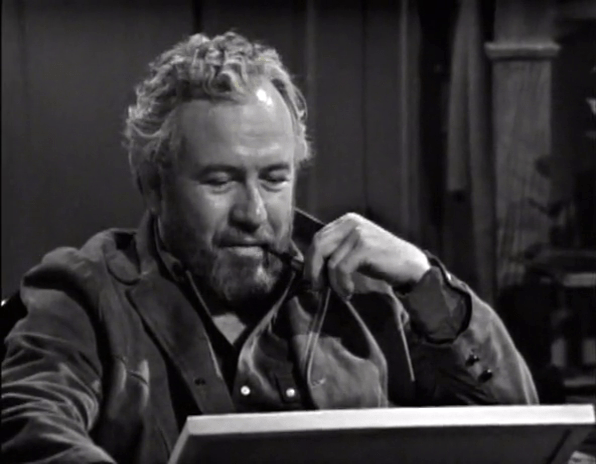
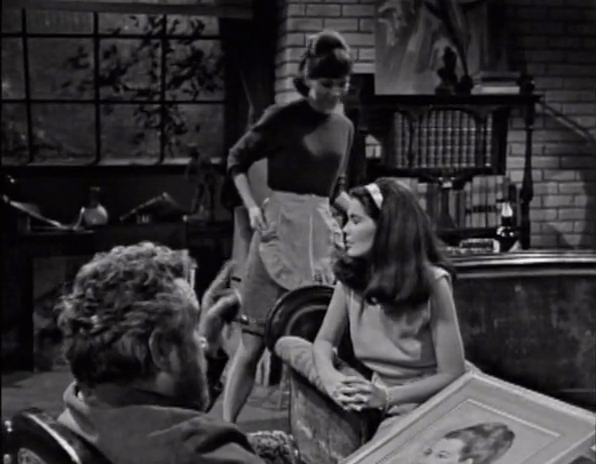
Instead of the scion of a dark and haunted family with centuries of tortured history, Victoria is instead descended from people much like her: working class nobodies who follow the rules rather than make them and who are beholden to the whims of the wealthy and powerful and all their cruel, selfish machinations.
This theory, as wonderful and weird as it is, is dashed almost as soon as you have time to think it however…
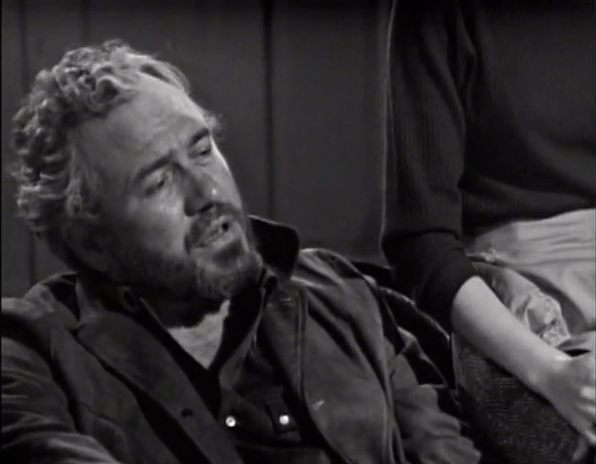
Sam notes also that Betty had no other family, and her parents have likewise passed on.
Oh, Art, you who give so rarely, and so quickly take away.
So it is necessary for me to do the thing I do best and create a timeline.
We will labor under the usual soap opera premise that these episodes are airing in a time vaguely analogous with the time in which they aired, which is true for Dark Shadows. For now.
Victoria is 20 years old. Since she is surnamed for the season she was left on the fondling home’s doorstep, we assume she was born in winter of 1946 and conceived in about mid-1945.
Betty Hanscom, according to Sam, was painted “25 years ago”, which would be about 1941. Then, using a very strange convention of half-year and almost half-year intervals, we learn she died about 1942, three whole years before Victoria would’ve been conceived.
But she looks so much like Vicky. It can’t be a coincidence. It’s far too wild. The only conclusion is that Vicky is a relative of Betty, but not directly descended. But Sam remembers no siblings. He might be right, he might be wrong. Let’s assume for now that he’s right.
That only leaves Betty’s parents, which is…er…
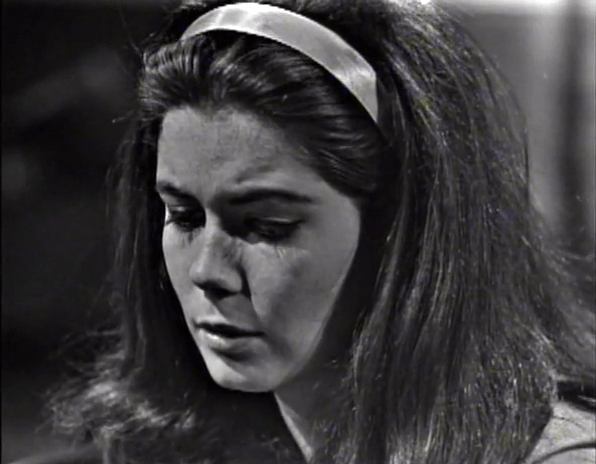
If Betty and Sam were together, that would imply they’re age contemporaries. Obviously, this show has proven that isn’t at all a rule, but we’ll assume also because Betty looks like Vicky does now in that portrait and, since Sam is in his 40s or so, he would’ve been in his 20s 25 years ago, the same as Betty.
So, assuming Betty was around 20 in 1941 and therefore born in 1921 and assuming Betty’s parents were in their early twenties (at least) when they had her, that means that, by the time Vicky was born, they would’ve been well into middle age, whichever one of them (or even both, if she were a legitimate child), it was.
Obviously, it stands to reason that at least one of Vicky’s parents is somebody still alive and on canvas, so we assume it’s only one of the Hanscoms but, either way, it sounds a lot like a case of Writers Cannot Do Math at best, and Maybe This is About Sex Crimes at worse.
But since that’s all Sam knows, I guess it doesn’t really matter what…
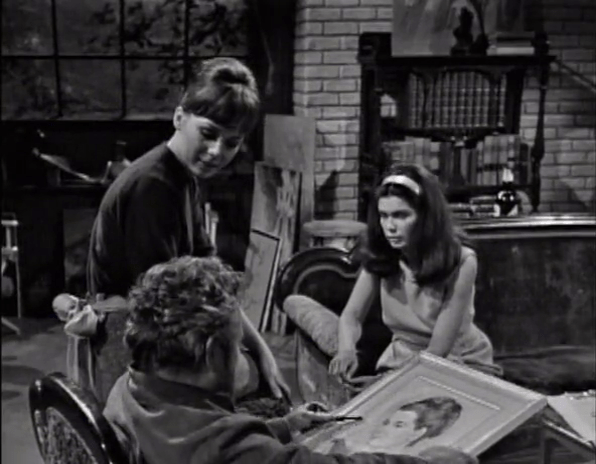
WHAT????
Sam takes quiet umbrage at Maggie’s statement, correcting her that Betty is a Hanscom.
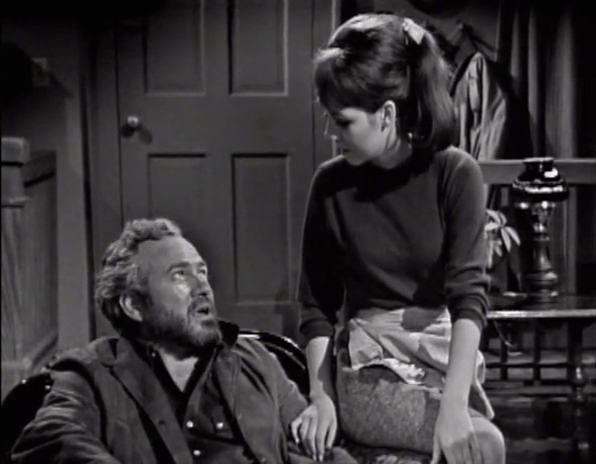
Hanson is somebody entirely different.
But…but why?
Several times throughout this blog, I have wondered why more was not done to connect the stories of the two principle characters of Dark Shadows. If, at some point, the tale of Burke’s revenge intersected with Victoria’s quest for her origins. We already saw in their botched dinner date a major missed opportunity when Burke turned out to have nothing about her that she didn’t already know in his dossier.
But this is an even bigger dropped ball.
What if the man killed in that hit and run, the man for whom Burke spent five years in prison, was connected in some way to Victoria? It was 10 years ago, so there’s no continuity errors with regard to her conception the way there are with Betty. What if that man was Vicky’s father, or some other relative? How would Vicky feel to learn that? Would she blame Burke for robbing her of a family she never got to know? Would Burke feel shame, would he insist he was innocent, tell her she could know for sure if she helped him expose Roger and destroy the Collinses?
What a story that would be. What a love affair. What drama!
But it doesn’t happen. Art Wallace seems to tease us, even, with that possibility, having Maggie excited about the prospect only for Sam to quietly put her down.
I won’t be ruining anything (sadly) by telling you that we will never again hear about this Hanson, the man killed by Burke (or whoever) that night. Nothing about who he was or what he did besides that surname. It doesn’t matter. It should, it feels like it must, but it doesn’t. He is only significant for the crime that cost his life.
And Vicky’s past has nothing to do with him. Dark Shadows insists on it. For some damn reason.
Within the scene, the mention of Hanson serves only to pivot for the second lore dump of the episode: Sam being made by an eager Maggie and Vicky to tell them the tale of Burke’s trial. I don’t know why they’re so excited to hear about vehicular manslaughter, but there’s fuck all else to do in this town.
Sam is, understandably, reluctant to go into this, but the girls are able to convince him.

Isn’t that the sad truth.
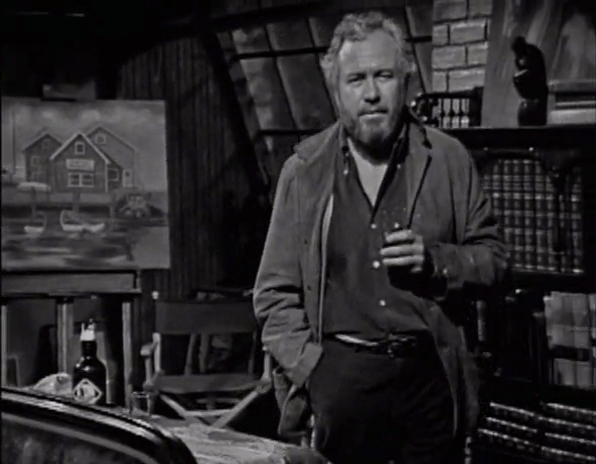
So here, for the first time, we hear the full story (previously only available in confused bits and pieces) of the night that changed Burke’s life, all delivered in the delightsome tones only David Ford can affect.
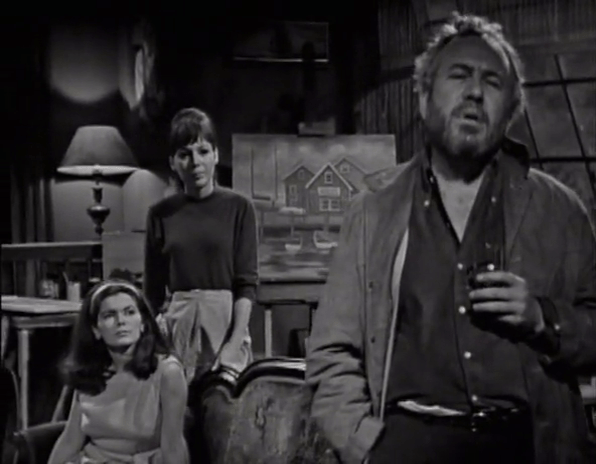
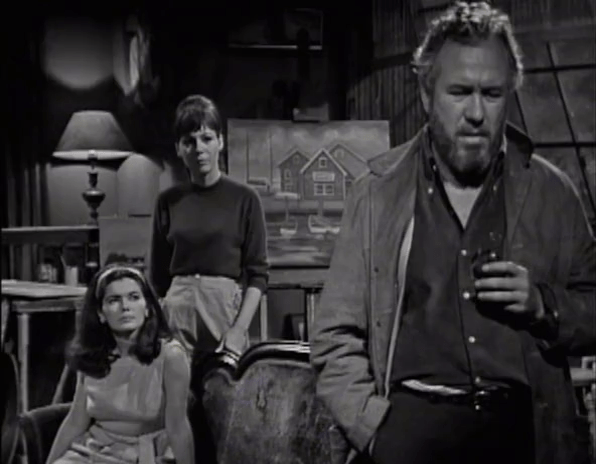

If that’s what you want to call it…
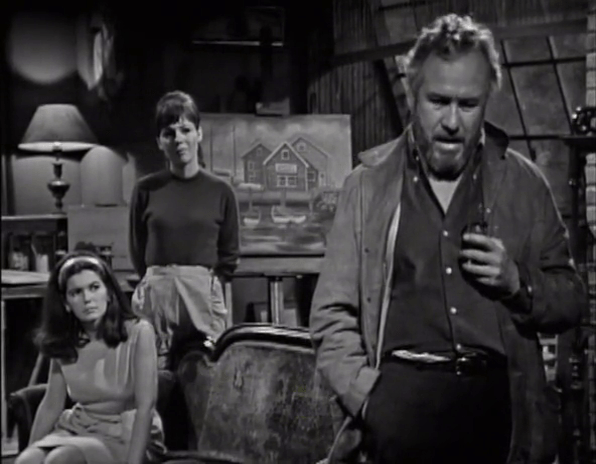
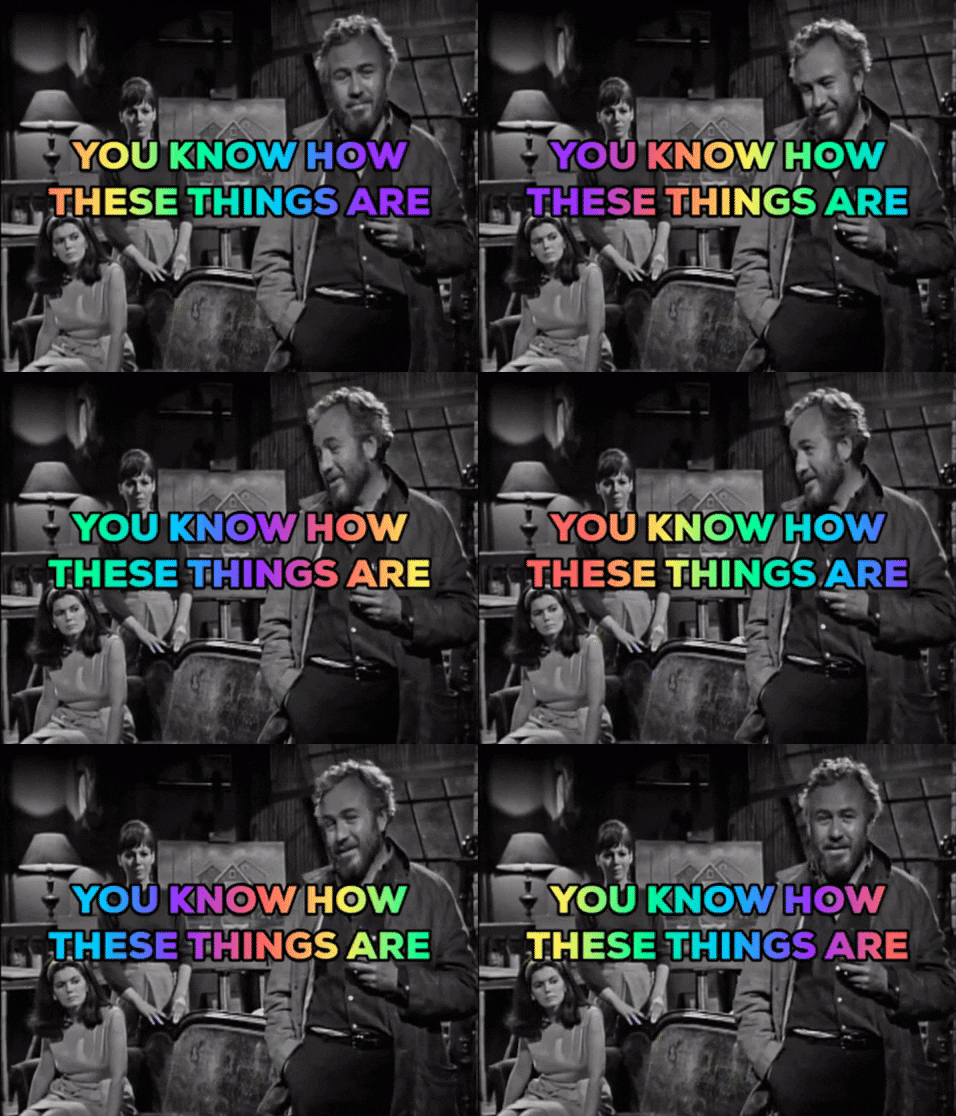

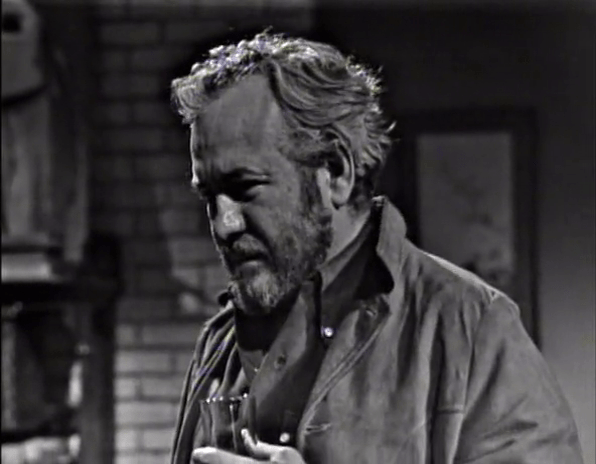

So that’s the kind of set up out was.
Oh? Don’t mind me, please continue.
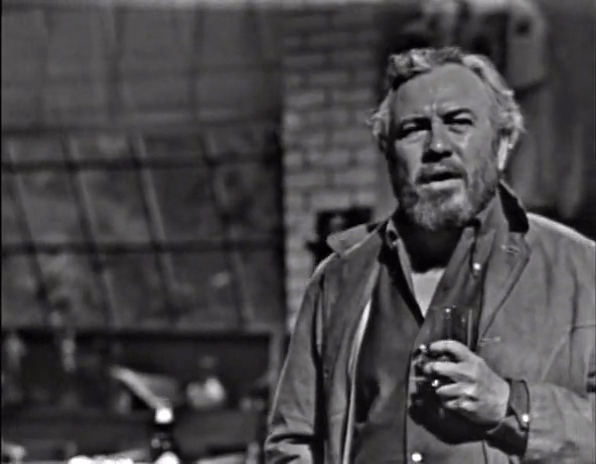
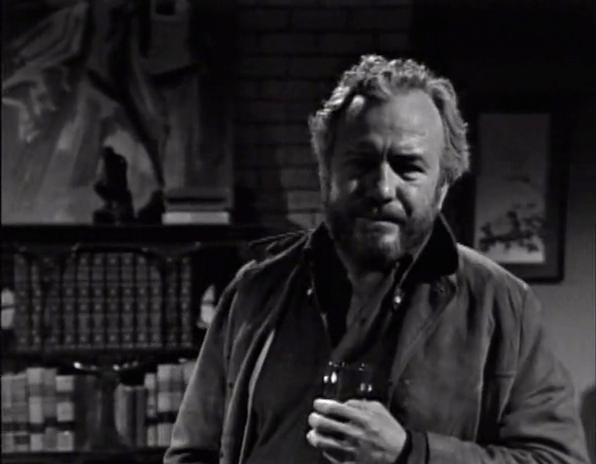
Well, that explains why even Burke isn’t sure for a fact. I guess it would’ve been inelegant for him to include mentions of his volatile drunkenness in all of those dramatic confrontations we’ve been watching.
Roger and Laura both testified against Burke at the trial…
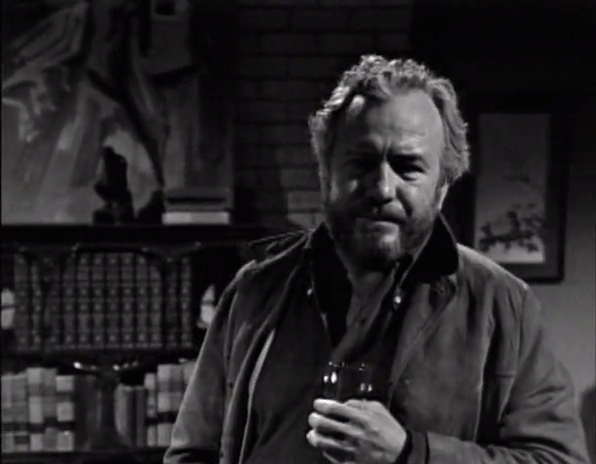
And the rest is history. Literally. Almost the entire mythos of Dark Shadows as it exists at this point was just unraveled very neatly in a single act of a 22 minute episode after almost three months on the air.
What the hell took so long? There’s quite a difference between withholding information for the sake of suspense and sitting on basic plot material so long that your audience stops caring about the story.
It looks like this show is starting to get a clue.
Patterson calls Sam and, in a much softer tone than he used when he was questioning him, asks after Burke.
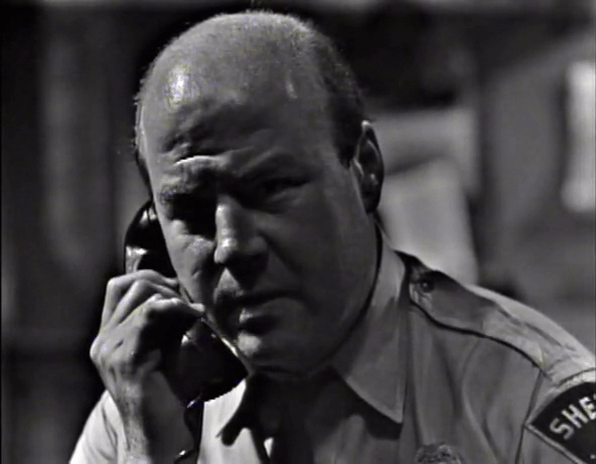
Patterson doesn’t say it outright, but he’s clearly worried the inflamed Burke will try something dangerous with Sam. We stan a cop who looks out for the little people.
And, of course, no sooner does the call end then a knock comes to the door. Sam begins to warn Maggie against opening it, but…
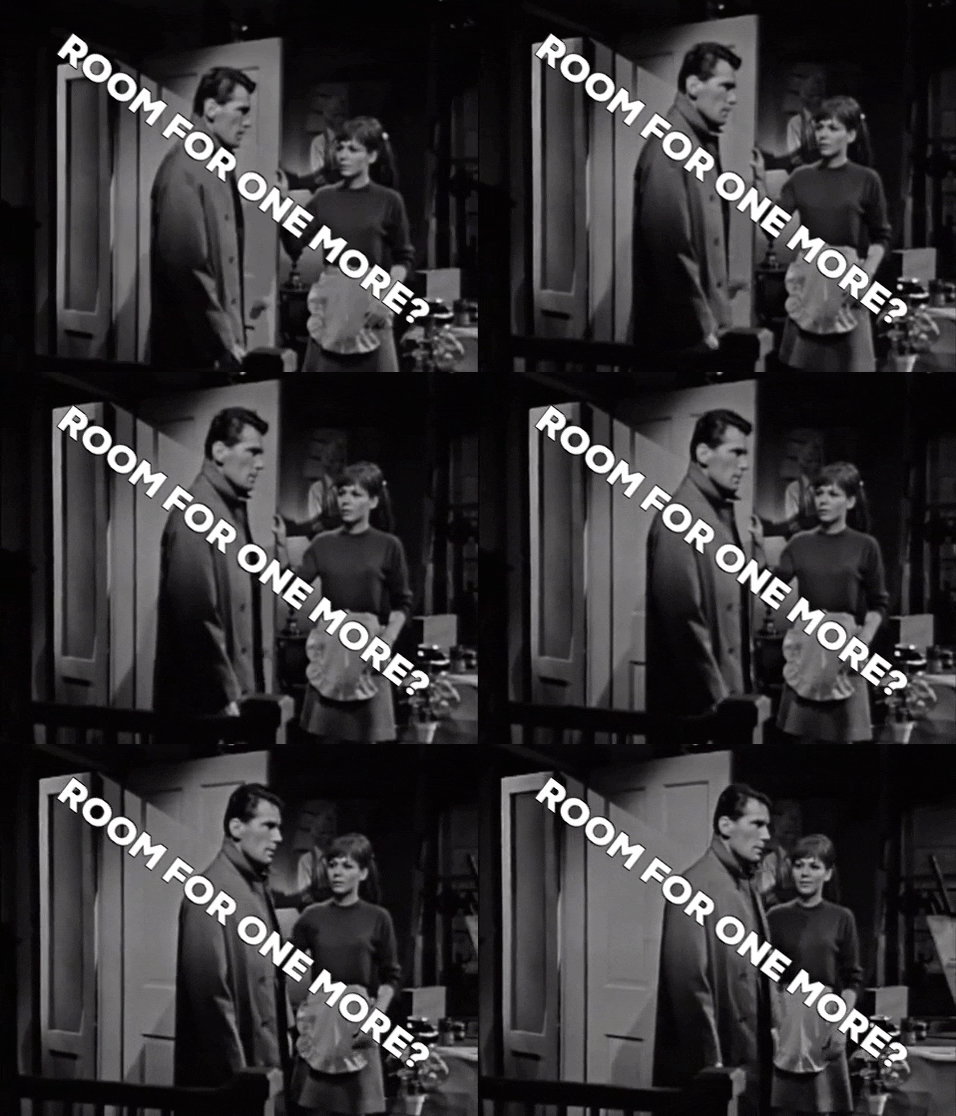
Aw well.
This Day in History- Friday, September 16, 1966
South Vietnam votes on revisions to their constitution. Buddhist leader Thích Trí Quang ends a 100-day hunger strike begun in response to the government’s quashing of June’s Buddhist uprising. So basically, he had starved himself for roughly the entire length of Dark Shadows to this point. I’m sure the government learned its lesson.
The Metropolitan Opera House opens in New York. To this day, it is the most expensive date in the city, and is guaranteed to be the worst time, unless you’re with a party and you get drinks first.
The August Moon, a Japanese freighter, breaks apart on a reef in the sea south of Hong Kong. All 44 crew are saved by a joint U.S. and U.K. naval effort in an inspiring example of international cooperation. Strangely, the next month, all 44 members of the American ship would die in a mysterious fire. Ghosts?
A British research team discovers the bodies of 12 U.S. Navy officers whose plane had vanished after taking off from Iceland in January 1962. More ghosts?
 Kooks of Collinwood