
Bad touch! Bad touch! Of tension.
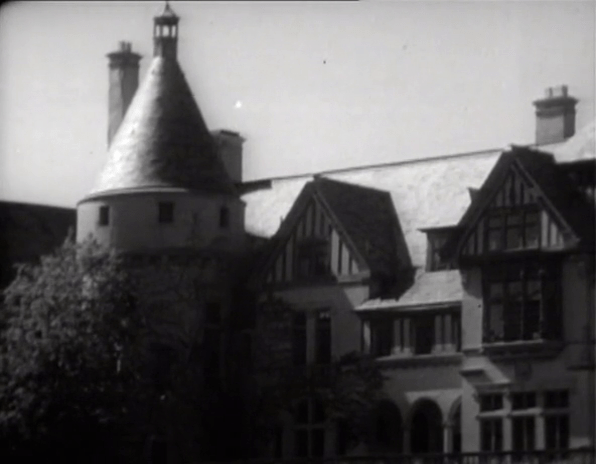
Today’s police procedural retrospective brings us back to My Man Sam Evans, who remains where Roger left him a few episodes ago.
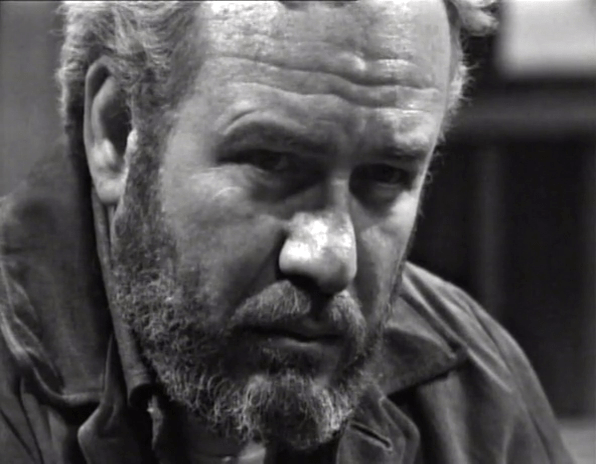
And Sam isn’t alone.

Joe is the only person to call the bartender “Punchy”. I have to assume it’s a private nickname Joe has for him, perhaps after he rescued Joe’s well-intentioned ass from one of those bar fights he gets into on Carolyn’s account.
Sam flags Joe over
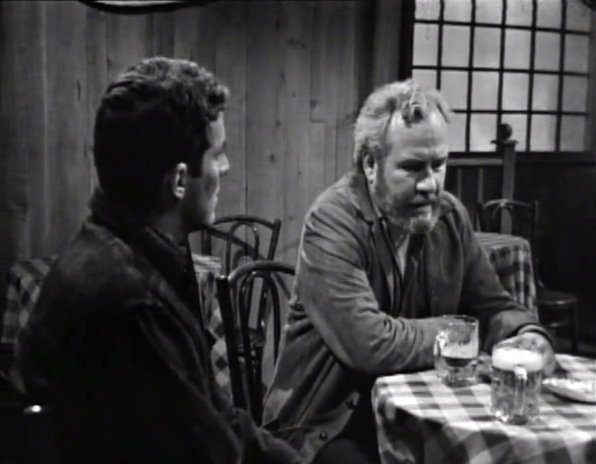
Remember that line for the end of the episode. Art Wallace is being cute again.
Sam convinces Joe to sit and drink with him, considering they’re the only people at this place in the middle of the afternoon. Sam has his otives, of course.
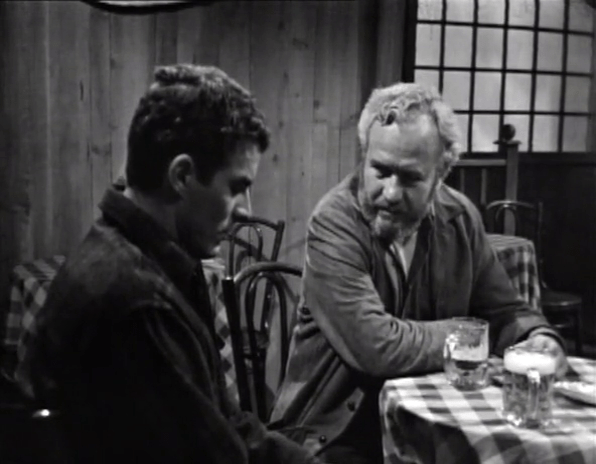
He and Carolyn have that in common. Among other things…
Ah-HEM.
Joe is surprised to learn that Malloy and Sam are friends and I can’t tell if this is a continuity error like Francis Swann having Maggie ignorant of the fact, or if Joe is more justified not to know this, despite Malloy speaking quite highly of the man Sam used to be the last time Joe ever saw him. Which was written by Francis Swann, so I guess both these guys aren’t reading each others’ notes.
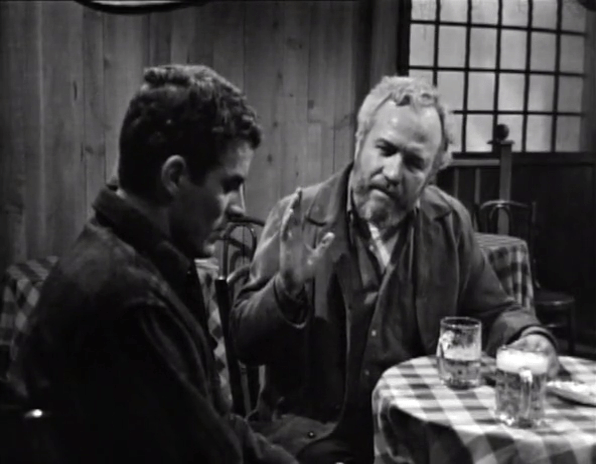
Bookmark that one too, I’m serious. It becomes an event.
Sam fishes (Geddit?) for info on Malloy’s death, presumably thinking Joe would know such things but he, of course, hasn’t been up to the house since literally moments before it was found out Malloy was, in fact, dead.
Sam’s questions line up neatly with Burke’s and Maggie’s to Victoria last episode: he wants to know what people there think. There is an understanding (much more heavily understood by Burke and Sam) that there is a significant connection between Malloy’s death and the Collins family.
It’s Roger. The connection’s Roger.
All Joe can tell him is that the plant closed for the day in honor of Malloy.
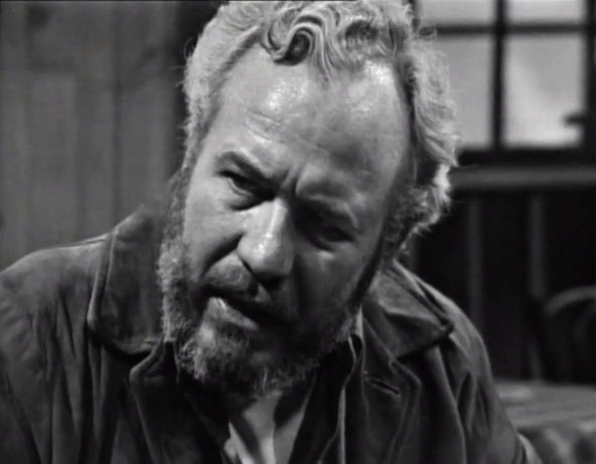
Er…what things? What does that even mean? Is it like an actual business closing, or is this some attempt at a metaphor. And if so, a metaphor for what?
I don’t know, but they used that line to cut to the opening title, so somebody somewhere thought it meant something.
At Collinwood, the contentious Collins cousins continue their catty conflict.

Carolyn reminds David that, per her mother’s orders, he should be playing outside. I have to believe she doesn’t actually give a shit, but processes grief through being generally unpleasant. It’s one of her more relatable qualities.
David, however, is very busy conducting research.
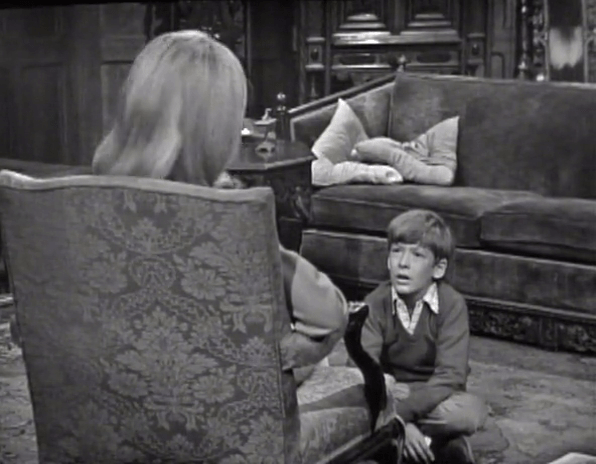
Carolyn, understandably, isn’t inclined to recount the exact details of her finding a Dead Man on the Foot of Widows’ Hill Who Ended Up Being Her Surrogate Father.

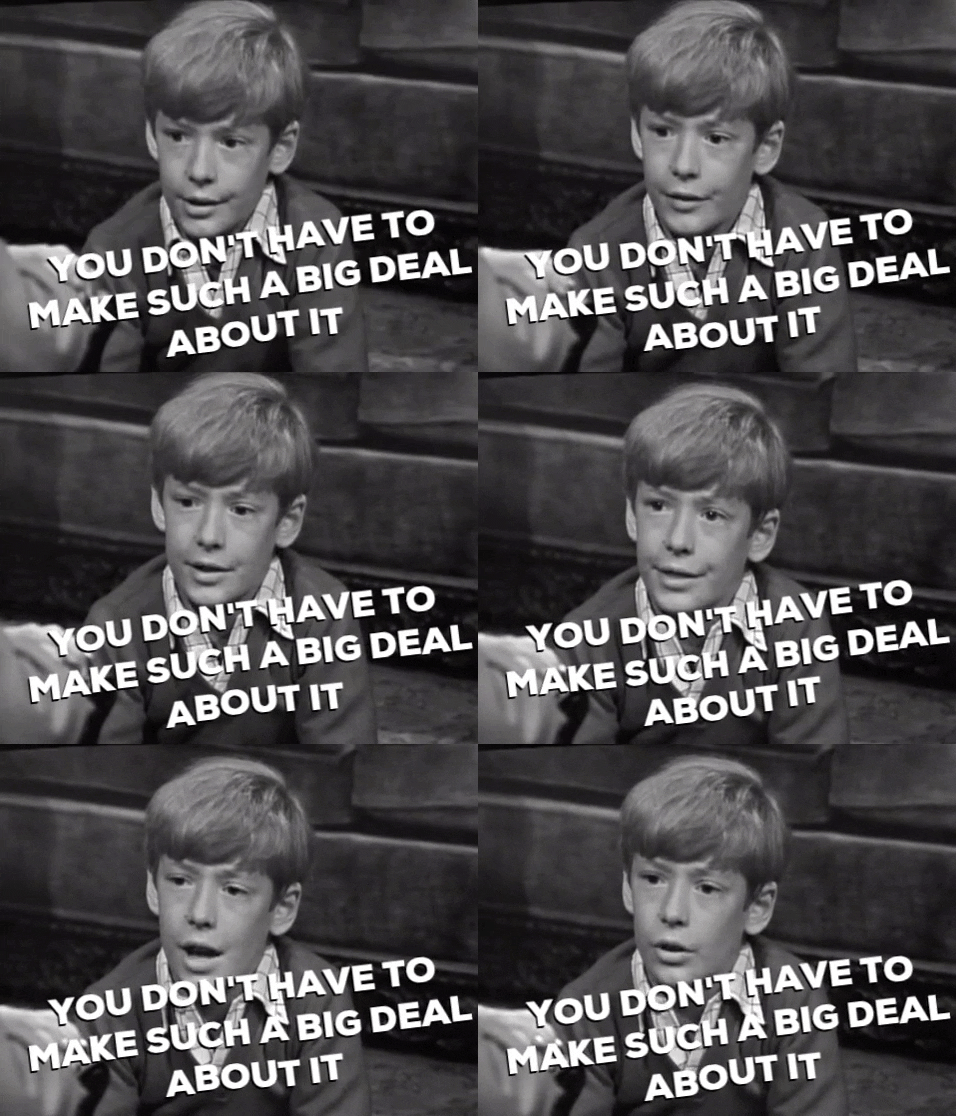
Carolyn has no reason to assume otherwise at this point, of course, but David isn’t just saying all of this to piss her off. In point of fact, he’s trying to solve the murder! Well, we’re not supposed to call it a murder yet, but he’s still trying to solve it.
So we have Burke Devlin as the rugged vigilante trying to clear his name (twice over) and David as the intrepid kid detective trying to solve the crime despite the adults’ (and, I guess, petulant teenager) not believing in him. It’s a weird fusion of mystery tropes, but it works in context. The main difference with David, though, is he’s motivated entirely by the hope (he believes certainty) that the killer is his father and if he solves the murder he’ll finally be rid of that son of a bitch.
Carolyn tells David she’s sick of all this grim, miserable business and this grim, miserable house, but I don’t think he’s paying any attention.
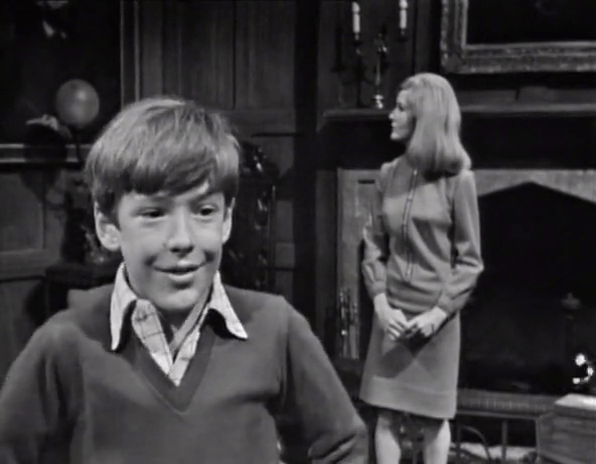
See? At least he’s enjoying this.
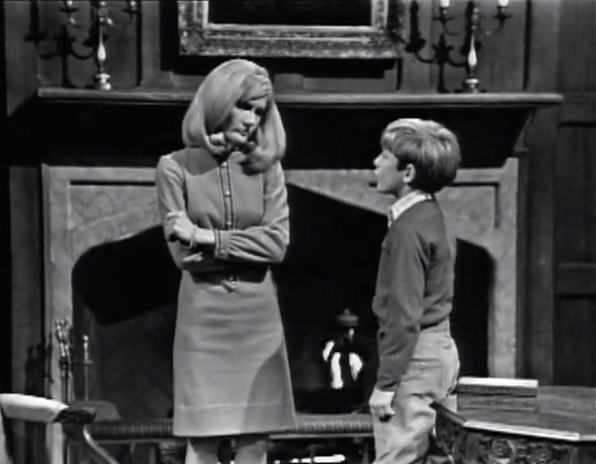
The world of Dark Shadows is so self-aware that it’s taken us 58 episodes for even one person to suggest maybe it would be cool to live in a haunted house. I mean, it’s not like these ghosts ever seem to do anything bad. Given how little we see them, it’s entirely likely they prefer to just mind their own business.
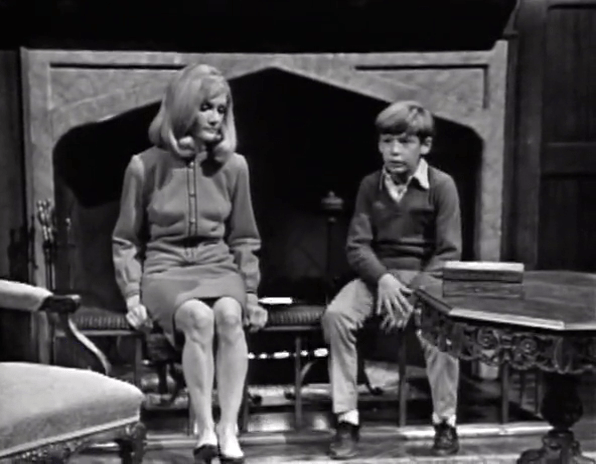
The Same Conversation has gotten so bad that now it’s the nine-year-old pointing out Carolyn isn’t doing herself any favors. This is even funnier in light of her inspired comments that Vicky should chase her dreams and all that. Carolyn doesn’t seem inclined to chase anything, mostly because she isn’t at all certain what she wants to chase.
But none of that is important right now because David sees dead people.
Carolyn reacts with bald-faced shock that David has friends, as if she has some sort of sprawling social circle besides her boyfriend, the babysitter and the french fry pimp.

David is laboring under the belief that Malloy will be damned to haunt Collinwood forever if his murder isn’t solved. I thought somebody had to die at the place in order to haunt it? And it’s been belabored multiple times that, wherever Malloy went into the water, it wasn’t Collinwood.
Regardless, maybe that’s another reason David is so into solving the murder. He’s friends with all the ghosts of Collinwood, and all of them (Josette, the Widows) seem to be women, and maybe they don’t like the idea of some random dude showing up and cramping their style.
And the method of David’s spot of sleuthing?
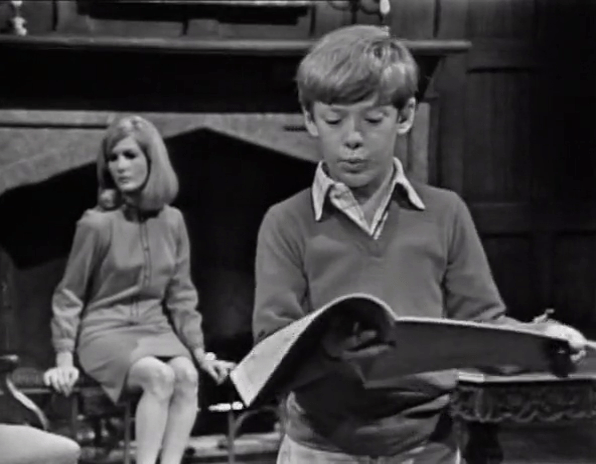
Oh, the tides.
It’s been mentioned before that the local police are studying tide charts to better determine just where Malloy died. As with the broken pocket watch inexplicably providing the time of Malloy’s death, tides are a (slightly less common for obvious reasons, but still) device in detective fiction.
The ebb and flow of the tide operate like a scientific formula: they don’t waver, they never slip up. You can predict them. This makes them understandable and, therefore, appealing to the logical deductive soup that permeates mystery novels of all levels of skill and competence.
There is a novel by John Dickson Carr from about 1961 called The Witch of the Low Tide. Carr was firmly in the American subgenre of crime fiction, writing gritty noirish stories that emphasized drama and intrigue over the puzzle-solving, logician bent of the British style, which was more focused on the method of the fictional detective.
The novel is set in the early 20th century and features a mysterious wet footprint in the sand, suggesting a killer may have come ashore at, get this, low tide. The novel itself is highly unremarkable, but I have to wonder if maybe Art Wallace had been reading it because one of the characters’ names is Betty Calder. The surname should already be familiar to you. As for the first…give it a few episodes.
Art Wallace attempts again to link two scenes together. Sam is pressing Joe, a fisherman, as to how likely it is the police can trace the tides to the source of Malloy’s death.


Recall that Patterson stationed HARRY at the Blue Whale to keep an eye on Sam until it was Dramatically Satisfying to interview him. Because Harry is, like most of us, doomed to live his life in obscurity, we will never see him, but I guess he phoned Patterson worried that Sam would never leave the bar and he would die at his post.
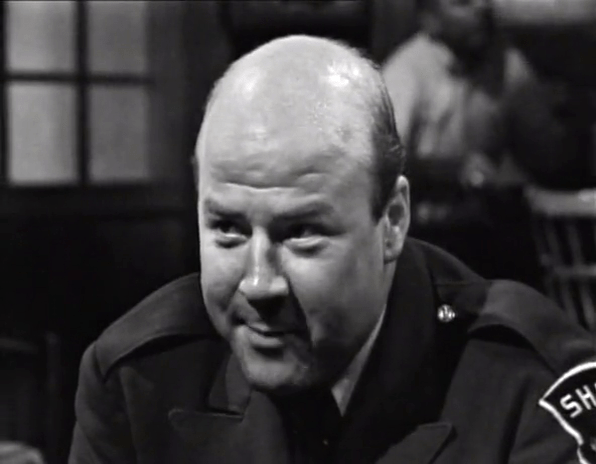
I love him so much. Not in that way, you creeps, but in the way of a delightful gay uncle.
Patterson continues being a Messy Queen by very unsubtly attempting to get rid of Joe by questioning his manhood.

At first it’s cute, like he’s thinking back on younger days when he himself was a rogish scamp beloved of the damsels, but then he makes it a generational thing…

Ah, the Glory Days, when men were men and local law enforcement officials got rid of unwanted interlopers by suggesting they weren’t dominating their women enough, all so they could intimidate witnesses in peace.
You might remember Consteriff Carter, in his last, labored appearance, mentioning a wife (who I am sure suffered greatly) he had to hurry home to. I wonder, if Patterson has inherited Carter’s role in the travesty that was the suppository story, does that mean he also got a wife? Is he married? It’s unclear, but the hogtying metaphor suggests a man in intense sexual frustration.
Sam comes to Joe’s defense.

His one ally.
But it turns out Joe doesn’t really fancy spending what is apparently a lovely day cooped up in a fusty old bar with the town drunk.
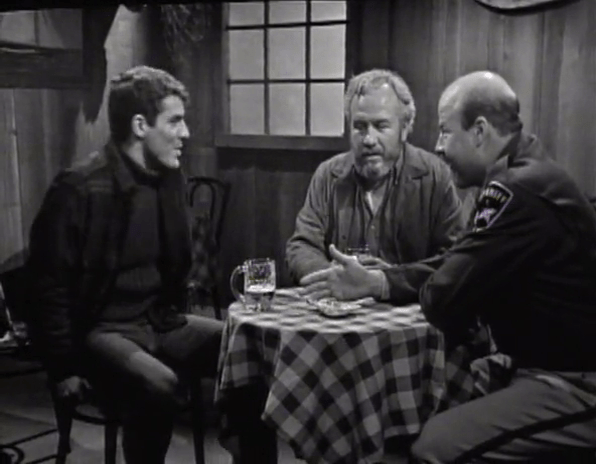
“I am a hollow shell of a man!”
With Joe successfully gotten rid of, Patterson gets to the Point.
At Collinwood, a muddied David returns from an expedition to Widows’ Hill. I don’t know if that means he climbed all the way down, but either way, I think giving Victoria the day off was a mistake.
He gleefully announces his adventure to his cousin, as if she gives a damn.
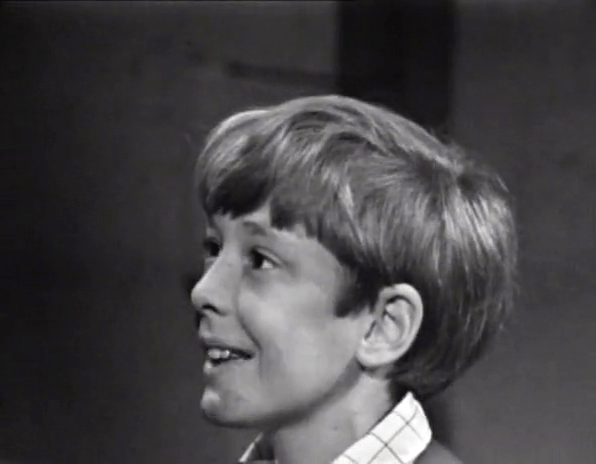
It’s nice to see him happy.
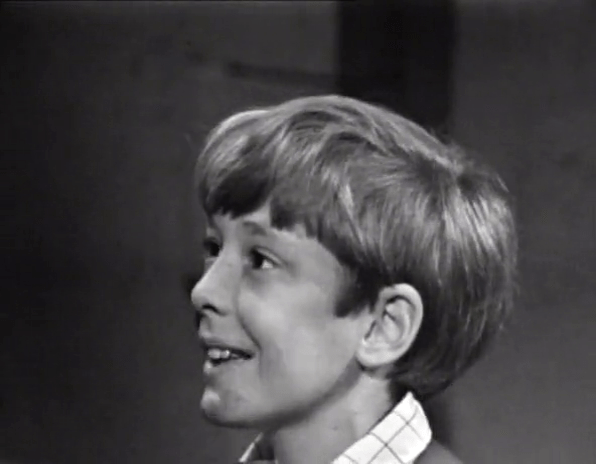
I would’ve at least said “Isn’t that something? Should I call child services?” but Carolyn isn’t at all impressed with the kid’s derring-do.

And David gives her one of my all time favorite comebacks:
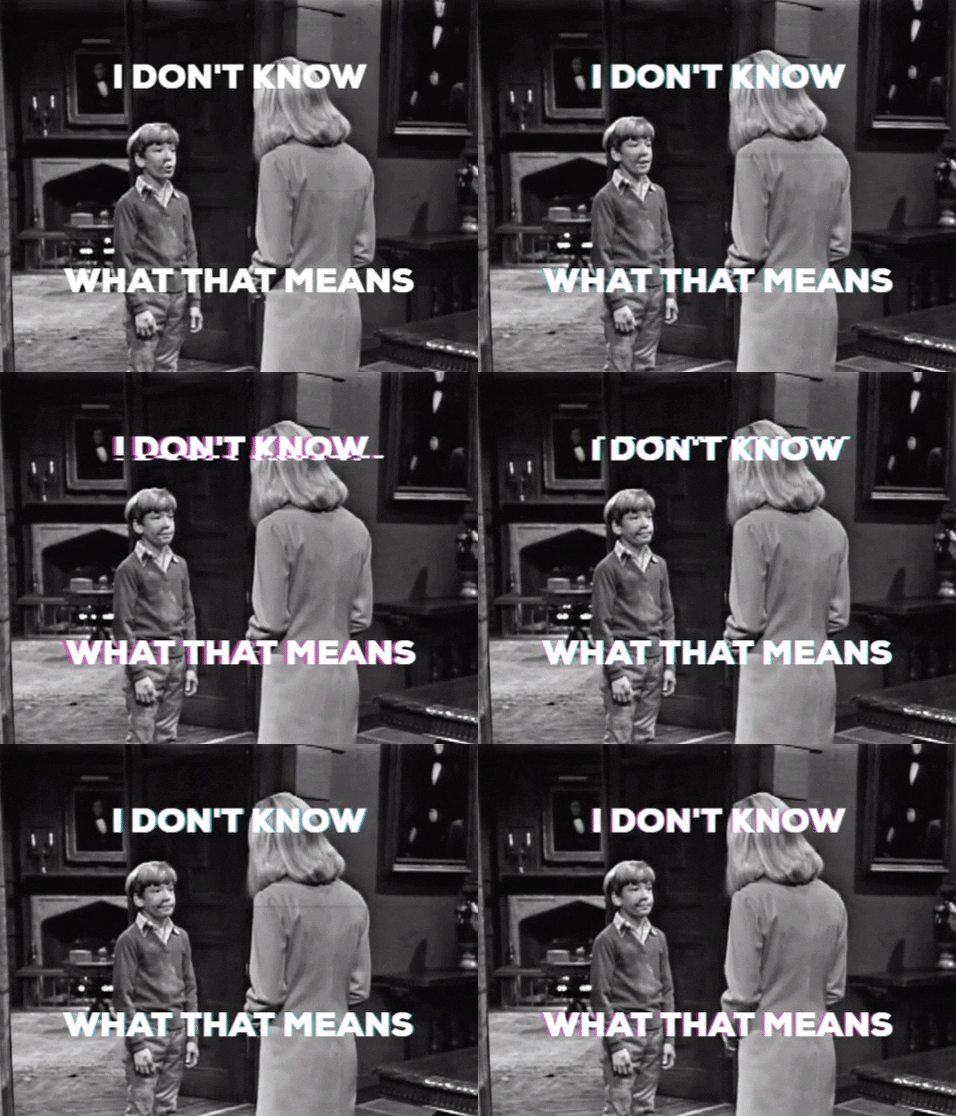
He’s gradually transforming from cold-blooded killer to well-intentioned sociopath and I am so here for it.
Oh, and I’ve said it before, but you’ll never see a child actor doing this on a soap again. It’s not happening. All the good ones are going to Netflix.
Joe comes to the door to prove his masculinity…I mean, to take Carolyn for a delightful tour of the countryside.
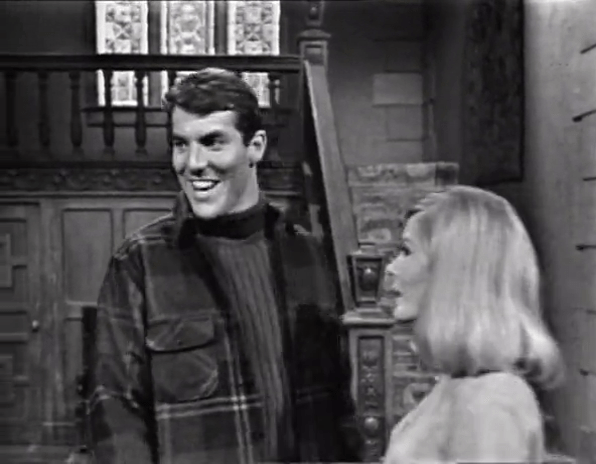
At least he has hobbies, Car.
Joe gives her his condolences and suggests they trip the night fantastic. I will say, in a time when we can’t leave our houses for fear of catching and/or transmitting a life threatening illness, the idea of an afternoon drive through the Maine boonies in September ’66 is compelling.
Carolyn agrees.
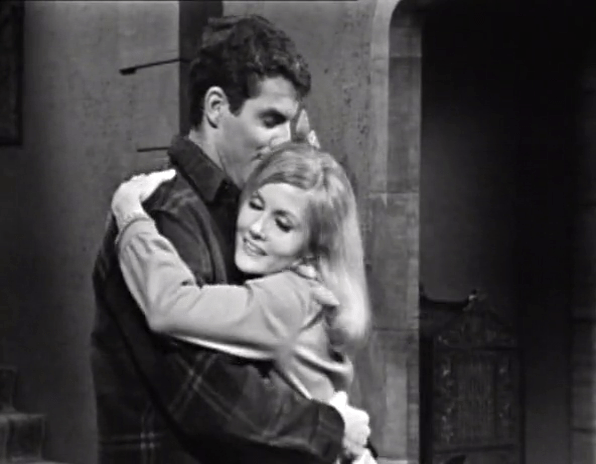
Did you know that Bangor is 50 miles from Collinsport? Of course you do. How could anyone forget.
David realizes Joe is here and, in a marked evolution to his treatment of him this morning (withering contempt), he hurries over to greet him.
Why? Because Joe is Useful Now.

I wish there were a more mature way of describing the rest of the Collinwood half of this episode, but it all boils down to Carolyn doesn’t want David stealing her man.
Relatable problems for the average high school-aged viewer just home from class.
Luckily for the duo of Evans and Patterson, nobody is expecting relatable antics from their end of the story. We want a hard-boiled detective story. Or at least that’s what Dan Curtis thinks we want circa 55 years ago.
Patterson has just got off the phone in relation to some sort of dockside brawl. I wonder if HARRY was around to break it up. He’s had an eventful day.
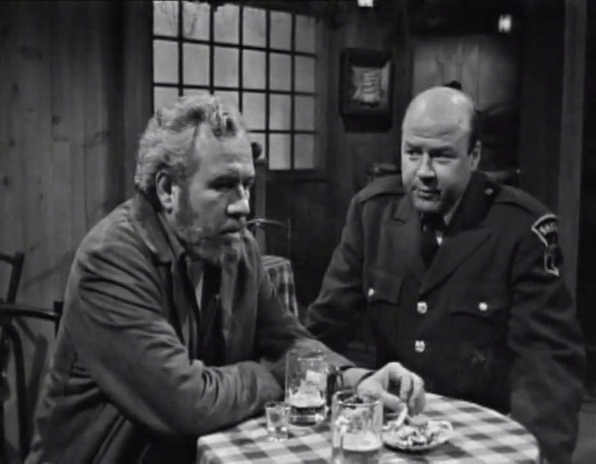
This is of course a soft prelude to a cross examination. Patterson is at least polite enough to extend Sam an invitation, suggesting he accompany him to the station. I can’t imagine it’s an invitation Sam could refuse, but it’s important we observe certain elements of politesse in this society.
At Collinwood, Carolyn has retrieved the requisite Light Jacket to disguise what really is one of her most unfortunate outfits (and almost all her outfits are unfortunate) in this first year.
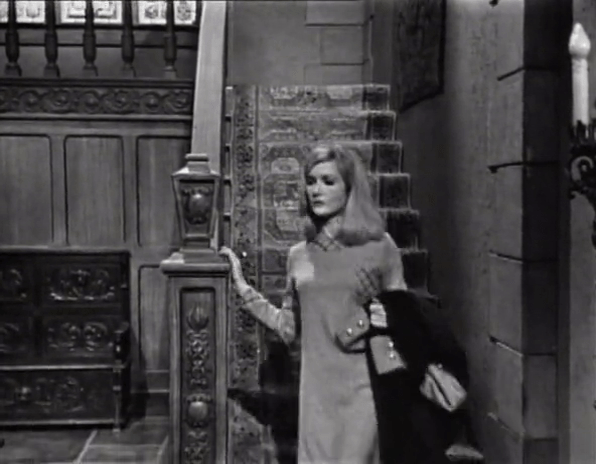
She crosses into the drawing room to find what is essentially the equivalent of Patrick and Sqidward playing with bath toys.

It’s really quite nice to see David and Joe getting along, just as it was nice seeing David and Maggie get along that one time. The boy is so starved for love and affection (and, as Liz often notes, attention), and gets it so rarely. Elizabeth loves him, but her love is a smothering, even damaging (cough-Easy Solutions-cough) thing. Victoria tries, but he can’t look past his fear she was brought here to usurp his mother.
This kid has twice now suggested Joe is a giant joke and will never get the one thing he wants (marrying Carolyn), but Joe is still willing to help him in his endearing but admittedly strange pursuit of the Truth.

Carolyn’s go-to response to just about everything is to make it about herself, so it isn’t that surprising that she thinks David’s investigation is bad solely because she finds it tacky. Any illusion she’s objecting out of some sense of moral imperative is dashed when she uses this to suss her boyfriend.
Also, the writing desk from Victoria’s room is in the drawing room now. Make of that what you will.

Yes.
Joe is quickly shamed…I mean convinced…by Carolyn’s display. Oh, and it wouldn’t be a Joelyn episode if he didn’t make some reference to wanting to marry her.

Carolyn responds to this with her usual manner of polite exasperation, but kudos to him for trying, I guess.
Before Carolyn can fully wrest her man away from here, David turns up, having (he thinks) cracked the code. Joe has to beg off, suggesting David try somebody else for help.
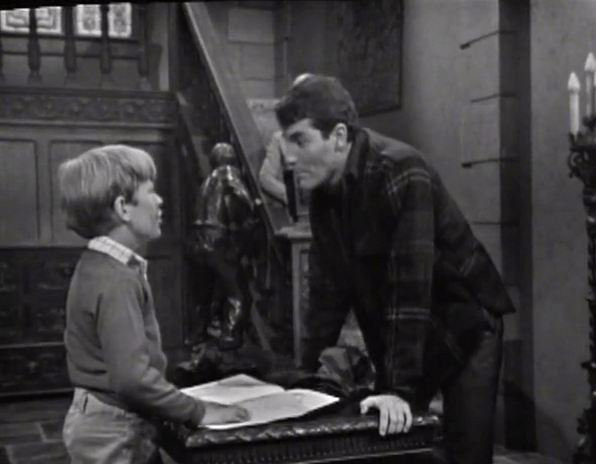
That’s literally what he wants. He saw it in his Orb. He believes it’s destiny that you will lose your girl and she’ll end up screwing your arch nemesis just to make you self-conscious.
Joe does assure David that he’s got the hang of it as it is and can continue on now by applying himself, which is better learning advice than he ever got from his governess.
Before he goes, Joe suggests he bring the charts to his father and ask him to lend a hand.

He’d probably rip it up, but out of contempt, not fear. He isn’t very effectual when he’s afraid.
Patterson and Sam arrive at the station to commence the interrogation. Patterson presses on the matter of the meeting, which he has now heard two accounts of, one from Roger and one from Burke. Sam more or less sticks to the story he and Roger prepared earlier, insisting he doesn’t know what the meeting was for.
Patterson responds by repeating his name like he’s chiding a child.
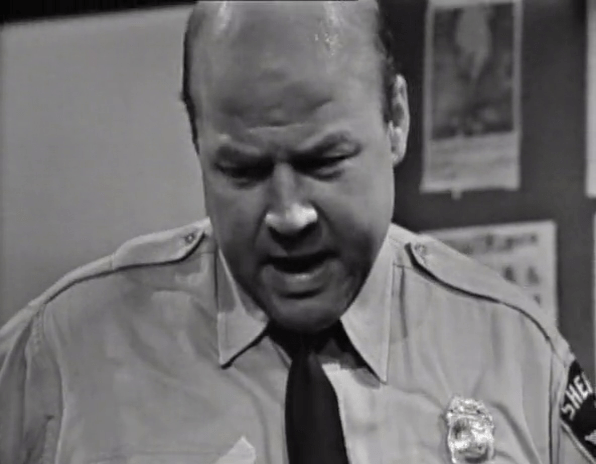
Patterson brings up the manslaughter conviction, coming to Burke’s claim that Malloy was trying to clear him.
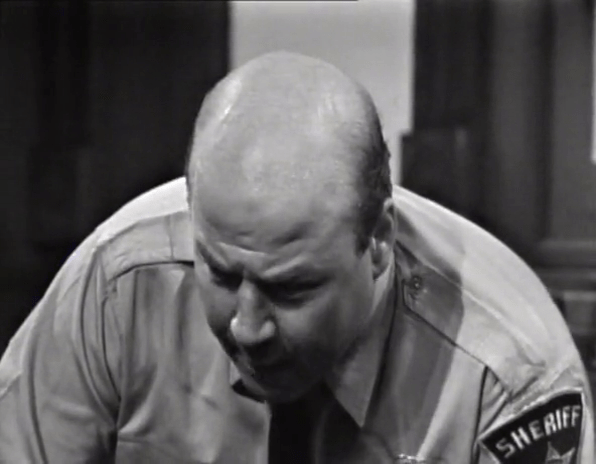
This indicates that Patterson may believe Burke’s story much more than he let on when he was speaking to him last episode. Which is good. A good cop doesn’t let on to a potential suspect what he thinks or feels about them. Dare I say, Patterson might be good at this?
Patterson gets downright angry, in Sam’s face, practically cornering him.

I hate the police procedural, but I’d watch one anchored by this guy.
So Sam describes his movements the evening of Malloy’s death. I’ve added them to the timeline with the new entries, as ever, in bold.
- 8:00 – 9:00:
- Burke sees Malloy at the Blue Whale. Malloy tells him about the meeting and the “hole card” that’ll be waiting there.
- 10:00:
- Malloy sees Roger at Collinwood at around 10:00 to make him go to the meeting. It is apparently a 10 minute trip from Collinwood to the cannery, presumably by car.
- Malloy next goes to Sam to tell him about the meeting.
- 10:30: Roger leaves Collinwood.
- Burke is still at the Blue Whale. He is observed by the bartender and “one or two” other patrons.
- Sam leaves home and heads to the cannery on foot.
- At about this same time, Malloy is at home. Mrs. Johnson observes him taking a phone call. He departs within the half hour.
- 10:45:
- Burke drives from the Blue Whale to the cannery.
- Presumed time of Malloy’s death, judging by his stopped watch.
- 11:00: By now, Roger, Sam and Burke are all at the cannery for the meeting.
- 11:20: Elizabeth calls Malloy and gets no answer.
- 11:30: Burke goes in search of Malloy, to no avail.
- 12:00: Roger returns to Collinwood. Liz is waiting up for him.
The main point here is that Sam can give no alibi for the time in which Malloy met his death.
Roger already had Sam well-assured he would send Sam up for this if he was given half a chance. Combined with this damning detail, our friend is in some trouble.
Also not helping is how Sam declares he knows Patterson thinks Malloy was murdered and is accusing him of doing the deed. Not that I expected any cohort of Roger’s to be good at “Keeping it cool”, but there it is.
We get a hasty dissolve back to Collinwood where David greets a visitor.

If Art Wallace did this intentionally, setting up Sam and Patterson to greet their respective young scene partners in the sane way at opposite ends of the episode, it may well be his best attempt at that dialog connector gag.
David doesn’t need a crystal ball to see why the sheriff’s back at Collinwood.
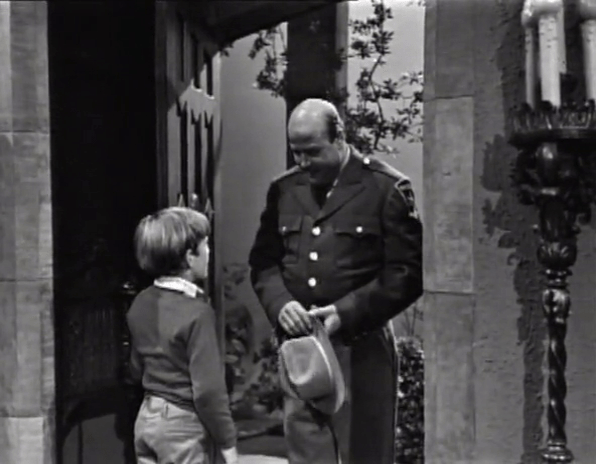
And he couldn’t be happier to fetch him.
This Day in History- Wednesday, September 14, 1966
Not much. I mean there was some stuff on Gemini XI which was currently orbiting the Earth. That’s been going on for a few days. Space.
 Kooks of Collinwood