
Vicky Winters is getting more personal these days.
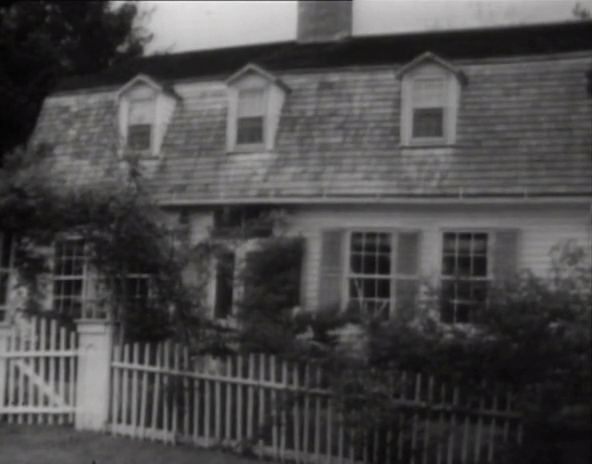
Mind you, Vicky’s lesson with “the son of a frightened man” isn’t exactly a thing we’re going to see this episode, which only makes the attempt to remind us that she is, somehow, relevant to the story all the more flaccid.
But at least they fixed Roger’s scar.
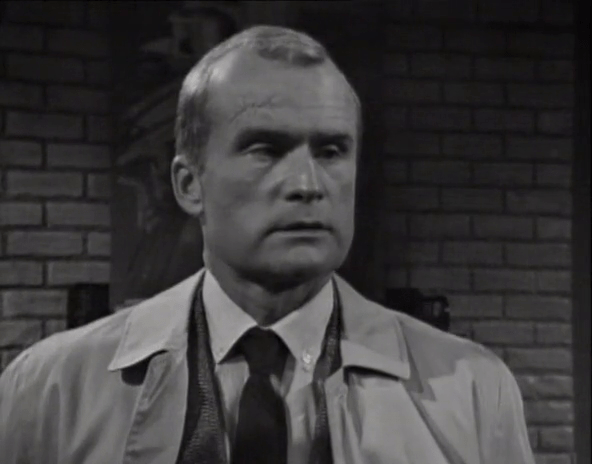
Roger’s fear, which is really an omnipresent thing, is significant today because of his panic that Sam Evans is going to tell his nemesis Burke Devlin everything and, for once, Sam isn’t about to kiss Roger’s ass and fuck off on demand.
And, to make matters worse…
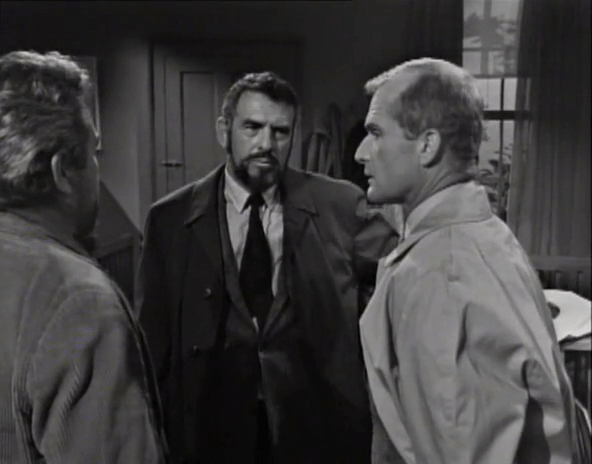
Bill Malloy has decided to be relevant again, as Art Wallace continues desperately spinning the narrative wheels after realizing he has cashed in almost none of his storytelling chips in the first two months.
Malloy has made a bargain with Burke, to help him clear his name…so long as Burke promises not to harm any of the Collinses. Except Roger because fuck him. The implication is clear. Whatever Malloy knows about what happened ten years ago, he seems aware of the fact that Roger was guiltier than history remembers. And he’s going to prove it, for Elizabeth’s sake.
If this is shocking to you, that’s probably because it resembles an actual conflict between characters, with twists and alliances and betrayals and those things that one expects to encounter on TV.
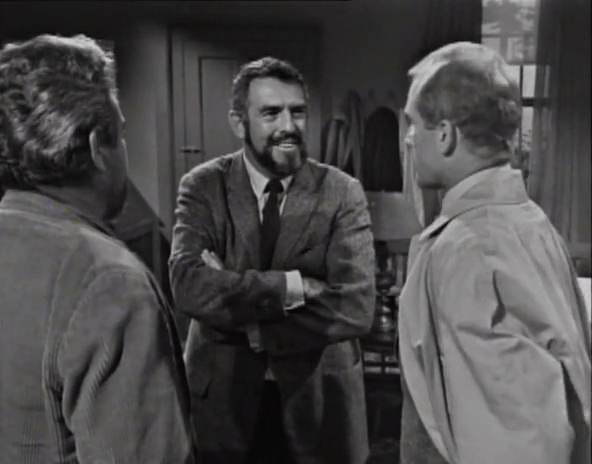
So maybe Malloy is kind of hot. Also, ‘run into a windmill’ should not be confused with “tilting at windmills”, a rhetorical expression that refers to Don Quixote and the titular noble idiot’s attempt to slay “giants” that were really, indeed…windmills. “Running into a windmill” is an expression that means to encounter something blustery and angry and generally all air.

Roger is suspicious of Malloy’s intentions.
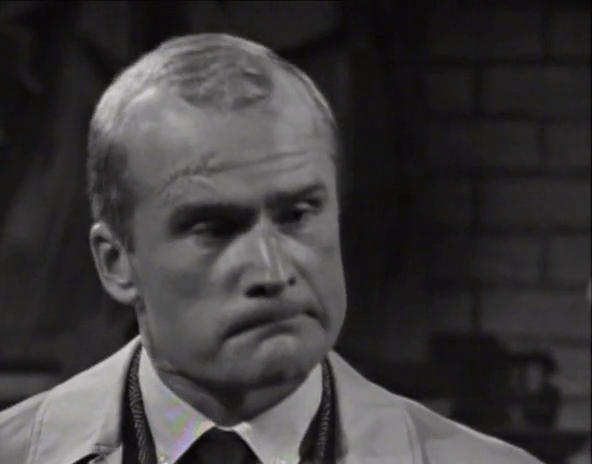
You’d be forgiven for forgetting, but Roger works at the cannery too. It’s unclear just what he does, but he does do something. Something. We can probably forgive him for not being at work much considering

But he really has no place wandering around like a cock-a-whoop, acting like Malloy’s the shit on the bottom of his shoe. Technically speaking, Malloy is his boss, family business be damned.
This animosity has only been touched on once before, in their first interaction back in Episode 3, in which Roger very helpfully informed us that he resents Malloy for having more authority at the plant than he does. Enough has happened since then that we can conclude why this is.
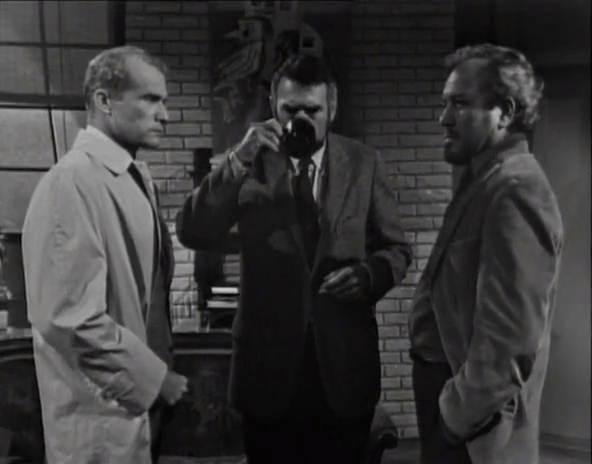
Frank Schofield is another of those character actors who do more than they probably needed to on this show. He’s rarely ever been around, but damn it all if he doesn’t make the most out of every scene.
So, Roger tells Malloy that he was commissioning a portrait from Sam and, considering what a convoluted claim that is to make, it may even be necessary for that portrait to actually be painted so that nobody suspects Roger was lying. Things have been looking up for Sam.

Malloy mentions his earlier encounter with Burke, which quite obviously disarms Roger.

This is the kind of scene that would work just as neatly in a poor sitcom. We have the two co-conspirators and the third party who came in, knows they were up to no good, but the co-conspirators have to play it as cool as they can in the vain hope that they haven’t yet suspected anything. The bad thing is that this goes on for much too long.
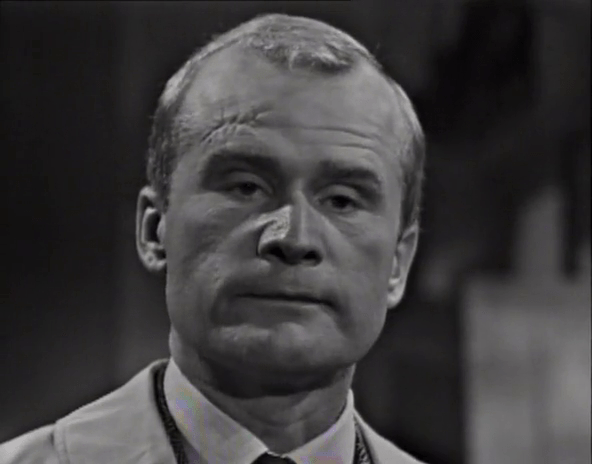
Roger hastily makes excuses and leaves, but Malloy decides to stay for “a second cup of coffee”.
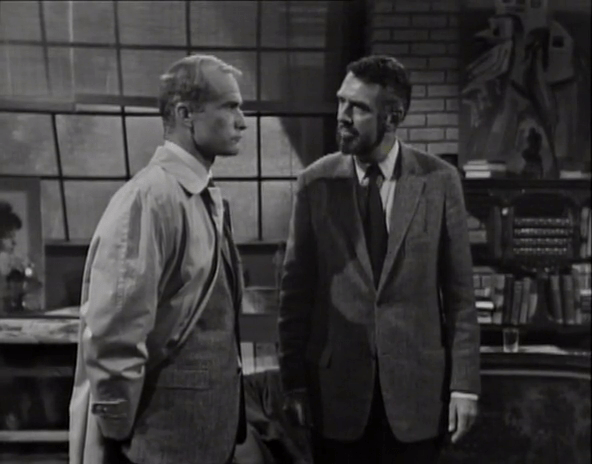
The “office” where he does “work”.
Alone, Malloy admires the preliminary charcoal sketch Sam has done of Burke.
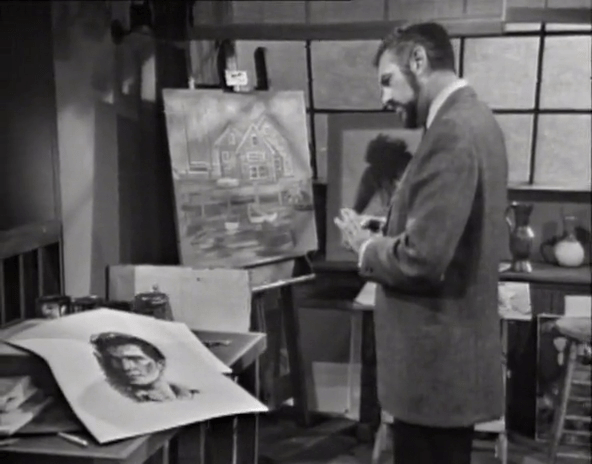

We recall from their embarrassing interactions over 20 episodes ago that Sam and Malloy are “friends”. In that episode, Malloy demonstrated this friendship by attempting to get Sam drunk so that he could tell him whatever he did or didn’t know about Burke, Carolyn and the rest of it. In this episode, Malloy demonstrates his friendship by…
Well, listen, at least this time it almost makes sense.
Speaking of ill-conceived and unethical plots, we recall Carolyn’s gambit with her birthstone ring, deliberately leaving it behind to give the man she is Very Much Uninterested in an excuse to call her.
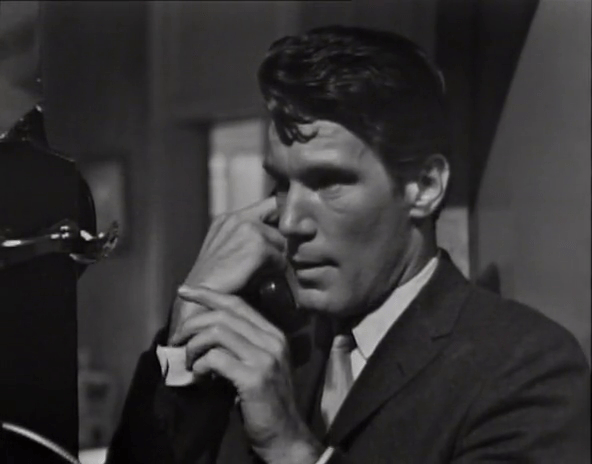
So we get another very long bit of the phone ringing and then Carolyn runs down the stairs in a gingham smock or something…
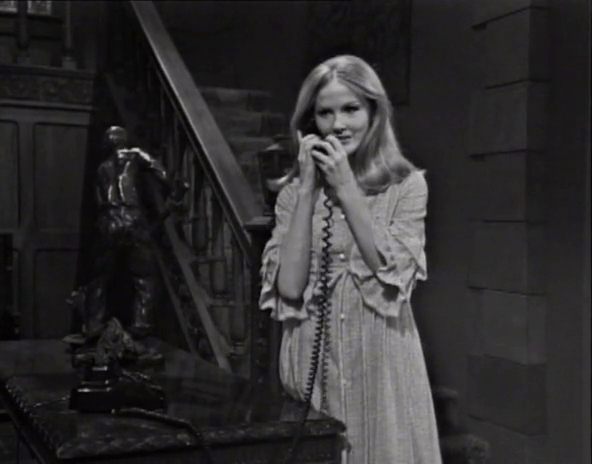
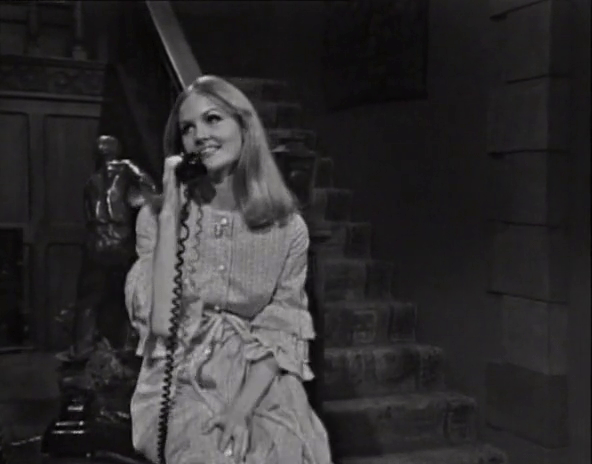
Imagine if Liz had picked up the phone, or Vicky, who had been told that Burke had no business with Carolyn, or David, who must be jealous of all this attention Carolyn is getting from him, or Matthew, who…
Carolyn lays it on thick how “grateful” she is that Burke found the ring, how “marvelous” it all is, and it’s really a very disingenuous performance, so it’s no surprise when Burke torpedoes it.
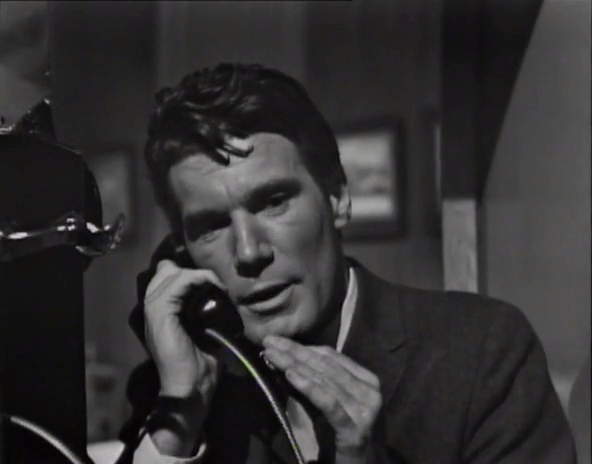
He wonders how he can return it to her, probably aware that Liz will castrate him if he comes within 20 feet of her house.

And Carolyn uses this as an excuse to suggest she meet up with Burke before he departs for his aforementioned business meeting in Bangor. Drink.
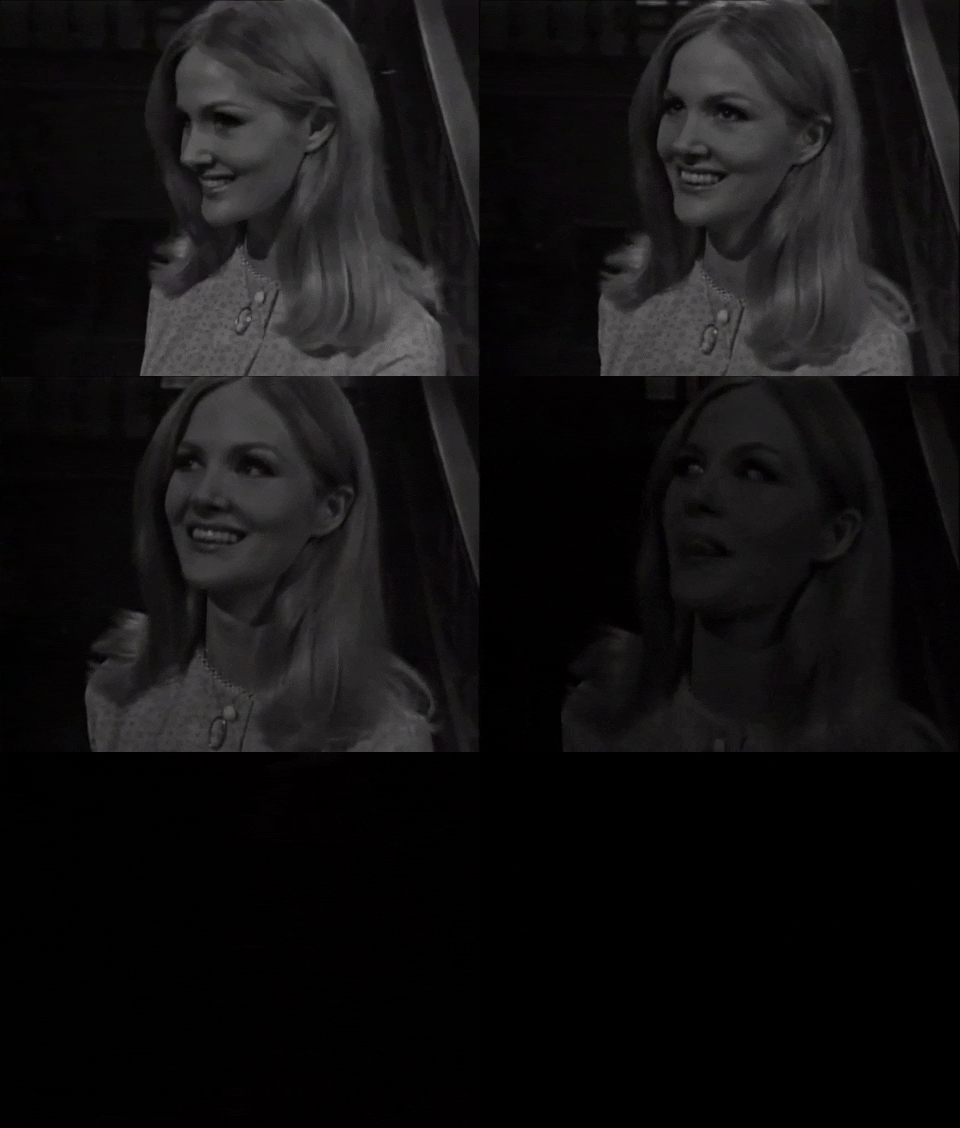
Things fade to black for the act break and Nancy Barrett makes this choice, which communicates all we need to know about the character’s intentions toward the Devlin.
Can we stop to discuss just how upsetting the sketch of Burke is?
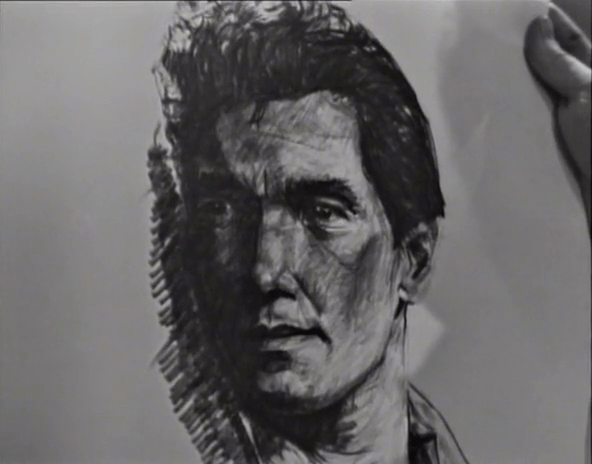
Maybe Sam is trolling? Maybe Burke is drawn thin and haggard and steeped in darkness as an illustration of the ravages his ceaseless ambitions have caused to him? The Doylist answer is that the sketch is a stage prop done in a passing likeness of Mitch Ryan by someone likely unskilled in portraiture, but the Watsonian answer (and there must always be a Watsonian answer) may be what Sam tells Malloy.

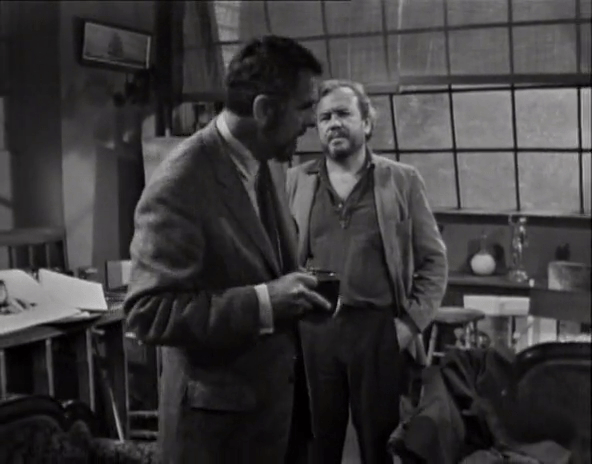
He feels he doesn’t know Burke well enough to capture “the essence of the man” on canvas. And Dave Ford clenches his fist in sudden passion as he says that and…
Ahem.
This is the logic that pervades lots of “small town” stories, be they soaps (small towns increase the sense of scandal when characters engage in infidelity and impropriety), mysteries (small towns are full of people with grudges, loyalties and alliances, creating healthy suspect pools and oodles of motives for people to want their neighbors dead), and the subgenre known as American gothic (the small town is deceptive in its innocence and the people within can be bloodthirsty monsters beneath their pleasant facades).
All three of these subgenres apply, in different senses, to Dark Shadows at any given time in its run. But at this particular moment, at the end of the 8th week of the series run, there is a major clinching factor that somewhat dampens the impact of the “small town” narrative.
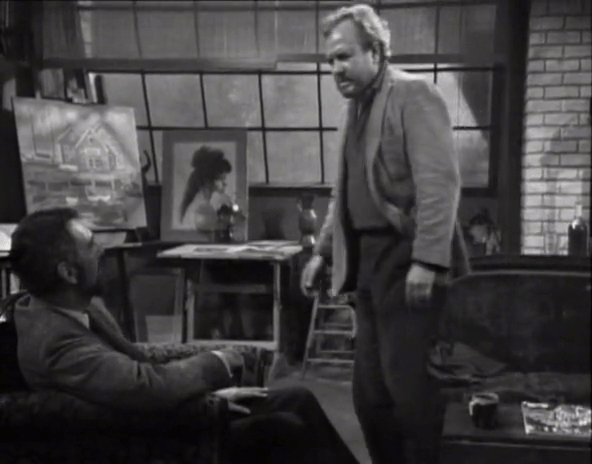
The Collinses control everything. They control the house and the business and the town. The lives of everybody in Collinsport are intrinsically linked to the lives of the Collins family. Collinsport is less a tiny town full of dark secrets than it is a feeble extension of the intrigues and darkness of Collinwood.
Nothing in Collinsport really matters. Sam is defined solely by his conflict with Roger and Burke, whose entire character is defined by his conflict with the Collinses as a whole. Victoria Winters’s whole shtick binds her to Collinwood. Malloy’s every action is undertaken in service to the Collins family.
There is no “community” in Collinsport. There is no hospital or office or club that acts as the center of activity, as may be the case on other daytime soaps. The story is of one family and the lives the family touches.
And this is fine. It’s ordinary, really, in the context of TV, but it does make for a caveat…
The Collinses, in their way, are untouchable. Their lives can only really be shaped by each other. We saw this with David at the climax of the suppository story. The resolution was controlled entirely by Elizabeth. The Collinses must persist, because the Collinses are the show
And this leaves everybody outside Collinwood as a variable. Their secrets and intrigues, their business only matters insofar as the story of the Collins family touches them.
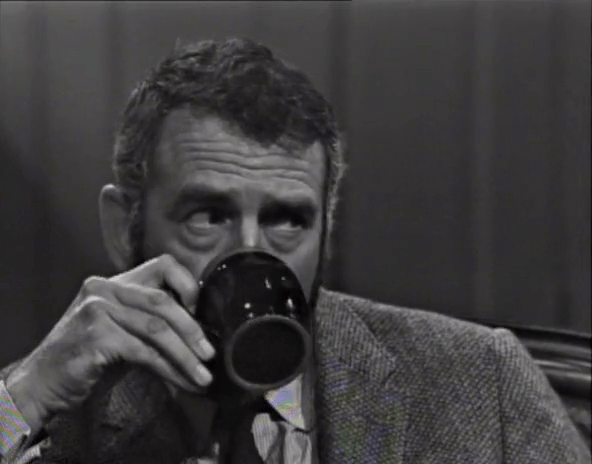
And this isn’t bad. It’s just necessary framing to understand why any of the “non-Collins” characters matter, and to determine their worth on the show.
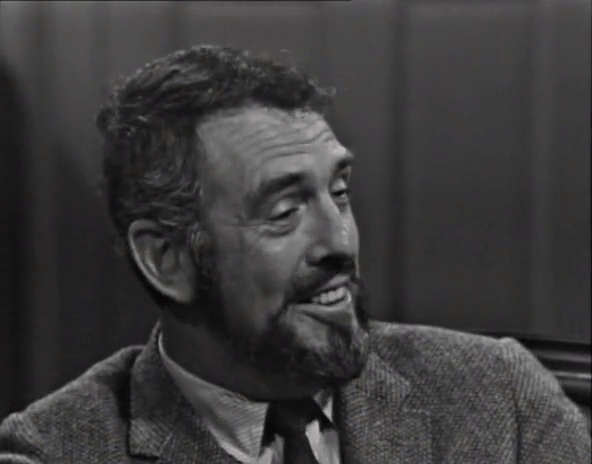
Oh yeah. That.
Malloy’s plan here is plain to see, more so because we’ve already seen it. This is the same gambit he pulled back in Episode 19, when Sam was less likable and generally more of a nuisance and it didn’t really matter that he was getting this vile slob drunk so he could milk him for answers.
But now Sam is charming and decent and played by a man who can form sentences, so I can’t help but feel conflicted.

Calling your friend of 30 years a vile drunk as you stuff him with booze like a goose being prepared for pate. Just ordinary friend things.
Sam looks off into the middle distance, his favorite thing to do, and tells us that he wasn’t always a rummy.

Back at the hotel, Burke is speaking to Bronson about their upcoming meeting, and if you’re worried about more real estate talk…you should be.
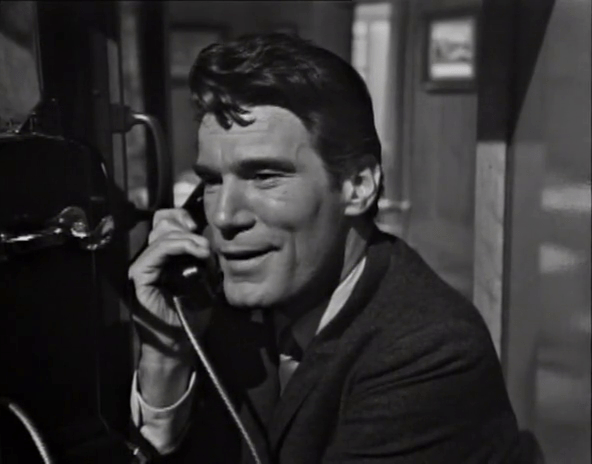
Look, Bronson did not need to know that.
But it isn’t Carolyn that walks into the restaurant.

Burke actually points this out, and Roger claims it’s none of Burke’s business how much of his job he pretends to do.
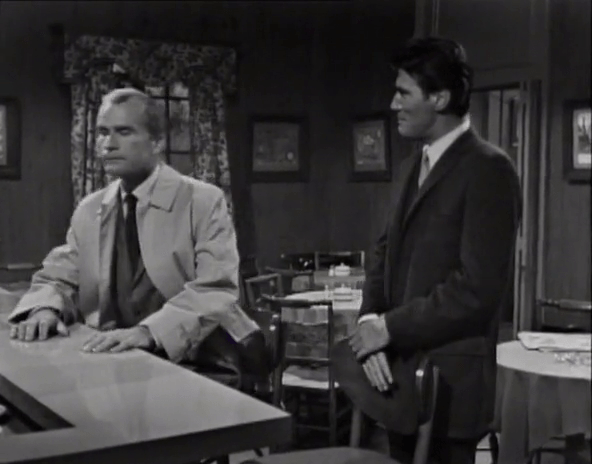
Burke hasn’t yet gotten the memo that we are never to speak of that again.
This discussion is kind of funny because it’s the first time Roger and Burke have seen each other since the suppository saga, in which Roger was determined to throw Burke in prison for a crime he didn’t commit, but now he’s forced to act all sheepish and abashed and prickly, presumably because he doesn’t want to admit he was wrong, and Burke is delighting in reminding him that he was and this is actually the most genuine romantic writing we’ve gotten on this show.
Now it’s Burke’s turn to quiz Roger about Sam. Most of this episode is just the same conversation with the names tossed around. This, thankfully, doesn’t go on for very long.
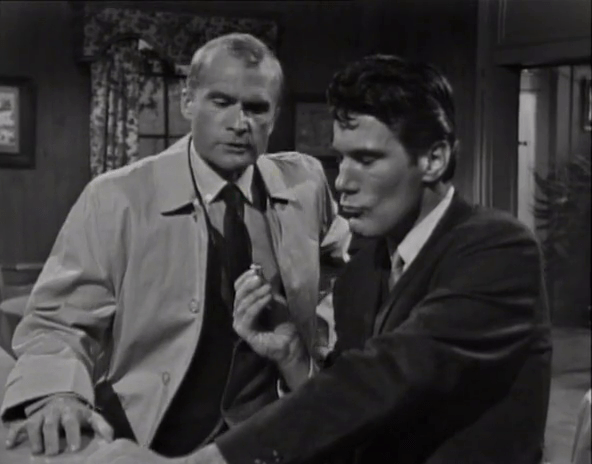
Roger breathlessly explains that he got Carolyn the ring for her 16th birthday. He couldn’t say her last birthday, because she’s currently 17, which provides neat cover so that the audience can continue to assume Carolyn is not actually meant to be a teenager pursuing (and pursued by) a man in his late 30s.
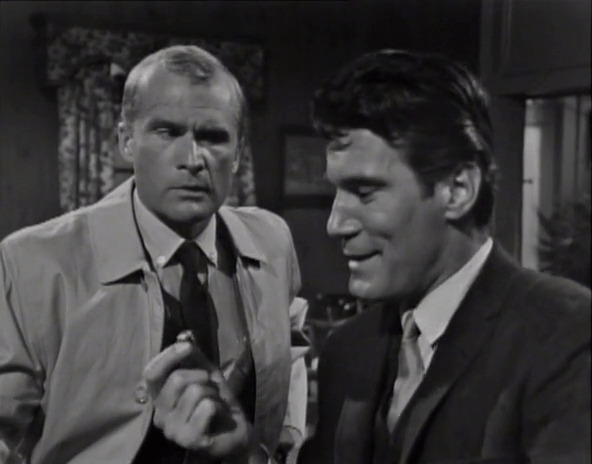
At a certain point, the subtext just gives up and becomes text.
For the first time in recorded history, Roger takes action to prevent a relative from doing something stupid. The downside is that there continues to be an insidious assumption he just wants “Kitten” for himself, but as long as he does something, right?
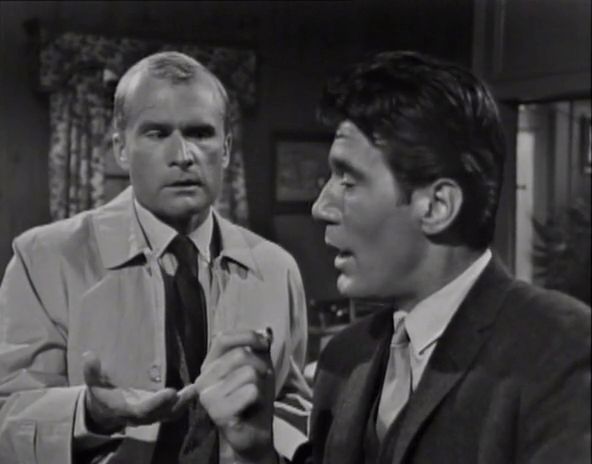
And Burke does surrender the ring, again presumably for no other reason than because he enjoys emotionally torturing Carolyn and probably figures she’s on the way to meet him anyway.
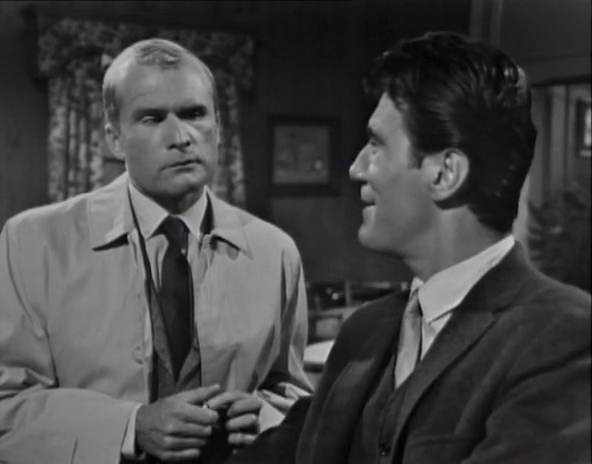
If that was an intentional innuendo, I will take back everything I’ve ever said about Art Wallace.
Roger proceeds to warn Burke off Carolyn and David which is…actually kind of sweet. I mean, again, he has mostly selfish motives for enforcing a separation from David, but with Carolyn, it’s much easier to believe he’s actually concerned for her well-being.
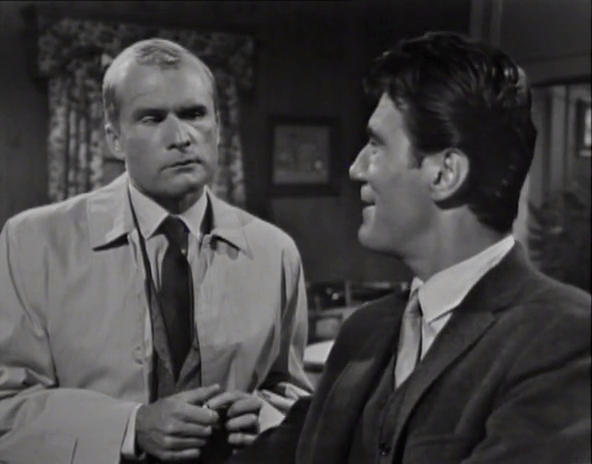
Roger knows as well as anyone how intoxicating the Devlin can be.
So Carolyn is just leaving Collinwood and, because there are currently no other characters at the great house in this episode, that means we can expect a visit right about…
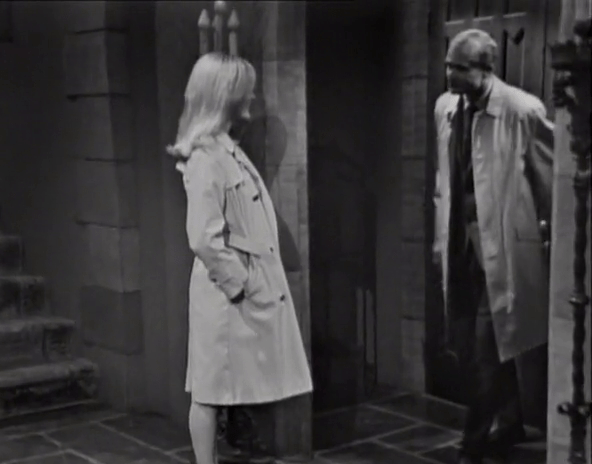
Carolyn becomes the latest person to point out Roger should almost certainly be at work, and Roger gets offended.
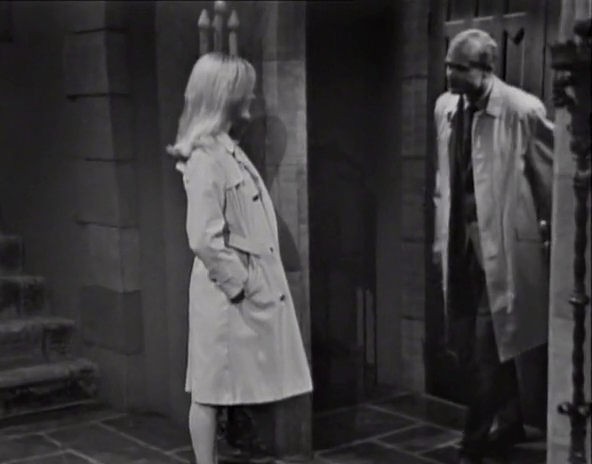
One of my favorite things about pre-Barnabas Dark Shadows is how much they embrace the fact that Roger is a rich wastrel who doesn’t like to work. Nowadays when soap characters are always fucking around instead of doing their high-powered jobs, we’re supposed to pretend that a lot of work is getting done behind the scenes because God forbid we develop negative opinions about this character who’s been on TV for thirty years.
Again, this episode is like a sitcom if everything was played straight. Carolyn says she can’t tarry, she has a date, and Roger is all…
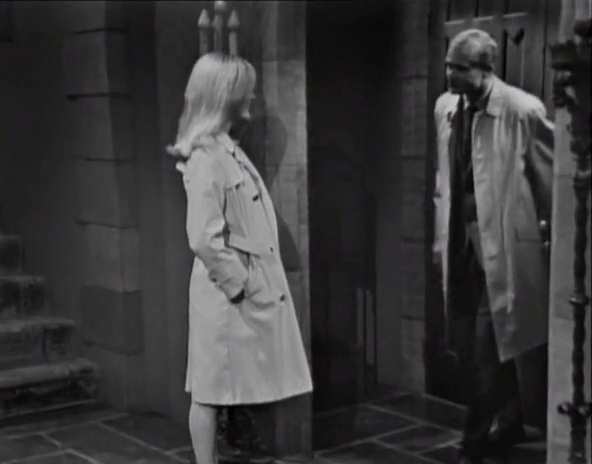
Girl!

This is when the studio audience goes all “Oooooh!” Carolyn deflates to hilarious effect. She insists she likes Burke.
Note that Carolyn doesn’t specify her feelings for her uncle are different than the ones she has for Burke, nor does Roger seem to expect such a clarification. It’s common knowledge around the Collins household that Carolyn has the moisties for her uncle. They told us this in the first week, and we all just laughed it off like a joke, but Art Wallace is deadly serious about this.
I appreciate the monkey-brain understanding that there was some kind of teen countercultural movement going on in the world about this time, and this seeming to inform Carolyn’s rebellious nature, but her reasons for rebelling against her family boil down to “I want to have a torrid affair with the man who threatened to paddle me in a public place and also is trying to financially ruin us all” which I don’t think was part of Second Wave Feminism.
This would be different if, say, Dark Shadows was written as a retrospective on the counterculture. Lets say it came out, like, a year or two later, and the writers were younger, or at least had watched the news and read some magazines and maybe listened to the Beatles once or twice.
Maybe you illustrate the weirdness of the fact that a single family has an economic stranglehold on the entire community. The fact that this insular family needs a governess in the 20th century is noted as being strange. The Collinses are deliberately out of touch and disconnected from the rest of the world, rather than their world being entirely disconnected from, well, the world of 1966. Carolyn’s rebellion is steeped in counterculture. She listens to music, she parties, she wears pants (!). She doesn’t want to marry Joe because she doesn’t want to get married.
Joe becomes a young guy trying to make it in a hard world. His irritation with the Collinses are more, well, anti-establishment than just “their house is turning my girlfriend into a spinster”. Victoria’s search for her past becomes more progressive…she is one of hundreds and thousands of young people in a rapidly changing country not knowing how to find her place in it. Her desire for truth clashes with Elizabeth’s obsession with secrets.
And Burke Devlin? Burke isn’t some smarmy, greasy millionaire. He is, in fact, the Count of Monte Fucking Cristo, ‘60s style. A rogue, a rapscallion, a rebel. His life was ruined by establishment capitalism and his rebellion comes in the form of destruction, not acquisition. He doesn’t seek to become the new master of Collinwood, he wants to destroy it.
Can you imagine what that kind of Burke would be like? What it might be to see that rugged, rough around the edges charm applied to a figure of the counter-culture? How that would effect his relationships with Carolyn and Victoria, how David’s own rebellious instability would play in that mix? What it would mean for Maggie to be working a two-bit job in the era of the Women’s Lib? Joe to be a working draft-age man in the midst of the Vietnam War protests? What does the Collins family look like then? How do you justify the Collins family then?
Perhaps you can’t. Because the Collinses are an otherworldly fantasy, long before there were ghosts and vampires roaming the halls of Collinwood. They don’t belong in the ‘60s. If they had, if they had fit into the world they were airing in, Dan Curtis would never have had to play hat trick after hat trick, and there would be no Barnabas, and I would not be here lamenting what might have been.
Still, it’s an interesting experiment, worthy maybe of a fanfic treatment. Not one that I would write. I’m very busy. But the idea is there. So Carolyn accepts the ring from Roger and all but tells him to fuck off as she goes to see Burke anyway.
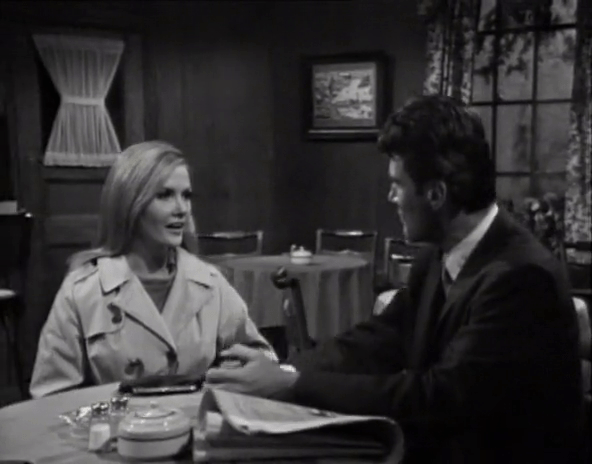
Carolyn pretends she doesn’t have the ring back and, you know, I do appreciate her starting to tool with Burke more. It’s the least he deserves after all the bullshit he’s fed her since they met.
Burke responds to this little theater by, of course, stealing Carolyn’s purse.
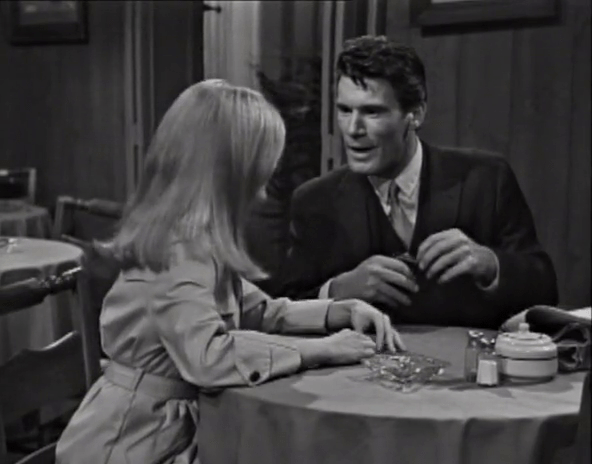
Burke gets the ring out of the bag and Carolyn gives him smokey eyes.
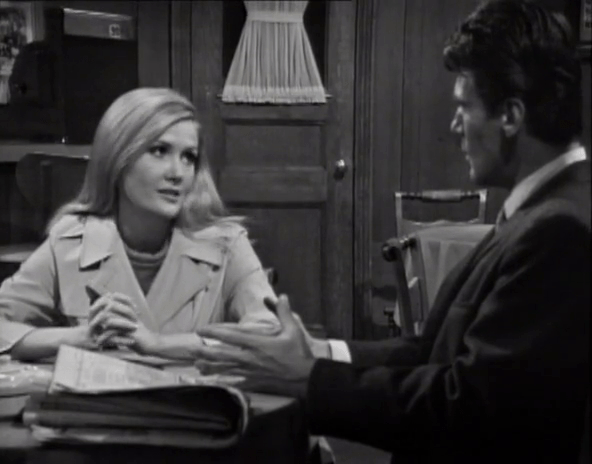
Burke points out the “leave the ring behind” thing is an old play.
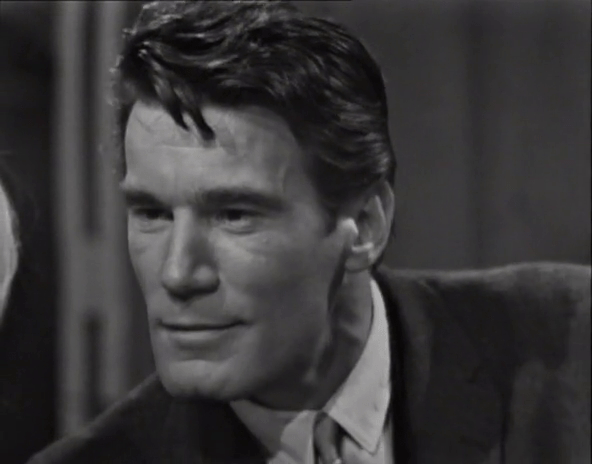
Burke and Carolyn’s combined ages, at my figuring, totals about 55 years, so the ring gambit is at least as old as the first world war.

Fancy that.
So Burke is asked, yet again, what he’s doing in Bangor. Burke claims it’s business and has nothing to do with the Collinses, even though multiple people have by now obtained sufficient evidence this is all a load of bullshit.
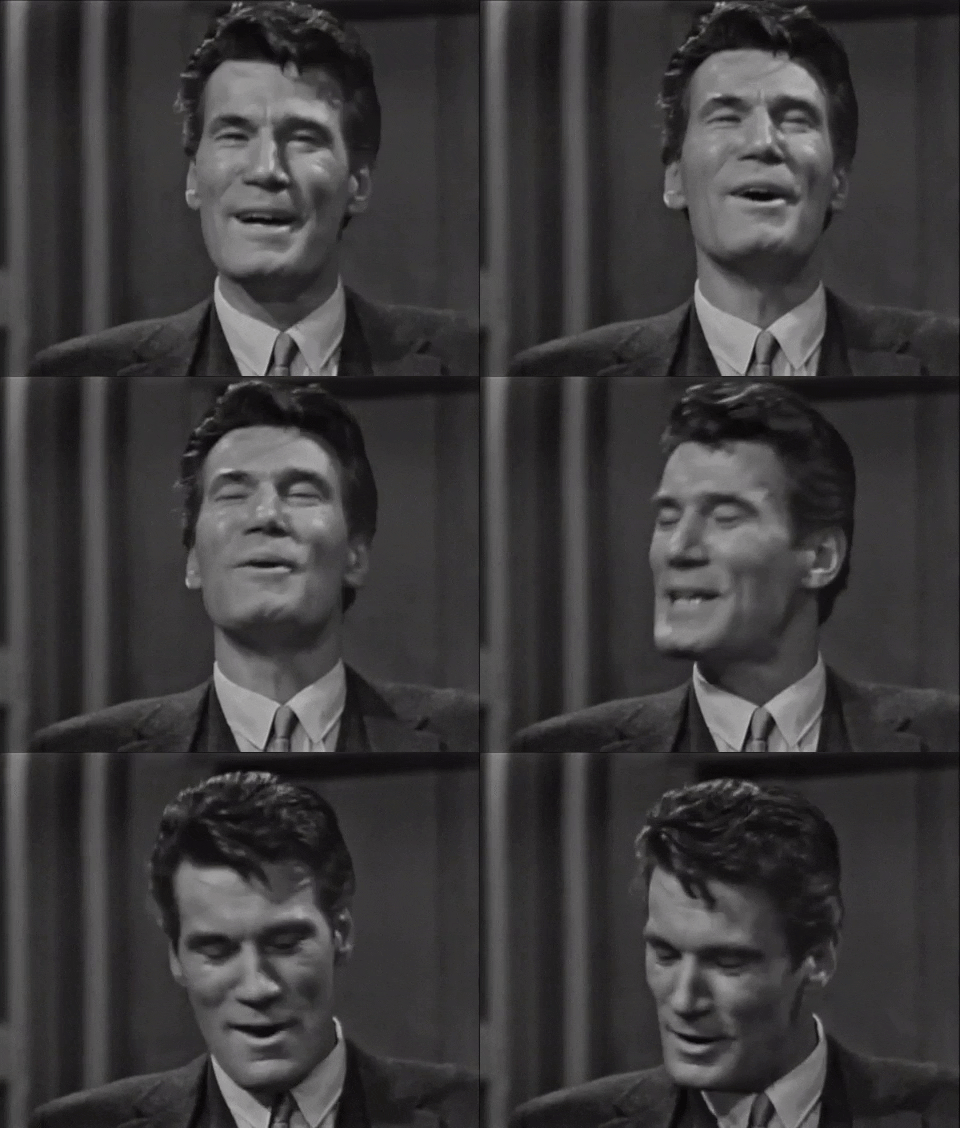

Burke often takes measures to prevent such things.
As he goes, Carolyn asks Burke when he’ll leave and he tells her which, if he really wasn’t counting on her following him, he wouldn’t, but we all know he gets off on this stuff.
More phone calls? More phone calls.

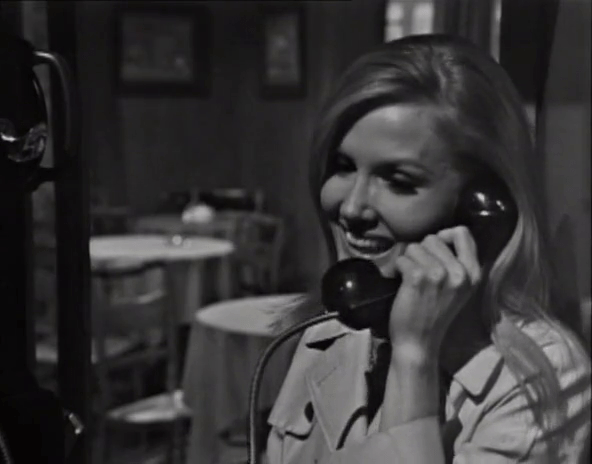
Vicky is the one who picks up the phone (maybe Roger’s gone to work, eh?) and Carolyn asks her to tell Elizabeth that she won’t be home for dinner. At this point, Vicky should definitely know this has something to do with Penis. Specifically, Devlin Penis, but given all her earlier attempts to warn Carolyn about these attempts were flaccid, she doesn’t bother.
Elsewhere, Malloy’s plan is working.

He’s taken off his jacket and everything. Sam, however, isn’t entirely stupid…anymore.
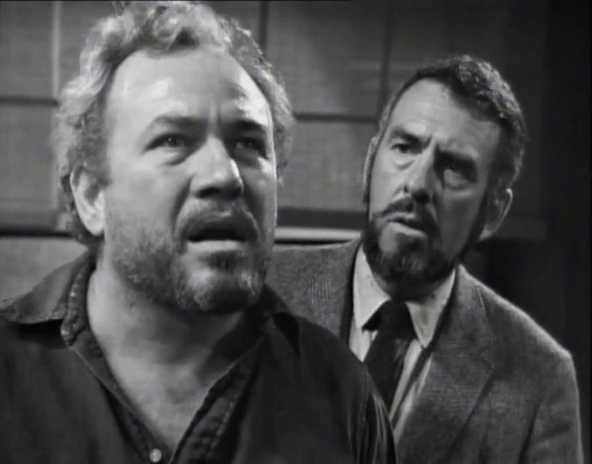
This is that scene when Raiders of the Lost Ark when Marion drinks Belloq under the table, but she gets wasted too and then the Gestapo show up. Except in this example, Sam is both Marion and Belloq and Malloy is the Gestapo.
Sam bemoans the withering of his talents which, he claims, began about 10 years ago. I wonder what else happened 10 years ago…

I want that on a tee-shirt. I want most of what Dave Ford’s Sam says on a tee-shirt, but that especially.
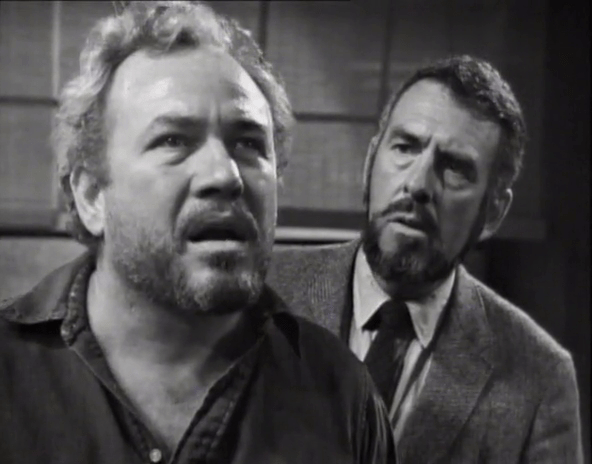

If I were Malloy, I might begin feeling guilty that I got my friend so drunk he is now contemplating suicide-by-nemesis. He does, however, insist Sam should protect himself, and I have to believe this is a genuine sentiment, as much as it’s also motivated by his desire to figure out what the hell’s going on.
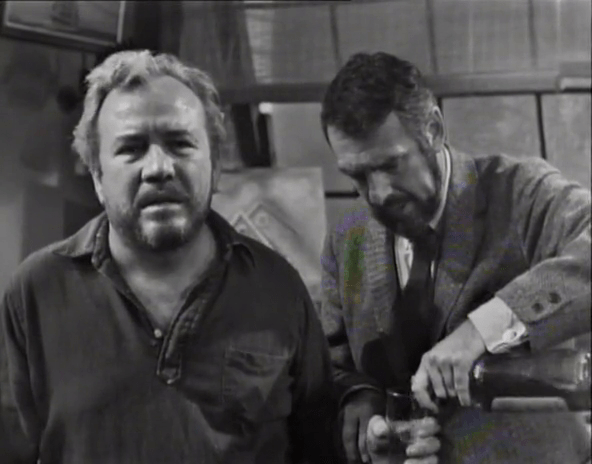
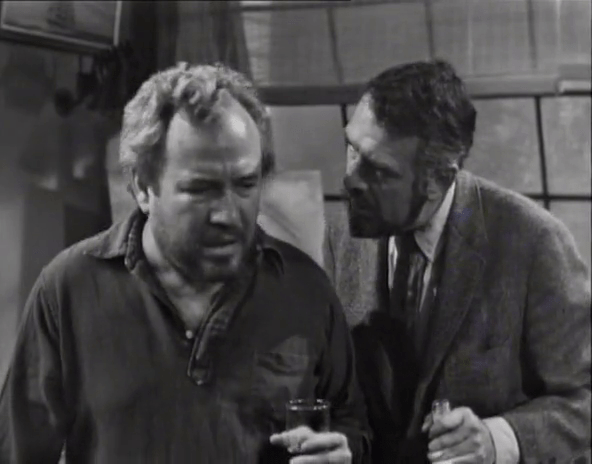

Well, he did suggest California.
In what really is a masterful attempt at drunkenness (as opposed to Mark Allen who seemed more, well, drunk than playing it for an audience), Sam laughs and kind of cries and breathes unevenly through a broken description of all the threats Roger gave him last episode.
Sam starts sinking onto the armchair and Malloy panics. Not, again, out of concern, but because he wants more tea. But still, there’s…there’s a noble motivation wrapped up in here somewhere.
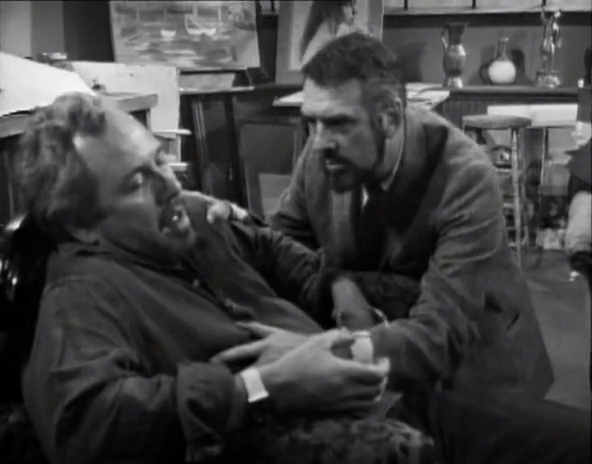
Bold to assume Roger would do anything he said he would do.
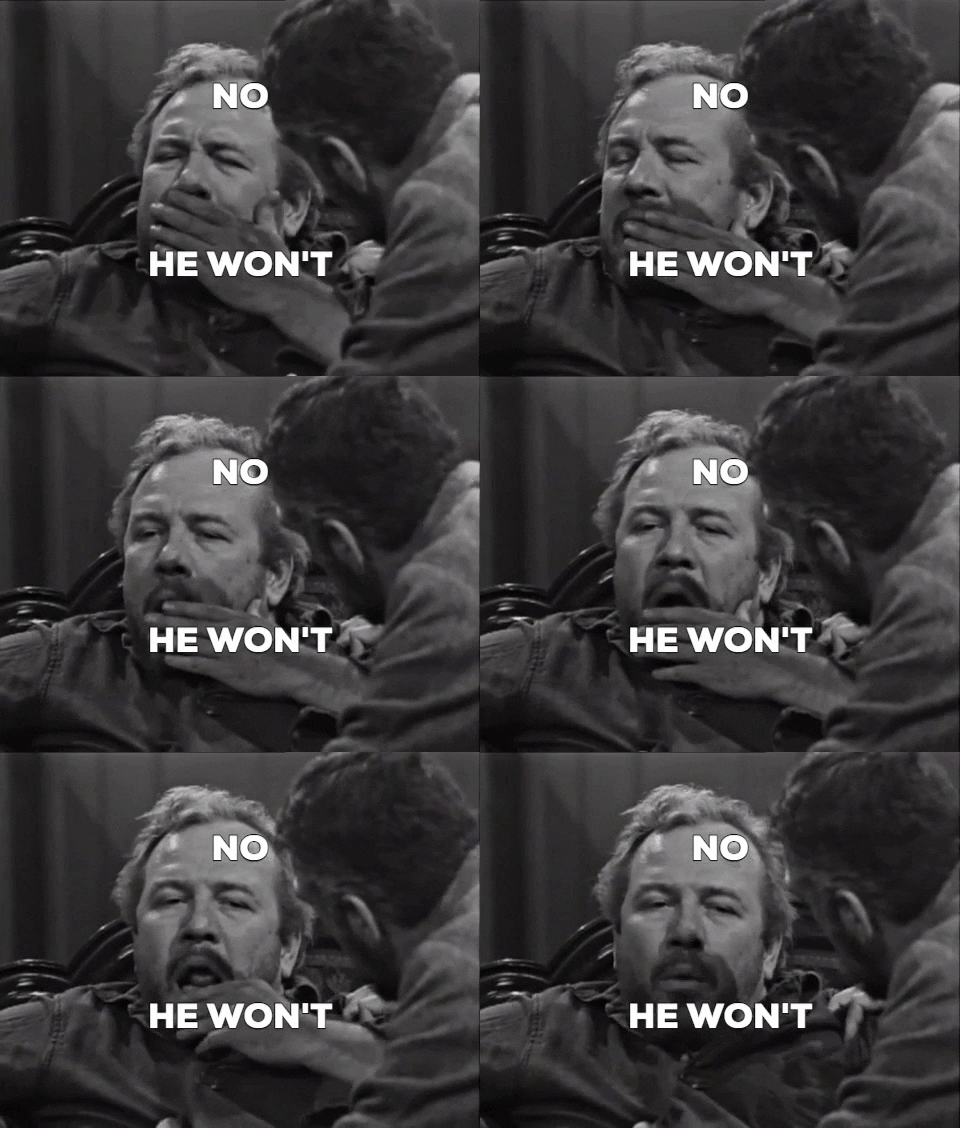
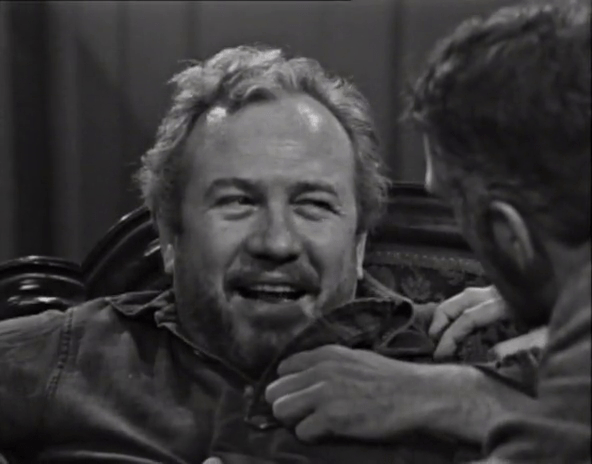
This really is a great performance. It’s ham and cheese, but you’re pleased to be served it. I hate to imagine what we’d have got if it was the other guy.
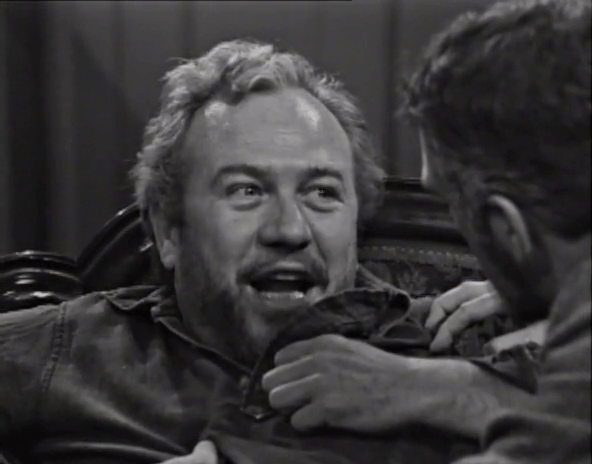
Oh honey.

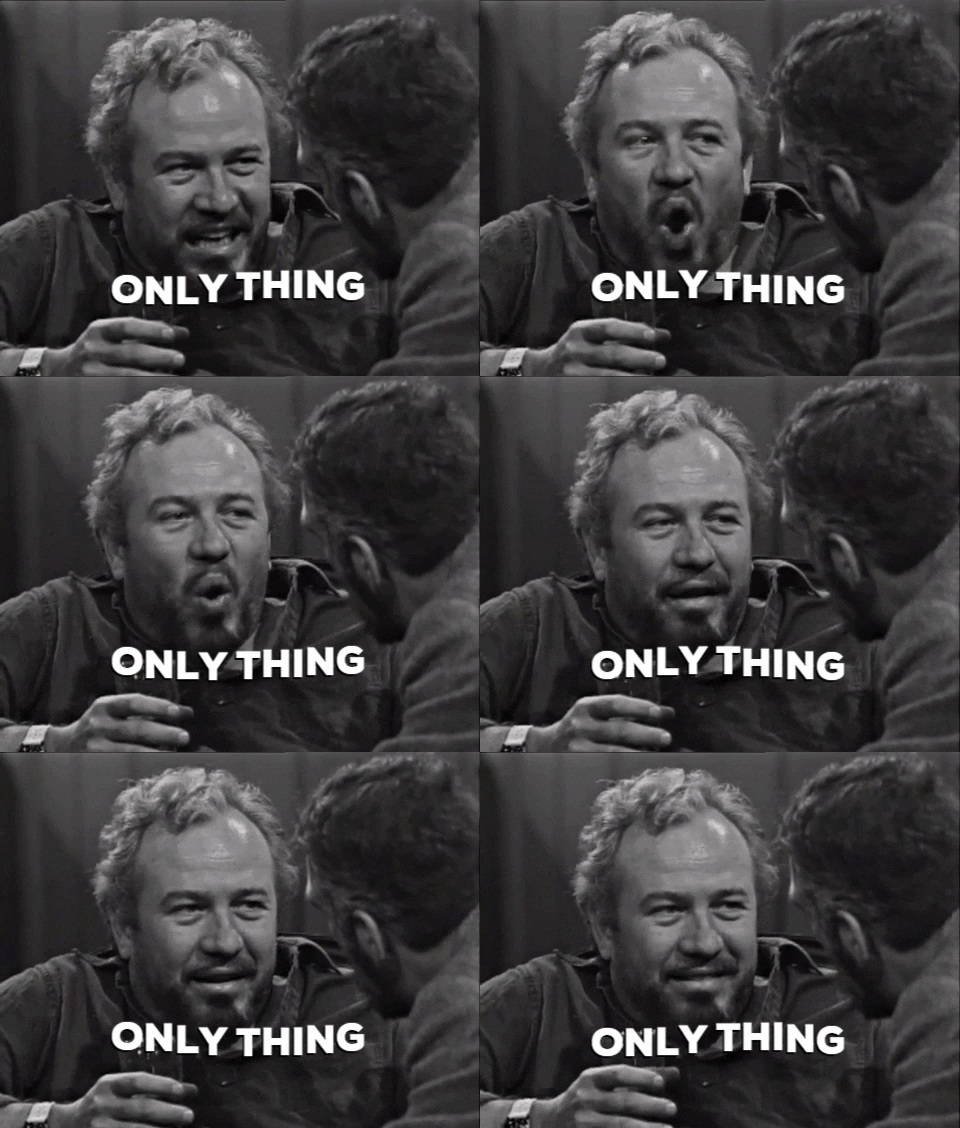
At which point, the Evans, having done his mandated duty, checks out.
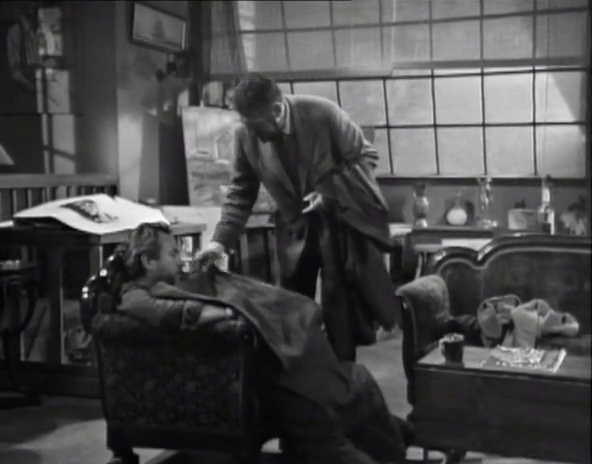
Even as he leaves the house without locking the door, despite knowing somebody wants him dead. But, you know, it’s the thought that counts.
Friends.
But, hey…that cliffhanger, amirite?
I promise. This will be more worth it than the suppository thing.
This Day in History- Friday, August 19, 1966
A massive earthquake strikes Turkey, killing 2,394 and injuring over 10,000.
A U.S. machinist strike ends after more than six weeks which, in Dark Shadows terms, means it outlasted the entire entire suppository saga.
In fiction, this day was a significant date in The Time Machine, the film adaptation of H.G. Wells’s science fiction novel. In the film, August 19, 1966 was the date of a nuclear war the protagonist visits after making tours of the two world wars that had already happened when the film came out. No hoverboards in this one.
Also significant: Lee Ann Womack was born today.
 Kooks of Collinwood