
The storm brewing/buffeting over Collinwood had passed, but this has done little to quell the storm brewing within the great house.
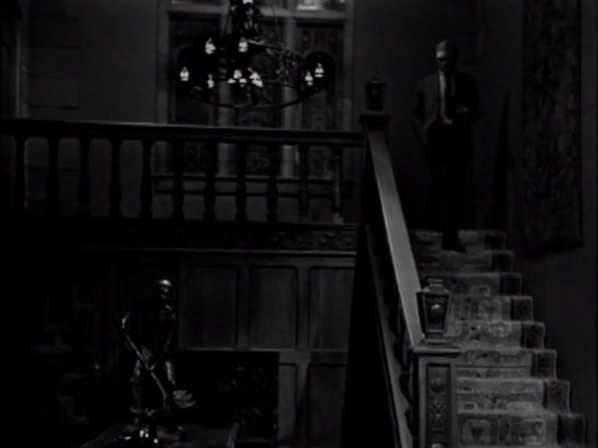
For example, whatever storm Roger Collins just inflicted on his fiendish murderous son. The truth has finally been brought home, despite Burke Devlin’s many attempts to protect the boy he’s just met and befriended, Roger wasn’t fooled, and now he holds power over the tiny little monster who started all this trouble.
What he doesn’t have power over, as today is dedicated to showing is, is the lady of the manse herself: our girl Elizabeth Collins-Stoddard.

Elizabeth has spent the entirety of the last two episodes hanging with Matthew and searching the grounds, or else having a passionate affair. Accounts differ. Matthew has apparently now gone into town to look for David, which doesn’t quite jive with Carolyn’s earlier mentioning of how she sent him down the road to look, but since Liz sent her out twice for the same task, it makes even more sense she’d have abused the help to the same extent.
Roger explains to her that David has been found after all, and…

Just as when this was brought to her before, Liz hotly denies it, though with much less enthusiasm. We know she’s already admitted to herself the likelihood that the crime was, after all, committed by her nephew. She isn’t pleased about it, but we’ve moved past the “point fingers at everyone else for as long as it takes” stage of the proceedings, which is progress.
The transition from the titles to the first act has Roger in the drawing room with a drink, meaning that he flippantly told Liz his son tried to kill him and then went off for a scotch, forcing her to chase after him.
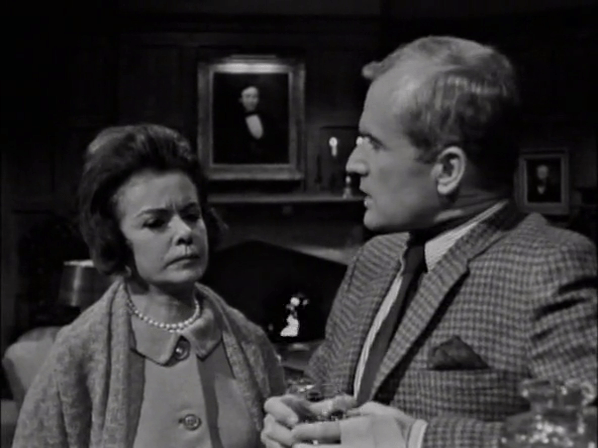
Louis Edmonds proceeds to have another Moment. Liz asks him what he means when he says David is locked in his room and Roger says…
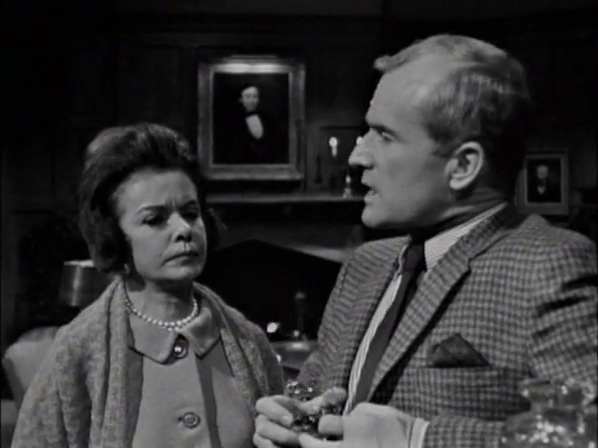
Liz-David-Liz is actually her confirmation name. This at least can be explained as this is at least Roger’s second glass of booze tonight.
In point of fact, this whole scene makes more sense imagining Roger is already drunk.
Roger describes that David’s return was, of course, “three quarters of an hour ago”. At some point I’m going to affix all this banal vague statements of what time it is to a clock and see if it makes sense, but I’ve already driven myself insane enough for this work.
Look at this image. Which of these people do you think was almost murdered by their only child?

He’s currently delighting in telling her all the evidence against David as she continues feebly attempting to defend him.

His happiness may be validation that he’s been proven “correct” about his son. Or it’s just regular trollery a good half century ahead of its time. Either one.
Hey, you know who I’ve been missing?
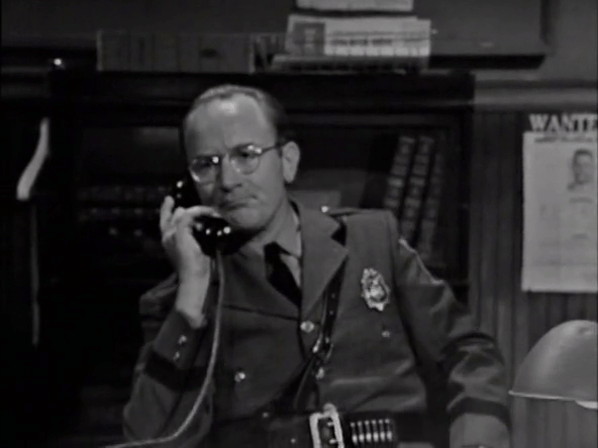
Constable-cum-Sheriff Carter has had quite an interesting day. This is the ninth episode since his first appearance and his fifth appearance overall. In his time among us, he has gone from the Constable, to the Constable with the word ‘Sheriff’ on his sleeve, to just the Sheriff, except in the end credits, which still called him the Constable in inexplicable ALL CAPS, to the Sheriff in name, costume, credit and maybe deed as well.
His various appearances have served mostly as a suffering public servant struggling with pressure (courtesy of Roger) to hang the whole crime on the most surface-level obvious suspect (our pal the Devlin). He has demonstrated a dedication to the rule of law and the value of evidence, at least insofar as he enjoys talking about those things, yet he also must have a certain amount of craven cowardice, given how he bent to Roger and ordered a search warrant for Burke’s room even though he had expressed he wasn’t likely to find anything there.
Essentially, Carter has been whatever Art Wallace wants him to be. He is a mass of contradictions. Honorable lawman, craven lickspittle, friend to the townsfolk, father to his men…
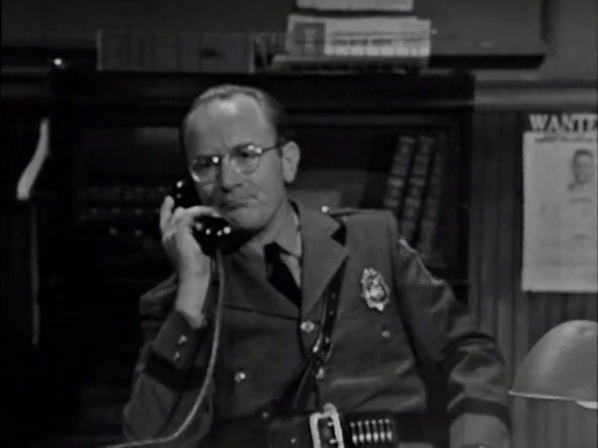
Is he a puzzle? A testament of the kind of layered character writing that only a daytime soap opera can provide? Or is he a cheap, shallow cut-out conceived as a plot device in a storyline that has gone on far longer than its architect ever intended?
I introduce Exhibit B: Bill Malloy.

Malloy, Elizabeth’s closest counselor and arguably only friend, the manager of her business, the stern, but fair boss to Joe Haskell and all the other faceless schlubs who make their money in the Collins enterprise. He was a regularly present force in Dark Shadows’s first month, appearing to challenge Burke, inform to Liz, give cautionary advice to Carolyn, assist Roger in the aftermath of the crash (twas he, after all, who first pointed out the significance of the missing suppository) and, most recently, to be the first person on canvas who connected Burke to the snooping of Detective Wilbur Strake before our story began.
That was 11 episodes ago. Carter has had an entire career since then. What happened to Malloy? Why has he dropped so fully off the map, from a supporting presence as reliable as Maggie and Joe (in fact, we haven’t seen Joe in eight episodes, but Carolyn’s own appearances have been significantly hobbled in this storyline as it is) to a complete nonentity, not even mentioned once, until Carter, the new man about town, asks Harry to call him, only to learn that, surprise, surprise, Malloy has already shown up?
There likely isn’t some big saucy super-sleuth-style reasoning behind it. In point of fact, it’s just the kind of thing that happens on soaps all the time. An old stand-by is trumped by the writer’s shiny new toy and therefore supplanted.
Anything Malloy may have done…confront Burke, confer with Liz and Roger about the wrench and suppository, even sleuth about Burke’s things (something that he seemed more than eager to get to in his last appearance) was done by Carter who, his repeated errors notwithstanding, wears a badge and therefore fits more into the dynamic than Malloy.
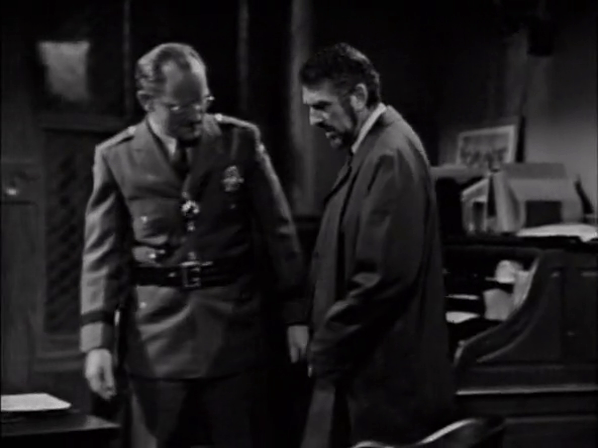
And might’ve saved us a lot more than that, if he’d been allowed to get to the bottom of this which, I don’t doubt, he surely could’ve.
Indeed, Malloy’s inclusion in this episode is mostly an afterthought. The presence of Carter tells us that he will eventually cross paths with at least one of the Collins siblings, the other fixtures in the episode. Malloy is transparently here only as a “talk-to”, a troublesome device not unique, but quite present in, soaps when a character who could have more to do is reduced simply as a sounding board so other characters can discuss their thoughts for the sake of the audience.

Carter, it turns out, needs some dish on the Collinses from Malloy.

Why, for the sake of this scene. But in context, the best Carter can come up with is because he manages their “flishy-fishing fleet and cannery”.
Malloy, however, ain’t no snitch and isn’t about to go flapping his gums. In any case, he insists they all know already who screwed with the Rogermobile…
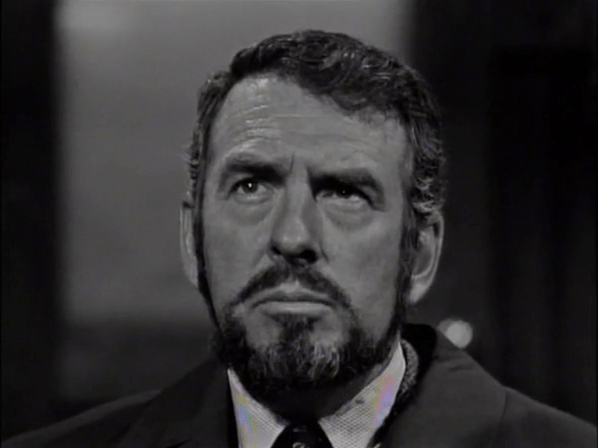
Would it were that easy. Malloy shares the information he has gleaned about Burke hiring the detective, something we already know Carter has found out, proving even that discovery of Malloy’s completely moot.
Carter, you see, “has problems”, like the camera refusing to show his face for half his lines in this scene, preventing me from getting screencaps. In effect, as much as he feels the whole case should turn toward Burke, there is a nagging suspicion there is more to it than that.
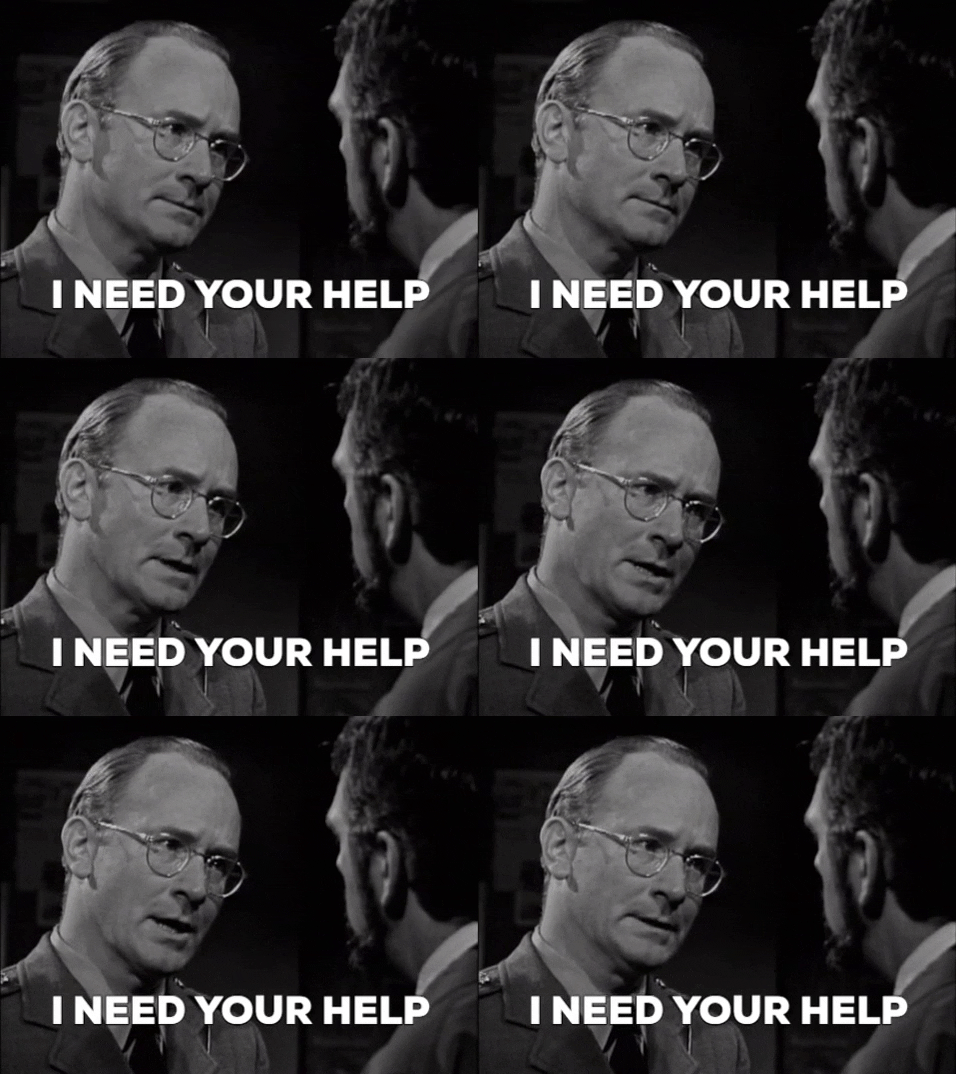
Poor guy really is stuck in a bind. And can you blame him, when he’s battling a growing uncertainty toward…
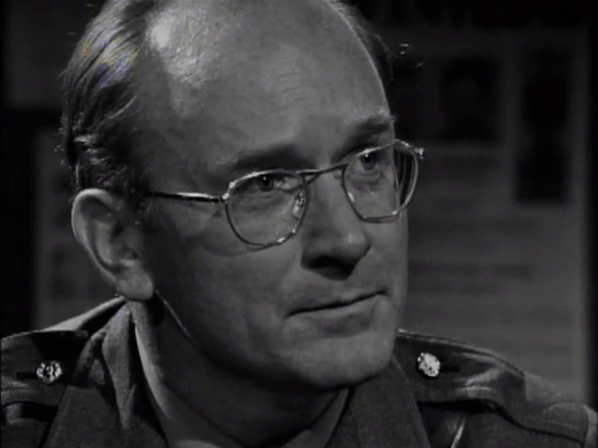
Better late to the party than to never show at all.
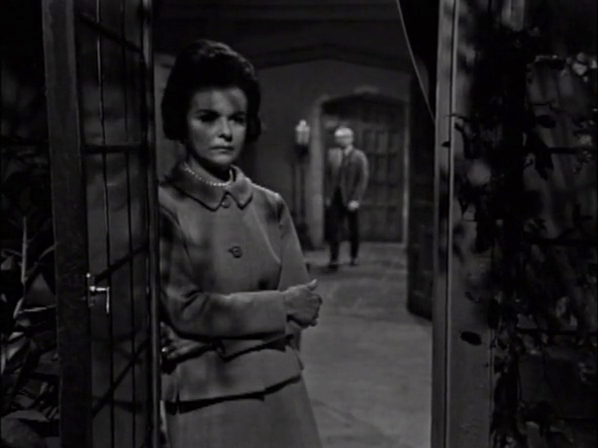
Roger has evidently just been to stop Matthew from making a pointless journey. No word yet on whether Carolyn will ever come back, but the week is young.
Liz begins questioning as to how many people know what David did and it becomes clear that she intends that nobody ever does. Roger, on the other hand, could care less.
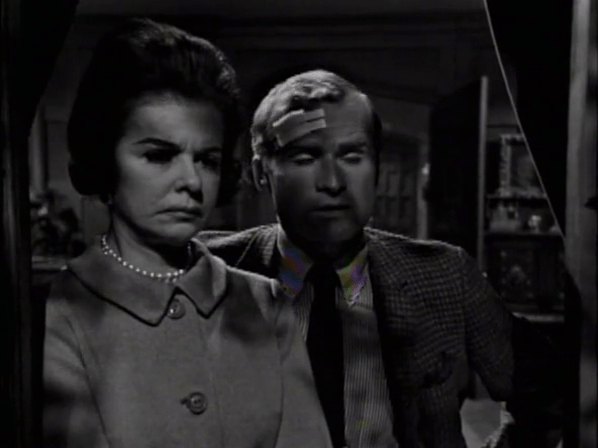
Roger can barely contain his glee at the prospect of David being out of what remains of his hair. The little scamp’s been a thorn in his side his entire life…just as his mother was, Roger tacitly adds because all of a sudden his wife is a relevant subject.

There’s a name. If you’ve been at all paying attention to tags, you’ve noticed I’ve always included a “Laura Collins” tag whenever David’s mother is mentioned, so it’s not some big revelation, but here we are. God knows why it took us this long to get the woman’s first name, especially since she’s been mentioned often enough since we began. It’s not like Art Wallace had to think it up on the sly. Laura is attested in the original Series Bible, and not even Matthew Morgan has that honor.
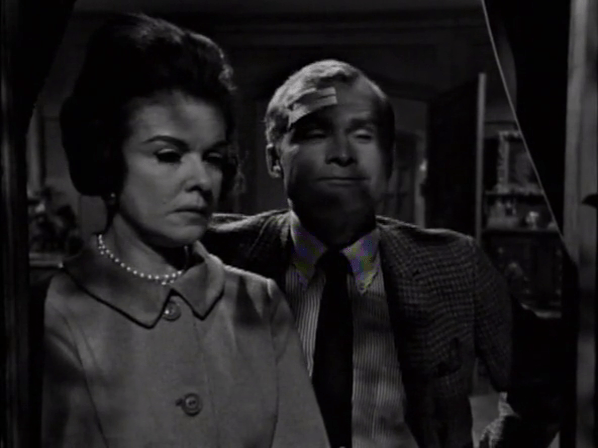
Again, you can say “hell”, but you can’t say “damn”. It’s rules.
We then get the little tidbit that you may have clued into yourself if you’ve ever watched a soap before. Elizabeth points out that, whatever else David is, he’s still Roger’s son.
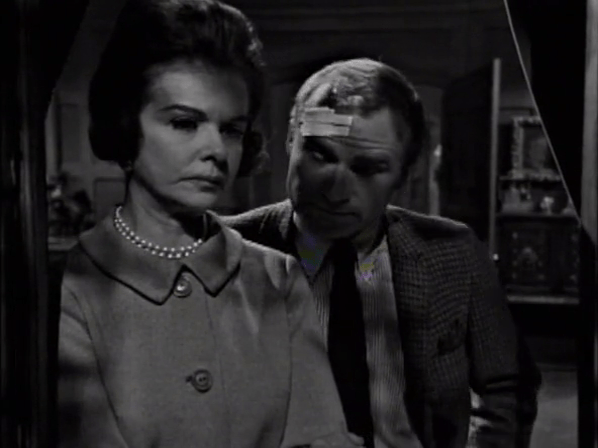
Depending on your knowledge of the soap opera genre, your red flags were flying at least 20 episodes ago when Burke asked Roger, in many-layered tones how his wife was. A less observant soap viewer may have gotten a clue three episodes ago when Burke told David he, Roger and Laura used to be great “friends”. Certainly, Burke’s fondness for Laura, expressed often last episode, seems a mite more than “friendship”. We recall also that Roger and Laura tied the knot almost immediately after Burke was convicted…on Roger’s testimony.
A picture begins to form.
The “Who’s the Daddy?” trope is as old as the Greeks and, love it or hate it, is the bedrock of the American soap. One of the liberating things of being a genre for women (even if, not always, by women) is that the various affairs of female characters were not always met with shame and scorn. I mean, they often were, but you would just as often have heroines screwing around with more than one man and being faced with the puzzling question of “who’s sending the child support?”
Every American soap opera in history has had at least one of these stories to some extent. It’s the bread and butter of the genre. As recently as this past decade, The Young of the Restless had Summer Newman learn she was the product of her grandfather’s archival, only to then learn that was wrong and she was her father’s daughter all along; Days of Our Lives had Abigail Horton’s serial killer boyfriend learn her baby was the product of an affair and then try to set her on fire; The Bold and the Beautiful had an agonizingly long story wherein “hero” Liam and “heroine” Steffy raised another woman’s daughter because Steffy’s psycho brother wanted said other woman in the sack; General Hospital has been dragging a paternity story out with an actual gay couple, bringing Homer to the homos in a glorious full circle example of the soapiest tradition.
But Dark Shadows is…different. Soapy as it is, it has little interest in soapy tenants. How often, indeed, does a paternity story play out without any evidence of the maternity? Laura Collins is shuttled off canvas, neither seen nor heard, and even more a ghost than the ones that supposedly haunt this house. Roger mentions the story (how quickly he married Laura, how David was born within eight months of the marriage, rather than nine, how Laura had been Burke’s “girl” for a while) as an aside to a disbelieving Liz.
What is the effect of a story like this, then? What does it accomplish? A custody battle? Not likely; Roger is only too eager to be rid of David. A love affair? How could it? The one woman in the equation is out of sight and mind. Mystery? Unlikely. Roger seems to be the only person who’s ever thought it and he gleefully just told Liz all the relevant information.
In the end, it serves to service Dark Shadows’s original preoccupation: male anger.

There. The gayest character on the show hates his son because he may have been the product of his wife’s affair. There’s the mileage. That’s what this gets us. I can’t even term it a story because, as with so many things from the pre-Barnabas era, it never really goes anywhere.
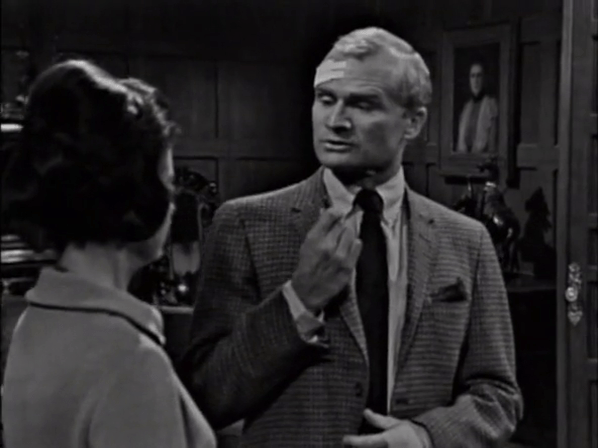
The shitter?
Elsewhere, Carter is explaining to Malloy how he’s come to the conclusion that David is a Wrong ‘Un.
Now…here’s the thing. Carter is right. But how is he right? The last time we saw him, he was heavily implying to Roger he thought the crash may have been an inside job. He’s been skeptical that Burke was involved since the start, and yet at no point has he ever shown a lick of suspicion about David.
Now, there was ample OPPORTUNITY for suspicion to be shown in his one interaction with David, when the kid tampered with evidence right before his eyes, something Carter dismissed entirely and didn’t think of once afterward, though Vicky did.
Not once in any of his intervening appearances did Carter once even mention David. His interactions, be they with Burke and Roger, always focused entirely on the other. Yet now, all of a sudden, Carter is convinced there’s more to David’s part in the thing than he has been led to believe. He’s right, and it wouldn’t have been hard to write him on his way to being right, but nobody did, and now the whole thing feels Wrong.

Good that they elected a master criminologist to the office.
Alternately, he really was the Constable until about lunchtime today when his lordship was deposed in a glorious revolution and democracy began in Collinsport. As it happened, nobody wanted to run against him for the newly created Sheriff’s office, so he got the job. This also explains why people were still calling him the Constable even when his clothes said otherwise. It’s like how Catholics keep saying “And also with you” at Mass, even though they changed the words years ago.

No, honey, state prison.
I’m hard pressed to recall any scenes Malloy had even adjacent to David, so all the things he tells Carter come from events we never witnessed. This entire thing is peak hokery.
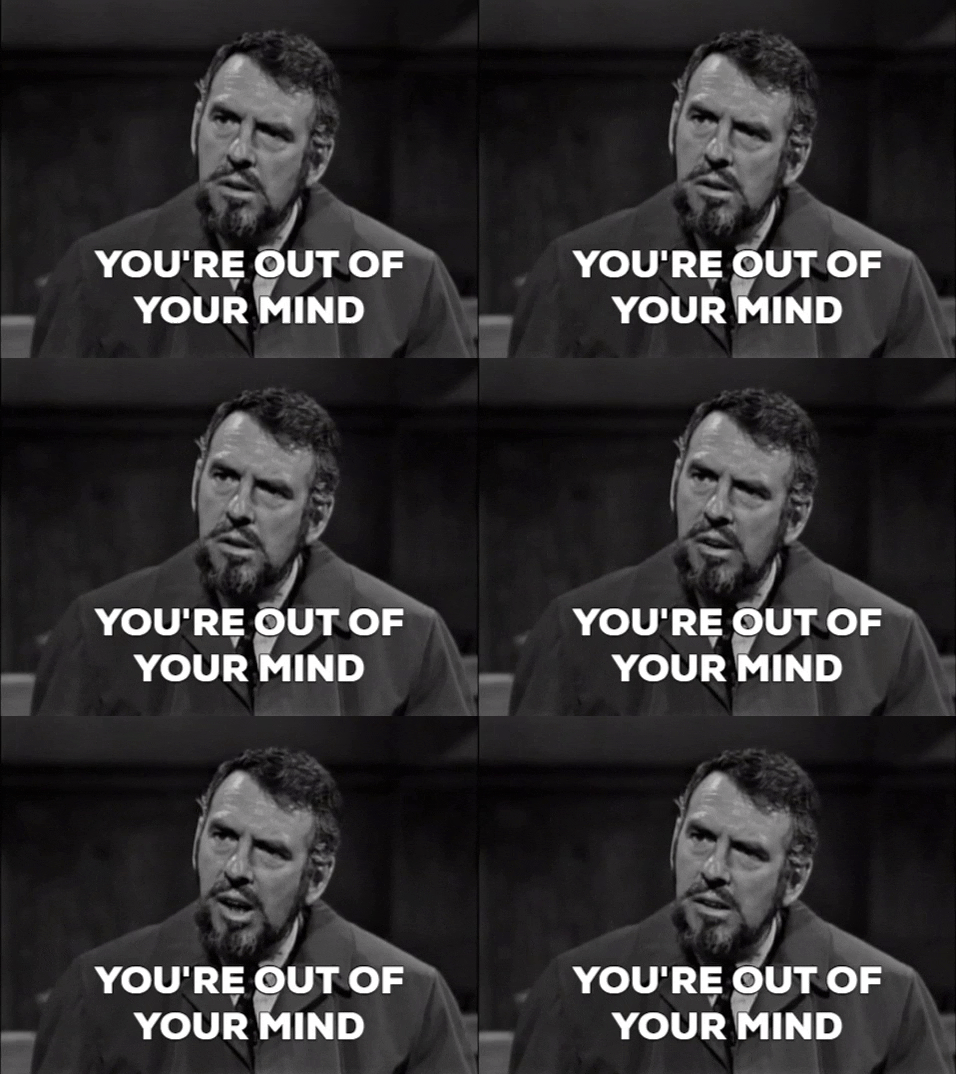
What this all comes to is that the only prints on the wrench are Burke’s and David’s. They already have it from Burke why his prints are on it. David’s the only other person known to have touched it. This is exactly where things were nine episodes ago, but now all the other characters have figured it out, so he has to too.
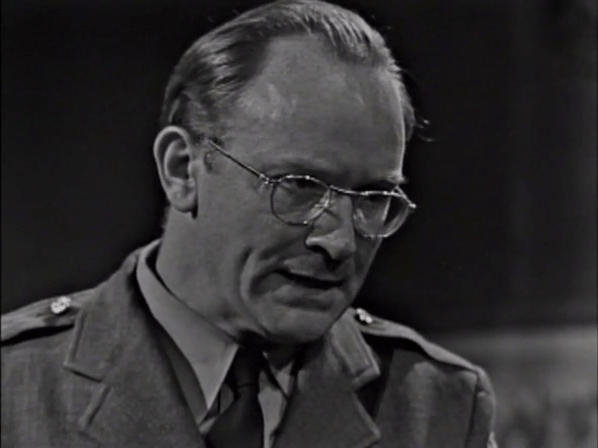
Not a bad idea.
These are the fingerprints from the wrench.

The prints are overlayed, with Burke’s over David’s, meaning David handled the wrench before he did.
There. That’s your solution. Mesdames and messieurs, we adjourn.
For a guy who so helpfully sketched the suppository for us, Malloy is kind of sick of being shown illustrations. Carter’s voice practically breaks as he impresses things onto him.
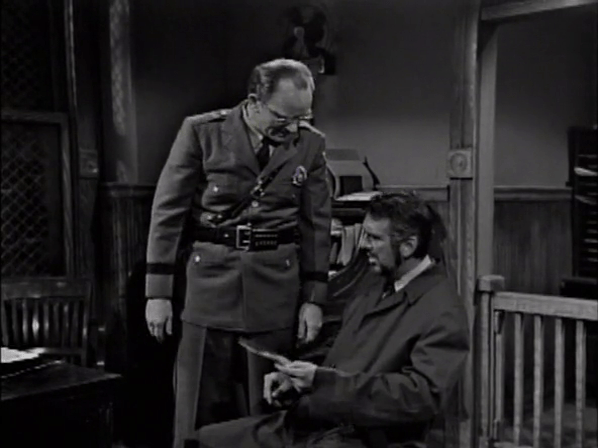
Malloy asks what Carter intends to do. There are many options, of course. Further inquiries, preemptive arrest, call a forensic specialist…
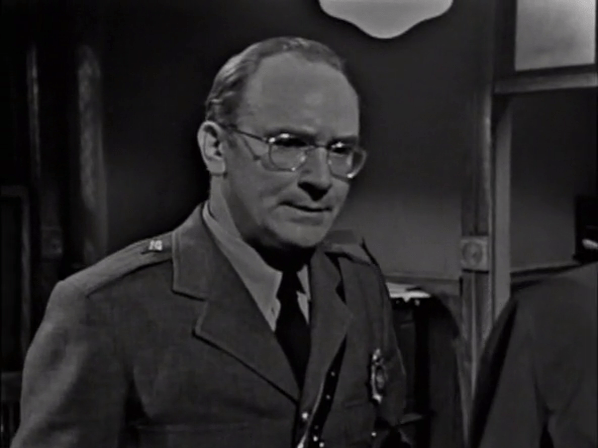
There’s also that.
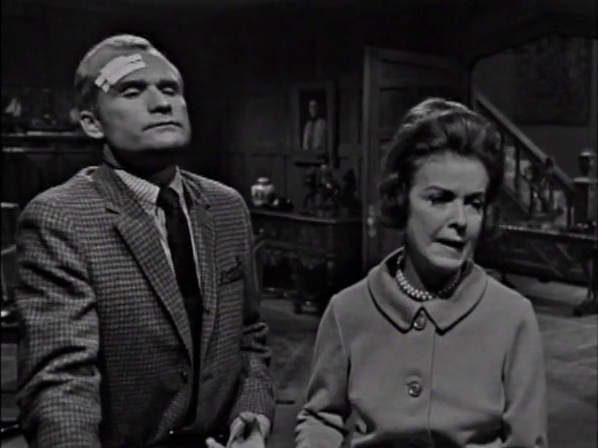
Back at Collinwood, Liz rejoins Roger after an unsuccessful attempt to get through to David. She admits a complete helplessness in the face of the difficult situation and, at least she has an excuse. It isn’t her job to investigate crimes. She’s allowed to feel uneasy about her nephew being sent up for attempted murder.
Roger, on the other hand, has made up his mind.
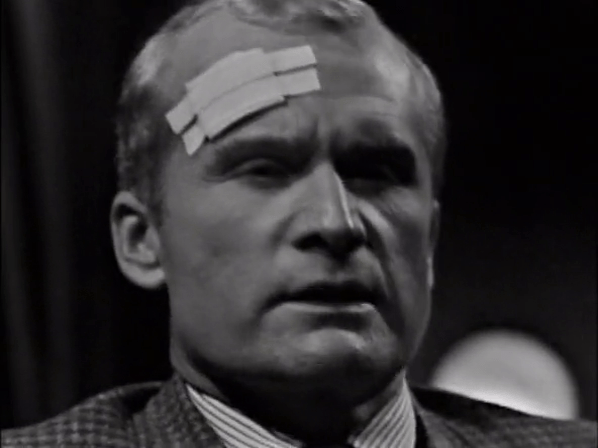
If you say so.
Roger maintains that David isn’t “normal” and needs “special help” which, in 1966, probably wasn’t Bedlam, but also wasn’t very nice.

On a modern soap, this would become a PSA about all the good work done at child sanatoriums because the bills have to be paid somehow.
Roger points out that if the police catch on, the “juvenile authorities” (sounds sexy) would demand a hearing. The family name would be dragged through the mud and, Roger doesn’t mention this, but we infer he must be thinking about it, he would look like a pretty shit dad.
Liz insists it will never come to that, because the police will never know.

Canon: Roger believes in neither friendship nor family. We’re still waiting on love.
From a…certain point of view, it’s easy to understand Roger’s frustration. He was almost killed and his sister, a woman in whose protection and debt he has been his entire life, is defending his would-be murderer.
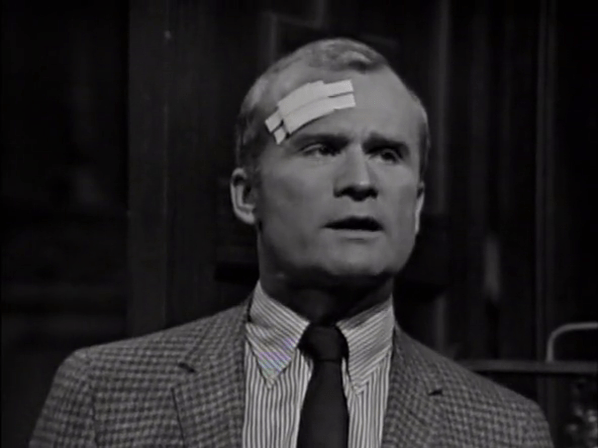
That last one was totally an ad lib.
This ties into Roger’s discussion of a few episodes ago…how we create our own monsters. Liz points out that David’s own psychosis was no-doubt shaped growing up with a man who hated him from birth. Roger himself all but admitted this to Vicky but now, with his stubborn pride back in full force, he bullies on ahead, refusing to admit this weakness to his sister. It’s an interesting discussion, perhaps more morally and philosophically complex than the fellows behind the camera are equipped or willing to handle.
David was wrong, but he is a child. Roger is wrong, and he is an adult. David may not have gone wrong at all, if it were not for Roger in the first place. Who is at fault? Who should suffer?
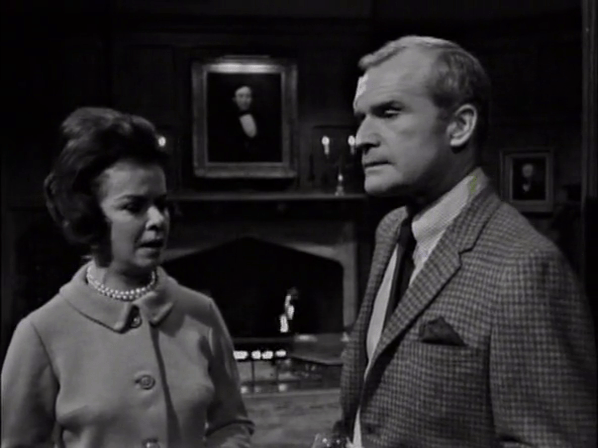
And you don’t help a “monster” but banishing it. You only selfishly protect yourself.
Joan Bennett hasn’t had a chance to pose with the suppository yet, and she rises to the occasion.

Liz further lets slip she believes Roger’s hatred of David is informed by guilt…but she doesn’t finish the statement. We can infer she was about to mention Burke, and the guilt Roger feels for the testimony (now almost certainly confirmed to be false testimony) that sent Burke away. And so, perhaps, whenever he sees the boy that so reminds him of Burke…it is not only hate for the man that fills him, but guilt for his treachery.
La sauce!
Dancing closer to that mark, Liz points out that the Collinses always stand together.
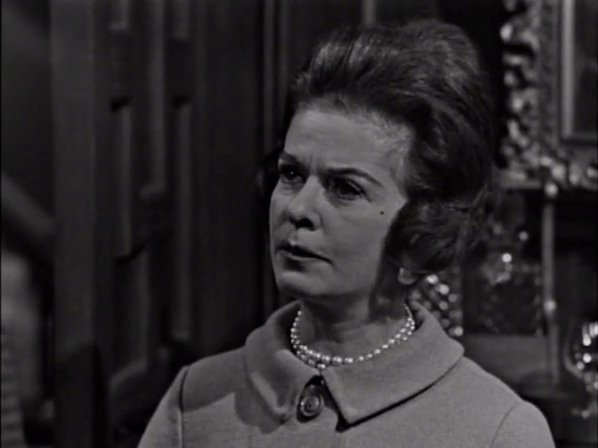
And here is our first positive indicator that Liz has not just been a passive observer of the last decade’s drama. Did she take an active role in the intrigues of Burke’s trial, or even the crime that preceded it?
In any event, Liz takes us on a sweeping tour of the paintings, much as she did in the first week, when she impressed the legacy of their ancestors onto Roger, insisting he act on Burke as they would have done.
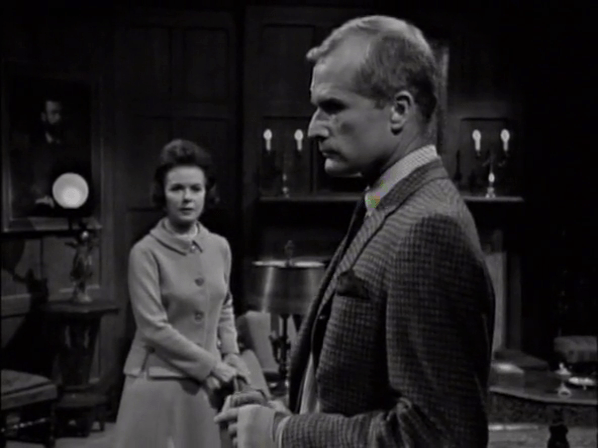
And that’s what it all comes to in the end. David is the son and heir, the last Collins. Yes, yes, there’s also Carolyn, but our patriarchal society has given her the surname of a father she apparently never got to meet (and claims she might like to kill if she ever did) and, while she could always change it legally, that would dilute the point of the story so just ignore it I guess.
Elizabeth has another soapy bug: that of the legacy protector. She is like Victor Newman of The Young and the Restless, Eric Forrester of The Bold and the Beautiful, Victor Kiriakis of Days of Our Lives and even the (somewhat) younger Sonny Corinthos of General Hospital. The difference? They are men. Patriarchs who zealously protect their families, their businesses, their children, even to the point of treating them as one singular entity.
The classic primetime soap Dynasty is, as its name suggests, much in the same vein. Blake Carrington is an incorrigible old asshole, but his one redeeming trait is his desire to protect his family, even if it often means he hurts his children and his wife. We don’t have to like him. Often it is impossible to. But the motivations of these patriarchs are always grounded in primal, easy to understand terms: family.
Liz is what would’ve been called the mater of the Collins household. There is no wise old man or ruthless business tycoon presiding over Collinwood. Her brother is half her age and uniquely unsuited both to business and family. Her daughter is a willful, impetuous little brat and her nephew is half out of his mind. They are all that remains of what we are told (and maybe it’s even true) was once a great family, a family that earned a fearsome reputation, and even respect, from their community. They are now small, weakened by scandal, relics of an earlier age. Liz never leaves her house and is (apparently) denigrated by schoolkids as a witch. The scandal of the Devlin trial is fresh in the minds of every townsperson who’s spoken about it since we began. What damage would be caused to the Collinses’ nearly 300 year-old legacy for their last heir to go down as a patricidal lunatic?
Is Liz misguided for protecting an attempted murderer? Or is she acting on a motherly instinct? Is she a coward for protecting the legacy of a family, or is she dedicated to something bigger than herself? All big questions and, indeed, these are ones Dark Shadows will attempt to answer again and again, from different people, in vastly different circumstances, time and time again.
Look, if there weren’t great things to say about it, would I even have started this blog?
Liz continues being a boss bitch, by saying Roger can’t stop her acting as she pleases.
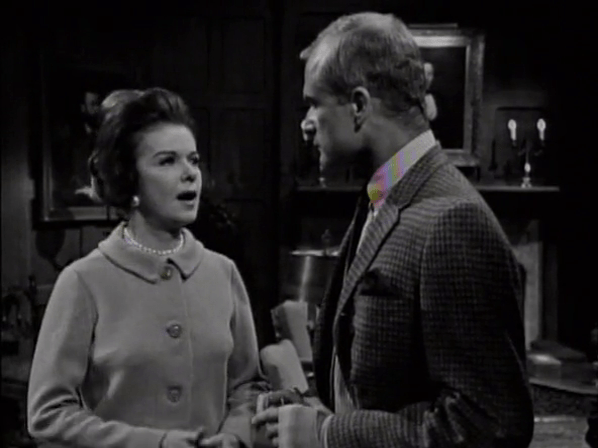
Love this decision or hate it, you’ve gotta admire the spunk. This is the best bit of work Joan Bennett’s gotten to do since we started, her scenes with Vicky and Carolyn in episode 29 close behind. Amazing what you can get out of your talent when you aren’t having them carry on fictitious phone calls.
Before Roger can do any more than fume (which he’s quite good at, granted), a knock comes to the door.
It looks like the Collins siblings may not have the luxury of choosing their own fate after all.

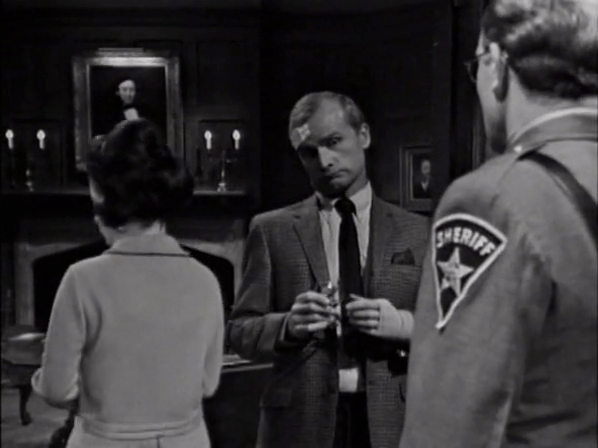
His time-wasting exercise with Malloy concluded, Carter is able to exercise the real reason for his presence in this episode and, as it happens, his presence on this show. While the Suppository saga reached a thrilling (by turns) climax last episode, this episode marks the old lawman’s climax.
Ahem.
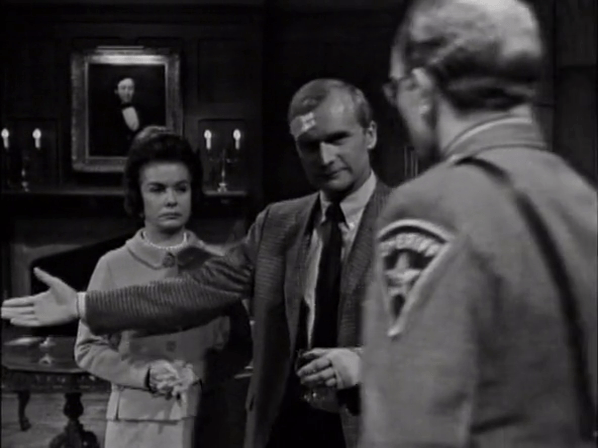
A more observant individual may have cottoned on that he was walking into something, but Carter is undaunted.
Roger is totally drunk, guys.
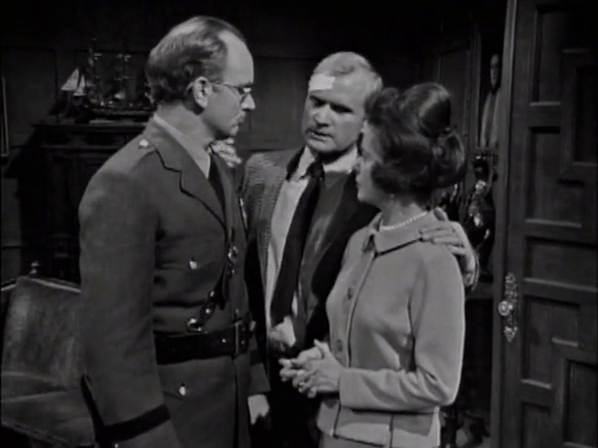
Liz hastily interjects that she doubts Carter wants to hear about “family loyalty” at which point Carter, with the air of a kid called to speak in class, says…
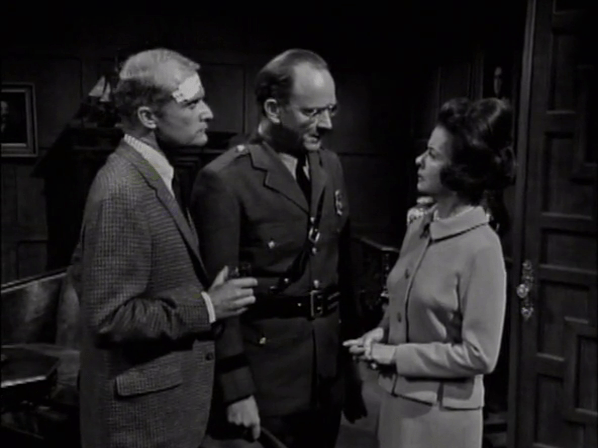
Ah God.
It is, indeed, about the accident…
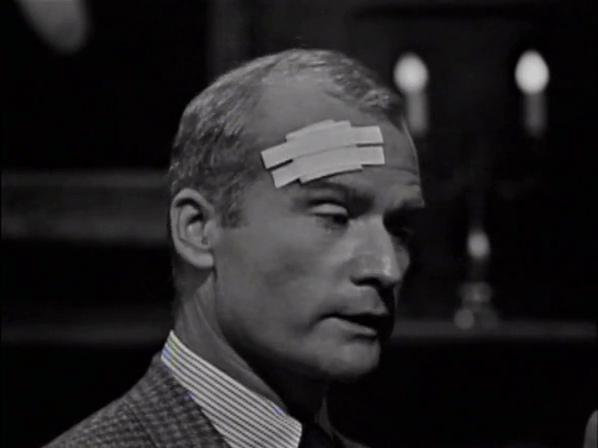
Carter repeats he never believed Burt was responsible for the crash and, you know, I think he’ll find they all agree. He brings up the wrench…

Imagine that.
Roger loudly wonders if it’s about David, as he goes to pour drink number three.
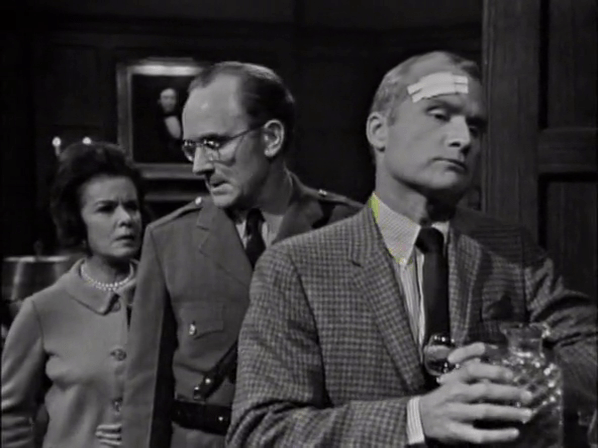
And here we go.

Liz explains, indeed, that nobody tampered with the brakes! The suppository just popped out of its own accord, as suppositories do.

That comment in and of itself should be enough to tell Carter something is going on here, but oh well.
Liz proceeds to put Matthew on the hot seat, claiming he just told her the suppository had been loose more than once before and he just never told anybody, which is a fairly shit thing to do to a guy who’s religiously maintained all the brakes at the house for almost 18 years, but that’s what the help is for I guess.
And so Roger has no choice but to produce the suppository for Carter’s inspection.

Carter, if nothing else, understands that all this means is that Liz wants him to drop the case. He is in possession of the fingerprints that tell against David. He knows everything he needs to know…
But Liz shuts down the investigation before it can gain any more steam.
Certainly, now he won’t have to compromise himself and arrest an innocent man, as Roger so desperately wanted. But to play into the hands of the other Collins sibling? To protect a disturbed child who at the very least ought to see a psychiatrist? Would it not be a violation of the law? A betrayal of his oath? Spitting in the face of the facts and evidence the importance of which he espouses so strongly?
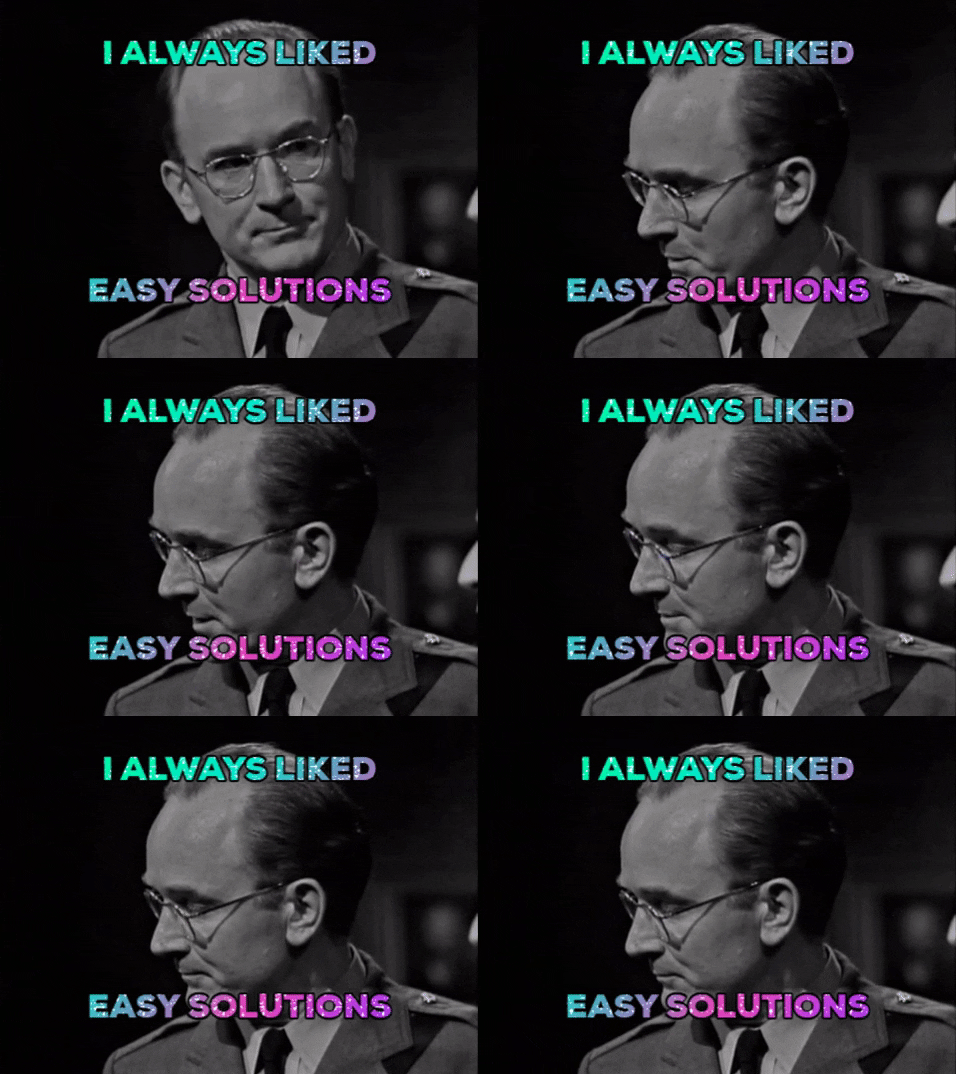
…
That’s it. That’s the end. He likes easy solutions. Loves them, in fact. So much for the dignity of his fucking badge. The rich lady on the hill tells him not to arrest her nephew, so be it. There’s that next election cycle to think about, and this time somebody might want to run against him.
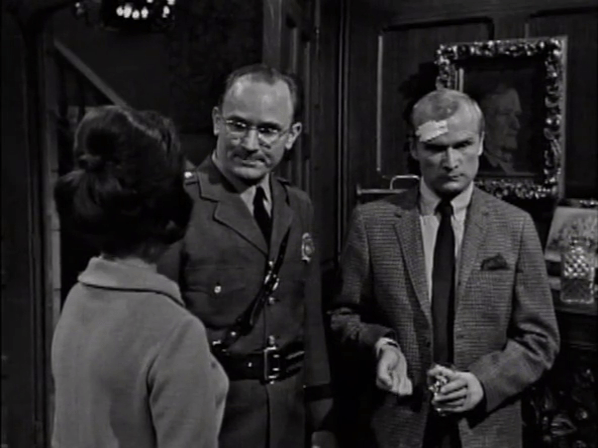
Well, go on sport! You’ve earned it! Why don’t you buy an extra large popcorn, you squirrely little pig? I hope your wife is having an affair. I hope she and Harry are going to town on your desk right now! You know, I bet she keeps an extra jar of mustard in the back of the fridge just for when he comes over because you are a poor excuse for a constable, a sheriff, and a man! Why should I be surprised? You can’t even satisfy your wife, why should you satisfy the expectations of the viewing audience? Get out of here, you goddamned son of a bitch. Out! Out, I say!
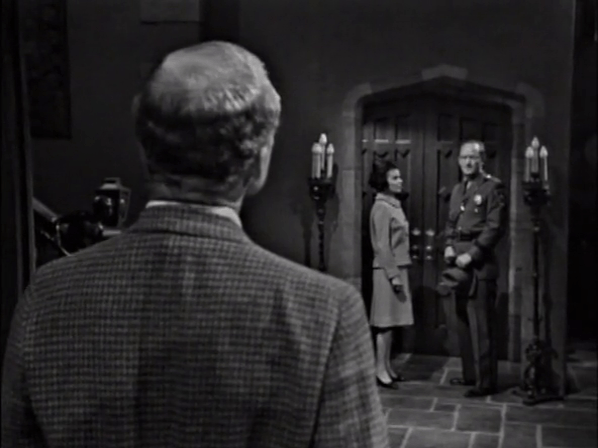
Oooh, that testy Constable Sheriff Whatever the Hell! He knows it was David, but he won’t do anything about it! Ooh, la dee da! What a maverick!
And…and that’s it. He leaves. Roger is upset with Liz, who insists she had no choice and needed to protect David.

And with those ominous words, that nebulous threat or warning…the Suppository Saga comes to an end.
Yes, they ended the show’s first major storyline on a Tuesday. Did you expect anything less at this point?
It was a wild ride, tremendously frustrating and, enjoyable though its last few episodes are, I can’t say they redeem it. It’s certainly not a very earth-shattering conclusion. Yes, David will have to face consequences, but they are far from what they may have been. Is Roger changed? David certainly seems to have been. He has a friend in Burke, and Burke and Roger have new layers of animosity between them. Roger knows he can’t even trust his sister, who has committed a truly morally dubious action that may or may not be judged by the others of the household.
Changes, yes. But were they worth it all? All the recapping and the stagnancy and the waiting, ceaseless waiting all for the ending that delivers us the closest to the status quo? No other pre-Barnabas story leaves as timidly as this one does, which is a good thing. It’s a sign things will get better. I think I might surprise you if I told you just how quickly they will.
This Day in History- Tuesday, August 9, 1966
Naji Talib becomes the new Iraqi Prime Minister, following his predecessor’s resignation.
Nigerian President Gowon concludes that all military personnel be redeployed to their regions of origin, increasing uncertainty that the nation would soon be broken up.
Singapore celebrates their first year of independence from Malaysia with the creatively-named National Day Parade.
Lee Bowers, whose observations of the JFK assassination suggested a conspiracy, was killed in a car accident in Texas. A write-up done later pegged him as the 10th mysterious death of someone connected to the assassination. We here at Kooks of Collinwood tell you, with great confidence, that it was the Widows.
This Guy Was in That Thing!
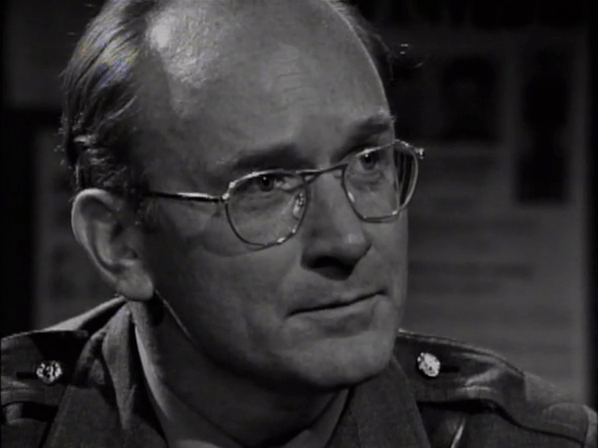
Despite his fairly poor showing on Dark Shadows, Michael Currie went on to become one of the leading character actors in American television.
Born with the unfortunate name Herman Christian Schwenk, Currie dabbling in footbal and choral performance in high school before going into acting.
He had a bit part as an electrical inspector in The Troublemaker, a 1964 comedy about chicken farmers and the mafia. After this, there was nowhere to go but up.
His first TV role was as “Smitty” in a single episode of The Trials of O’Brien, CBS’s Peter Falk (!) driven procedural that lasted, somehow, for only one season.
His first regular role was this five episode stint on Dark Shadows (IMDb humorously credits him both as a Sheriff and a Constable, in keeping with the show’s own shift) after which he was understandably so traumatized that, aside from one role as “the Major” on 1967’s N.Y.P.D. he stayed away from your television screen for a decade, only resurfacing to play “Cop Friend” in See How She Runs, a 1978 TV movie.
Currie’s fortunes began to change in the 80s, however, where he attained roles on series as diverse as M*A*S*H, Barney Miller, Knots Landing, Dallas, Remington Steele, Newhart, Family Ties, Scarecrow and Mrs. King, and Cheers.
This period of time also saw Currie play a supporting role in Halloween III: Season of the Witch. You know, the one without Michael Myers. Still, this makes him the first cast member we’ve covered to feature in a slasher franchise, making him a veteran of two late 20th century horror fiction moments.
The 90s saw him in a recurring role on Homicide: Life on the Street, as well as a TV movie called, wait for it, Devlin. His final role was in a TV film called Fantasy in 2002.
Currie passed away ion 2009, at 81 years old, having attained over 60 credits in a career that stalled in his mid-life. Not bad for a cop without mustard.
 Kooks of Collinwood
One thought on “The Suppository Spat Final Chapter Prologue- Easy Solutions”