
Dark Shadows has completed its first month! Granted, not much has been going on, but increasingly there has been a feeling that that will change. Roger’s car crash has created a stir that affects the whole canvas, the way any good soapy story should. The stage is set now for things to begin to change, for things to boil over at the great house on Widow’s Hill.
Even Victoria Winters senses it…

In point of fact, given this is the first time she’s ever attempted to do the job she was brought here for, we might be looking at the opposite of “normal”.
David doesn’t want Vicky to see him reading “Night Crawler Comics”, which sounds like something that would’ve given Frederic Wertham a stroke, so he makes like the devil and hides it behind his back.
She fell for the magazine thing, after all.
Elsewhere in the house, Roger is going upstairs, presumably to fetch Victoria as he told Carolyn he would do last episode, when a knock comes at the door.
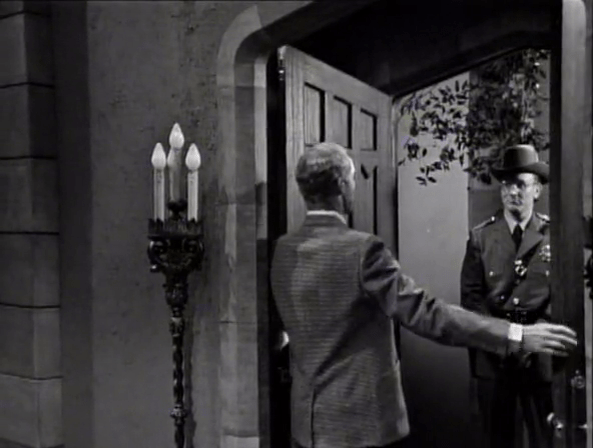
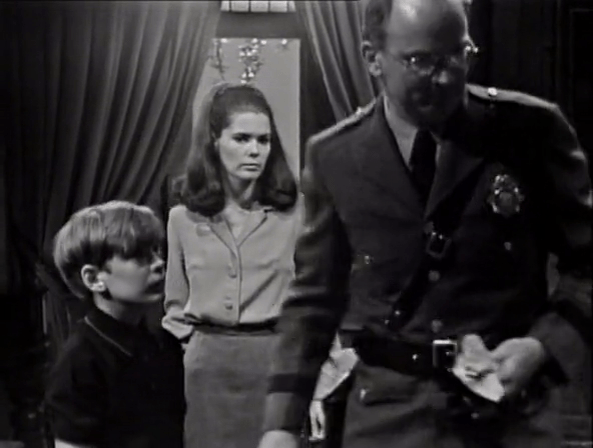
This is the much ballyhooed “Constable” Carter, as played by Michael Currie, who would go on to be quite an oft-cast actor despite all this.
The first impression you get of him is of an almost painful earnestness:
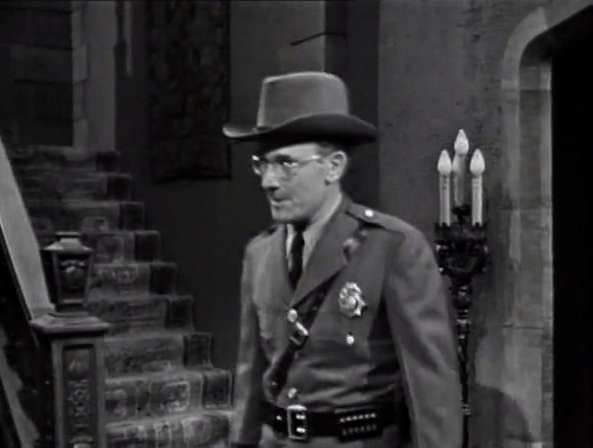
It perhaps shouldn’t be strange that the law enforcement official in a sleepy New England town is a plainspoken, ordinary type of man, but this is a town inhabited by the likes of Roger Collins, Burke Devlin, Sam Evans, and even Bill Malloy, all of whom, well…
Project in their own unique ways.
Michael Currie does not project. This does not mean he doesn’t act, rather he acts in a quiet, unassuming manner unsuited both for the stage and the classic (regrettably, not contemporary as well) daytime soap opera. His neat manner, compounded with his spectacles and that absurd hat marks him a more likely candidate for Wagon Train than a show with the name and content of Dark Shadows.
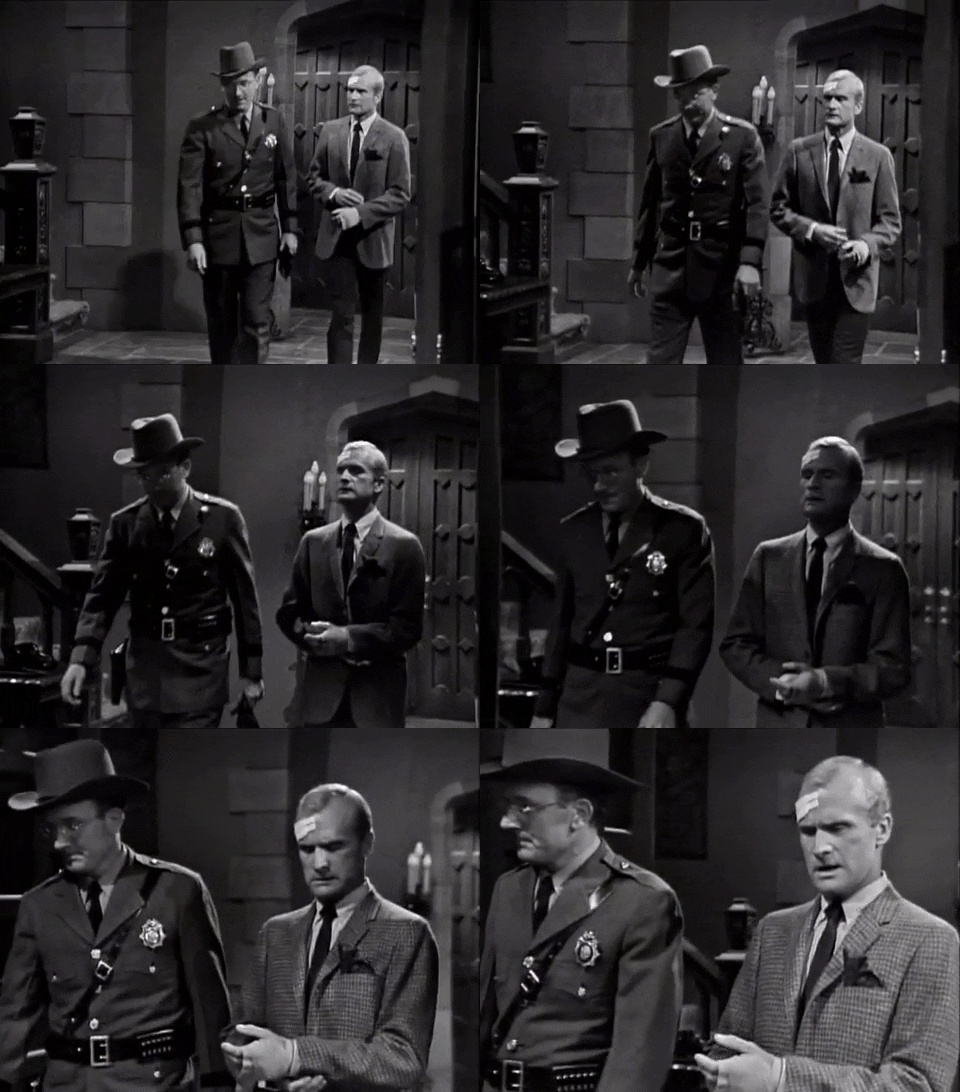
Constable Carter seems, above all things, to be a Decent Man. He is surprised when Roger impresses upon him that his accident was truly attempted murder. Or at least, we must assume surprise, but Carter’s Decency prevents him from looking more than mildly interested…
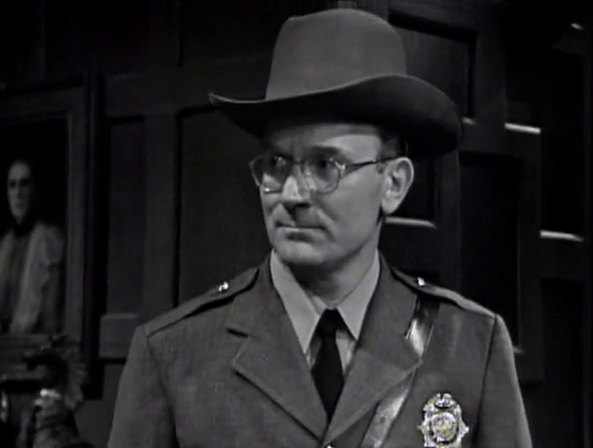
Liz arrives to inform us that Carter’s first name is “Jonas”, so it seems he’s got the short end of the stick from the get-go. In what might be a nice touch, at the entrance of a Lady, Carter removes his hat, to demonstrate the true largeness of head and bald spot.
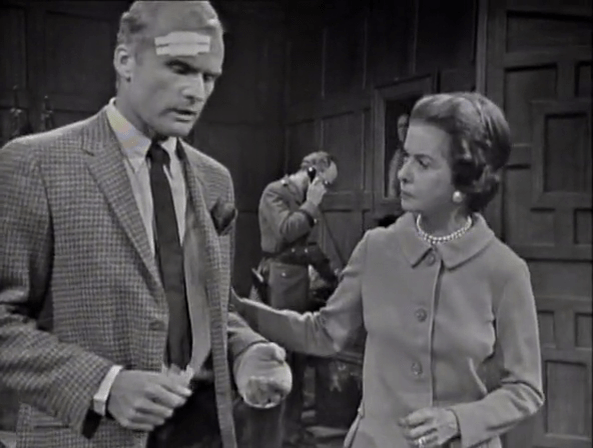
Liz tries to tell Roger about the letter from the foundling home, presumably so she can prepare him to tell more unconvincing lies to Vicky, but Roger is enjoying being the center of attention and wants no part in the so-called ‘heroine’s’ journey.
At which point, Carter yells “HARRY!” into the phone. Harry seems to be his deputy. He might even be the same Harry that the bartender spoke to on the phone back in Episode 2 before Burke took it upon himself to spank the fear of God into the pub brawlers. He should not be confused by the second Harry, also in that episode, who attempted to get a dance with Carolyn and got socked in the face for his trouble, nor should he be mistaken for the first Harry, from Episode 1, the unseen cabby who drove Vicky from the hotel to Collinwood.
Harry is kind of like the Diane to Constable Carter’s Special Agent Dale Cooper. We never see him, but we see Carter telling him things so that he doesn’t need to tell us things. Unlike Cooper, however, these things don’t provide much insight into Carter’s mind, likely because there isn’t much that we can’t understand from looking at him for five seconds.
Here, for example, Carter yells into the phone like your confused grandmother, while the Collins siblings watch in what we must assume is pained captivity:
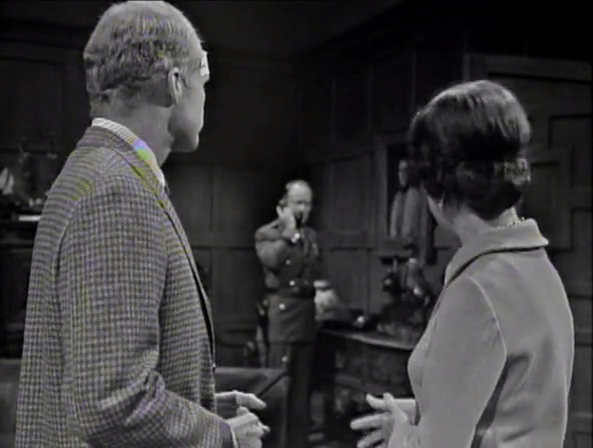
This is done presumably so we can get an idea the kind of place Collinsport is like when there hasn’t been One Interesting Thing. While Carter deals with the Suppository Caper, Harry keeps the minutia of the town in order as best as his little heart is able.
Carter returns to the siblings, and Louis Edmonds must’ve been so distracted by that meandering phone call that he forgets his line.

In his defense, there were many other ways that sentence could’ve gone: “The brakes on my car run on hydraulic fluid”, for example. “The brakes on my car are useless if the suppository is removed.” “The brakes on my car have never been more irregular.”

On the one hand, you wanna love this guy for his upstanding manner especially in contrast to these loud personalities. On the other hand, you’d kind of understand if Roger picked up his so-called “sprained arm” and decked him.
Carter is clever enough to guess Roger suspects Burke.

The first guy in 23 episodes who couldn’t remember Burke’s name right away. It’s a record.
Meanwhile, we get our first look at Vicky’s tutoring skills, following an entire day of fucking around town and country for a series of ill-defined and never entirely justified reasons.
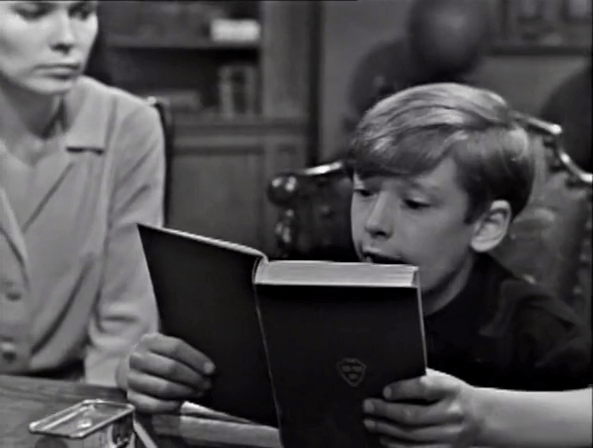
Yes, the dirty rat.
I refuse to believe the story David is reading (about some lost girl named “Lucy” who is found by her parents at the end) is truly as long as the book he’s reading from. It might be meant to be one of those anthologies you had in English class, which combined a bunch of sub-par short stories into one frustratingly heavy binding that caused you excruciating back pain for ten years.
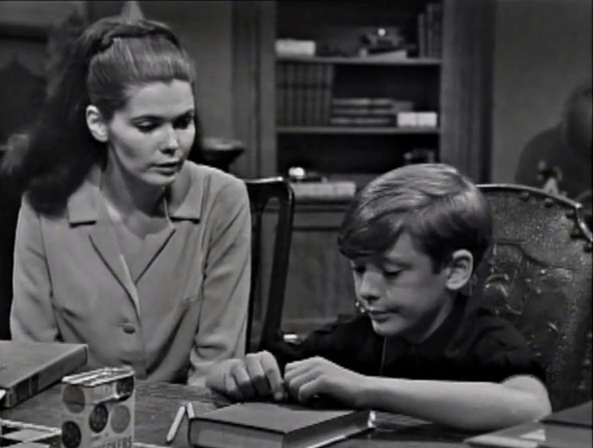
I like this teaching strategy. Sit in the background and yell “very good!” when the kid is finished. But if David really does read so fluently, it’s likely Vicky should either be planning more advanced curriculum, or else leaving her job.
Don’t let’s get started on his engineering savvy.
David’s even inherited the first cardinal trait of the active consumer of fiction: constant complaining!
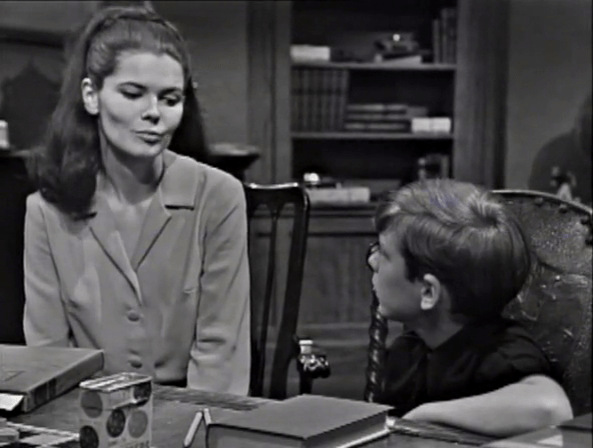
David is all caught up imagining the dread horrors “Lucy Johnson’s” father inflicted on her upon her return home, which should prompt Vicky to start questioning his thought process, but alas.
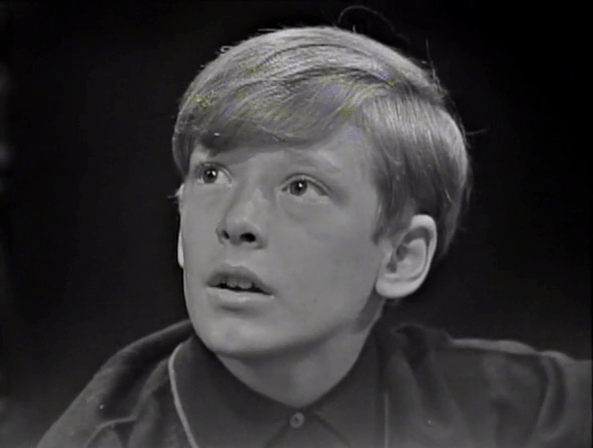

Shit. Where’s that Victoria Winters and can we interview her for this job?

If you thought David’s last episode was full of “Right before your eyes moments”…

Because the best way to respond to a child’s repeated questions about murder is with a smile.
David keeps pressing Vicky, which does prevent her from beginning the “History of Maine” unit, which must be a plus. If Vicky killed somebody, wouldn’t she go to prison?

Glad that she can find a sense of humor in all this.
David proceeds to look off into the distance like he’s been in this business thirty years.

Not another “I wish he was dead”, nor “I hate him”, nor even, “He hates me.” This is a sad admission…David just doesn’t know why Roger hates him so much. And that childish worry, that never answered question, burns beneath every action he has undertaken.
It’s a surprising nuance, and it allows us to see the troubled child that David Collins truly is, despite everything. Mind you, this undoubtedly would not work if we didn’t have David Henesy running this thing, so it’s a damn good thing for all of us that we do.
Downstairs, Roger is telling the whole 100 miles of it to the good Constable.
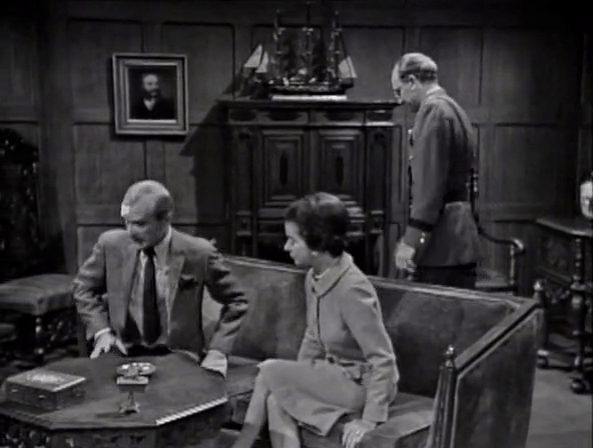
See? Suppository is a much easier word.
Carter takes umbrage at not being called first thing.

Just when you think Roger’s suffered enough, he has to be owned by Constable Forehead.
Roger admits his fool errand to Burke’s hotel room after the fact. Carter is displeased.
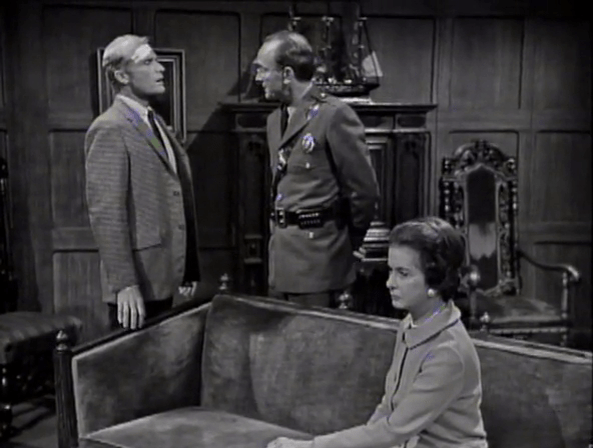
But you do wonder why Carter didn’t take it upon himself to stop by Roger after the crash. Matthew mentioned seeing a deputy at the crash site. If the local police department, or constabulary, or whatever we’re expected to call the damn thing, is truly so ‘un-happening’ as the rest of the town, I can’t imagine Carter couldn’t put aside whatever he was doing to drop by Roger, maybe while he was still recuperating at Dr. Reeves’s office. I mean, the richest bastard in town crashed his phallic sports car on the hill everybody thinks is haunted, you’d think it would stir up some questions?
Alas.

Joan Bennett is disassociating through this entire thing. You can see, she keeps staring off at the teleprompter, as if waiting for her next line.
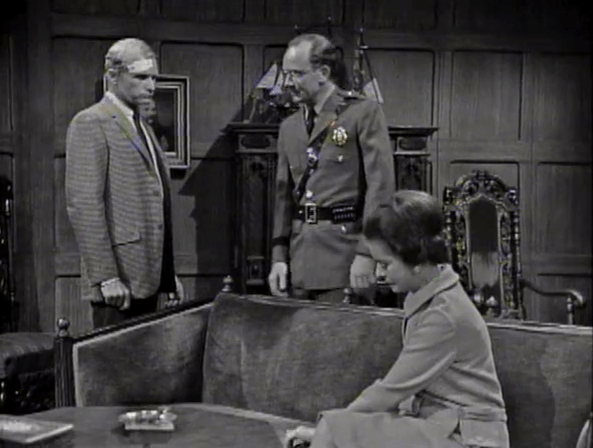
At one point, when Carter asks a clarifying question about that garage thing we’ve heard about as many times as a Catholic schoolkid’s heard the Lord’s Prayer, Liz seems to lose her temper.

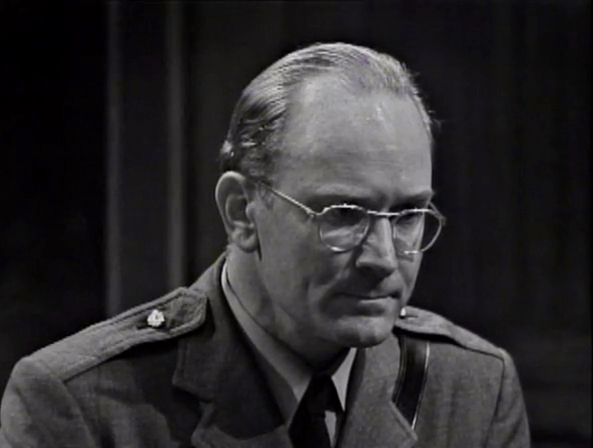
Carter wants to question Victoria about the garage thing, and here we go again. Liz insists that she’ll fetch the governess, and at this point Roger is too tired to protest.
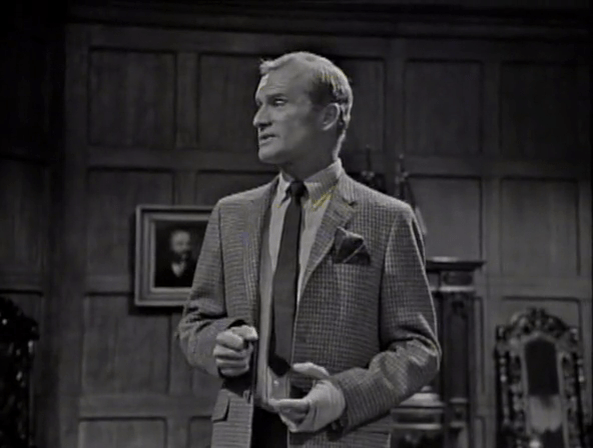
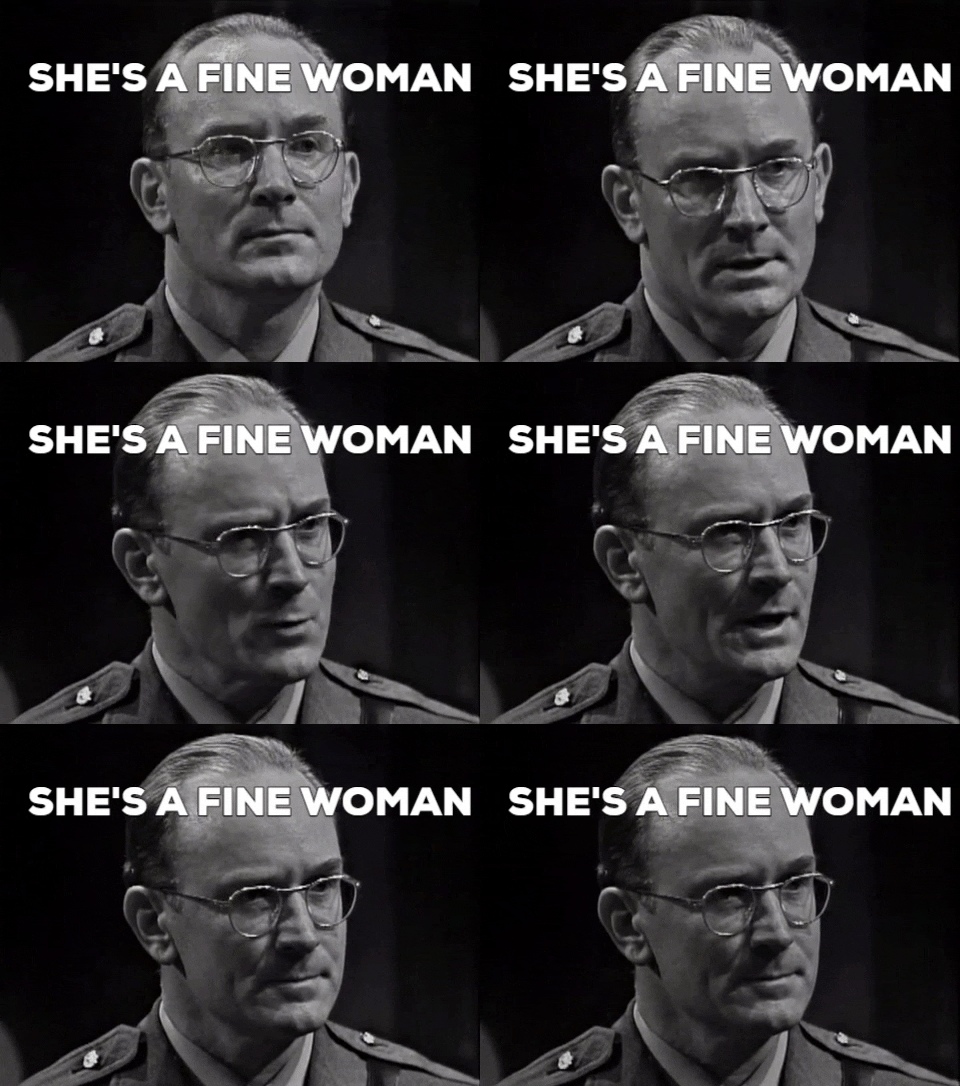
That would probably be less suggestive if it wasn’t the last line before the scene changed. Like, it’s great that the Constable thinks Liz is dandy, but…uh…
Well. Nobody wants to think about it.
Meanwhile: child torture.

How delightful. This will certainly be on the SATs.
Liz arrives to cut this farce short. She doesn’t want David’s mind wandering and, in the delicate diction of Joan Bennett, insists he focus on…

The same verbal quirk that leads to her pronounce Burke as “Beyerke” gives us “skewlweyerk”, which really is a phonics miracle.
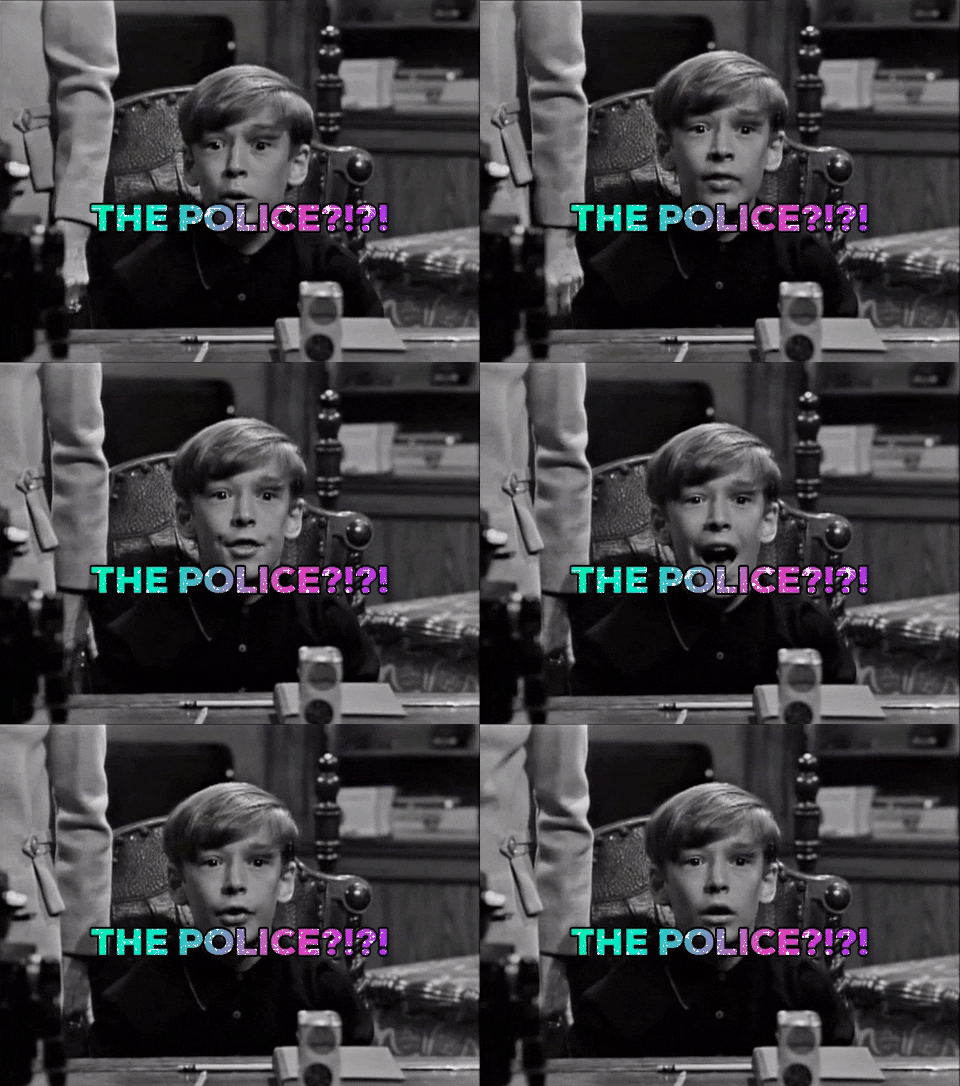
Liz mentions the constable is here to speak to Vicky, and David keeps cool.
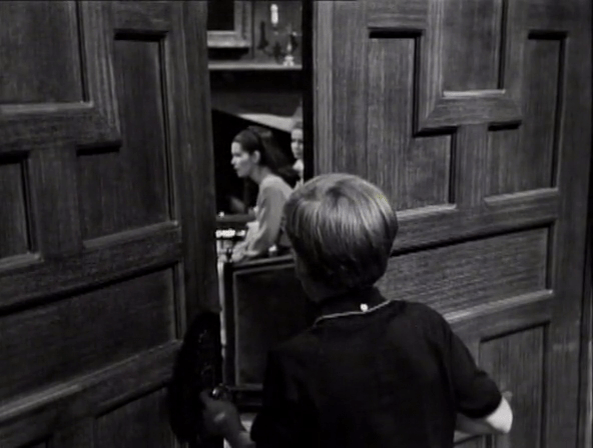
We return for Act 3 to see David engaging in his favorite habit: spying on the adults in highly visible ways they somehow don’t notice.
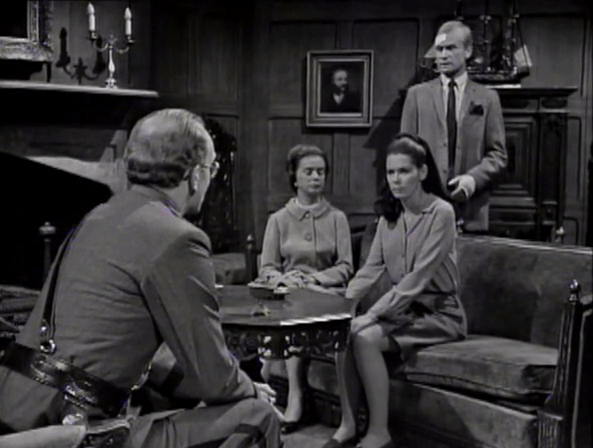
The Collins Christmas card continues apace.

Vicky tells Carter that she already told Mr. Collins all about the wrench.
Don’t fuck with the Constable, girls.
The debate about the sound of the car door vs. car hood slamming returns and, with it, the desire of everybody in the viewing audience to slam their head against the nearest wall.
Because Carter is all about Truth, Justice and the American Way, no stone can be left unturned, and so we have to trundle on through this agony.
Carter gets up and, I dunno, fixes his pants.
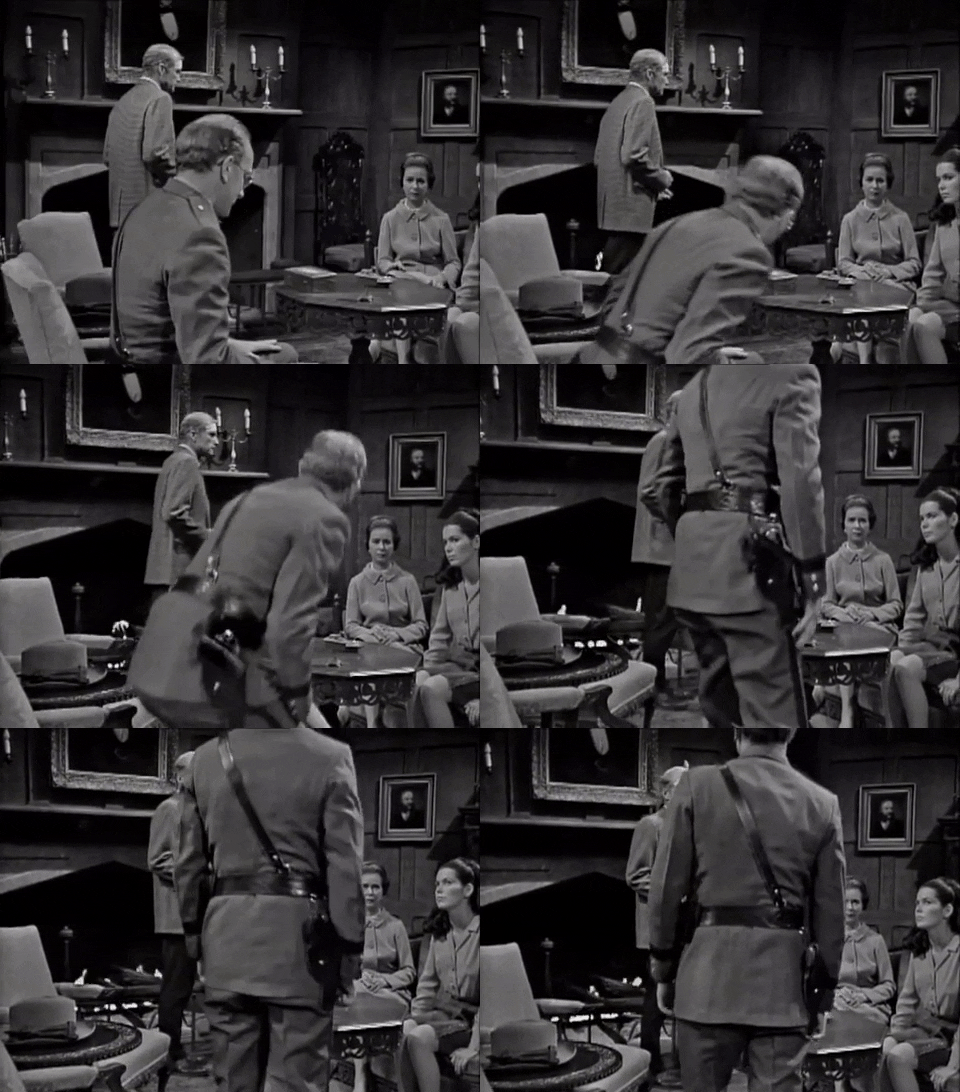
There is discussion of Burke’s disposition when he visited Collinwood.

They’d half broken out the champagne.
We then get a…strange piece of criminal psychology that either proves the evolution of the field, or the ignorance of Art Wallace.

Insane. Criminal insanity. Because only insane people commit, or try to commit, murders.
Liz is so confused by this that she jumps through a series of verbal hoops: “No one’s accusing him, of him of being insane!” Which is correct. Nobody is, but in Carter’s mind, only crazy people commit violent crime, which paints a fairly elementary picture of the whole thing, doesn’t it?
If insanity was truly the only motivating factor to commit violence, Batman throwing all his enemies into Arkham Asylum would actually make sense. Carter supposes that the only way for this to work would be if Burke stewed in his anger over Roger for ten years and then went insane enough to commit a fairly calculated plan of attempted murder.
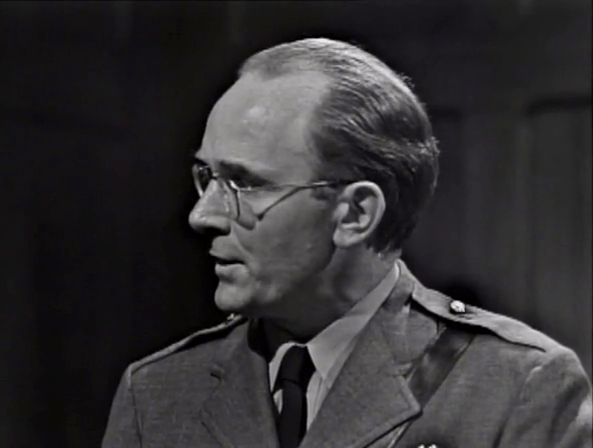
Police are forever doomed to be useless in fiction, particularly in ‘scary’ stories, where the presence of an authority figure must be rendered less-than-helpful (if not outright malevolent) in order to increase the sense of isolation and fear experienced by the protagonist and, by extension, the audience.
Soap operas also love the useless cop trope, even though soaps also love cops. Half the cast on Days of Our Lives work in the “Salem PD” or else in the “ISA”, a loosely-defined international spy organization. General Hospital has had cops interbreeding with mobsters for more than 20 years, with the strictures of the story meaning the cops can never actually catch the mobsters, but also ensuring those mobsters do the cops’ job more often than not. The Young and the Restless ran a Big Little Lies rip-off a couple of years ago where the Chief of Police was presented as about as competent as Yogi goddamn Bear.
The explanation is simple in theory: if law and order works the way law and order must, there is no drama. The cops must be crooked, or corrupt, or just plain useless so that the story can take more inventive and surprising turns.
I wouldn’t go so far as to call Carter useless, and his insistence on facts and reason (even if he doesn’t quite seem to know what reason means) means he’s far from corrupt, and yet he still is not at all helpful. While he is right in supposing Burke’s innocence, his reasoning makes almost no sense, so that next to it, Roger seems like the one making a point, and if you’ve been watching along, you know that’s news. Carter can’t believe Burke is a murderer and…
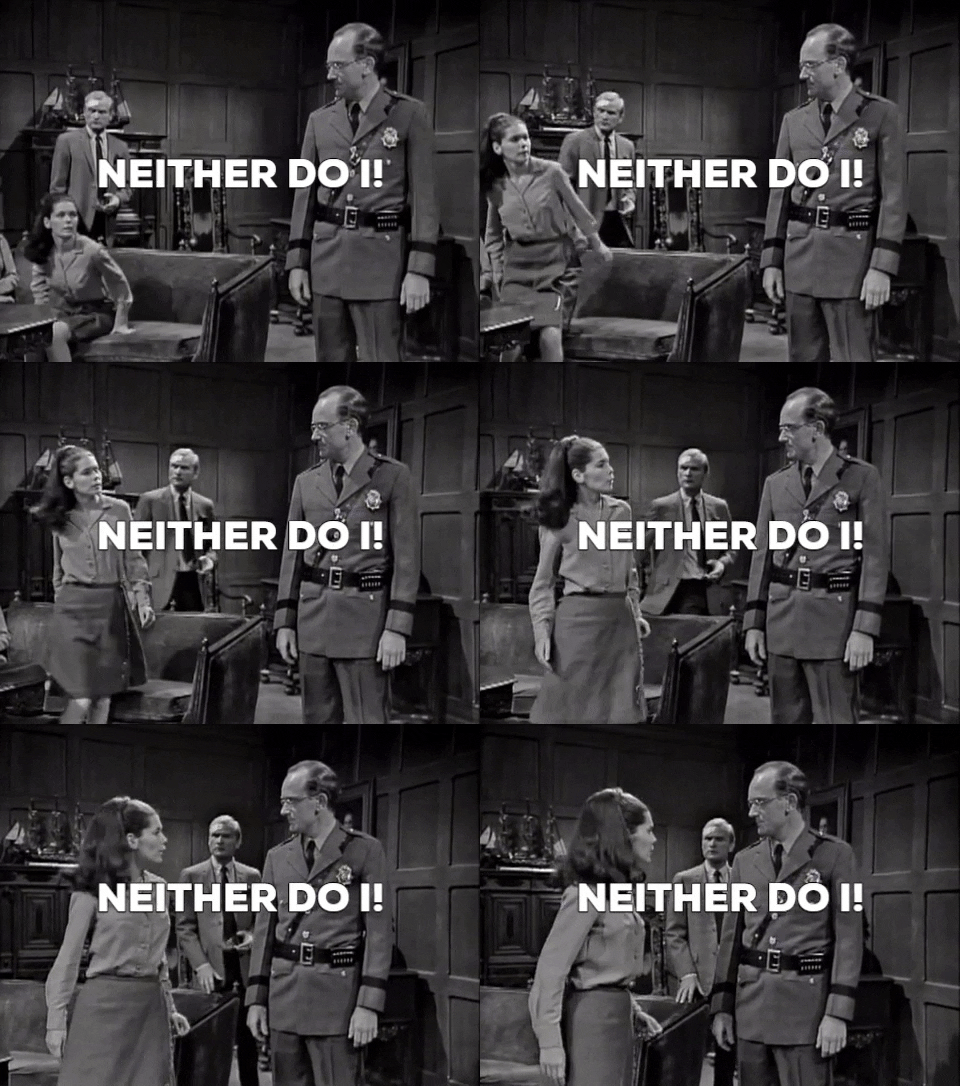
Please enjoy the look of betrayal on Roger’s face.

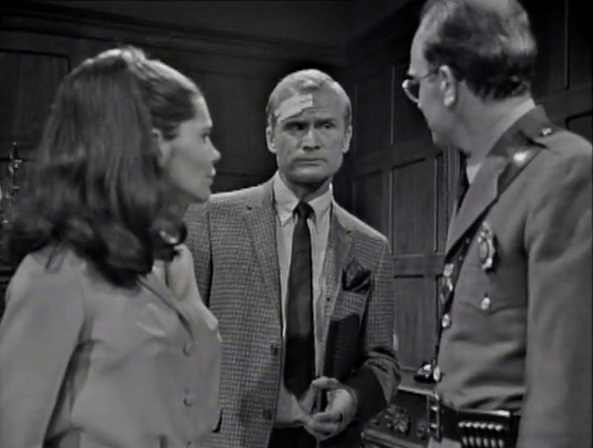
Things come back to the wrench, but for the first time, they seem to be going somewhere. Carter becomes the first person in ten episodes to suggest that the wrench was left there by somebody between Roger leaving the car and Burke arriving at the garage, and that this somebody was the likely saboteur.
Liz interjects.
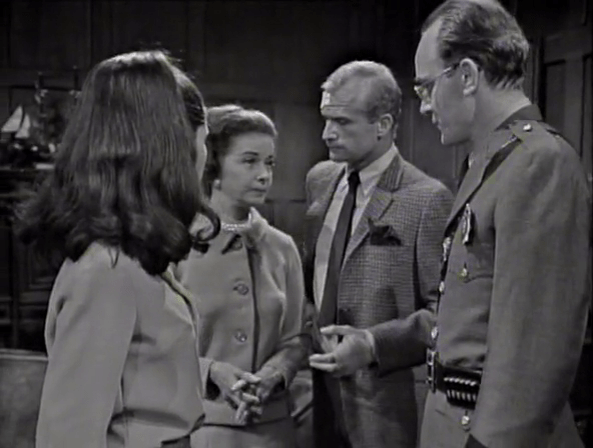
People really have been using that tiresome phrase for a tiresomely long time.
In between act breaks again, Carter gets back in touch with Diane, I mean Harry.
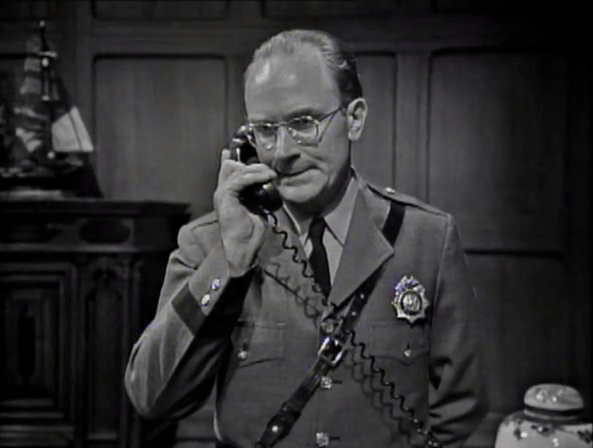
Speaking of Twin Peaks, Carter asks Harry to get through to NYPD Lieutenant Frank Palmer for a background check on Burke’s activity in New York. Maybe he’s a relation.
Roger just wants to get all these formalities over with and commence guillotining.

Carter doesn’t want to make any hasty moves, though. He wouldn’t want to arrest the wrong man.

Jonas Carter: Woke King.
The whole troupe heads to the garage to have a looksie over that wrench, something which really should’ve been made a point of ages ago, because anybody who’s read a detective story knows how quickly fingerprints and such can be sabotaged the longer they’re left unprotected after a crime. But this is what happens when you spend all your time restating the case and none of it actually investigating it.
Liz remains behind and, just as before, she sees David hiding.
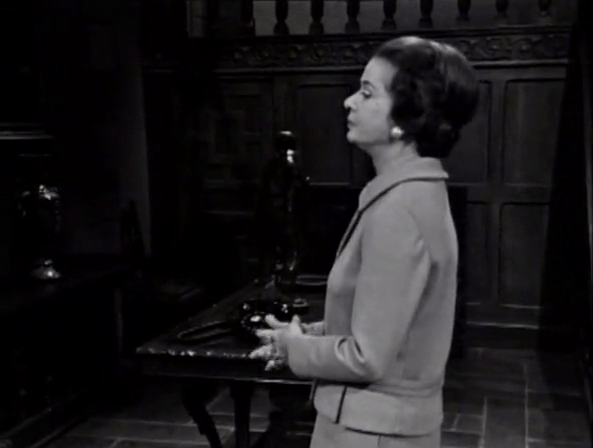
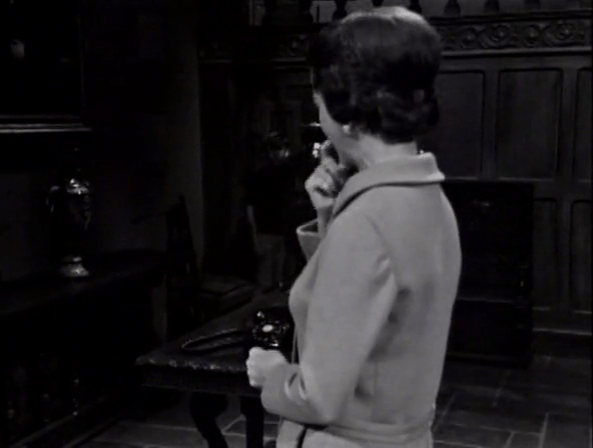
Liz is sympathetic, assuming he was eavesdropping out of concern for his father and the case which…well, it isn’t exactly wrong.
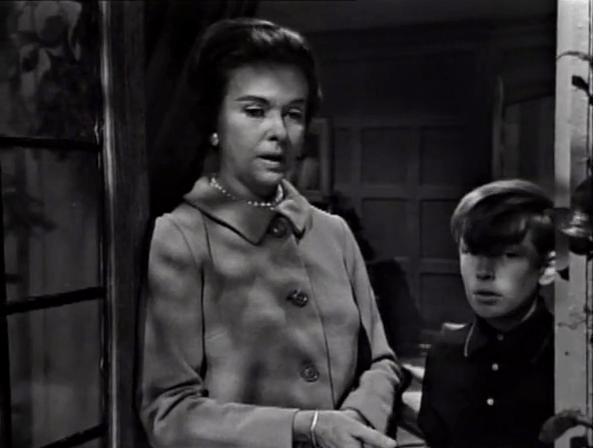
David expresses great frustration that Carter isn’t willing to right away hang this whole thing on Burke, a man he has never met and, as far as Liz knows, he knows almost nothing about.
Liz responds in the long-suffering manner of somebody who regrets ever allowing children.
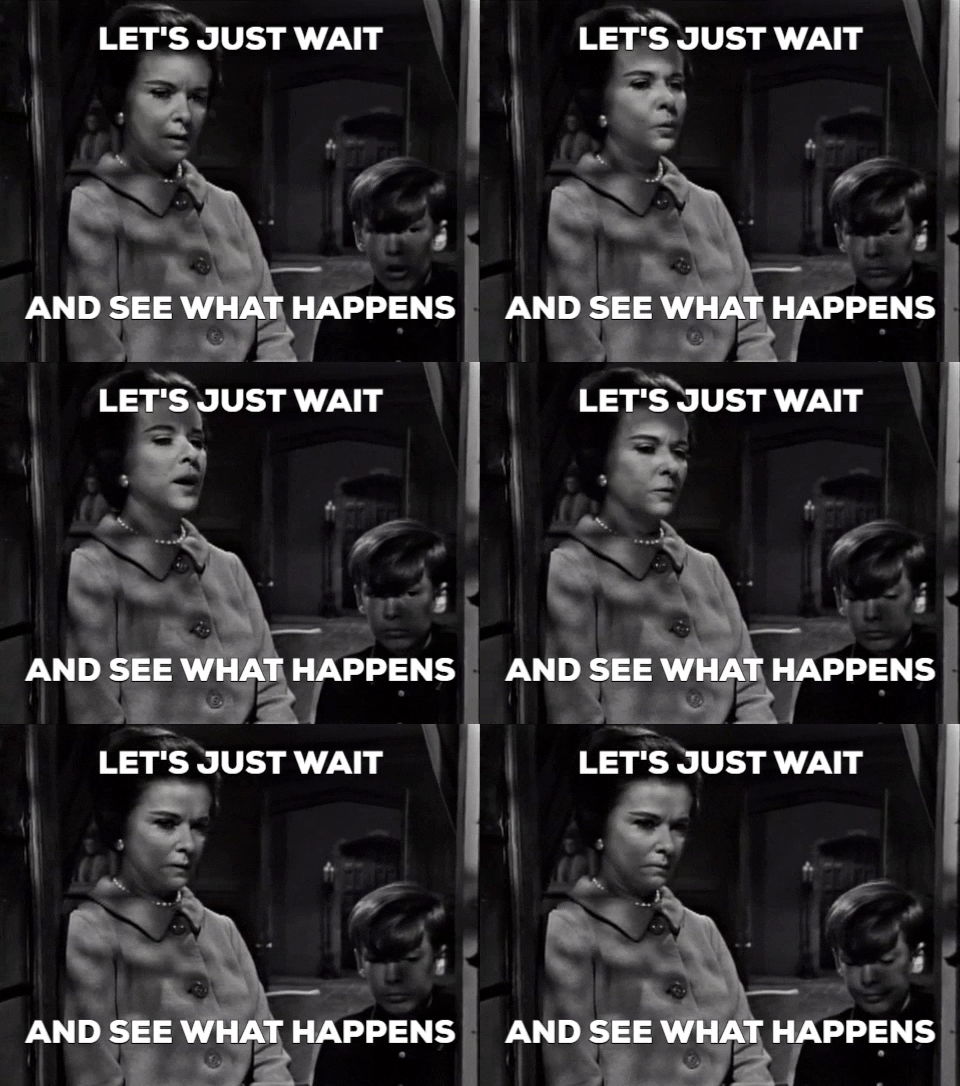
David then learns, via some cutesy questions (“What’s corro-bor-a-tive evidence mean?”) about the significance of fingerprints in criminal investigations and it’s time for us to stop the suspension of belief train yet again.
David was intelligent enough to research his chosen method of murder. He executed it without fail, Roger’s survival being treated by everybody as a freak occurrence akin to miraculous. David was also smart enough to know he had to dispose of the suppository, which would prove the sabotage, and even tried to plant it on Vicky, not that that ended with anything.
Yet, the more obvious thing of the wrench, the tool he would’ve used to remove the suppository to make the whole thing possible, he entirely neglected. He just left it there and, apparently, didn’t wipe it clean of his prints. Now, for somebody who reads automotive magazines and has an interest in mechanics and things of that sort, is it reasonable to assume that this nine-year-old has no awareness of fingerprinting, a forensic device old as Sherlock Holmes and abused in fiction to the point that crime writers like Agatha Christie had to devise clever ways to avoid it as a detection aid?
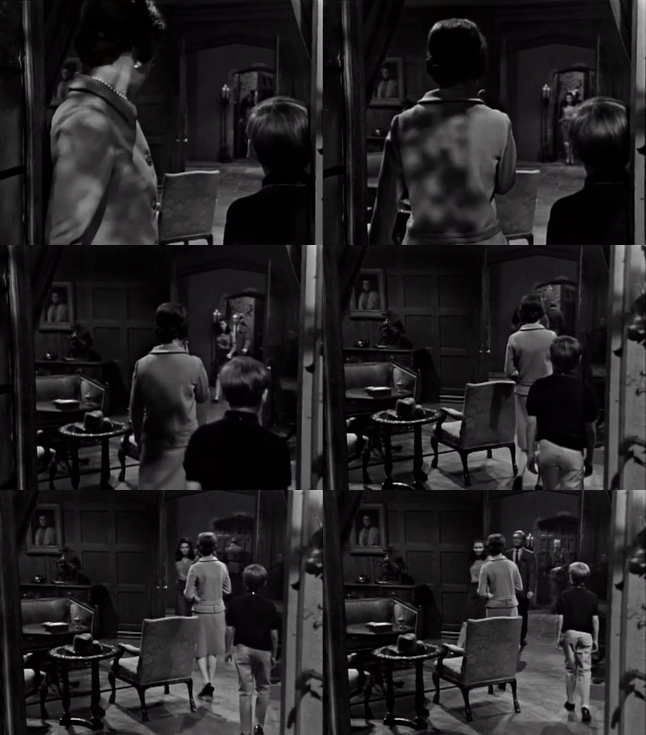
Carter has returned with the wrench, neatly wrapped in a handkerchief, perhaps of the same sort he uses to mop that very big forehead.
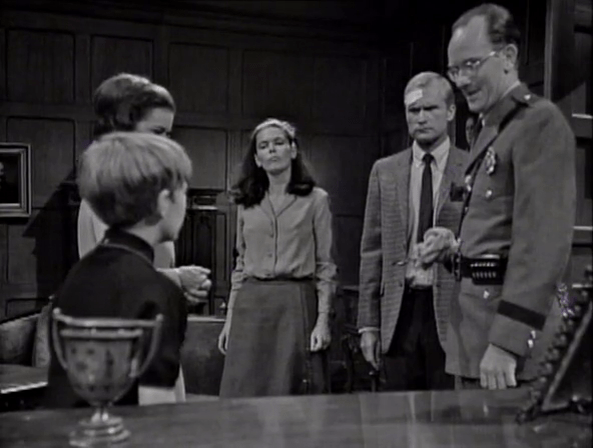
This cap is renaissance art. You have Victoria looking like she swallowed a bug, Roger staring at David like he’ll kill him if he answers the question, and Carter looking like he honestly expects to have a decent conversation with a friendly face for once in his life.
In this, he is disappointed.
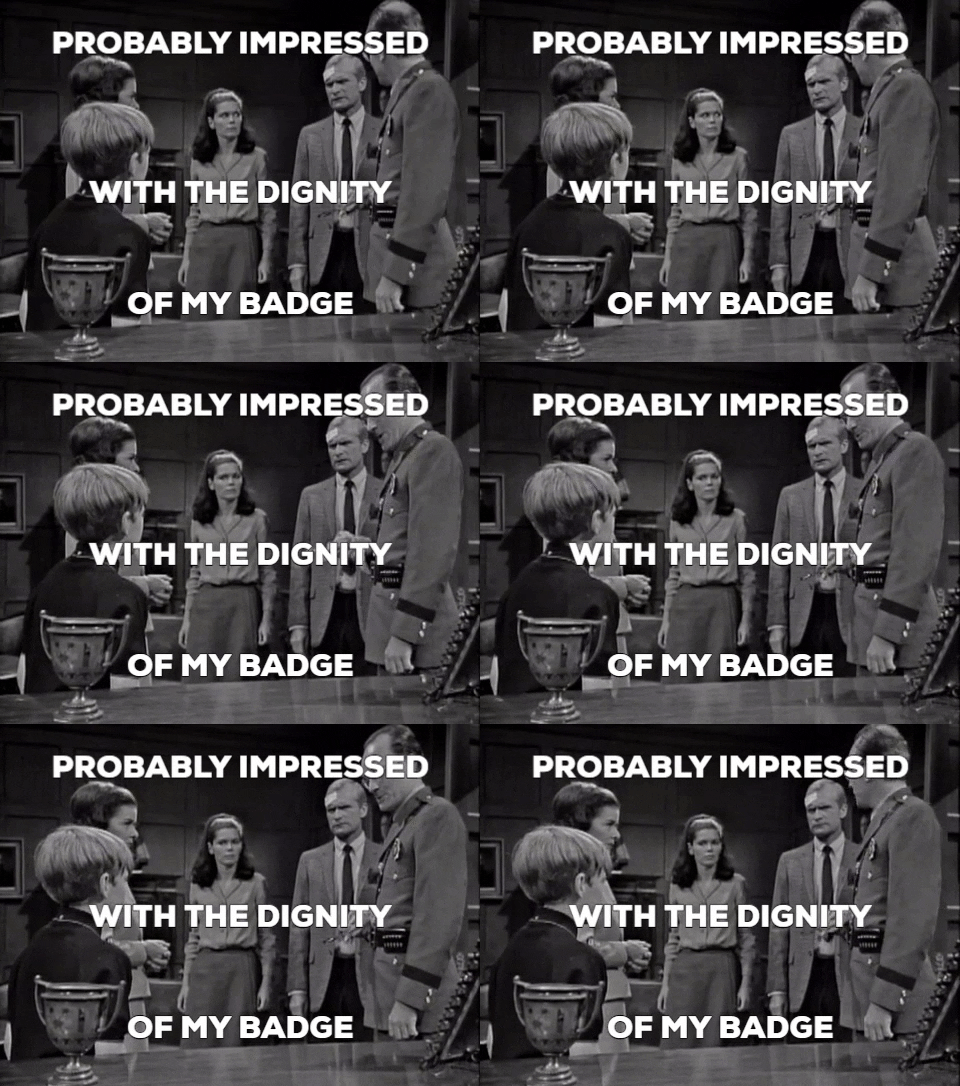
Probably best not to think too much about what that means, but it is comforting that Carter thinks this job lends him dignity.
The phone rings. It’s Harry with an update on the NYPD Homicide guy. None of this is really important, but it does serve to leave the wrench alone and unattended while everybody pretends to be interested in Carter’s phone conversation so that David can do something that really should not be as easy as it is.
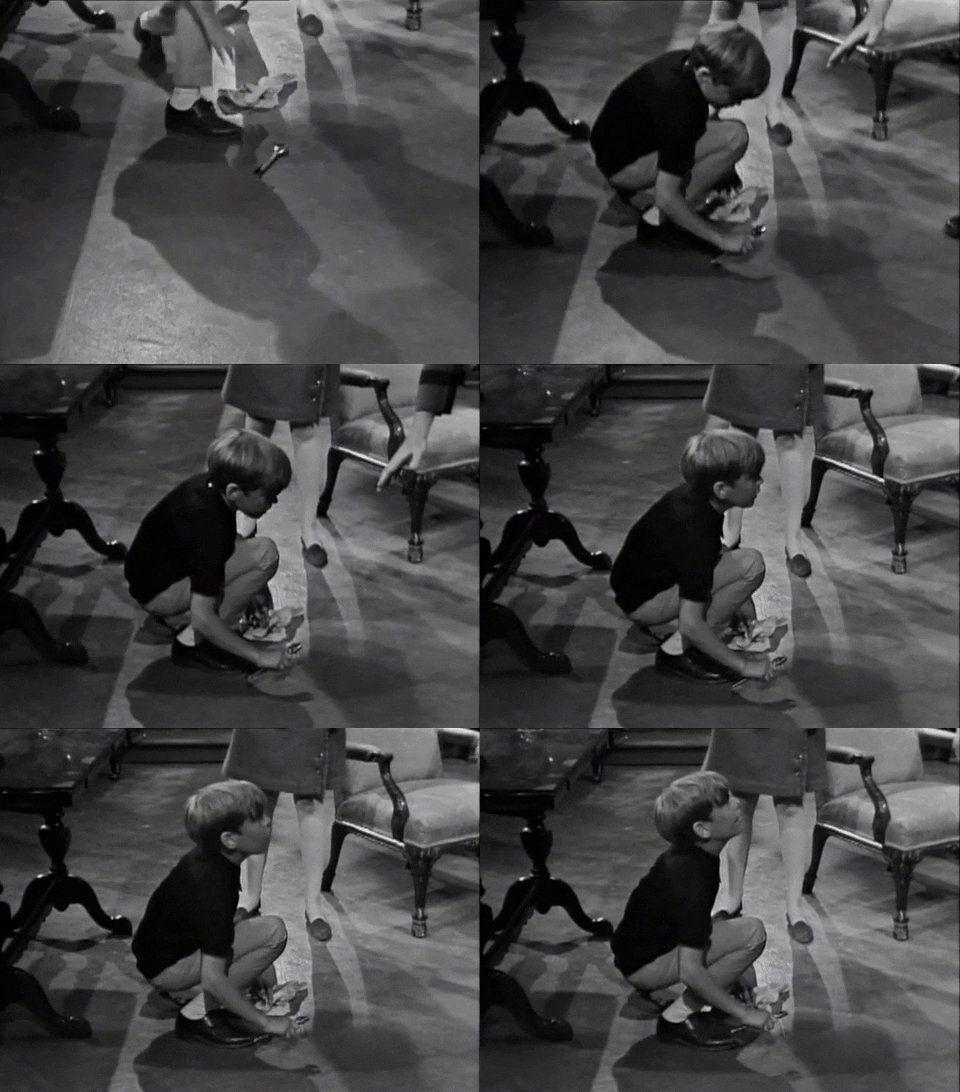
David reaches for the wrench…
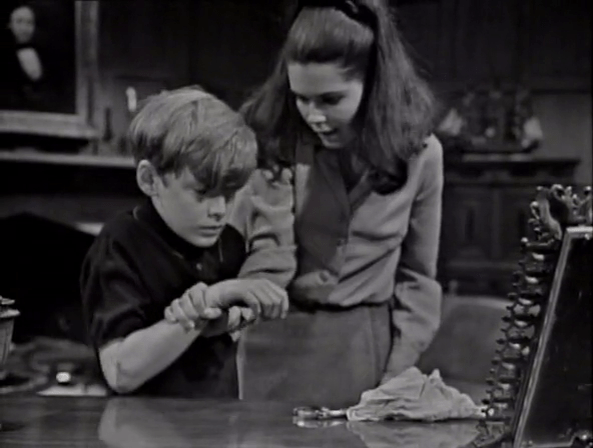
Three cheers, Vicky finally did something important.
His call concluded, Carter declares his intention to question Burke for his side of the story.
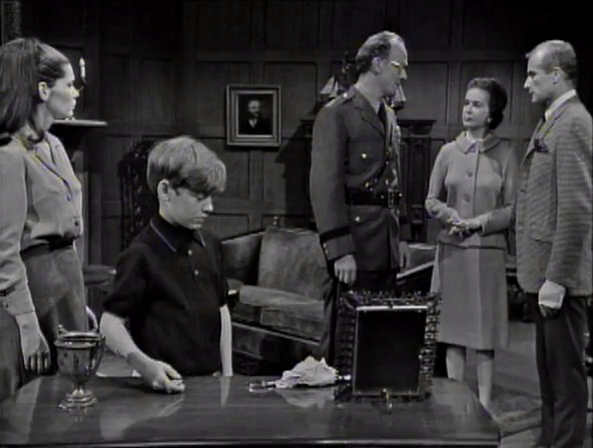
Yes, wild. Like, perhaps, your son who’s always talking about how he hates you and won’t let you send him away and OH LOOK AT THAT
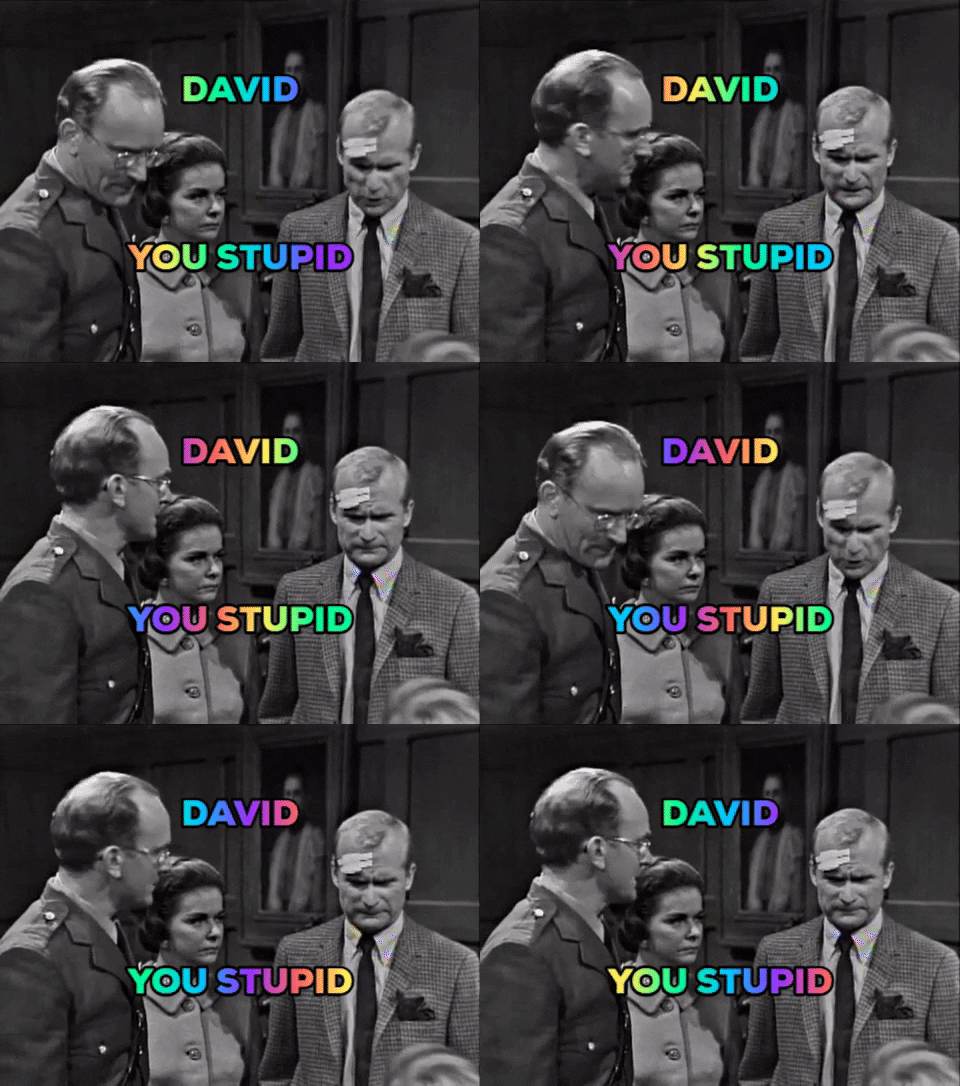
He doesn’t even try to finish that sentence. Just “David, you stupid”, which is probably for the best. We wouldn’t want to sully Carter’s virgin ears.
Carter, in true Art Wallace fashion, proceeds to explain what’s going on without getting it.

For edification, they already knew Burke’s prints would be on the wrench, since Vicky saw him discard it on the bench. So even those prints would not have been conclusive proof of his guilt. What David has done now, is offer an ‘explanation’ for why his prints are on the wrench. Given the lack of computers in forensic science, the Collinsport Constabulary or whatever would have no way of differentiating between David’s prints as made right here in this scene and whatever ones he left at the garage.
And he does. And that’s it. That’s the episode.
WAGON TRAAAAAAAAAAIN…
Wednesday, July 27, 1966
Mississippi becomes the last of the United States to repeal prohibition laws, but the damage had already been done.
An 11-year-old girl named Brenda Sue Brown is beaten to death in a wildly sensationalized case that would remain unsolved for 40 years until her grandfather confessed (on his deathbed!) to collaborating with a man named Thurman Price in the kidnapping. Price would die some years later, awaiting trail.
 Kooks of Collinwood