
Shemp, of Three Stooges fame, once warned that “strange things will happen in this mysterious castle. Yes, there will be strange happenings!”
Victoria Winters has spent a full day in this mysterious castle, and she is aware of all manner of ‘strangeness’.

David, it turns out, may not be entirely soulless after all. He tosses and turns with fitful dreams, rising from the bed as if in a trance to…
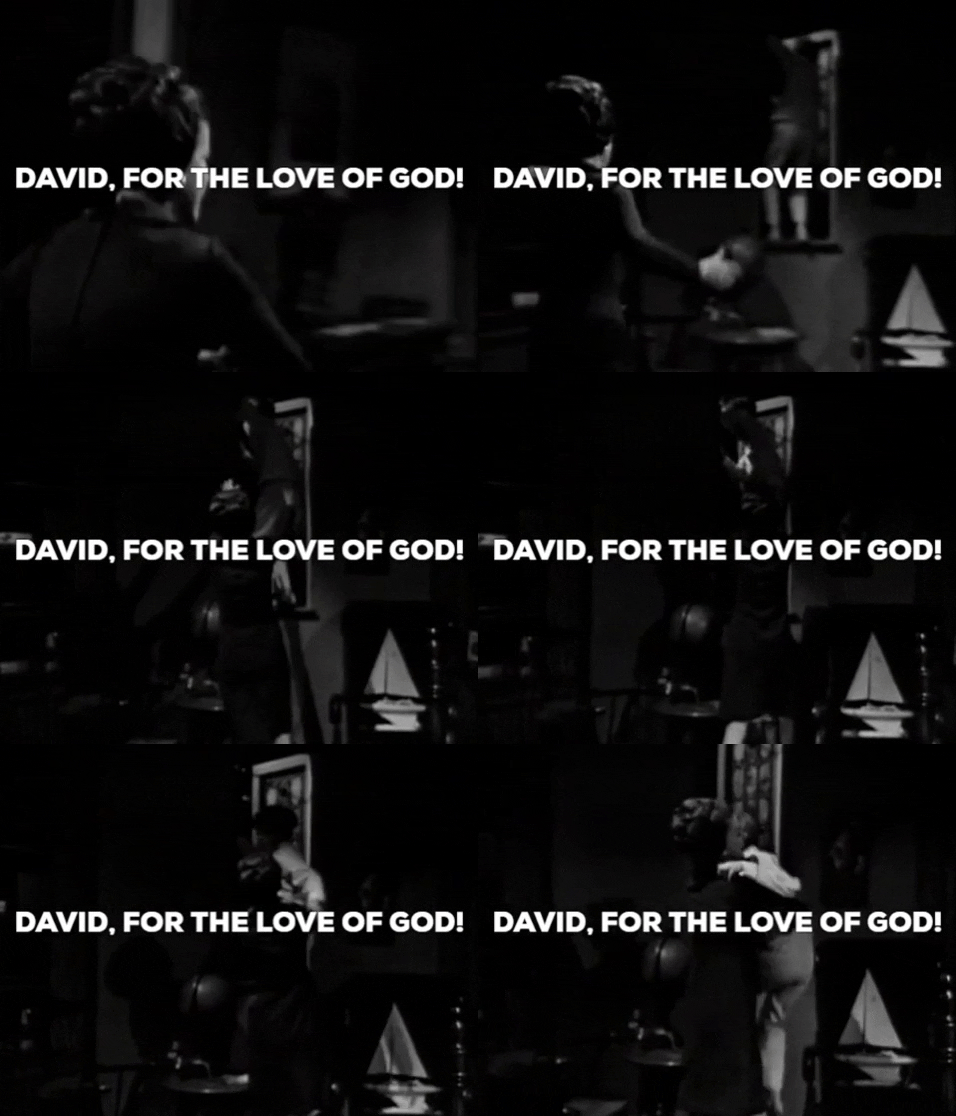
Not gonna lie, this is a fairly metal opening scene, especially given last episode’s insistence on revolving entirely around irregular phone calls.

Okay, so we know what this means. David is wracked, either by guilt, or by some sort of juvenile self-consciousness, over arranging the crash that nearly killed his father. He is so tormented by this guilt that he almost gave himself to those Widows he likes gabbing with so much.
Even though the sea is apparently on Vicky’s side of the house, and also despite the fact that location footage shows David’s window overlooks the road, and not the ocean.
Oh well.
Big deal thing: David is actually talking about his role in the attempted murder. You might think Liz would start asking questions, but it’s only Tuesday.
Anyway: new set!
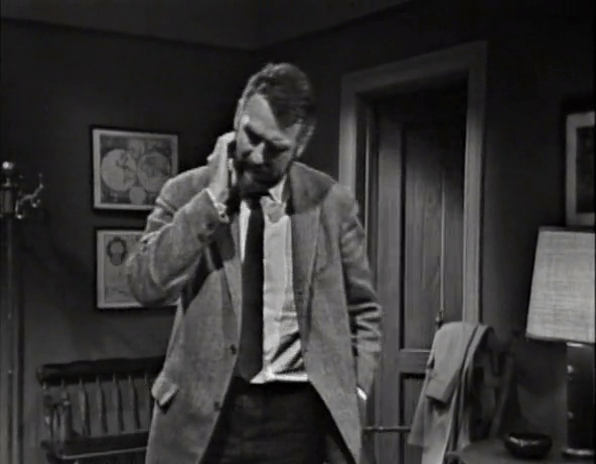
It’s been a while since we’ve seen Bill Malloy, that heartiest of old salts. We were told last time that he was Roger’s guardian angel, discovering the wreck on the side of the road and getting Roger to the doctor. And all this despite Roger being a catty bitch to him for reasons he can barely articulate without forgetting his line.
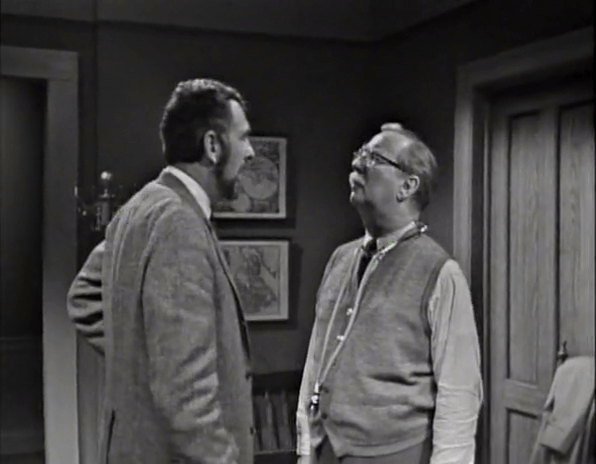
No, that is not an Audio Animatronic from Disney World’s Main Street U.S.A. That is Dr. D. Reeves, the local physician and, by extension, Collins family doctor. Played by the amiable character actor Fred Stewart, he has no idea what’s coming to him.
There is a pervasive stereotype about doctors in the soap opera genre. The image of the suave, sexy stud with the perfect coif and the stethoscope draped over his shoulders in a manner designed to titillate rather than convince is indelible and, yes, has been supported by several decades of medical procedurals and programs that disguise themselves as medical procedurals.
In 1966 alone, five of the 17 daytime soap operas on the air were medical dramas (The Doctors, The Nurses, General Hospital, The Young Marrieds, and fledgling soap Days of Our Lives, which originated as a hospital drama in the vein of GH).
These shows typically revolved around big contemporary hospitals with full staffs of square-jawed men in white coats and nubile women in flimsy caps. The medical procedural had cornered the daytime market. No other subgenre was more common…you had police procedurals, mystery shows, one teen-geared drama that was not long for this world, and whatever the hell Dark Shadows was trying to be.
It is, perhaps, a testament to Dan Curtis’s unwillingness to cave to the trends of other daytime dramas by not bothering to cast a conventional looking soap ‘doctor’. Dr. Reeves, in his genial manner, is more like the fantasy of the small town doctor.
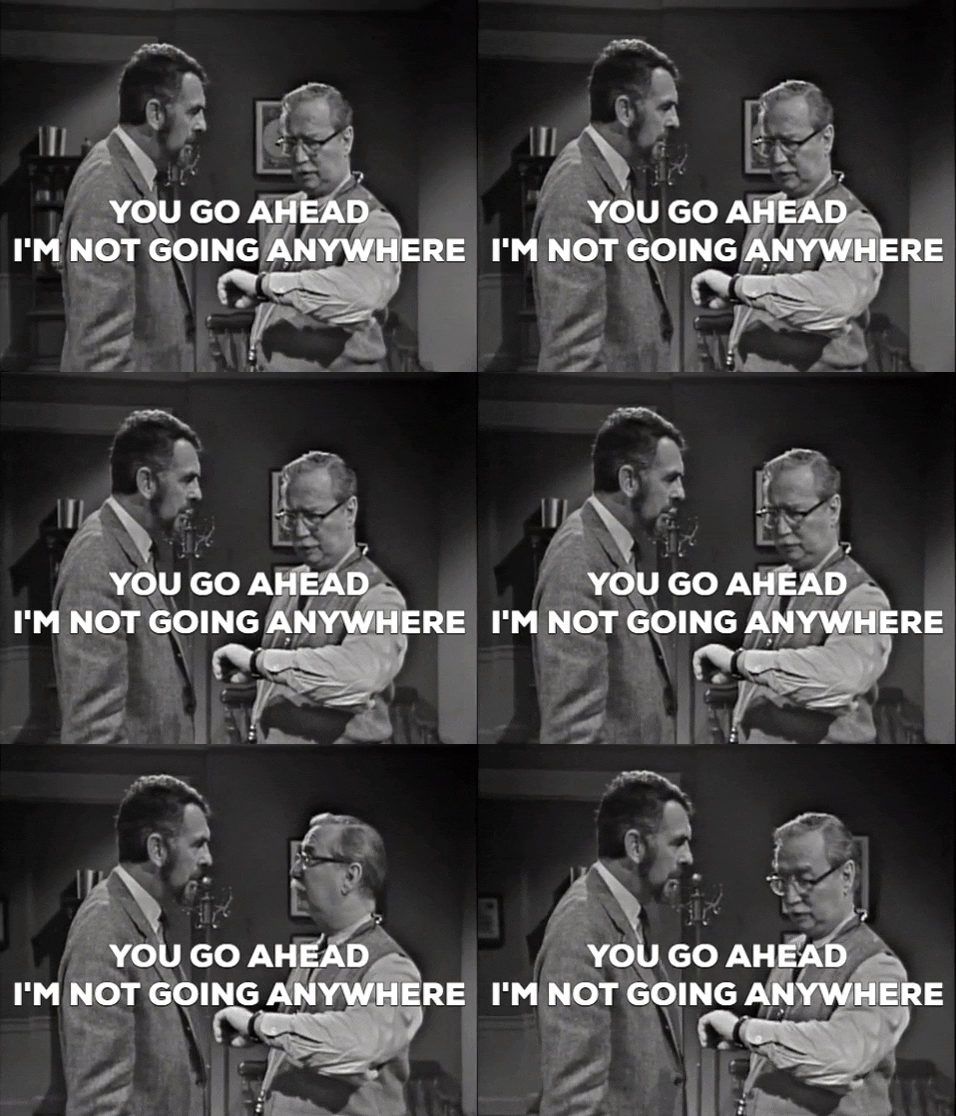
His is an almost intimidating air of pleasantness. Compared to the skeevy, sketchy, creepy attitudes of every other man on the show (with the exceptions of Joe and Malloy), he is a delightful old grandfather. The kind of guy you can’t help but like.
Even that iceberg Roger Collins can’t help but soften in the old gentleman’s presence.
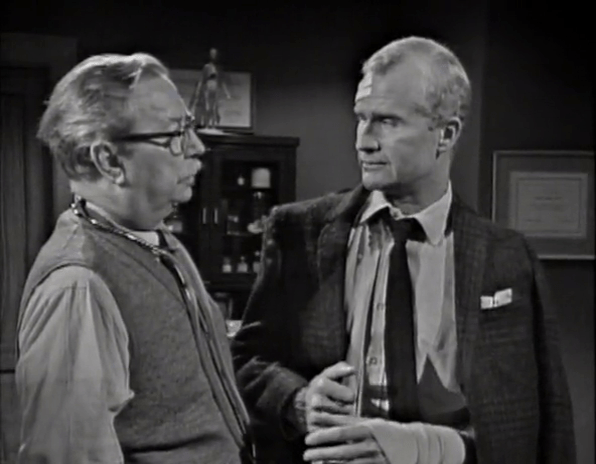
Roger’s car wiped out on the side of the road on a very steep hill. According to Matthew, the car was entirely caved in. The crash was alarming enough to attract immediate attention from the local press. It has been the common consensus of every person who has heard of the crash that Roger should have died.
And yet here he is, with a bandage on his forehead and his arm awkwardly splinted at the same angle mine goes to naturally while I’m waiting at a train platform.
Even the show seems to realize how ridiculous this stretching of the rules is:
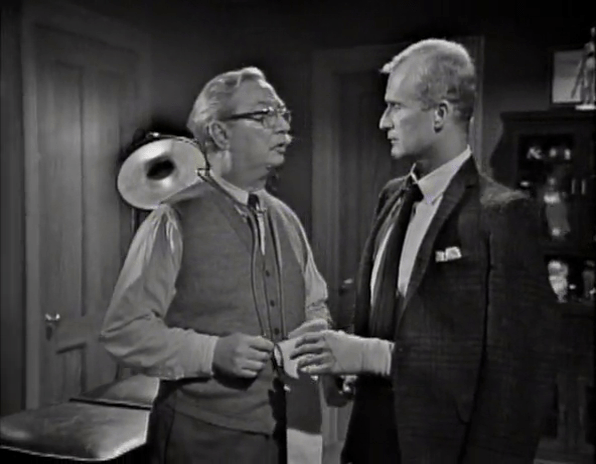
Naturally, it doesn’t do to kill a major character three weeks into your show’s run. And any injury too debilitating puts the character out of the regular orbit of the storyline. So the daytime soap will give the injured individual some superficial bandages and instruct the actor to sort of mince about as if they stepped on a splinter.
Though perhaps it is in character for Roger Collins to act as though his few scrapes and bruises are a death sentence.

Reeves begins asking probing questions as to the nature of the wreck, clearly having a sense that Something Fishy is Going On.
Roger decides to diffuse these suspicions by doing what Dark Shadows characters do best: narrate their experiences. What follows is the greatest moment in the history of acting:
Louis Edmonds doesn’t just flub a line (“100 miles”), he realizes his mistake (“100 MILES!” as if his near-death experience is a cocktail party joke), hastily moves to correct it (“It seemed like 100 miles!”), accompanied with an assist from Fred Stewart (“AH!” as if he’d just pronounced the greatest wisdom of all sages), and then moves on (“100 feet from the bottom of the hill…”) as if nothing happened.
Such is the Art of Louie Edmonds. Nowadays when an actor flubs their line on a soap, you can expect some incoherent dithering, some stammering, maybe a flustered glance away from the camera before the co-star bails their scene partner out.
But on Dark Shadows, populated as it is with legit THEATER people, every mistake is a work of art, sometimes more than what made it into the script.
Reeves comments that it was a good thing Malloy was walking up the hill.

So it comes out that Reeves treated the nameless schlub that died during that whole manslaughter thing. Roger’s reaction is very measured.

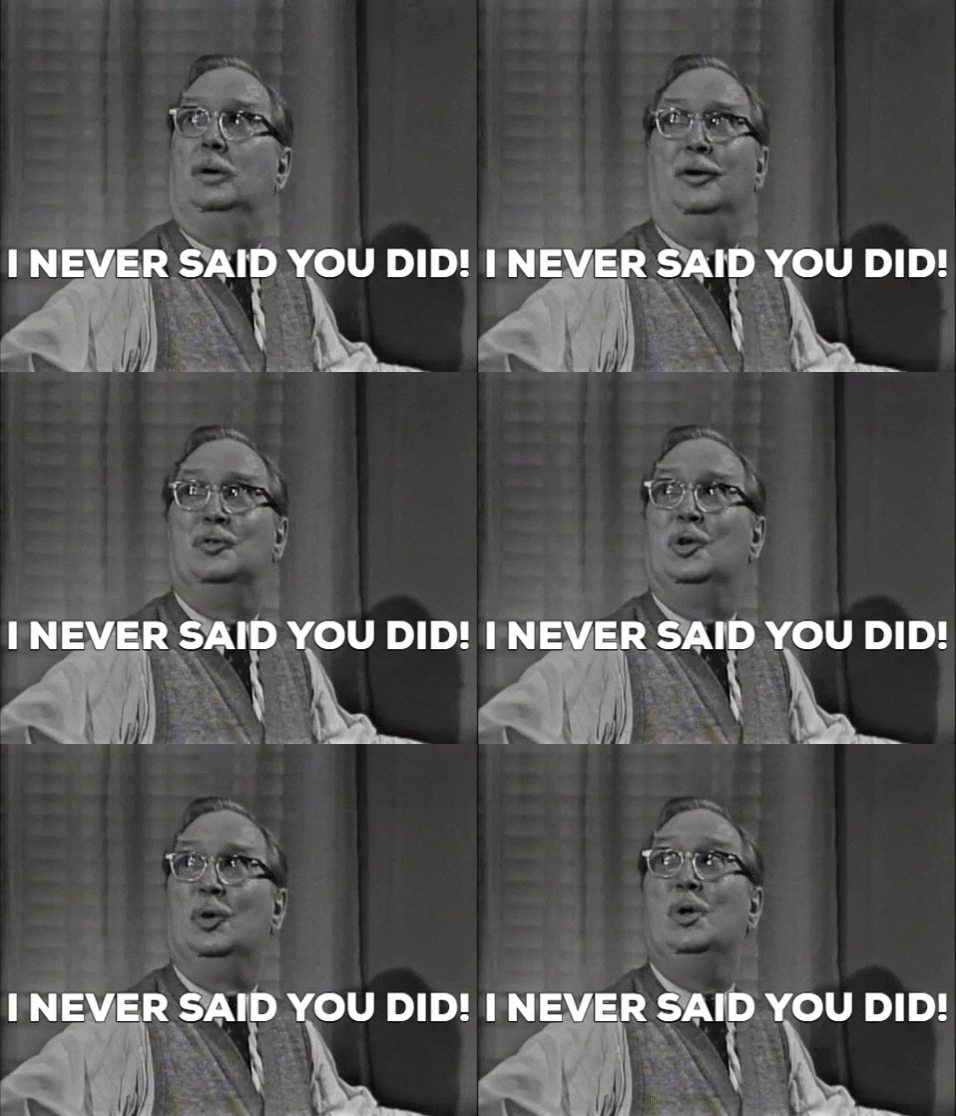
It’s actually kind of shocking Roger hasn’t been implicated in any way in ten years given his strategy when confronted, time after time, is to loudly bluster that he never did anything, not at all, no sir.

It turns out David’s window has the same spontaneous opening powers as Vicky’s.
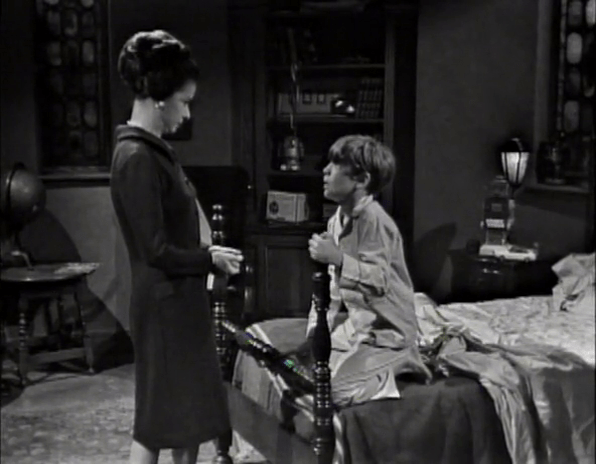
What a charitable way to respond to a child who nearly killed himself.
David Henesy is here charged with a fairly tantamount acting challenge: to play levels of guilt and fear in a child who has done a horrible thing. He more than rises to the challenge in a manner that, to put it kindly, is unlikely to be replicated by the children of soap operas of today.
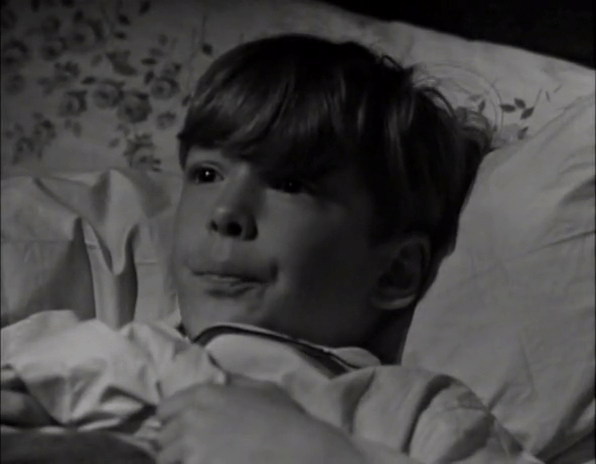
Alright, he’s precious then too.
Like many children in these wee hours between sleeping and waking, David has a litany of annoying questions with which to pester Aunt Elizabeth: most particularly about whether he named the man he killed before trying to jump out the window.

Perhaps sensing that David won’t rest until he flat-out admits to attempted murder, Liz suggests they wait downstairs for Roger to return from the war.
Elsewhere, Bill Malloy has a pocket watch.
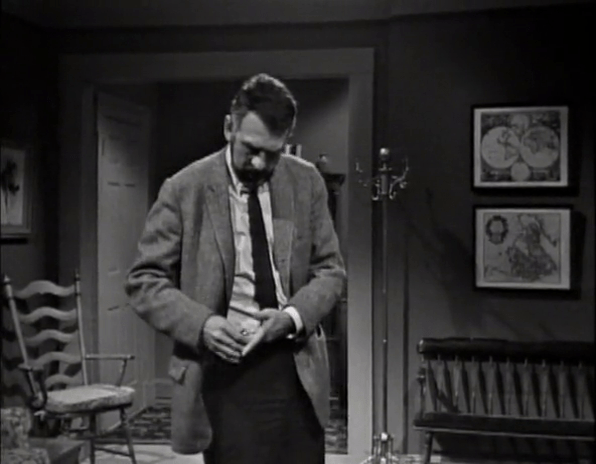
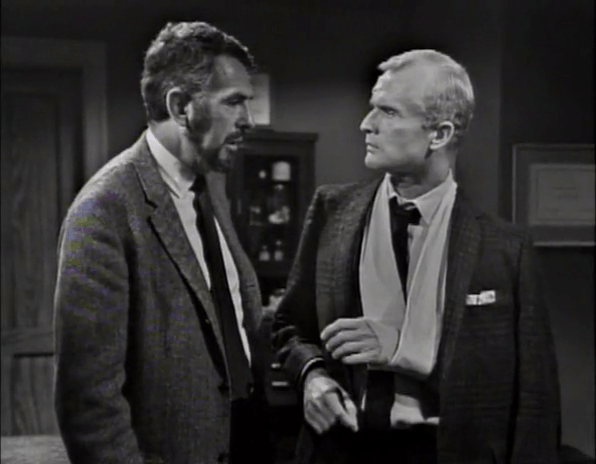
10 to 1, Reeves’s quip wasn’t in the script.
Malloy, it turns out, absconded to the wreck site to have a closer look at things, things which we will soon learn in ponderous detail. But these things are not meant for the venerable Reeves’s ears.

Reeves is canny enough to be aware that the characters sharing this soap opera world with him have the soap operatic tendency to speak in riddles, talk around things, and generally keep secrets. What is obvious to us in the audience is obvious to him as well, and he notes it with a charming, almost Edwardian affectation that puts him apart and yet at the same time makes him work in the world around him.
Of course Collinsport has a cutesy, nosy old-time doctor! It’s a tiny town that the modern world has left behind. Dr. Reeves is a relic of a long ago age, an age of Main Streets and family doctors and neighbors waving to each other across fences. He is the Disney bit of Small Town Americana, appearing to oppose the darker, Lovecraftian Small Town America that Collinsport wants to be, that we are perhaps led to expect when we tune in every day.
Collinsport never truly fits into either camp, though. Maggie is all American, but there is nothing of Norman Rockwell in the House on Widow’s Hill. Nor do any of the actors parading along the streets in the location footage need to worry about encountering any Dunwich Horrors.
But here, in Reeves’s office, we get an idea of what kind of place Collinsport might be. It’s easy to imagine the kind of community Reeves might exist in. And then, once accepted, it becomes easy to contrast it with the wild dancing at the Blue Whale, the frequently empty (I know extras are expensive, shut up) wholesome diner, the air of loneliness and despair that hangs over every room at Collinwood.
Reeves is small town America…and small town America is on its way out. Reeves’s frustration, however jokingly worded, is a comment on how the people have changed, the town has changed…America has changed.
Reeves is a relic. And soon, he’ll be gone as neatly as the world he represents.
Not that there aren’t more…er…logical reasons for that. But I digress.

Once left alone by this delightful guest star, Malloy gets down to business.
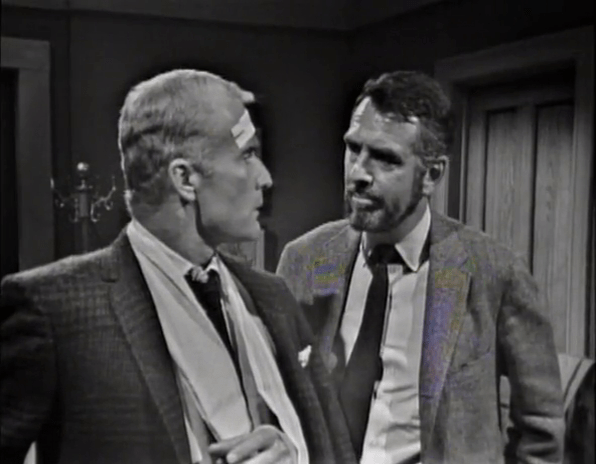
Kindly unclench. It’s suppository time.

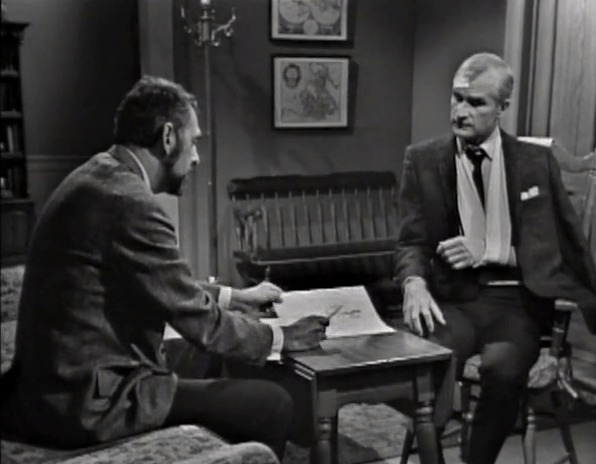
Malloy asks Roger what he knows about cars, and if you needed more convincing of Roger’s sexuality…
Icon.
Malloy identifies a piece missing from the brake valve on the Rogermobile. The bleeder valve, once removed…
Well, why should I explain it, when our friend brought a diagram:
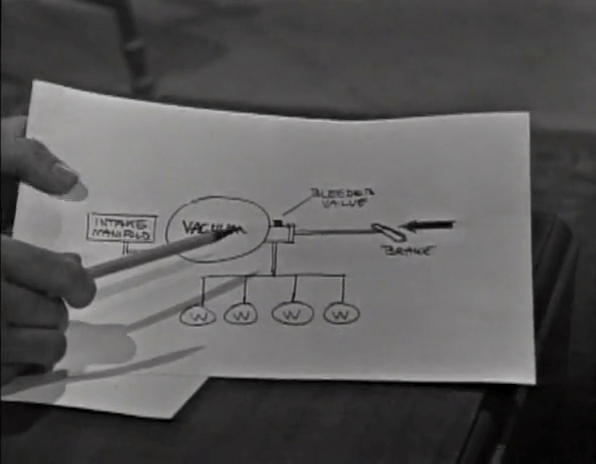
So, the valve, once removed, causes a leak of hydraulic fluid that eventually stops the brakes from operating. That’s all fine and dandy, and it’s nice that Art Wallace did his research, but please consider that this soap opera just described a clean and relatively easy method of murder, complete with pictures, to an audience of housewives.
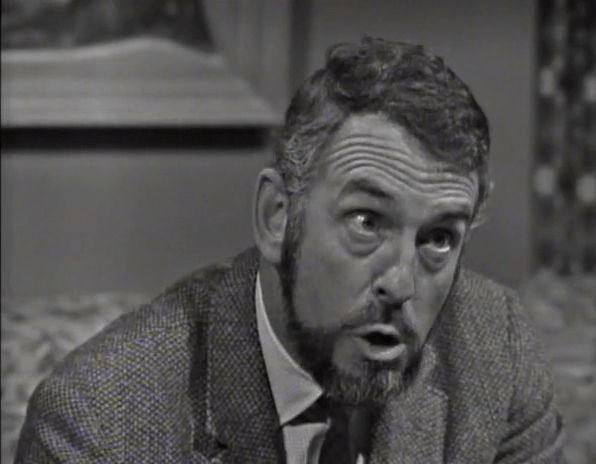
Roger is sufficiently convinced of the murder attempt, and immediately (we might say, naturally) concludes Burke is responsible. Malloy urges caution, but Roger won’t be swayed.
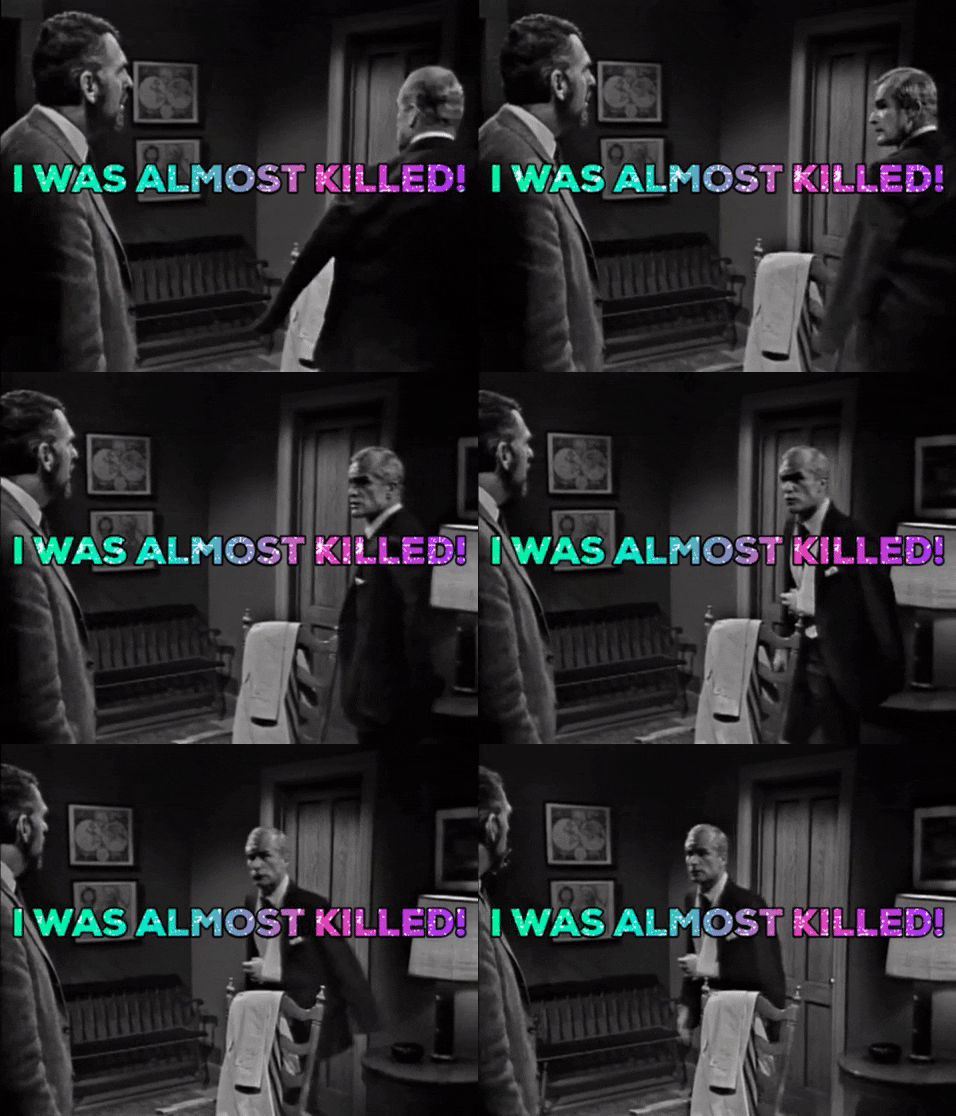
This delightful conversation is interrupted by Reeves, who shoos the men out as he has a baby to deliver in town. Do you think it’s worth it?
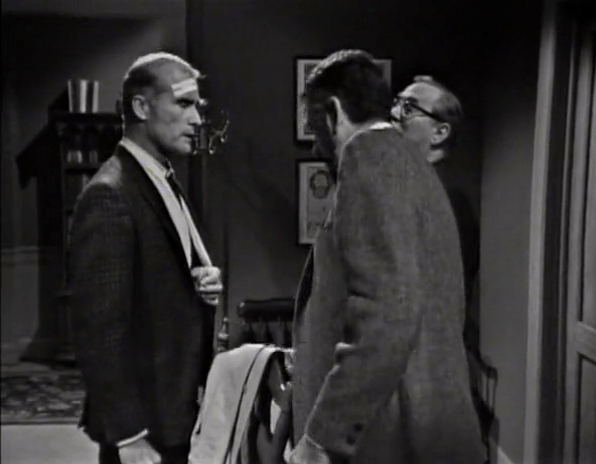
Not sure whether to praise Art Wallace’s script or Louis Edmonds’s ad libbing, but at this point, I think you know who I’m leaning toward.
With that, Reeves ushers the men out, and walks out of our lives.
Meanwhile, Liz is giving David Collins family history, but don’t be too excited: nothing about Isaac matters.
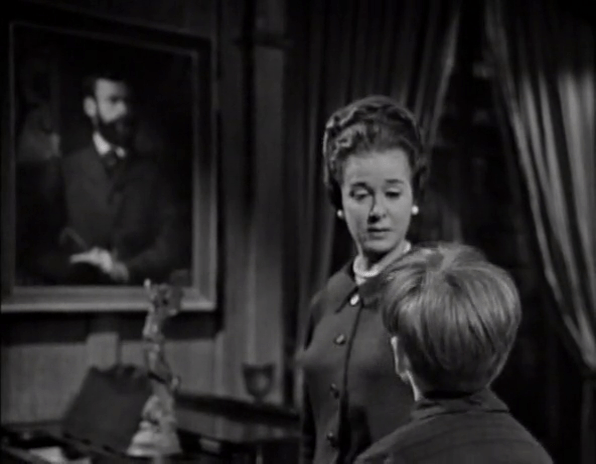
Isaac landed in Frenchman’s Bay in 1690 and set about founding Collinsport as the seat of his fishing empire which endures to this day. Liz’s favorite detail?
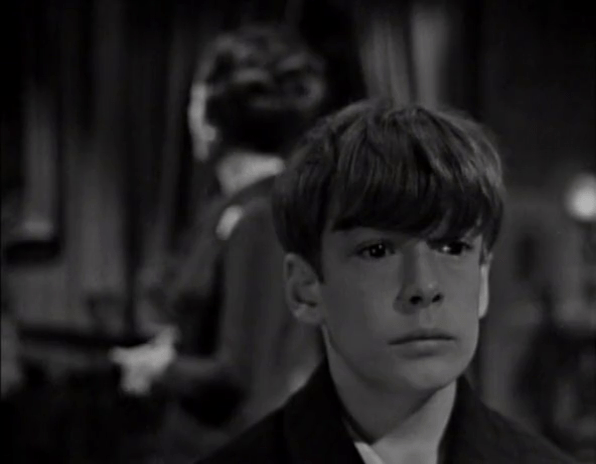
Because every New Yorker is intimately familiar with the James II.
As you might expect from any child being lectured about the 17th century, David’s mind is elsewhere: specifically, as to whether his regrettably still living father has come back yet.
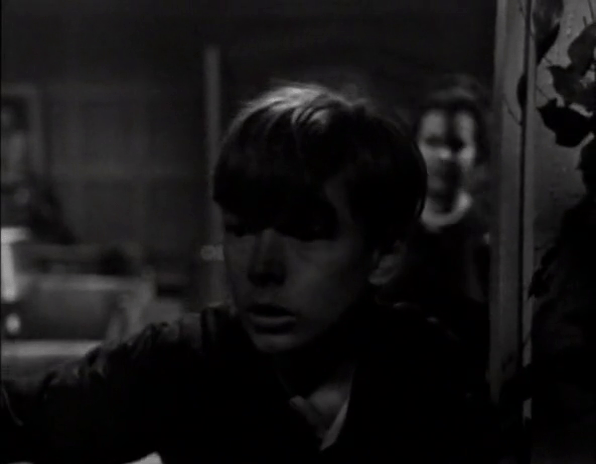
But Columbo, mercifully, isn’t here. Yes, I am sending mixed signals. I just don’t like Columbo.

There are many ways you could respond to this. Elizabeth chooses “What a strange question” in the same disaffected tone she might’ve used if he’d asked if the moon was made of cheese.
She seems to think David is reacting to his father’s accident and, well, he is, but not like that.
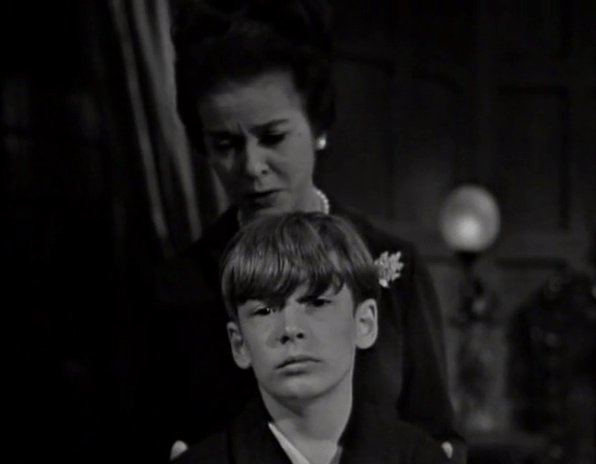
You might think that’s ineffectual garbage, but I suddenly want Liz Stoddard to adopt me.
Roger gets back, and David immediately runs away yelling that he doesn’t want to see him, which you think might be added to the list of suspicious behavior, but I get the impression that happens fairly often.
The boys return.
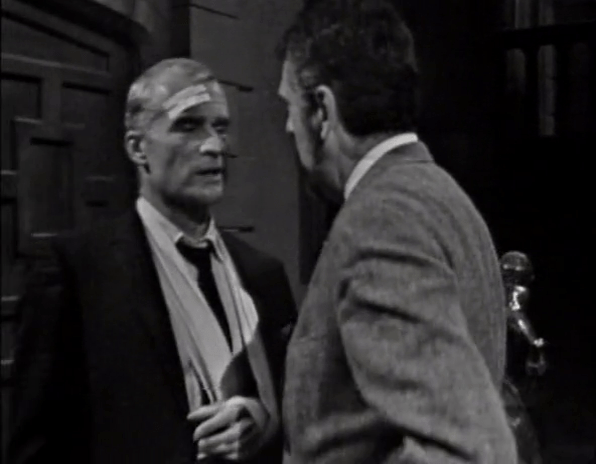
Would you want your relations to know about your missing suppository?
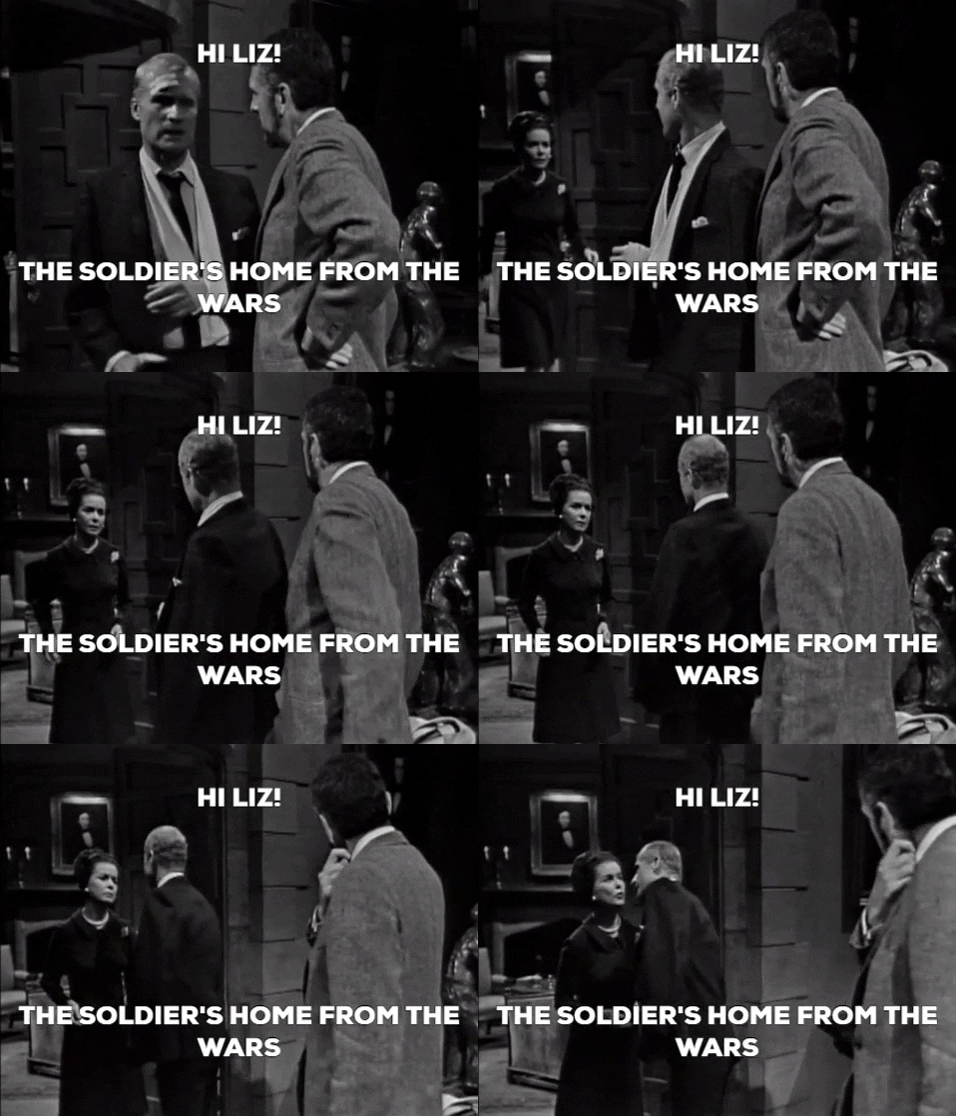
Roger immediately decides the best plan to proceed is to get drunk and, maybe deciding he’s suffered enough, Liz allows it.
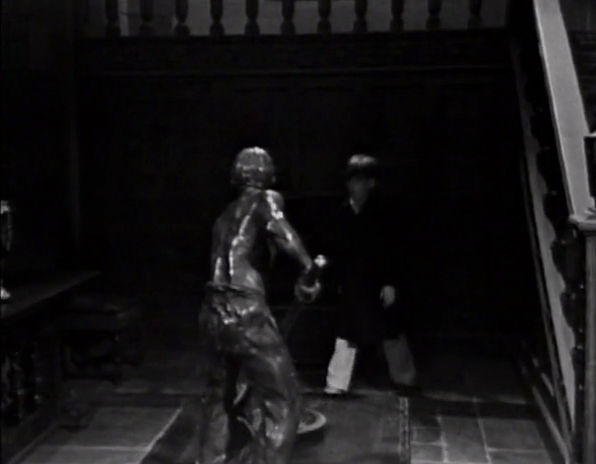
Roger has, for some reason, decided not to tell Liz anything about the valve until he has ‘proof’, as if Elizabeth wasn’t the one that warned him about doing anything stupid in the first place.

Same.
Liz, however, won’t be sated and, in a remarkable example of forthrightness for this program, tells Roger about Vicky’s encounter with Burke at the garage.
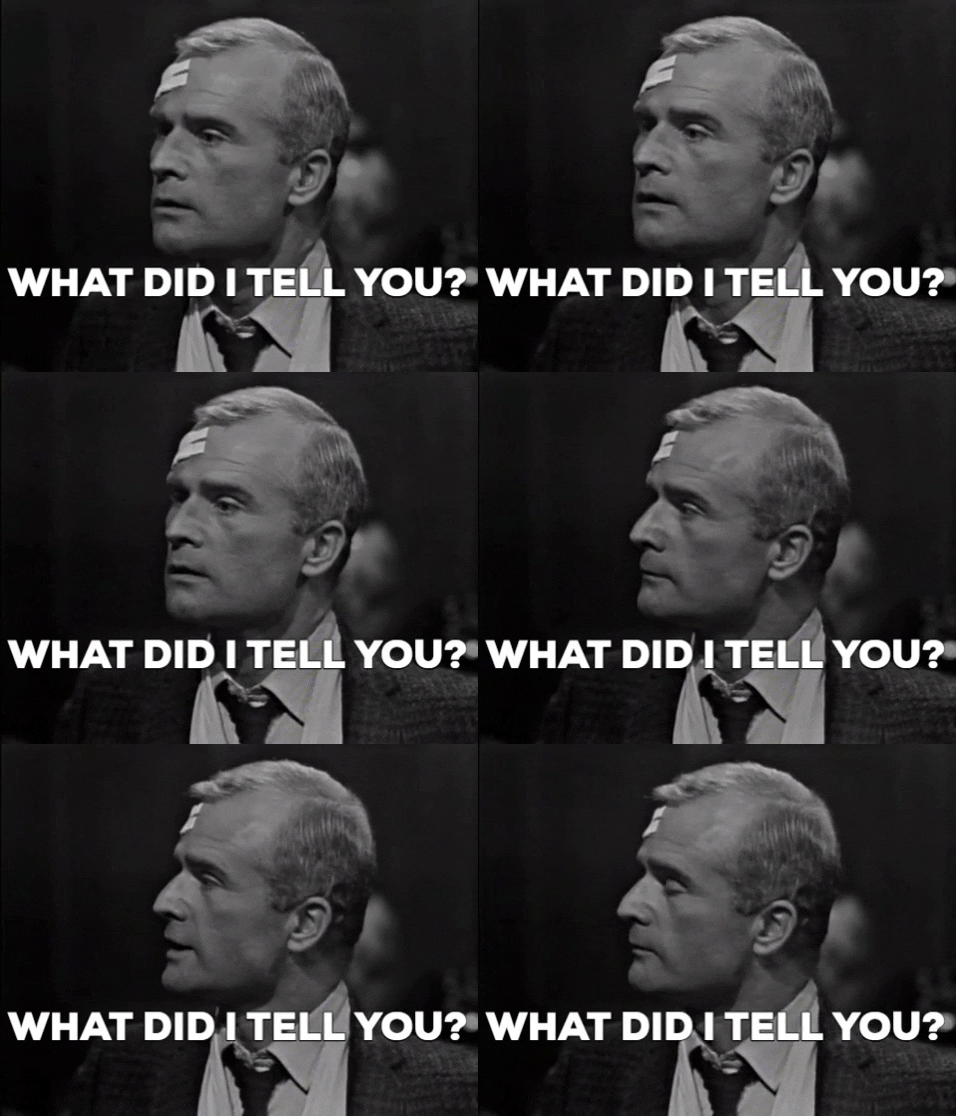
Malloy advises against vigilante justice.

Yeah. A constable. In America. In 1966.
I’ve already talked your ear off about the doctor, but just wait till old Constable Carter crawls out of the time machine.
In a repeat performance, Roger seems raring to haul Vicky out of bed, though he assures Liz he won’t actually do anything that insane.
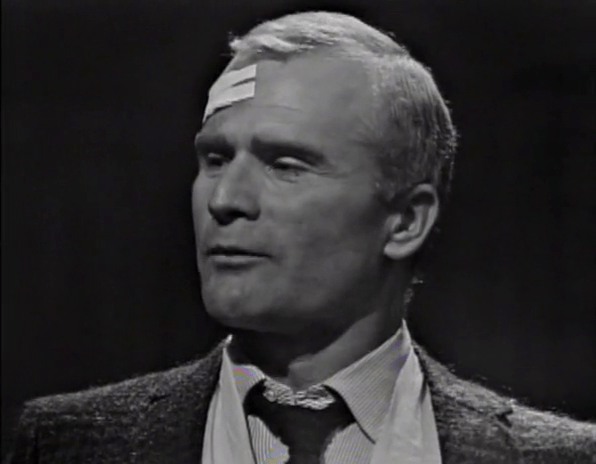
Oh, thank Christ.
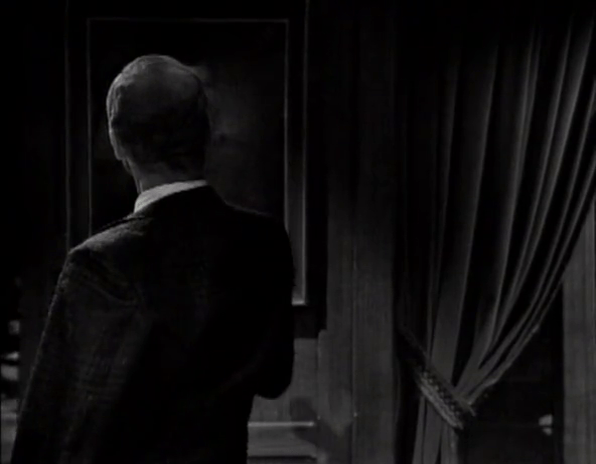
Plotting with the portraits, as one does.
Malloy comes back to bid his farewell. Liz has asked him to find Carolyn in town, presumably because Frank Schofield needs to make up for not appearing in any of last week’s episodes. He asks if Roger will just have a drink and go to bed.
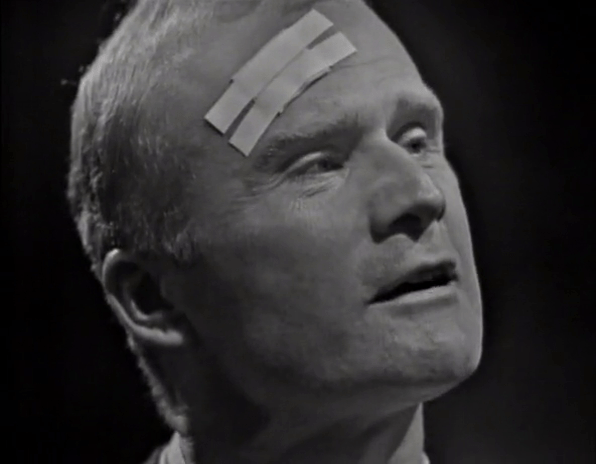
Ah.
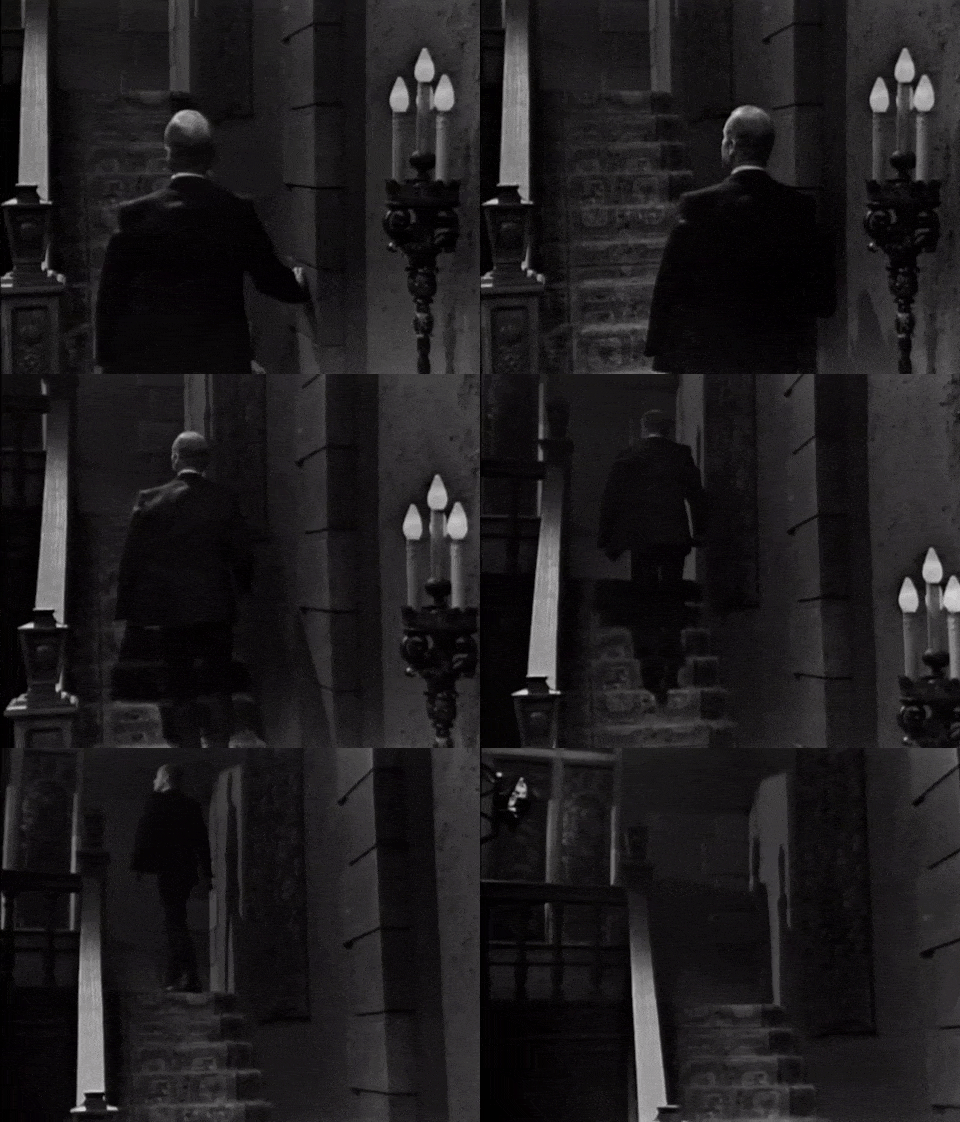
Electric Boogaloo.
It’s This Guy from That Thing!
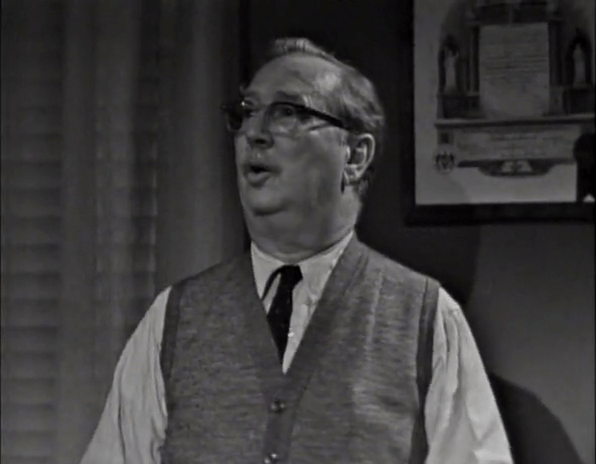
The amiable Fred Stewart may not have as decorated a resume as Elizabeth Wilson, but his filmography is still sterling, especially given he was farther along in his career by the time he made his way to Collinsport.
His first soap opera role was on Love of Life, which you may recall was also home to Mrs. Mitchell’s Jane Rose. He was a supporter in the first year of the series, 1951, and possibly shared scenes with Rose’s Sarah Dale, though early episodes of any soap (exempting this one…) are hard to come by.
Throughout the early 50s, he was a fixture in the ‘plays of the week’ dramas, early T.V movies, such as Tales of Tomorrow, The Goodyear Playhouse, The Gulf Playhouse, Repertory Theatre and Producers Showcase.
As with George Mitchell, he clocked an appearance on crime drama Naked City in the early 60s. He also clocked a few roles on the seminal legal drama The Defenders, appearing in three episodes, including one named “The Star Spangled Ghetto” in 1963.
His second soap role was on medical drama The Doctors on NBC. Unlike his Love of Life role, it was a bit part.
Stewart’s shiniest credit comes a year after his departure from Shadows, as Dr. Stuart (heh) on the groundbreaking New Hollywood picture In the Heat of the Night, remembered now as one of the seminal films of the late 60s.
Stewart went on acting until his death in late 1970. As with Mitchell, he was one of the first Dark Shadows actors to pass away. His last film, A New Leaf was released after his death, in 1971.
This Day in History- Tuesday, July 19, 1966
Michael Collins (should’ve noted last time: no relation) spacewalks outside the Gemini 10 capsule to take pictures of the capsule’s sunrise. Really puts this soap opera stuff in perspective.
In the World Cup, defending champion Brazil is eliminated by Portugal. Elsewhere, my homeland Italia was disgraced by North Korea in its first World Cup appearance. Seriously. North Korea. Perche?
 Kooks of Collinwood