
It took four episodes but we’re finally at the bright side of morning! Victoria’s monologue informs us of the ‘tension’ that fills the old house, and I only note this because that ends up becoming her favorite word in these things.
Victoria notes that the last four episodes, i.e. ‘last night’ was the most terrifying evening of her life. I’m not gonna dispute that, but she has no idea.
But that doesn’t matter, because…
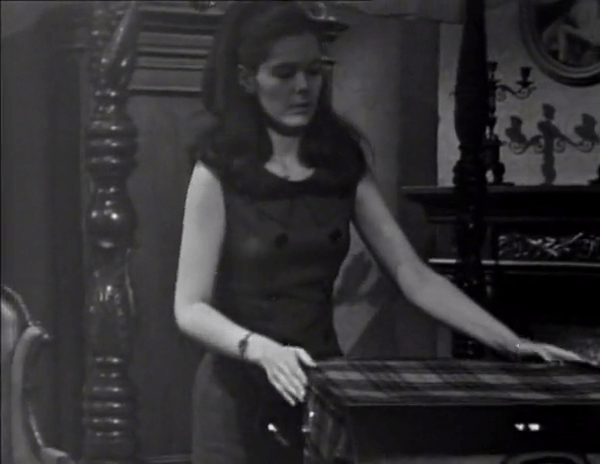
When you have to write five of these a week, you end up running short on ideas pretty quick.
But it’s plain to see Vicky wasn’t just whistling Dixie when she told Roger she was thinking of bugging off. But to leave Collinwood would mean abandoning her quest! Her search for “Me. To finding me.” Whatever happened to “no turning back?”
These earlier episodes serve up a character study of Victoria. She is the quintessential Gothic heroine: the young woman in the dark house, the one plucky personality surrounded by grimness and despair, always threatening to bear down on her…
We empathize with characters like this because on a primal level, we fear the loss of innocence. It’s why we cheer when the final girl stabs Jason Voorhees. Sure, we know he’ll come back for next time, but it’s something to know that there are some things…some people Jason can’t break.
Collinwood has yet to offer a masked slasher with a machete, but Victoria has been thrown nothing but discouragement, confrontation, and vitriol from everybody she’s met, even the ‘friendlier’ faces like Maggie and Carolyn.
So our arc for this episode is plain to see: will Vicky stay or will she go?
Carolyn, for her part, hopes she stays.
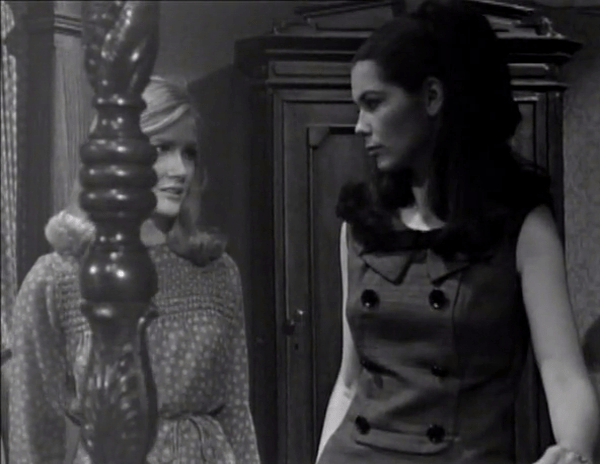
Fine outrage from somebody who suggested Vicky leave for her own good two episodes ago.
This episode also does a lot to reinforce the contrast between Vicky and Carolyn: Victoria can choose to go whenever she likes, yet Carolyn feels she herself is a prisoner of Collinwood. When Vicky suggests Carolyn visit her in New York sometime…
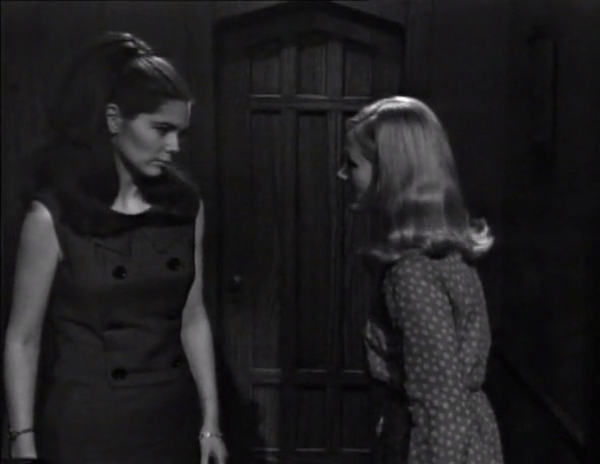
Carolyn doesn’t even want to entertain the thought of leaving the great house on Widow’s Hill. But, let me tell you, she’s full of platitudes and advice for Vicky. Don’t you just love friends like that?
Carolyn points out (excitedly!) that Vicky hasn’t even met David yet, as if forgetting her foreboding warning about David, also two episodes ago. But, either way, the point is moot because, as Vicky informs her…
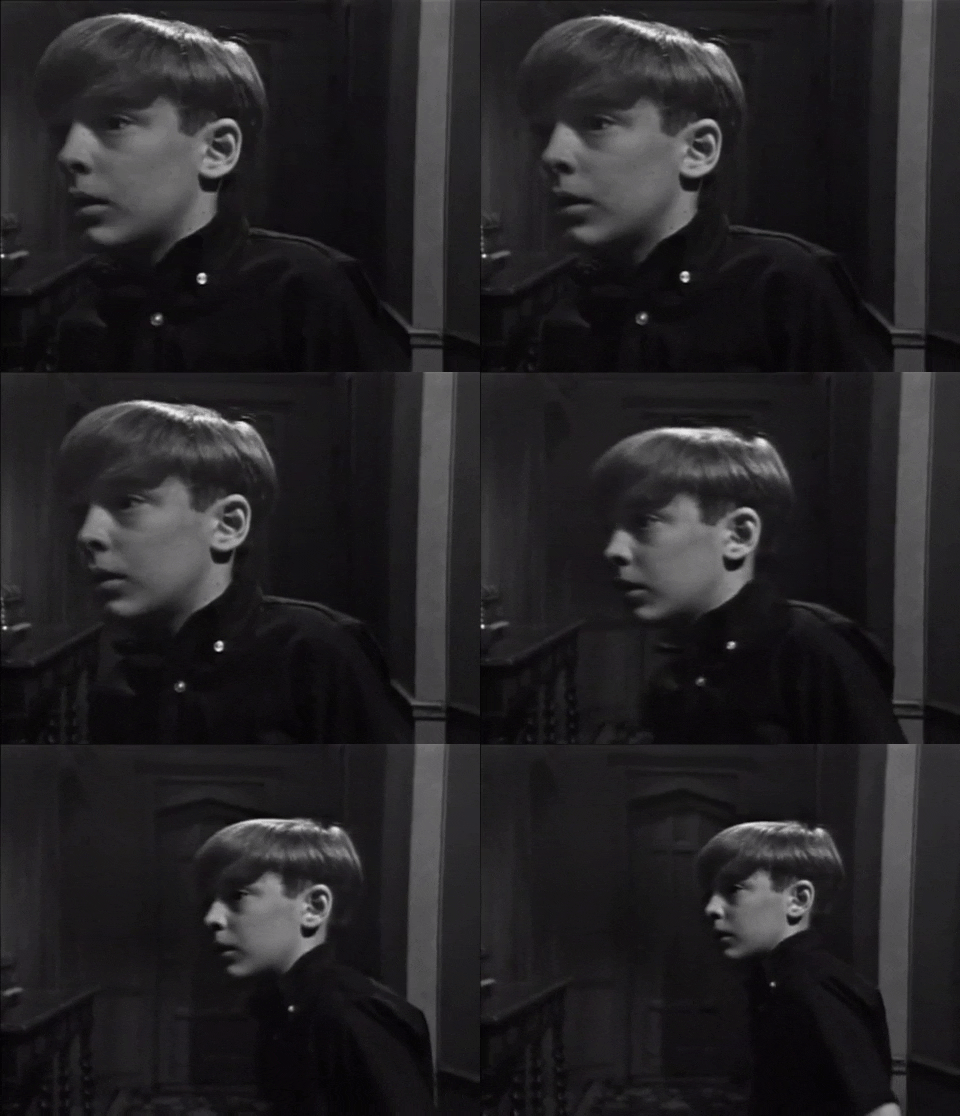
The creepy child is a hallmark of the horror genre. It endures in so many mediums and across so many decades for the same reason as scary clowns and gore fests set at Christmastime. Things that are supposed to be ‘innocent’ or at least benign that, inexplicably, act malevolently or have generally sinister connotations are, by default, assumed to be scary.
This backfires…a lot. See the flower girl from 2009 mini-series Harper’s Island.
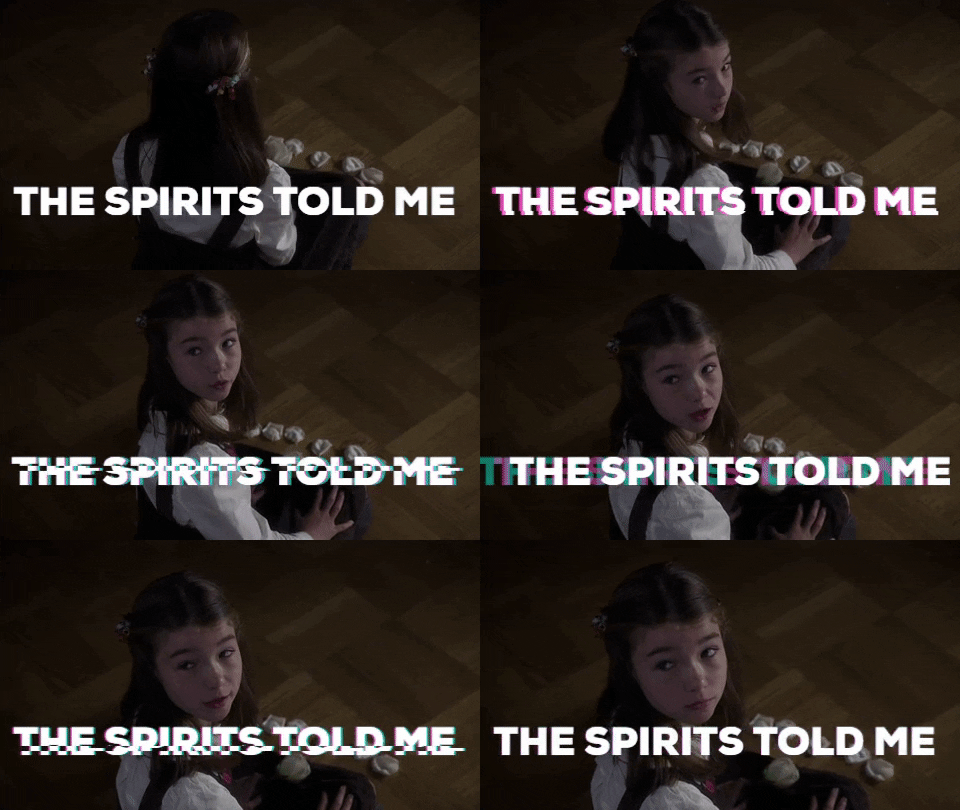
But little David Collins is a textbook example of a creepy child done right. It isn’t enough to credit the writing (there are as many questionable incidents in David’s script as in those of the adults); David Henesy makes this character work. And this is a damn good thing because otherwise the next 30-or-so episodes would be torture.
So David breaks into Victoria’s room, goes dangerously close to the window and, apropos of nothing…
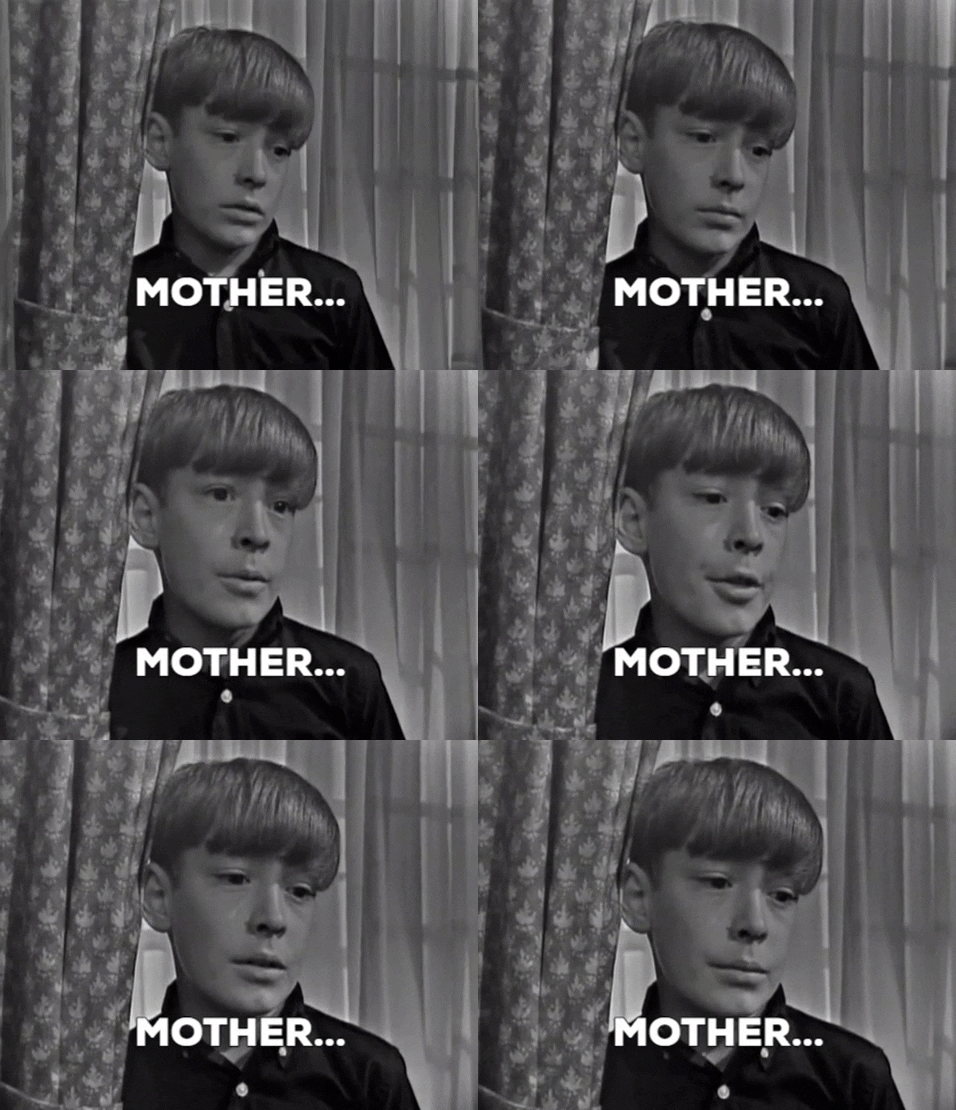
Laying it on a little thick, aren’t we?
Vicky and Carolyn are having breakfast and it’s really something how Carolyn doesn’t even pretend to look interested as Vicky describes her psychopathic cousin.
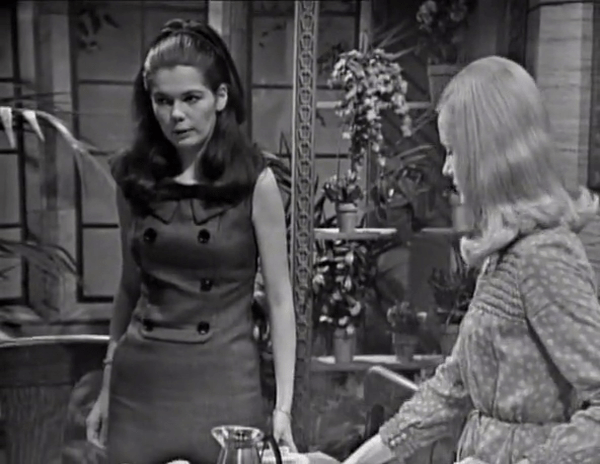
Also, Vicky describes David as a ‘small white form’, which makes him sound like a goblin.
Victoria also mentions the sobbing she heard last night.
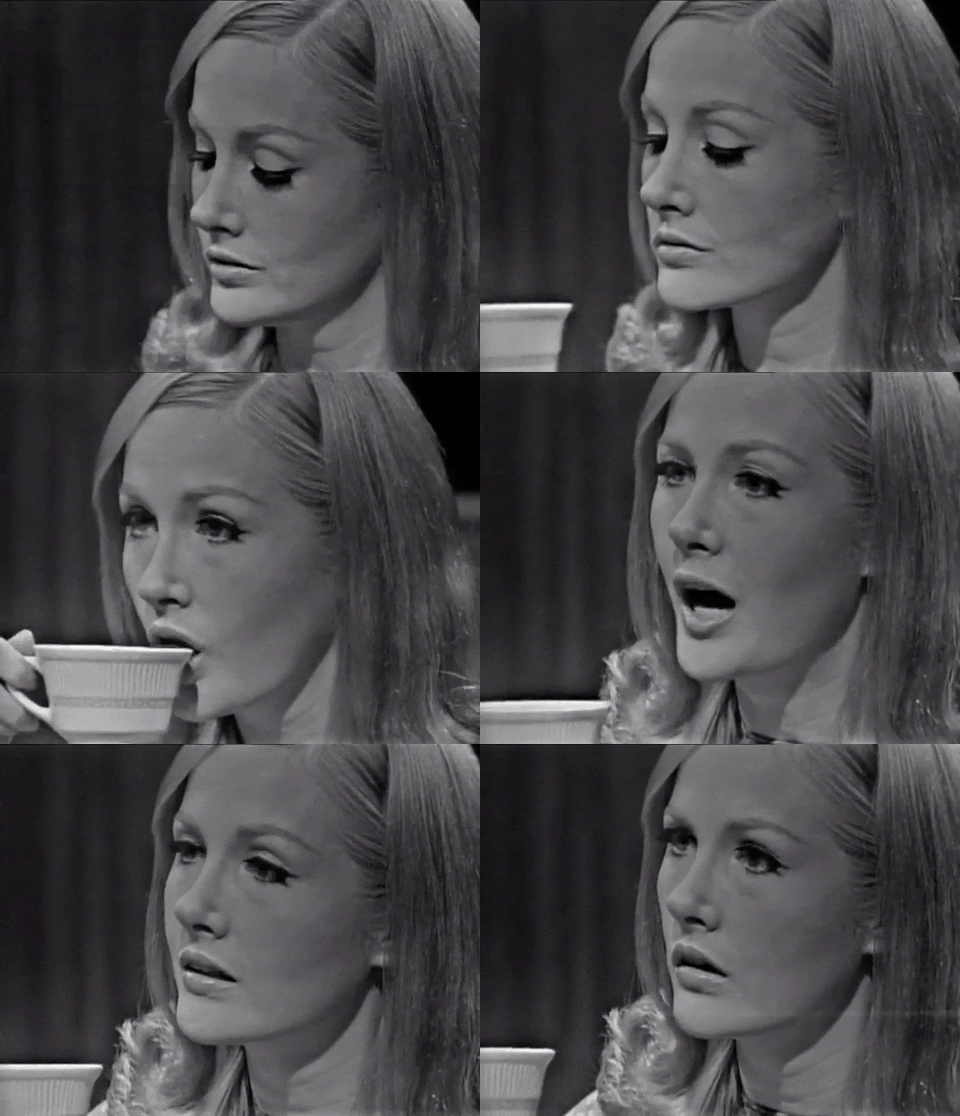
More staple horror stuff. The weird supernatural phenomenon encountered by the protagonist is completely ignored by the other characters. This is done to create a feeling of isolation. If even the heroine’s friends don’t believe her stories of the evil lurking beneath the surface of their world, who can she possibly turn to?
Well, I guess there’s this guy.

How cute. You’d never think he got drunk and suggested he wanted to give the nanny painful pleasure last night.
Speaking of inappropriate: Roger plants a kiss on Carolyn’s cheek.
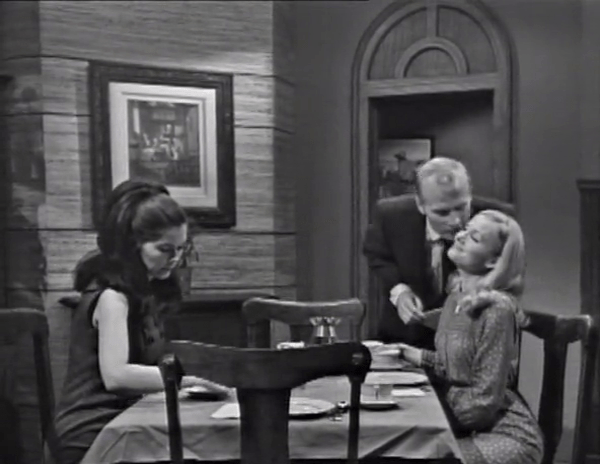
I like how Victoria just averts her eyes, the way you would if you encountered two people making love in a subway car.
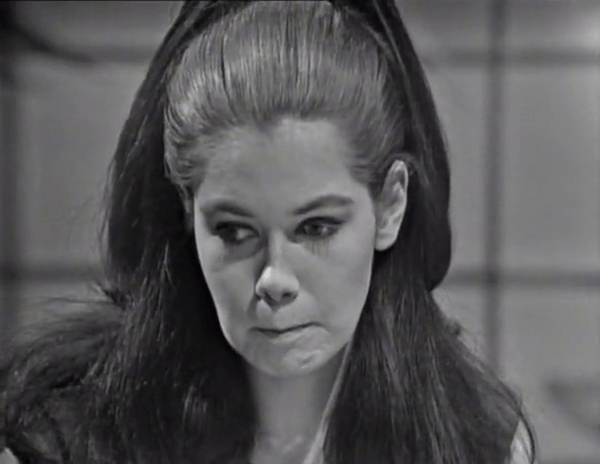
But it’s cool, because Roger has two things for her: a letter from home and an apology!


Pretty sure this was meant to be foreshadowing for something that ended up never happening, just like Vicky and Roger’s first meeting on that cliff. Oh well, more for that later, or simply check out Dark Shadows From the Beginning which casts a far more analytical eye on all this than I do.
As Roger goes, Victoria asks him if he heard the sobbing, and we get our regular reminder that Roger Collins is Bad at Lying.
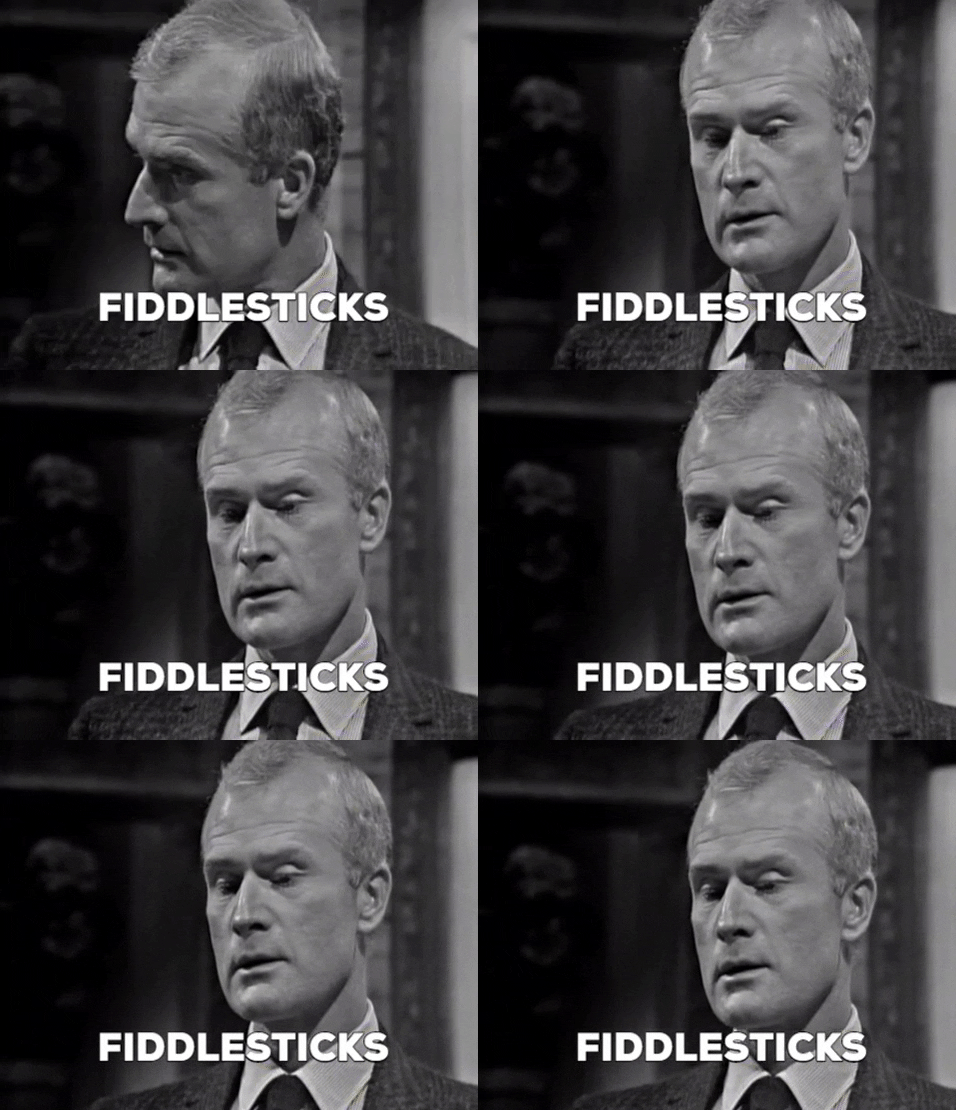
The sane person would conclude that Roger is covering up the fact that he was crying, possibly while burning photographs of Burke Devlin. In any event, he claims Vicky was just dreaming and the matter rests there.
For a very long while.
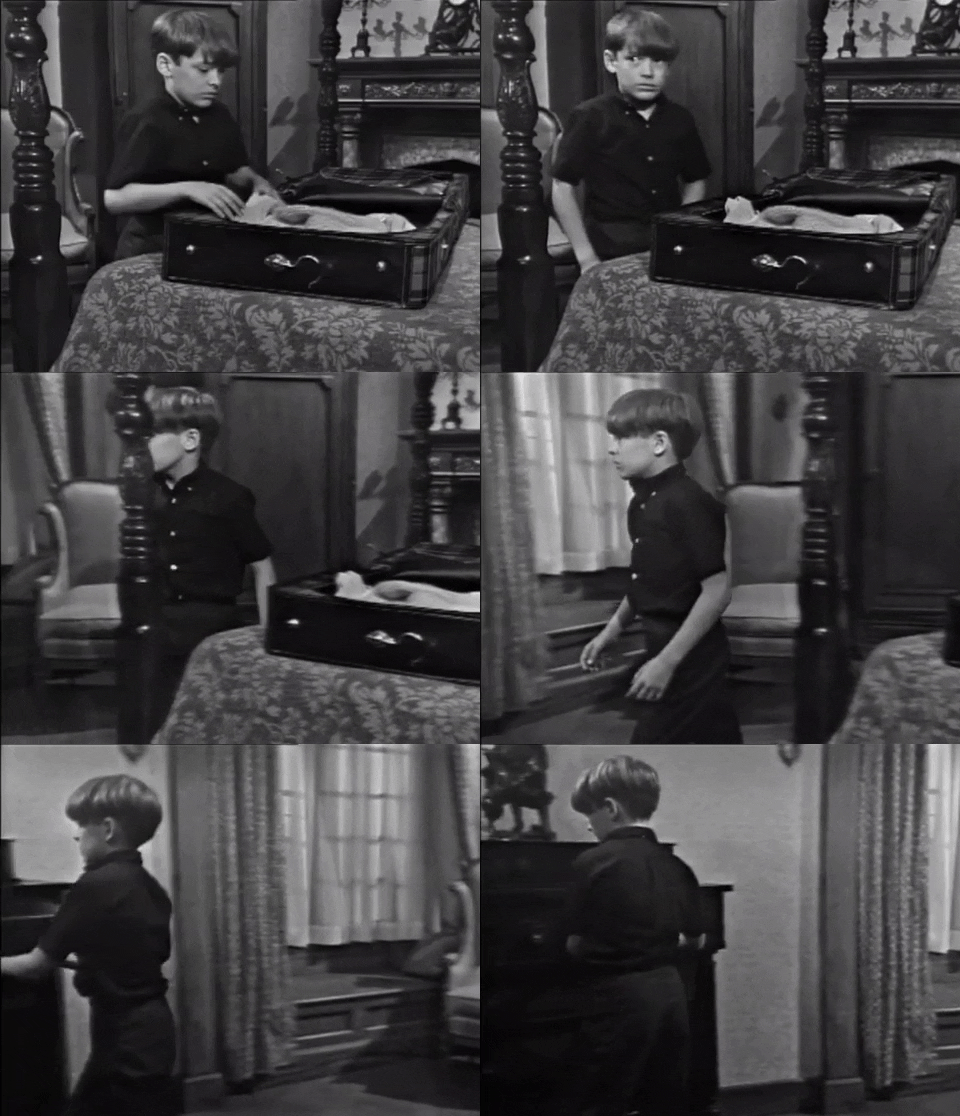
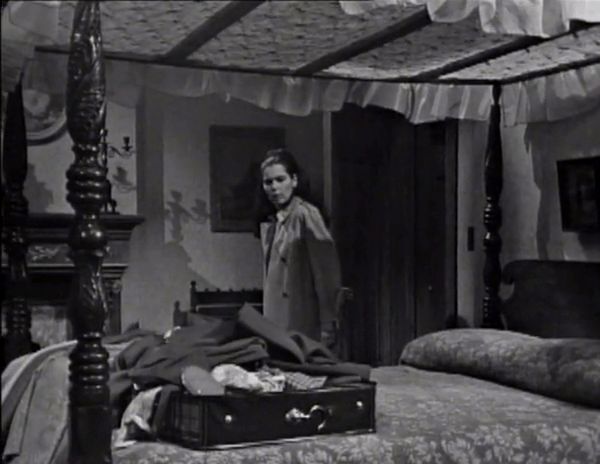
So David is packing Vicky’s bag.
While Vicky reads the letter from the foundling home, all while reaffirming her desire to leave. Carolyn is not pleased.
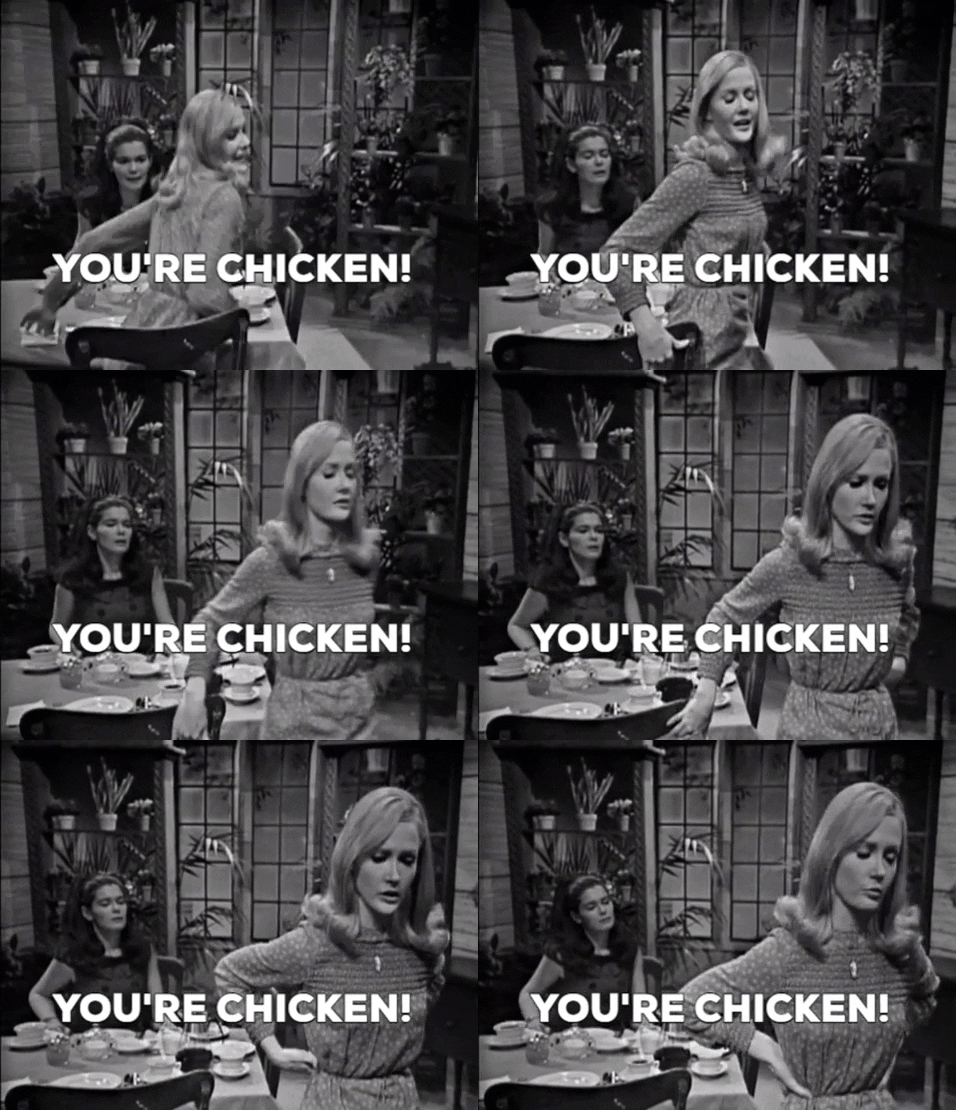
Again, if Victoria really were from New York, Carolyn would’ve gotten a hot coffee facial by now.
Victoria points out that Carolyn was one of the several people who advised her to leave, but we skate right past that and onto this cogent point.
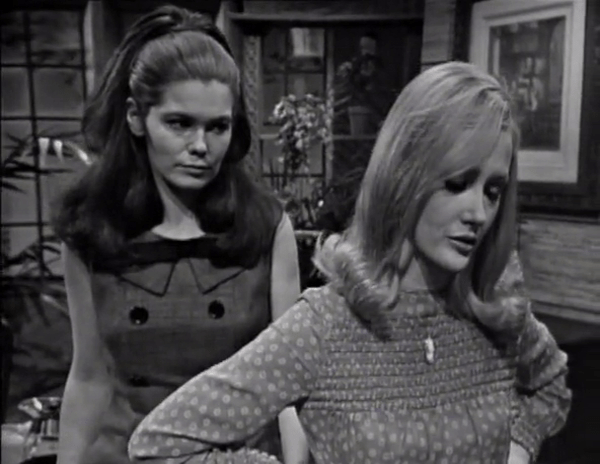
Again, we’re confronted with themes. Victoria has no past, and no home, Carolyn is so overburdened with home and family that she’s suffocating in it. Reinforcing the fact that Carolyn Isn’t Very Compassionate, she suggests Vicky is lucky…
And now we get Backstory.
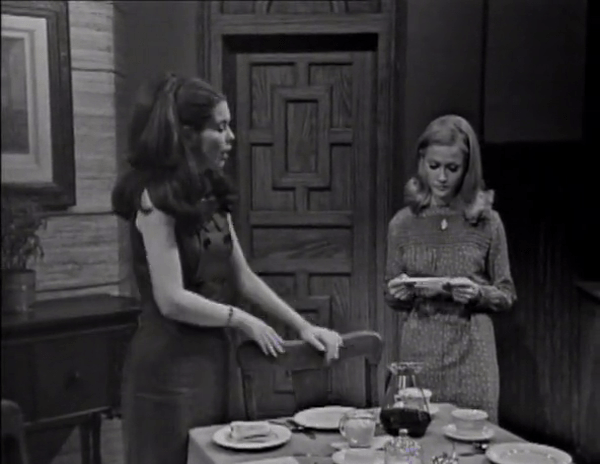
Child…
With an astonishing patience, Victoria describes that she also was raised in that foundling home. And here, for the first time, we learn the full story of Vicky’s infancy, and why this crusade to Collinsport is so important to her.
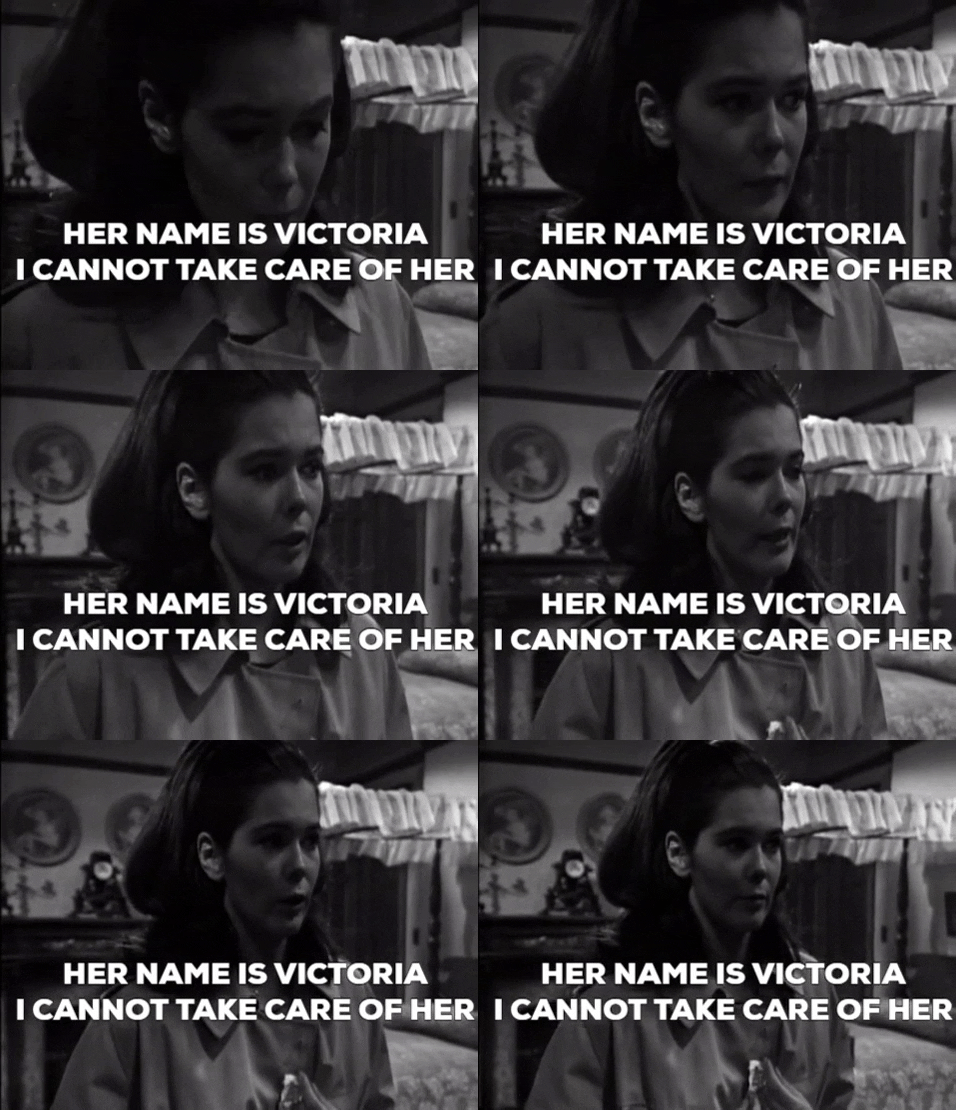
Victoria, you see, was left at the foundling home in a box, with a single note bearing the message ‘Her name is Victoria, I cannot take care of her.’
That message is all she has of her family. And therein lies a stealthy theme that I’ve always believed was done on purpose. Victoria has only ever had those ten words as a legacy of where she came from. Whoever ‘I’ was, they at least bothered to name her.
So Victoria has that…her first name, the one legacy of whoever she may have been had she not been given up. And, if her name is so important to her…
Maybe that’s the reason she’s always reminding us what it is.
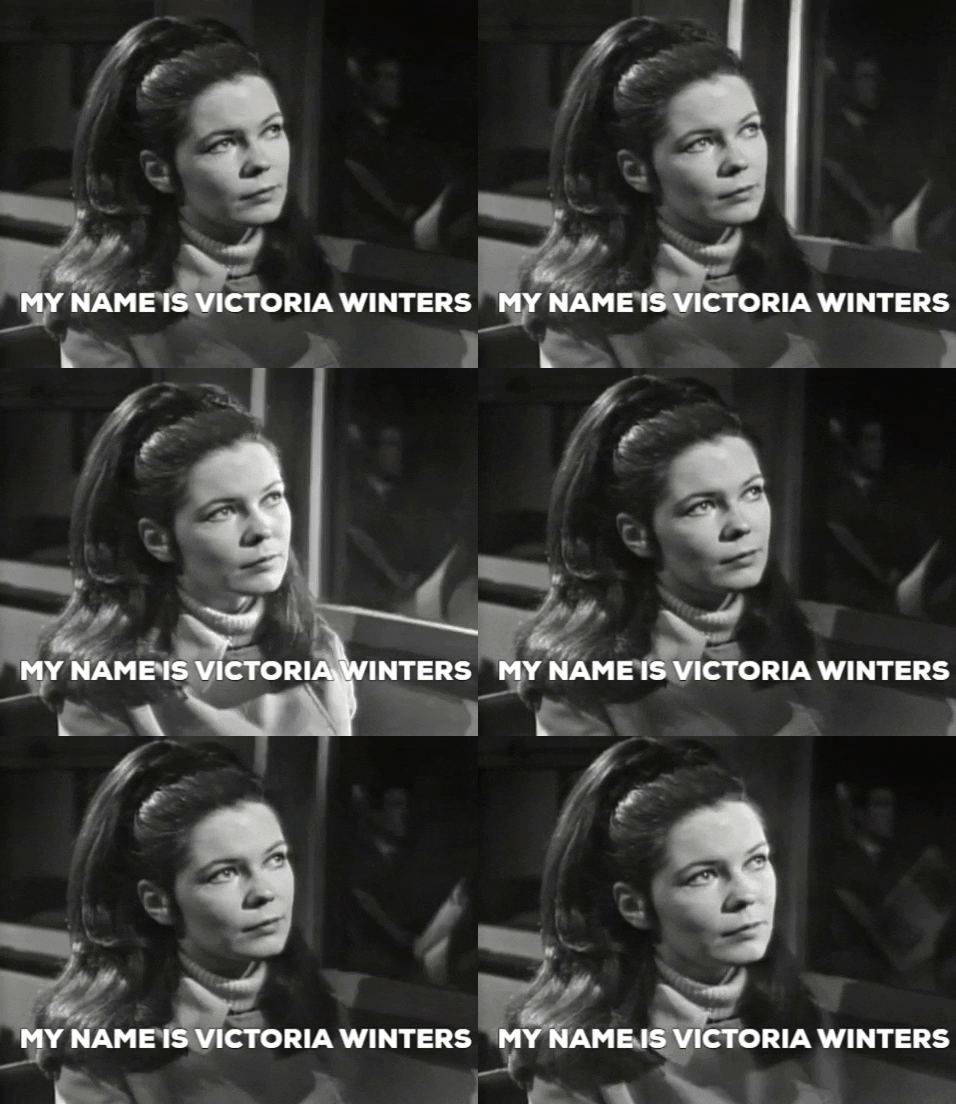
Granted, I have no way of knowing if this was intentional or not. I’ve always believed it, though.
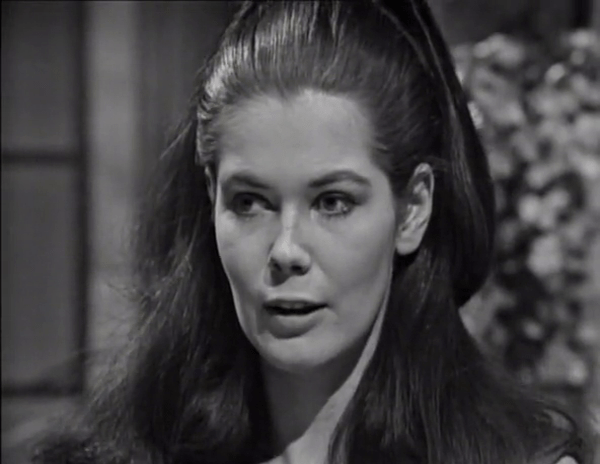
It’s actually gratifying getting relevant information that doesn’t involve 15 minutes of people recapping things we’ve already seen. Victoria goes on to say she accepted Liz’s offer because Collinsport isn’t that far from the city of Bangor. and it was from Bangor that Victoria received $50 every month for 14 years.
We talk a lot about how the baby boomers inherited the greatest economy in U.S. history and left succeeding generations absolutely nothing, but just to reinforce the point, by the last month Vicky’s $50 allowance was $424.79 in 2019 money.
A month.
For 14 years.
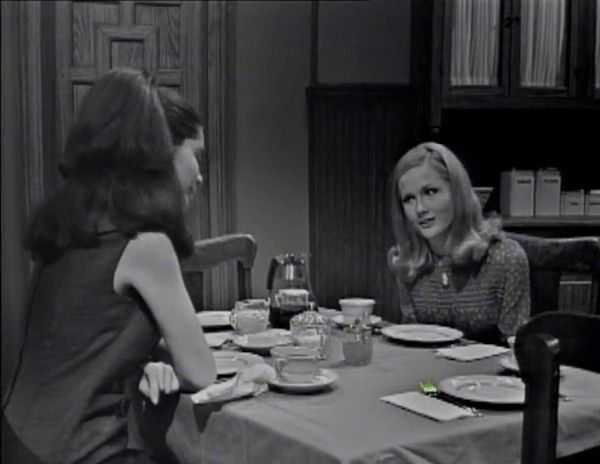
Victoria also adds one other tidbit that I don’t think any of us needed…the origin of her last name is the season she was given up in.
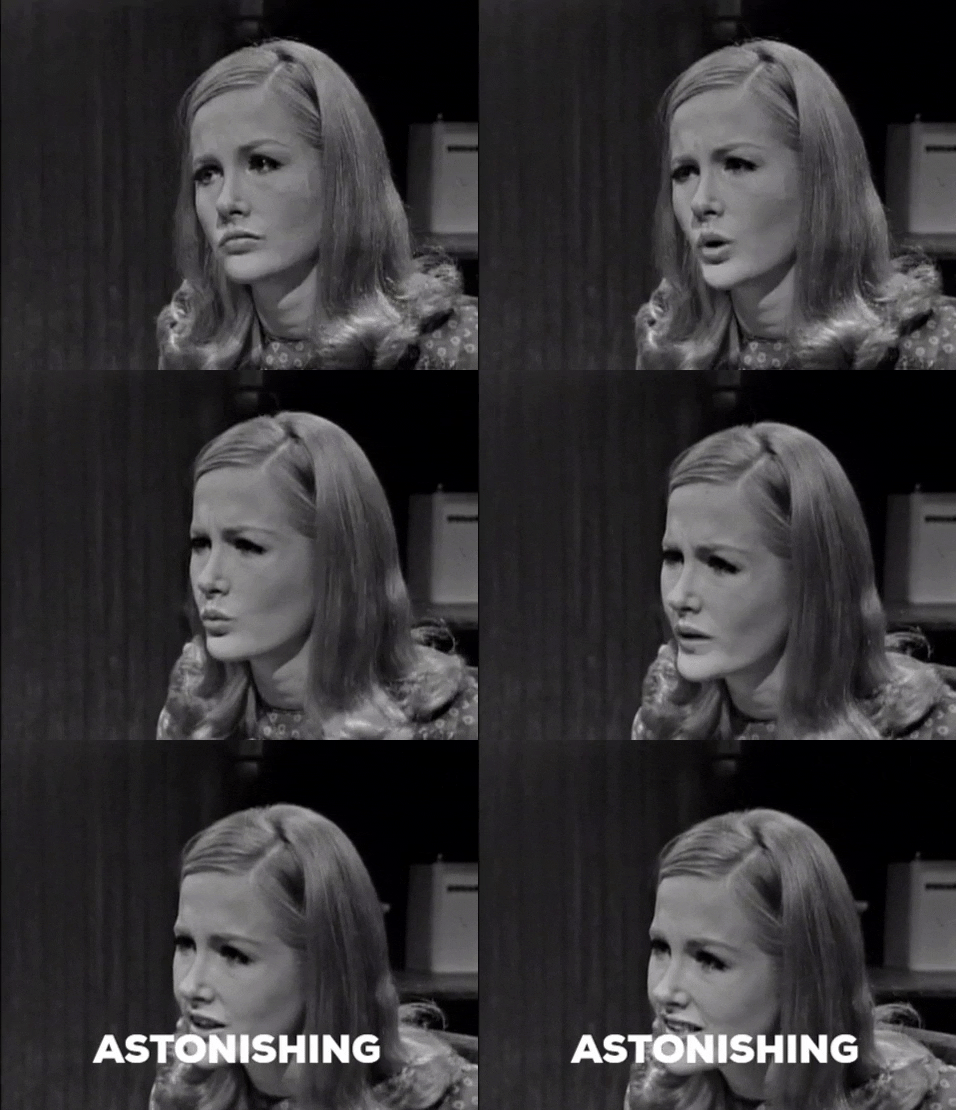
It could be worse. The character’s original name was Sheila March, which isn’t near as phonetically appealing.
Sorry, Sheila March, if you’re reading this.
The B story this episode is David is very bad at packing.
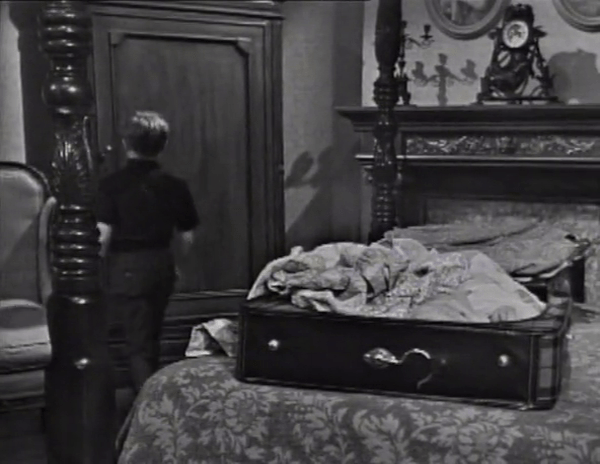
Take time to note one of my favorite set details on Dark Shadows: the elegant engraving on Vicky’s mantelpiece. It’s just an ace piece of furniture, and so unlike typical ‘nice’ soap opera set dressing.
Anyway, Vicky goes for a walk, which means more location footage.
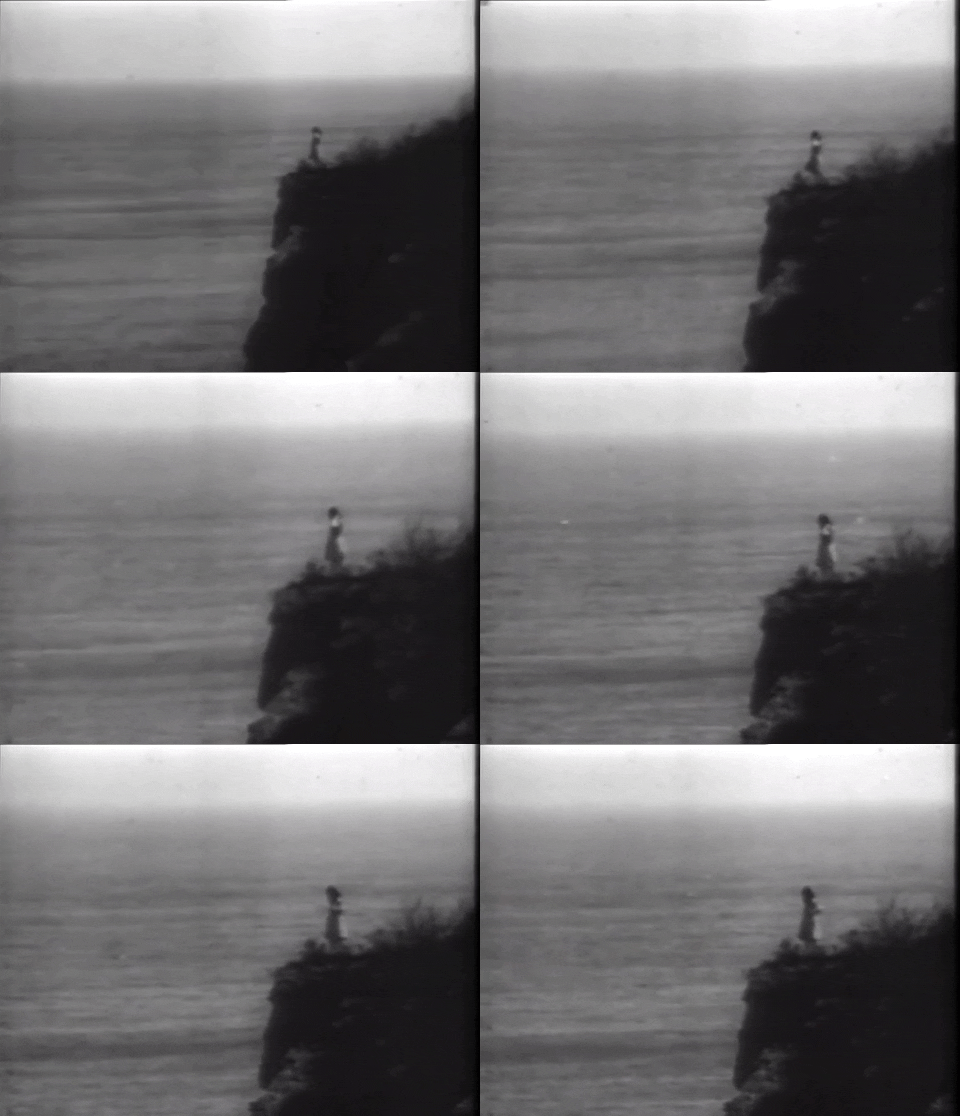
Honestly, I’m surprised she went back to the cliff. You’d think after her last meet-up there, she’d be wary of…
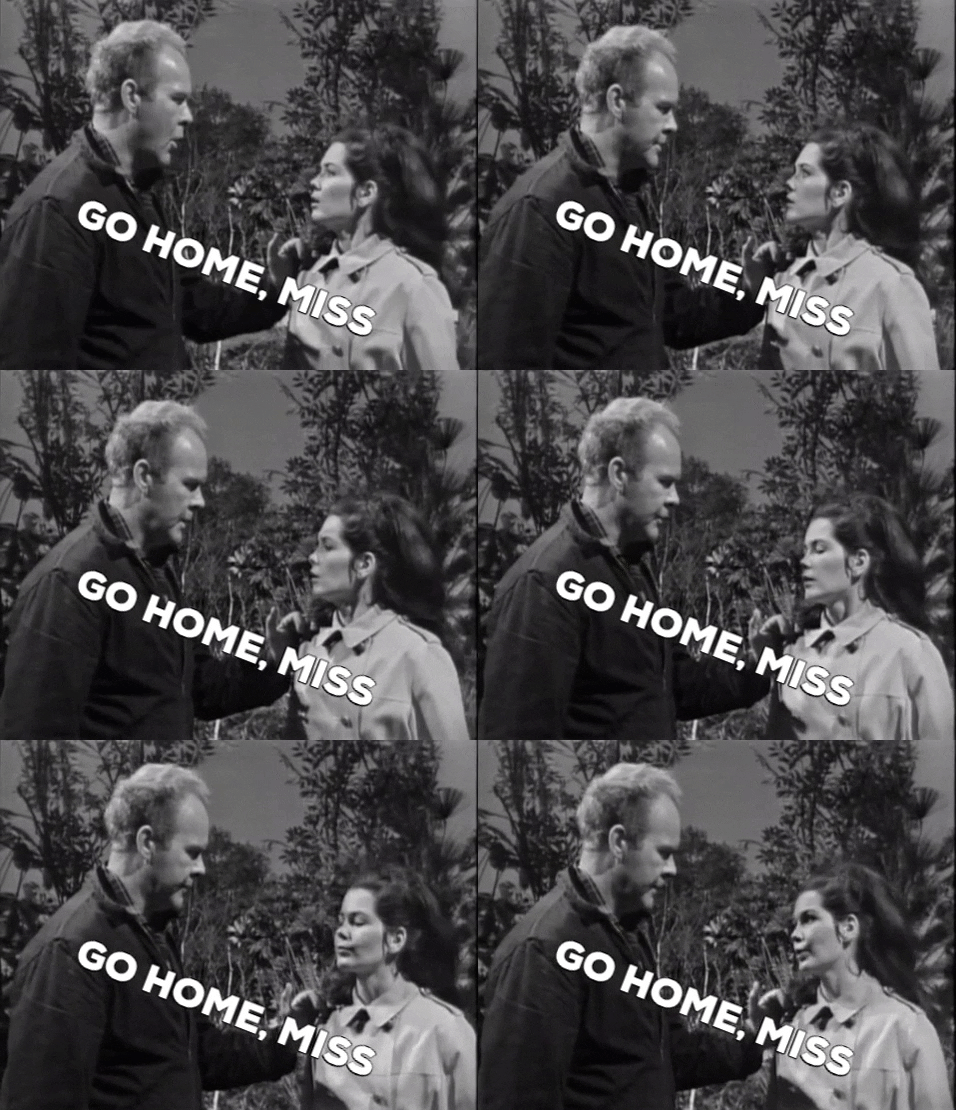
There’s something endearing in how tired Victoria is at this latest round of “leave this place and never return”. Like, guy, she gets it, lay off.
Again, the heroine being told over and over again to leave is standard horror stuff, but in a day-to-day serial format, hearing some variation of the same warning on loop is much more maddening than five minutes of ghostly crying.
So Vicky asks who the latest strange man to sneak up behind her on a cliff is…
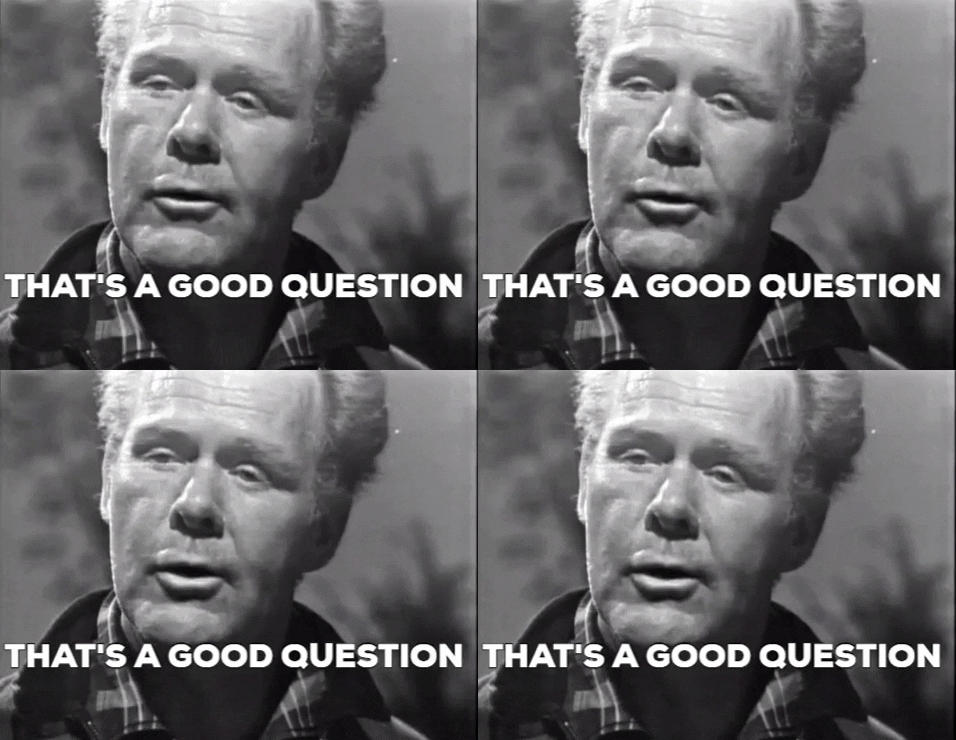
I know this is difficult to ascertain, but actor Mark Allen is not trying to play a sad clown here, it’s simply a natural result.
He knows who Victoria is, you see, because…

Just cruising, as you do.
He demonstrates a full and complete knowledge of Victoria’s movements in the first episode, her car ride with Burke and her getting the taxi to Collinwood. This should be creepy, but after Burke, Roger and David, this is about as regular as discussing the weather.
The conversation ends as abruptly as it began, with the man, who identifies himself as Sam, of…
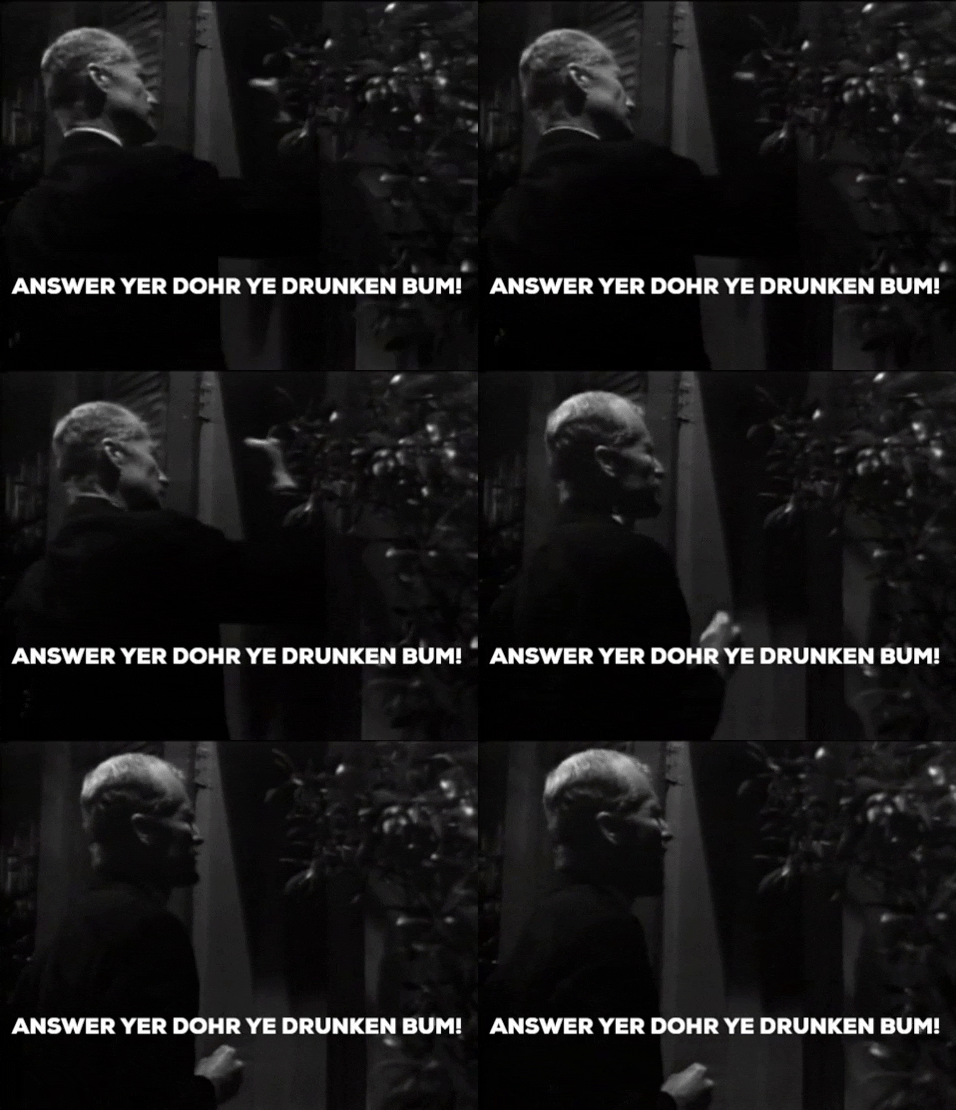
fame. He’s returning Roger’s call, and tells Vicky to tell Roger he was here.
Sam postulates for some time more about how nobody else must be told, not a single soul, this is all very secret, etc.

In his flowery prose, Sam describes Collinwood as a “ghost-ridden house of tears”, which gets Vicky’s attention.
We then get a bit more Collins family lore that reshapes whenever it suits the plot. Josette Collins was the French wife of Jeremiah, who built Collinwood as a present for her. But Josette was never welcome in Collinsport, because the townspeople were bigots, I guess, and she never knew peace. She cried herself to sleep every night until, in the way these things go, she had enough and threw herself off Widow’s Hill.
Which is not why it’s called Widow’s Hill, but I digress.
Sam guesses Vicky heard Josette crying, at which point we learn something else about Victoria that marks her as a true plucky heroine.
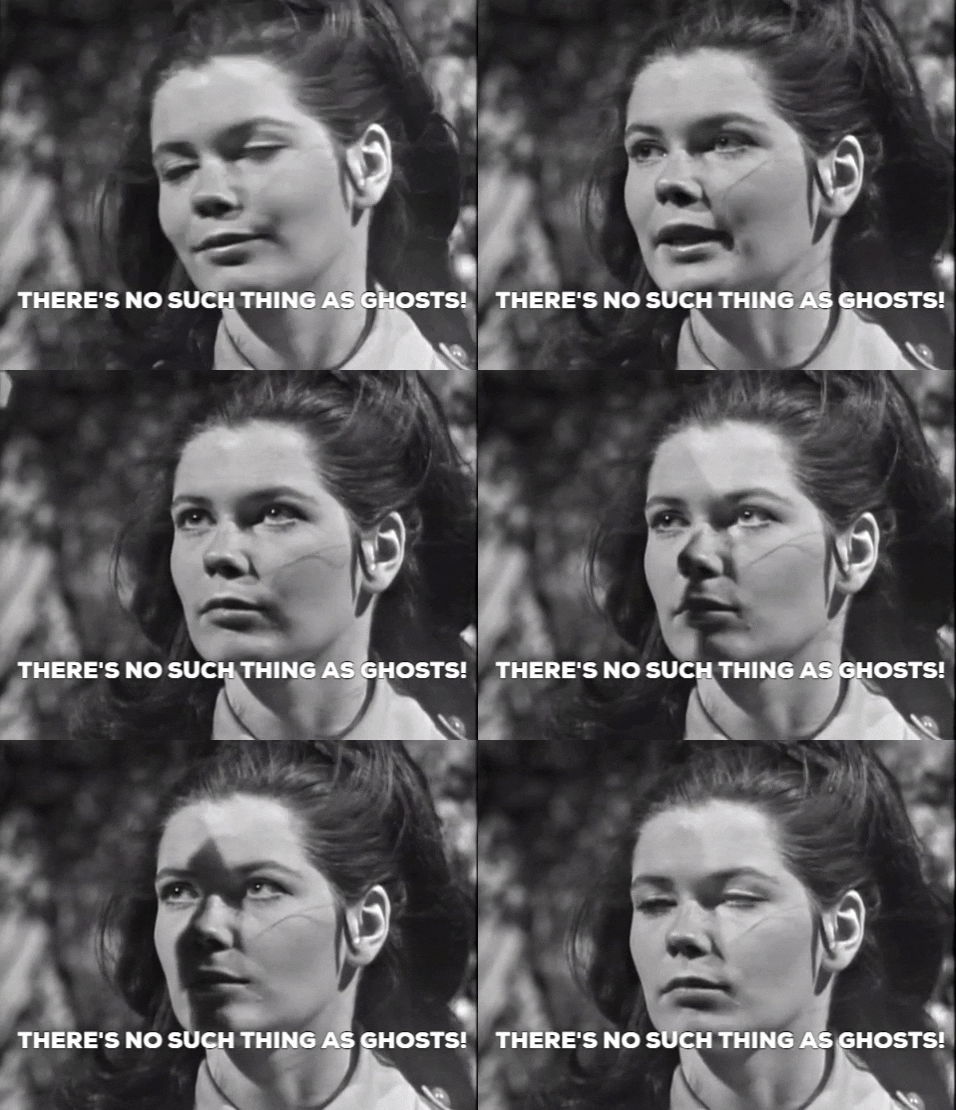
The Skeptic in a horror story does not always overlap with the heroine, but when it does you can expect Great Sorrow to befall her. Because, naturally, the heroine will have to learn the hard way that the supernatural forces she sensibly claims no belief in exist whether she believes it or not.
In well-done stories, the heroine will adapt the new worldview and take her pluck and drive on with a new arsenal of information to brave the new environment she finds herself in.
In worse done stories, the heroine looks like a complete buffoon and her credibility falls apart, along with her integrity and any semblance of actual characterization she had to begin with.
Ahem.
Sam, off-hand, compares Elizabeth to a ghost, at which point Vicky learns, belatedly, that Liz hasn’t left the house in 18 years (drink!).
Victoria returns to the house and finds that Carolyn hasn’t moved, and also that this mansion has an ironing board in the dinette.
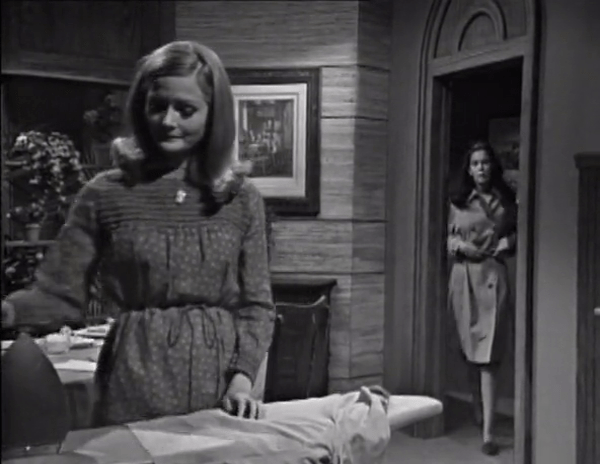
Carolyn explains that her mother hasn’t left the hill since “six months before I was born”, at the same time her father left. Ostensibly, Liz is waiting for him to come back.
How Dickensian.
Carolyn gets an idea and follows Vicky back upstairs with the hottest of takes.
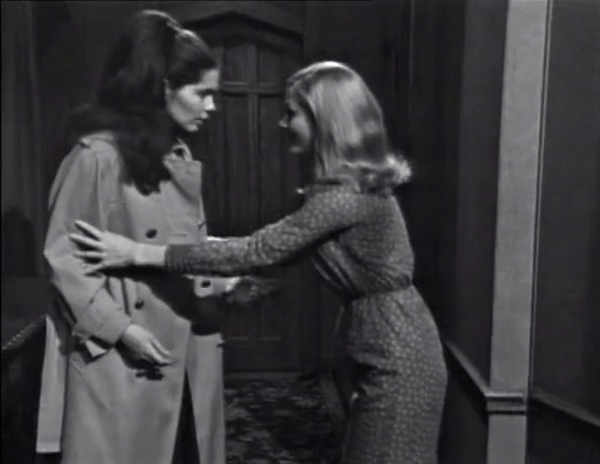
It did. Both Carolyn and Vicky seem to understand the implications of this potential connection, but they never actually say aloud what it would mean.
Not ever.
But the fact that Victoria’s connection to Collinwood is a blood connection, that she and Carolyn might actually be sisters, while never properly explored on the show, endured in the fandom’s consciousness for so long that it eventually, retroactively, became canon.
And, indeed, was meant to be canon from the beginning…they just never got around to it. But more on that later.
Victoria returns to her room…
With a theatrical panache he could only have gotten from his father, David materializes from the window nook.
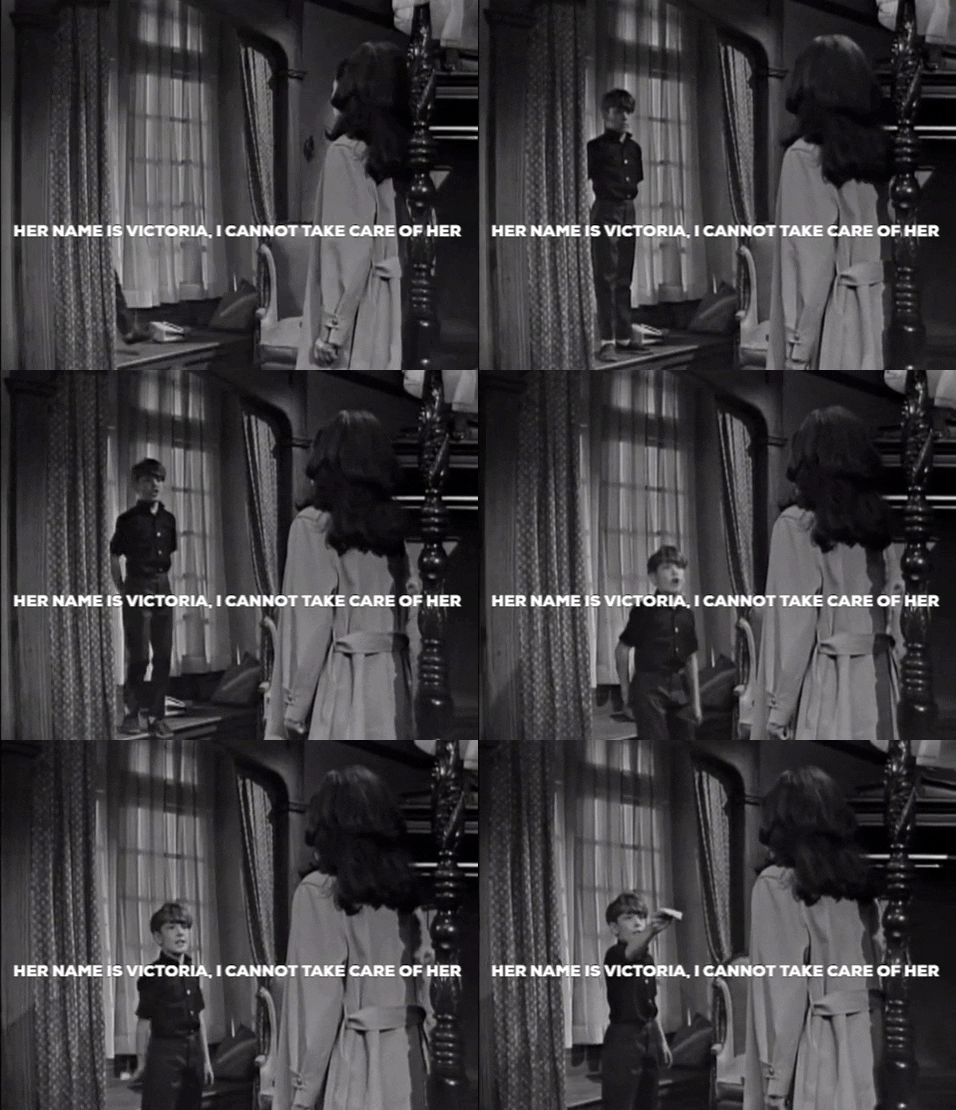
Okay, okay kid, we get it.
So David crumbles up Victoria’s one link to her past and throws it on the floor. No big deal. Victoria wonders why he wants so badly for her to leave (everybody else gave at least one reason, so it’s only fair).
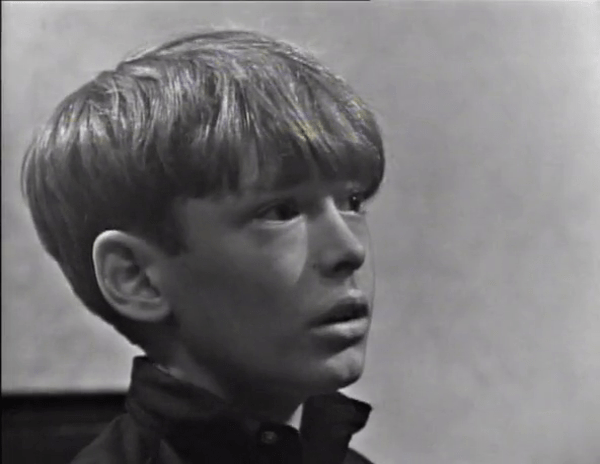
Victoria, naturally, doesn’t know what the hell he’s talking about, at which point David lives up to that haircut, exclaims nobody believes him, and runs away.
Carolyn comes by and tells Vicky that her crazy idea about the crazy coincidence that might just explain the mystery of Victoria, Elizabeth, and her missing father is too coincidental to have any merit and probably means nothing and we should all never talk about it again.
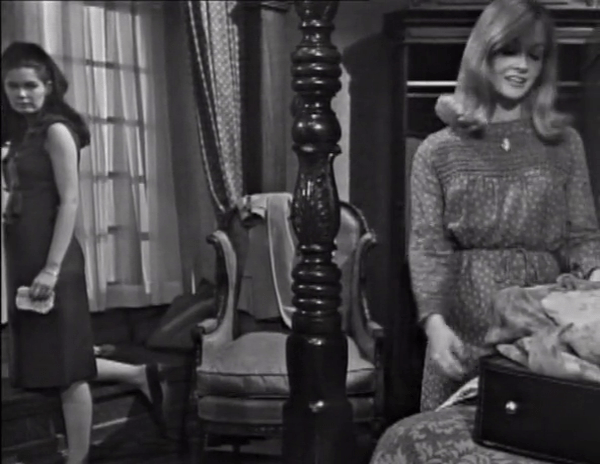
Victoria agrees that only a lunatic would continue staying in a place like this to pursue such a flimsy lead.

And that’s our first Dark Shadows Friday cliffhanger: Victoria chooses to stay in Collinwood. But, then, did anybody think she wouldn’t? She is, after all, our protagonist, and Collinwood is our setting. If Victoria leaves, so goes the show.
Or…well, so it seems.
But imagine with me, for a moment, some fantasy world in which Victoria Winters did leave after Dark Shadows’s first week. The show was lying to us, building up a false protagonist with a false story. Somebody from outside who, true to everything Roger said, didn’t belong in Collinwood and, because of this, couldn’t last one night within its walls.
Without Victoria, what do we have? Burke Devlin continues to pursue revenge, Carolyn still finds herself stuck in a rut, wanting to escape Collinwood, but not if it means marrying Joe Haskell. Roger still must contend with a son he can’t stand and a man from his past he believes is out to destroy him… And Maggie Evans still has coffee to pour and pie to cut.
Victoria is more necessary for us. She’s the audience surrogate. The stranger in a strange land. As she learns what’s up in Collinsport, so do we.
But what happens when she’s as up to speed as everybody else?
We’ll find out, of course. But not for a long time yet. Victoria’s journey continues. It has an ending, just not one she was looking for, and certainly not the one this cliffhanger promises.
This Day in History- Friday, July 1, 1966
The Medicare program was founded in the United States. We try not to get too political on this blog (who am I kidding?), but Roger Collins certainly thought Medicare was ‘creeping socialism’.
Explorer 33, the first American attempt to put a satellite into orbit, failed. We would try again. And again. And again.
Pauline Boty, leading figure in the British pop art scene, passed away at age 28, from cancer. A feminist icon, her work faded into obscurity for decades after her death. Her cultural impact is only recently being recognized.

 Kooks of Collinwood
4 thoughts on “Should I Stay or Should I Go?”