
Many years ago, a woman dozed off on a train and dreamed of meeting a little boy in the forest. He told her his name was Harry Potter and that he went to a school for wizards.
Some years later, a different woman dozed off and had a possibly-erotic dream about a beautiful pallid young man who led her to a meadow, revealed he sparkled in the sun and added, as an afterthought, that he was a vampire.
You’re no doubt familiar with both those stories, given how they shaped young adult fiction for the better part of the last 20 years. As far as links to Dark Shadows, one has trains in common with the series, the other has vampires, and they both began, as Dark Shadows did, with dreams.
There were no vampires swirling around in the subconscious of producer and series creator Dan Curtis when he (literally) dreamed up the concept for Dark Shadows. But there was a woman on a train: a woman on her way to a little New England town to work as a governess at a big, lonely house on a hill.
That woman’s name? She’ll be happy to tell you:
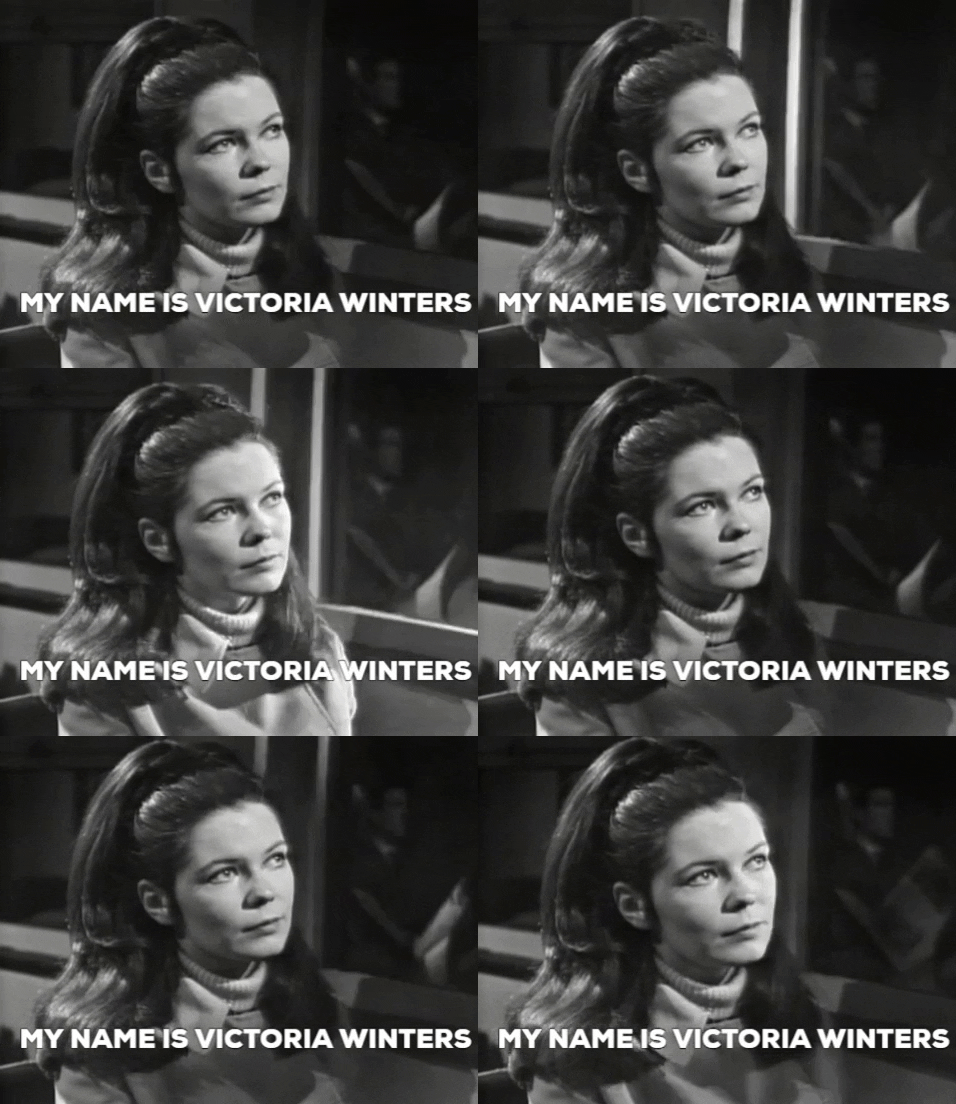
Meet our heroine.
Soap operas today are ensemble pieces, much like the prime time soaps that, whether pop culture admits it or not, pull their cues from daytime’s decades’ old template more often than not.
Your Game of Thrones, your LOST, your Grey’s Anatomy and Riverdale, all feature sprawling casts of characters whose interpersonal relationships drive the story, with no singular protagonist among them. Soap operas are assumed to follow the same rule, though we do have exceptions…
But in the old days, before soaps had 20, 30, 50 years to build up their casts, they generally revolved around a heroine and the people closest to her: her love interest, her boss, her gal pal, her rival… The early radio dramas were tales of housewives, nurses and secretaries navigating their professional, family and romantic lives.
There are whole essays to be written about how the soap opera, one of only a handful of true, purely American-originated genres, was one of the first fictional mediums to non-condescendingly center on the working woman for an audience of women, but that’s a tale for another day.
Suffice to say, a soap needs a plucky young woman to endure trials and tribulations five days a week, and Dark Shadows (more importantly, I think, Dan Curtis) had Victoria Winters.
Vicki is more than just our protagonist: she’s our narrator.
“My name is Victoria Winters…”
Whatever comes after, episode after episode, the implicit meaning of that statement is “and you girls are gonna listen.”
Here in this opening monologue to kick off all the rest, she tells us what she wants, why she’s sitting on this train trundling through perfect darkness: to connect her past with her future. In essence, to make sense of herself.
We’ll learn the nitty gritty details as we go on, (never all of them, but you’ll stop noticing after a while) but from the start, Victoria’s motivation is both astoundingly vague and quite universal. What young person doesn’t want to link their past to their future, to have the ‘doors of life’ open for them?
In many ways, it’s all we need to know. In more ways, it’s about all we’ll get. Maybe that’s okay.
Victoria’s monologue continues, describing the house of Collinwood:

Sorry for quoting so heavily from the monologue, but this one is just so rich with prose. If it’s any comfort, very few of them are as good.
Anyway, something-something-something-great house on Widows’ Hill…

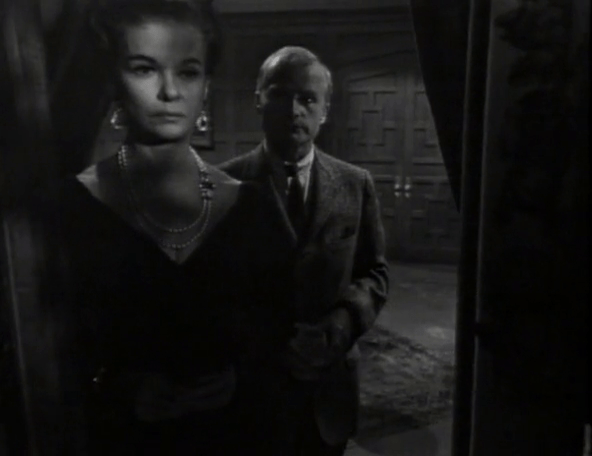
This is Elizabeth Collins-Stoddard. It’s 1966 and a soap, so it’s important we include all her names.
Liz is played by Joan Bennett, the biggest star on Dark Shadows who, ironically, is now known to all but the hardiest of Golden Age film buffs for her role on Dark Shadows.
Here she stands, well dressed and dignified, wearing her pearls and looking altogether very classy.
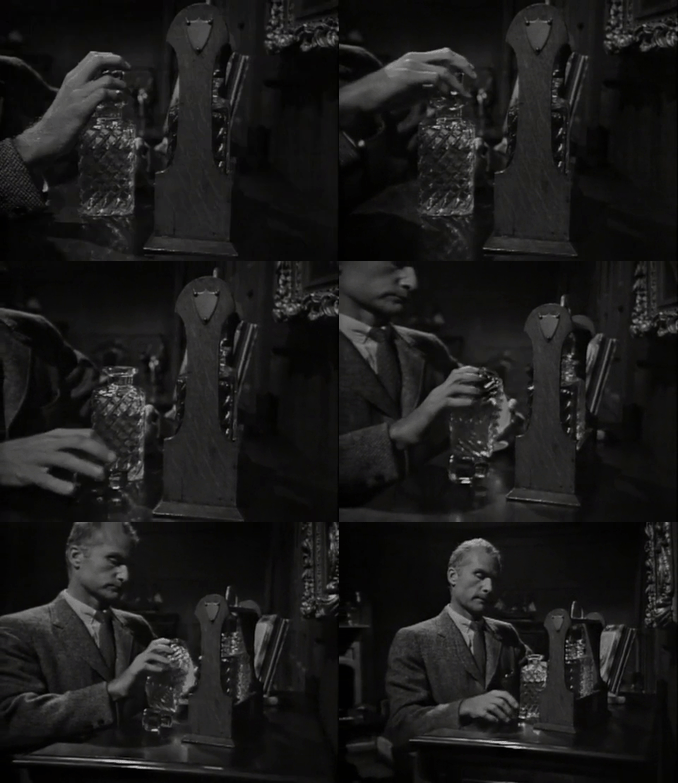
This is Roger Collins, as played by veteran stage actor Louis Edmonds. If it isn’t already clear, I’m going to do a lot of editorializing in this blog, so let me just say that Louis Edmonds will be the panacea for the next 208 episodes and some time thereafter. Nothing on this show can ever truly be bad as long as Roger is around.
Roger’s first words, and the first non-monologue line on the show is:

Which tells us two things:
- Louis Edmonds is a lovely old queen.
- Liz is waiting for something.
And aren’t we all? Nowadays, anyone who watches Dark Shadows watches it for one reason: they heard there were vampires and witches and ghosts and stuff. Whatever other factors come in aside, the one reason the show endures in the popular consciousness is that it’s Monsterpalooza.
And yet here we are…watching from the beginning. No monsters, no ghosts, no witches. Just a girl on a train, going to a spooky house to meet a well-dressed but exhausted woman and her fruity alcoholic brother.
But that doesn’t mean this is an entirely devoid experience. After all, what’s a life if all the doors open the moment you reach them? Half the point of living is the journey.
And watched pots don’t boil.
This, in general, is also a good descriptor for ideal soap opera storytelling. A story may take weeks or even months to wrap up but, if the writer is talented, if the actors are good at their craft, if the wait is worth it…
The payoff is everything you could ever want.
You can’t know just how the story will end when you start. Just as Victoria doesn’t know what she’ll find when she reaches the dark house on Widows’ Hill, and Elizabeth isn’t sure how she will find the young girl she’s summoned to act as her nephew’s governess.
Speaking of her nephew…
Elizabeth, clearly Not Here for Roger’s queening, tells him to go check on his son. Roger can’t be bothered, and then we get…

He certainly is. Every soap actress worth her salt knows how to employ a withering glare. See The Young and the Restless’s Melody Thomas Scott…

I have no idea who she’s looking at here, but they’re probably in ICU now.
Part of the soap opera’s appeal is wish fulfillment, and a large part of that is the wish that we (but especially women) can just shut up talkative imbeciles with the power of our eyes.
Joan Bennett has the Powah.
The Collins siblings trade more barbs. Roger heartily disapproves of this silly governess thing. And not just because it’s the 1960s in America, or because he wants his son to go kick rocks…
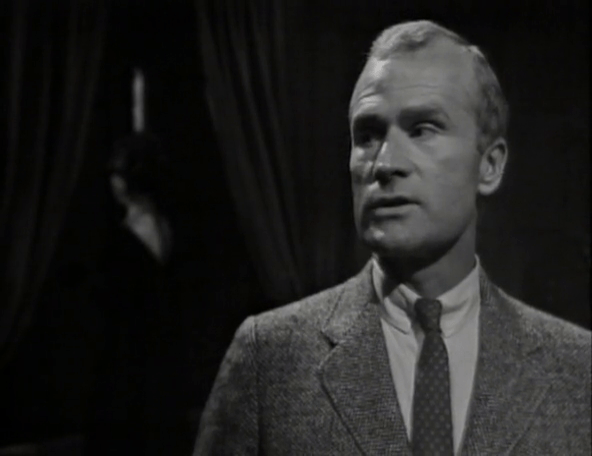
“With all our ghosts, we don’t need any strangers in this house.”
First reference to ghosts! Of course, it seems more likely Roger is referring to the metaphorical kind: skeletons in one’s closet.
And such a capacious closet Roger’s must be.
Ahem.
Liz’s mind is made up: the governess is staying and Roger better mind his Ps and Qs or else it’ll be his puckered rump on the curb.
Roger gives her the point.
As if he had a choice.
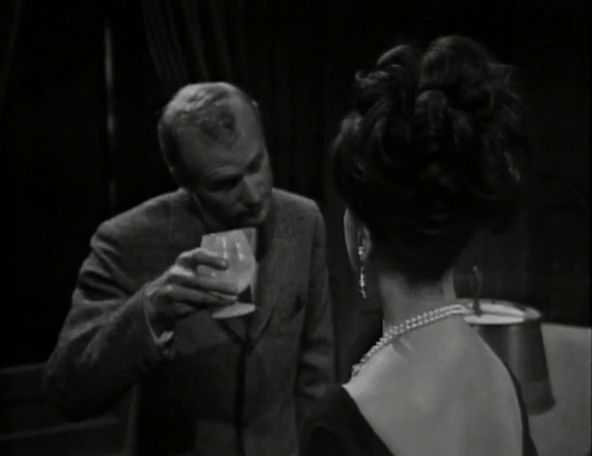
Liz leaves the drawing room and we get THIS SHOT…

I should note that cinematography and set design were not very big deals on soaps at the time. Or now for that matter.

We live in a Society.
Dark Shadows is unique, not just for its genre-bending and perpetually evocative atmosphere, but for the innovative and dramatic cinematography and the sets lovingly crafted by Sy Tomashoff.
Anyway, Roger is so stressed and flustered and probably drunk that he breaks his glass.

And…MUSIC.
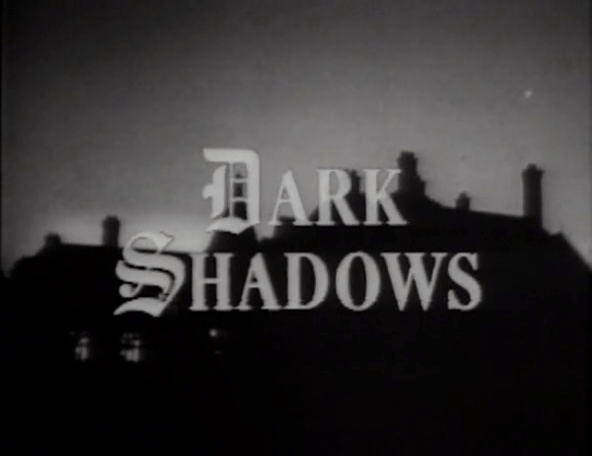
Okay, so back to the train. Some Dick Tracy cosplayer is sitting in the back of the carriage.

So we’ve already discussed Vicki Winters’s universal, and therefore relatable, motivation. What could make her more relatable? Why, a talkative tourist caterwauling in her ear non-stop on mass transit!

~You want the doors of life to open up to you? Then open a door to Jesus!~
I’m not sure to what degree actress Alexandra Moltke (who gets a bad rap, then as now, for reasons I think largely out of her control) meant to sound relieved when the conductor says her stop is coming up, but we all understand.
Collinsport isn’t a happening kinda town. The old woman, who I guess lives on the train full time, informs us it hasn’t made a regular stop there in five years. Take a moment to thank the deity of your choice for the invention of headphones, earbuds, and those Air Pod things.
Victoria segues into a flashback establishing her past life at a “foundling home” in New York City.

Meet Mrs. Hopewell: Patron saint of collars.
We’re going to be hearing this expression an insufferable amount of times in the next twenty episodes or so, so you’ll note “foundling” is a dated term for orphans that makes them sound like a small animal one might collect in the pockets of a large coat.
Vicki, it turns out, received a letter from Liz asking her to take the governess job at Collinwood. Given Liz lives several states away and nobody has heard of her or the place she comes from, this is Mysterious.
So Mysterious, in fact, that we will never learn why. But it doesn’t matter.
Vicki notes that Collinsport isn’t that far from Bangor. Stephen King happened to be a big fan of this show, by the way.
Vicki launches into a tried and true soap staple: monologuing about her past for the benefit of the audience. People talk a lot flack about monologuing now, but it’s as old as Sophocles and a useful way to impart information. Just because we don’t talk like that in real life (I mean, I hope for your sake, you don’t know anyone who does), doesn’t make it bad as a fictional device.
Look, Hopewell, you could at least try not to disassociate during the girl’s speech.

So Vicki has lived in the foundling home all her life, and now she works there. I can’t tell whether I pity her or envy that degree of job security at 20-years-old.
Back to the train.

Vicki, naturally, wastes no time getting off that train. The old woman fades into the dust of history. You can still see her if you close your eyes too fast or look directly at the new moon.
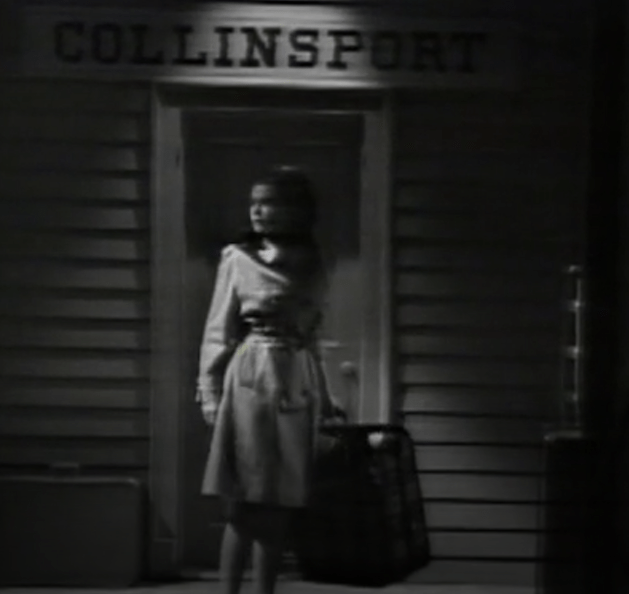
I should point out that elaborate staging, such as was done with the train platform and train sets, as well as the various establishing shots (Including location footage of the actors!) were not par for the course on soaps.
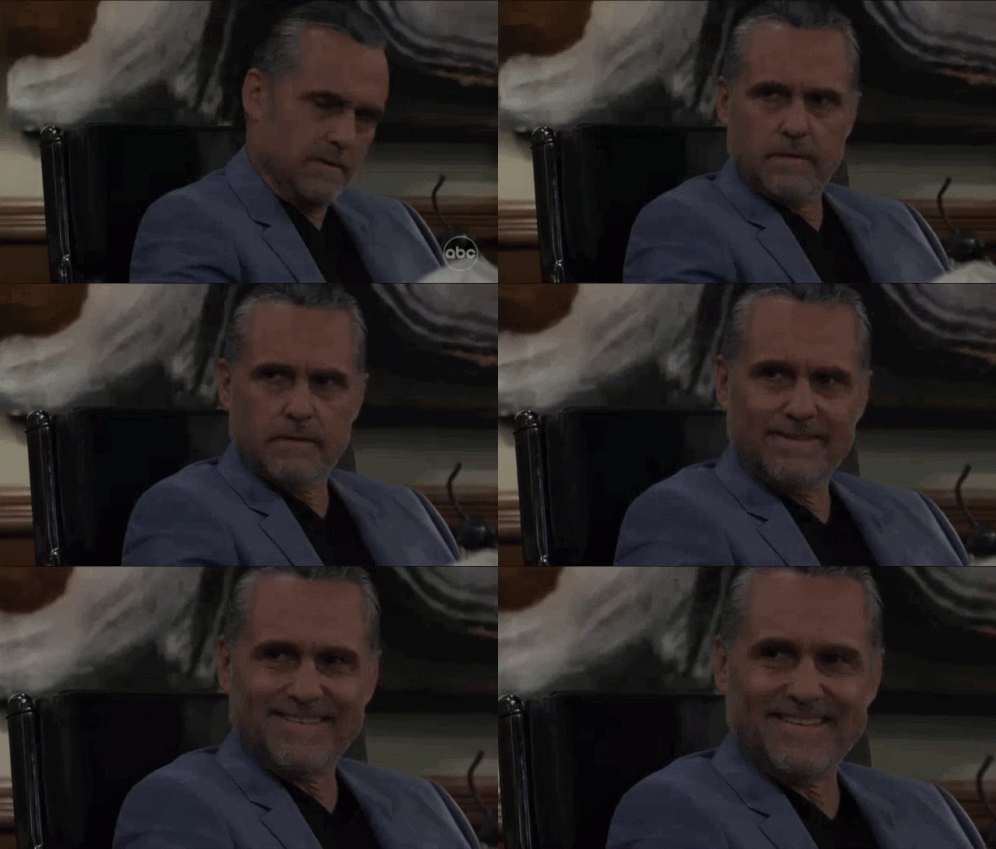
Even now, it’s rare to see daytime actors ‘on location’. Most soaps don’t have the budget. A few years ago, it was a big deal when General Hospital started filming their actors next to a random fence in the park.

Look, I will defend the American soap opera up and down, but that doesn’t mean we can’t face facts.
Dan Curtis wanted his show to be immersive, atmospheric, realistic…and, let me tell you, it never stopped being two of those things.
So Victoria is alone on a train platform in a strange new place in the middle of the night. We were told she’s from New York, but this tidbit is very quickly challenged when she walks up to a strange man and asks him if he can recommend a taxi.

Rather than give her a straight answer, Suave Bola over here starts at an 11.
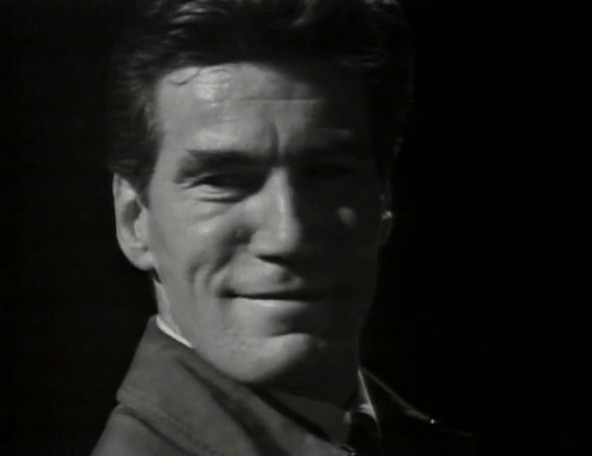
How helpful. I guess it’s too late for Vicki to escape.
After ‘charmingly’ telling Victoria that the townspeople expect them to travel by “broomsticks and unicorns”, he offers her a ride in a hired car.
Maybe it’s my 21st century paranoia, but there are enough red flags here to land a Boeing.
Still, our plucky street-smart heroine thanks him, at which point he introduces himself as…
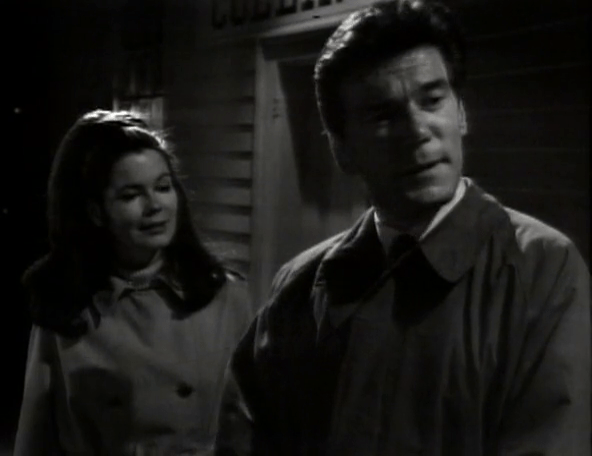
Get used to that one too. The first 100-or-so episodes of this show may as well be the Burke Devlin Revue.
Burke proceeds to give Vicki one of the best lines of dialog in the entire series run:

You’ve got your mystery, you’ve got your intrigue, your drama, a hint of something sad, a hint of something scary, and a touch, the slightest touch, of sex.
That’s Collinsport. That’s Dark Shadows. That’s where we are now, and that’s where we’ll be staying.
Buckle up.
Vicki tells Burke that she’s going to Collinwood, and…

There’s probably still time for her to walk the rest of the way.
But Burke’s very strange reaction aside, the two seem to enjoy a fairly pleasant off-screen ride to the lobby from the Hollywood Tower of Terror.
I guess I’m obligated to point out that lamp on the desk. If you know, you know.
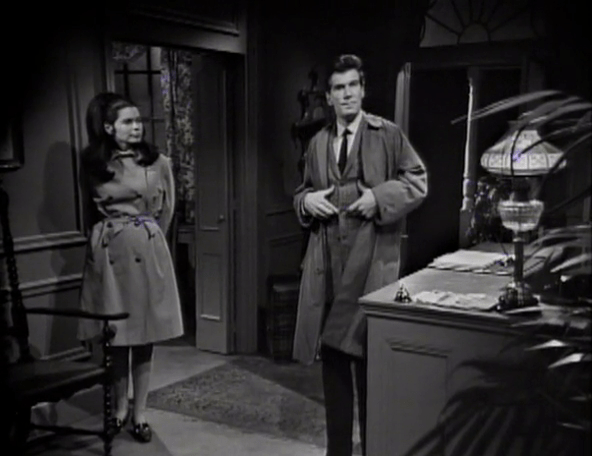
Burke advises Vicki, apparently not for the first time, to hit the hills. I can only imagine this was non-stop what he was saying the entire car ride down a winding, unlit country road.
But I digress. Victoria remains determined to do her job, and so does hotel clerk Mr. Wells, fresh from his day job at the Gettysburg Reenactment.

You know he’s got a snuffbox in that jacket.
Mr. Wells recognizes Burke at once and starts making offensively loud noises. Burke proves himself far less patient than Vicki in this regard and wastes no time telling Wells to shut the hell up.
It turns out that the taxi has a flat, so Vicki will have to wait. This isn’t so bad, because the adjoining Collinsport Restaurant (or coffee shop, or hotel restaurant, or whatever they feel like calling it any given episode) is the first set we’ve seen that doesn’t look like it wants to haunt me to my grave and all my descendants after me.
Burke has his own agenda. A letter has been left at the front desk for him and he hurries off at once to Where the Action Is…
It’s got WOOD PANELING! Checkerboard tablecloths! And GOODWILL SAILBOAT PAINTINGS!
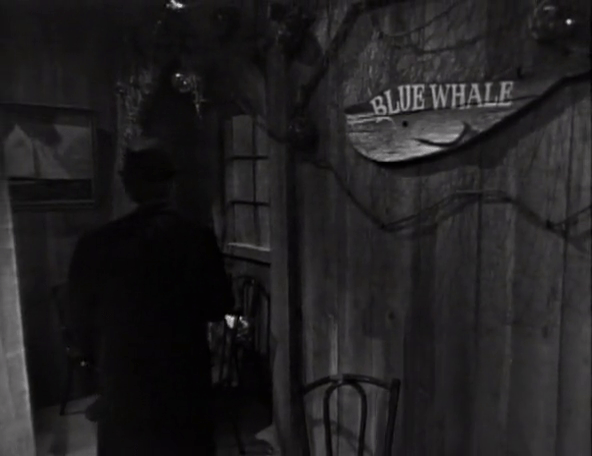
The Blue Whale is the primary nightspot in Collinsport, and the only other eatery besides the Collinsport Restaurant. Most soap opera towns cap out with two or three town spots. General Hospital has the Metro Court, a fancy hotel restaurant, and Kelly’s, a pub/diner mashup. The Young and the Restless has the Crimson Lights coffee house and the aforementioned so-called “Society”. Days of Our Lives…
Okay, bad example, that show can barely budget for chairs.
The point is, there’s typically one venue for more formal scenes, and one for more casual ones. That Collinsport’s only two options are a quaint diner and a shanty-house named after a whale tells us a lot about the kind of place it is.
Contrast the common hotspots in town to the imposing grandiosity of the house on Widow’s Hill, the black gown and pearls of Liz with the ill-fitting trousers and jacket on Mr. Wells. These people inhabit the same space, but they live in different worlds.
So Burke is at the hotel to meet a man name of Wilbur Strake.

He ought to be flipping a coin.
This type of character, with his fedora and his cigarette and his weather-beaten face, was once as universal on American T.V screens as Mickey Mouse and the man that sells catheters at 2:00 A.M.
This character could be many things: a mobster, detective…
He’s a detective.
Strake has been hired by Burke to do some digging on Collinsport and its inhabitants. This is what people had to do before the Internet.
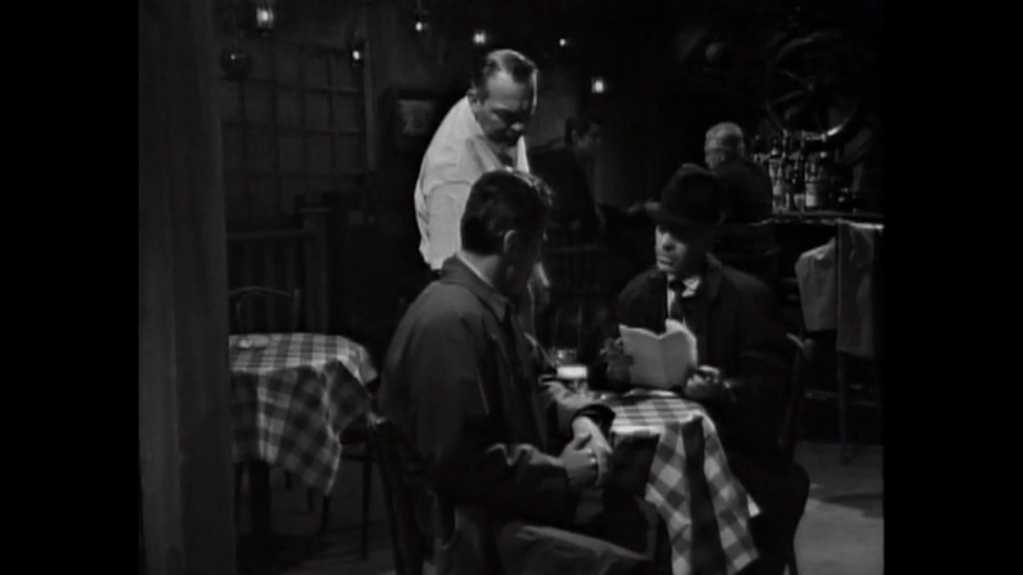
Strake informs us that he’s managed to convince everybody in this sleepy New England town that doesn’t even get regular train service that he’s speculating for real estate. He then seems surprised that nobody was very forthcoming with him, so we can only hope (or not) that Burke isn’t paying him very much.
Back at the Collinsport Restaurant, we’re introduced to sassy waitress Maggie Evans, whose star quality is immediately evident to everybody but the people making the show she’s in.
She presents Vicki with her roast beef sandwich, coffee, and a free insult…

As if to further spit in the face of her New York heritage, the best Vicki can come up with in response to this is…

Why is Vicki a jerk? Why, because she’s going to work for the Collins family, of course! Maggie informs us that the Collinses own the biggest cannery, the biggest fishing fleet, the biggest house…
I didn’t pick the name for my health.
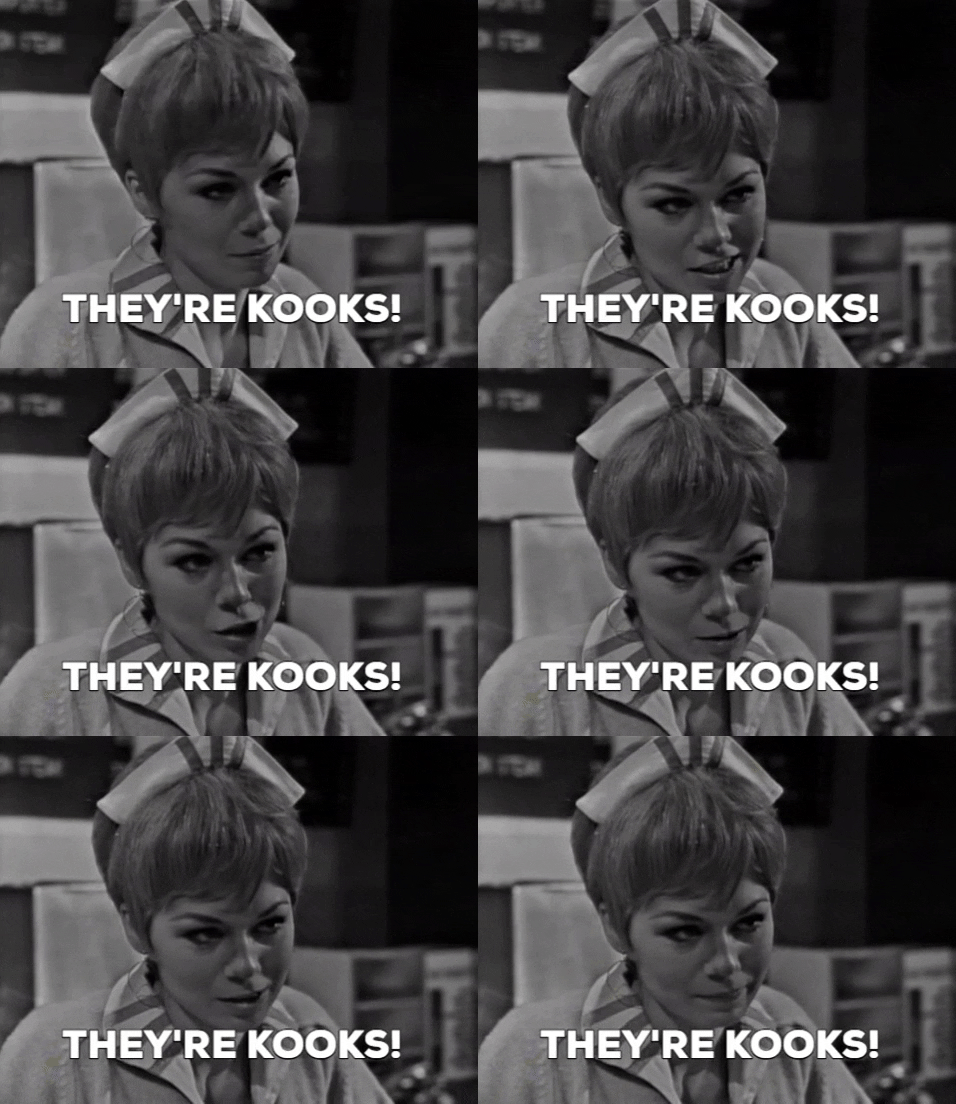
Vicki points out that all this aura of menace around the Collinses and their house sounds like the stuff of “an old English novel”. The word writer Art Wallace probably wanted to use, and certainly the word Dan Curtis evokes every minute is ‘gothic’.
Early Dark Shadows isn’t a ‘horror’ soap, no more than it is a ‘vampire’ soap. But it’s Gothic in the extreme. The young woman in the old dark house with its haunted inhabitants. The man with mysterious motives lurking around town and bringing chaos and discord wherever he goes…
There are ghosts and monsters galore in Collinsport in these early episodes. But they’re living, breathing monsters for all that. Does it make them scary? Maybe. In a way.
But we’ll have plenty of time to talk about that.
Anyway, Maggie proves that, foreboding warnings aside, she’s a pretty chill person, offering Vicki some apple pie on the house for fortitude.
While she waits, Vicki takes us to another flashback, and if you thought the old woman’s Mainer accent was bad, wait till you hear Vicki’s NYC roommate, Harley Quinn!

I should note that Dark Shadows was filmed entirely in the ABC studios in New York City, so the actress playing ‘Sandy’ could very well have been a native.
Even so.
This flashback serves to fluff out Vicki’s motives for going to Collinwood a little more, but the best part is when Sandy says “HEY DAT’S MAH SLIP YER PACKING!” with the same zeal as one might say “I’m so thankful Robert and I got life insurance through the Colonial Penn program!”
Also, I think we all know Vicki was actively trying to steal Sandy’s slip. Good for her.
I’m sorry, this scene keeps on giving. Sandy then suggests that, if Vicki likes fishing villages so much, she should “Go to Long Eyeland! Have a BAAAAAAAWWWWWLLLL!”
No offense to any Long Islanders out there, but I wasn’t aware the Oyster Bay scene was that lit.
Vicki doesn’t really want to go to Collinsport, but she must! Because it could be the closest she’s ever been to…
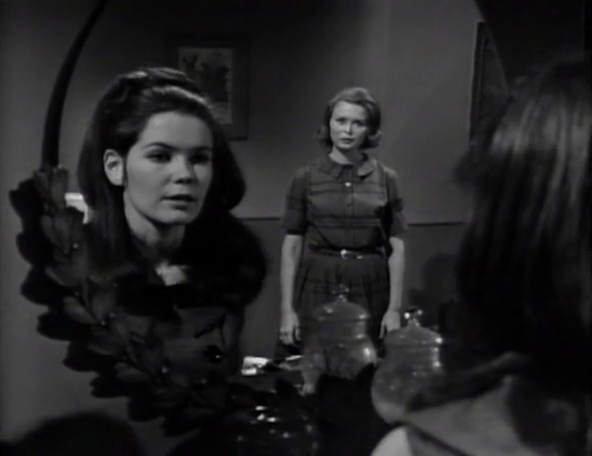
“To me. Finding me.”
Iffy dialog aside, this is the theme restated. Though one wonders what we learn from this flashback that we didn’t from the first one with Mrs. Hopewell? That Vicki has a friend? I mean, I guess I feel sorrier for her after that. We return to the present, and it transpires that Vicki has been talking to herself.

We can only hope Vicki was saying all Sandy’s parts too. This must be the liveliest evening of Maggie’s life.
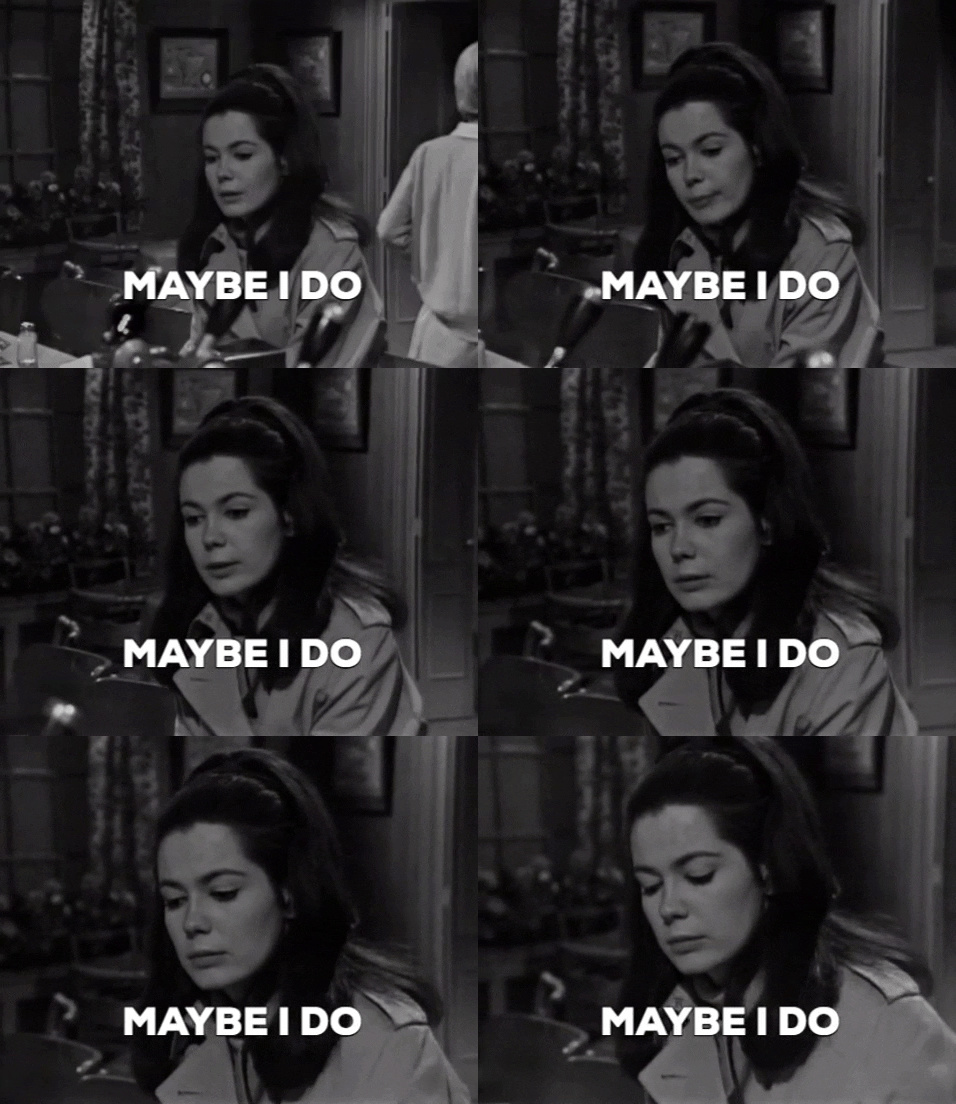
Maggie jokingly suggests that maybe Vicki does belong at Collinwood after all, and Vicki, seemingly aware that we’re cutting to commercial, looks into the distance with her best soap eyes and says…
It’s the little things.
Back at the Blue Whale, five minutes have passed, and there are as many cigarettes in Strake’s ashtray.
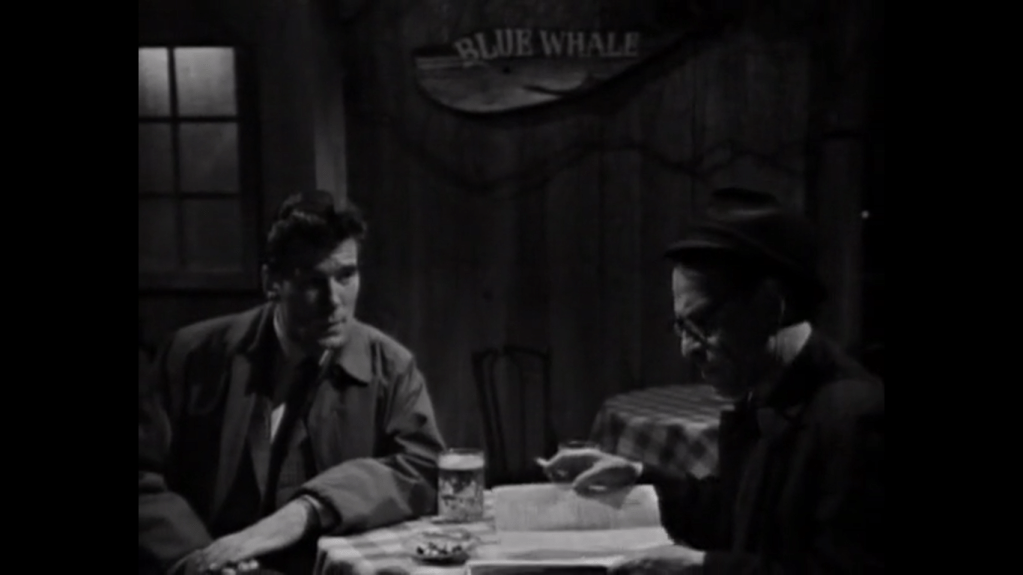
The reading glasses mean he’s serious about this.
Elizabeth Collins-Stoddard, Strake informs Burke and us, the woman in charge of the Collins business, has not left her house in 18 years. Burke apparently is already familiar with this, but nobody knows why.
This is another common Gothic trope: the woman who stays shut-up in her house. And the spookier the house is, the better. We’ll talk more about that when it becomes more prominent. Suffice to say that, if Burke Devlin is the active source of intrigue and mystery on Dark Shadows, Liz remains the passive source.
We see Burke: cagey, cryptic, rude and brash, clearly seeking something to do with the Collins family. He is mysterious, but present, active…we wonder what he wants. Liz, however, is a shadowy figure, all by her own design. With her, it’s a question of why? Why does she want Victoria to work for her so badly? Why does she tolerate Roger in her house if she clearly can’t stand him? Why won’t she leave her house?
As for Victoria, who is a mystery unto herself, the truth of her past lost even to her…the question is one word: Who?
Cheesy as her words to Sandy may be…Victoria’s whole ethos is ‘finding me’.
It’s a pity she never can. Or…does she, if not in the way she planned?
So, Mr. Wells comes back in to tell Vicki her cab’s here, and also to lower the temperature in the restaurant by about 20 degrees.

As she leaves, an obviously still-nervous Vicki asks Maggie if she were just pulling her leg with all that “leave this place” crap. Maggie, clearly pitying her, says of course she was…
But talking about pity, I feel I should do a charity to the straight men in my audience by pointing out the most terrifying thing about this episode…
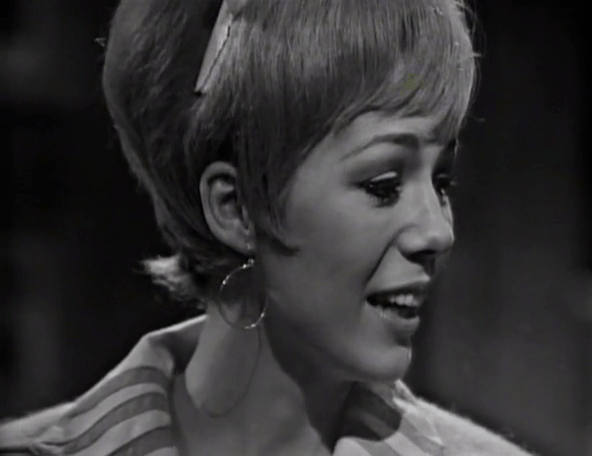
That’s a wig, honey.
They were afraid that, because Katherine Leigh Scott and Alexandra Moltke are both brunette, they would end up looking too much alike, so they put KLS in that dome and called it a day.
Though, in retrospect, it’s funny how concerned they were that people would end up mistaking Maggie for the lead…
Ahem. So off Vicki goes to Collinwood.

She’s greeted by Elizabeth who, naturally, is (re)introduced cloaked in shadows, and then we get a pair of the most stunning shots in daytime television history, accompanied by an authoritative and chilling sound cue courtesy of composer Bob Cobert.

It’s unclear just what Victoria will find here in this great, grim tomb of a house, but if one thing is made perfectly clear by these first 20 minutes of Dark Shadows: it’s not certain that she’ll ever leave.
I know I never have.
Welcome to the beginning and the end of the world.
This Day in History
Dark Shadows premiered on Monday, June 27th, 1966. Besides namechecking the birthplace of eventual horror visionary Stephen King, this episode also happened to air on the birthdate of someone else who, much like Dan Curtis, would go on to revolutionize T.V for a new generation.
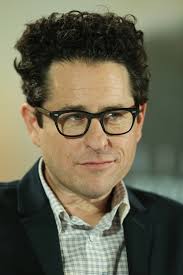
Today J.J. Abrams is most known for either redeeming or ruining the Star Wars franchise. But I’m more concerned with his seminal work of the previous decade. His collaboration with Damon Lindelof and Carlton Cuse on the weirdest smash-hit primetime drama to hit T.V since Twin Peaks.
LOST, a drama originally about a plane crash on a weird-ass island, was a watershed in television history. Running for six seasons, the show earned acclaim for a unique mix iof soapy character-driven storytelling and out-there sci-fi influence that tested the limits of the network television medium.
Much like Dark Shadows did 40 years earlier.
Besides sharing networks, LOST and Dark Shadows had several other things in common.


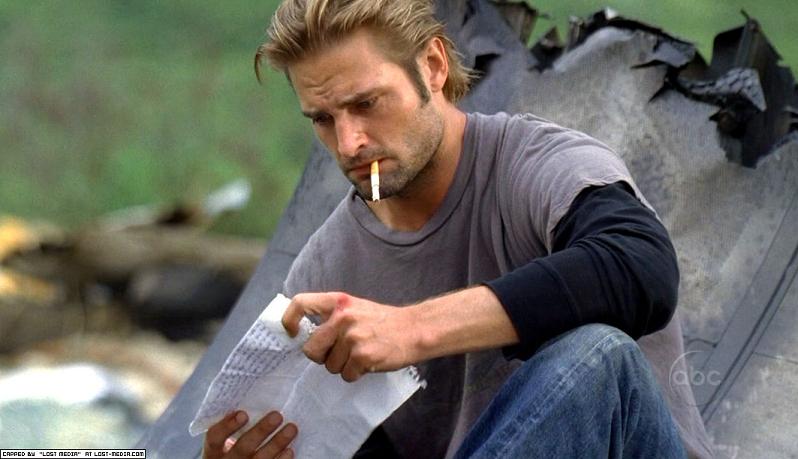

And that whole time travel thing.
This Person Was Also in That Thing!
When she wasn’t terrifying the soul out of Victoria Winters…
Jane Rose (the old woman credited as ‘Mrs. Mitchell’) was a presence on several soap operas your grandmother or mother (or you, old timer, glad you’re here) may have watched.
Her most notable soap role was on Love of Life (a favorite of my Gran’s, who was never much of a Shadows girl) where she originated the role of Sarah Dale, though soap fandom is more likely to identify Joanna Roos with the rule.
That happens a lot on soaps, a recast becoming the ‘definitive’ version of the role. Not that the opposite doesn’t happen just as often (nowadays, even more so): a recast being so loathed that even hardcore fans of the character disown them.
I bring this up because Dark Shadows will be offering us plentiful examples of both categories, some sooner than you think.
Jane Rose may also be known to fans of classic sitcoms for his role as the mother-in-law on the Cloris Leachman vehicle Phyllis in the late 7os. Her last role was in Roots: The Next Generations, the sequel series to the groundbreaking Roots miniseries.
Ironically, Rose was one of three actors in the first Dark Shadows episode to have had any experience in daytime. Neither of the other two appear past Episode 10.
 Kooks of Collinwood
4 thoughts on “The Beginning and the End of the World”